
- What is Katori Chaat?

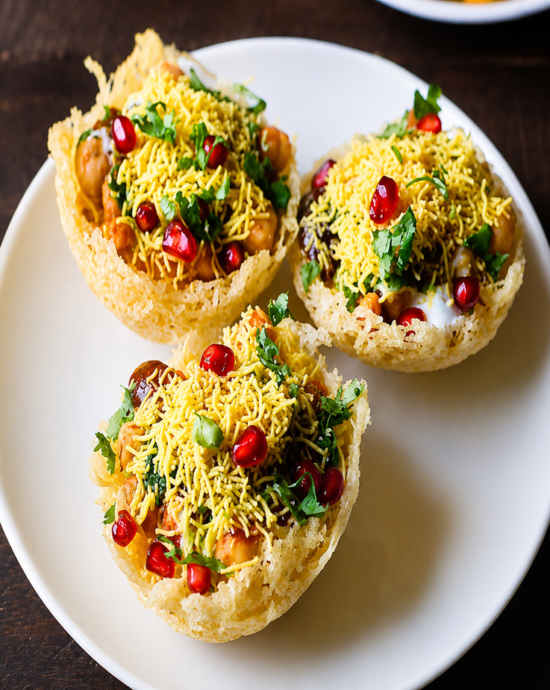
Katori Chaat is a relatively new and attractive Indian street food served in a crispy edible container (katori) prepared using potato or wheat flour. The edible container is filled with spicy potato, boiled chickpeas, seasoned yogurt, tangy chutney, fresh vegetables, sev, pomegranate, coriander and fragrant spices.
Katori Chaat is a very popular Indian snack at, Food Festival, Street Food Marts. It comes in Crispy Tardy as well as sweet, sour, tangy and refreshingly flavor.
- Regional Variations of Katori Chaat
The traditional style comprises flaky flour katoris packed with potatoes, chickpeas, yogurt, tamarind sauce, mint sauce, onions, tomatoes, sev and pomegranate.
Taste Profile
Tangy, sweet, spicy, crunchy
Why It Is Popular
Its fluffy, crispy edible bowls and explosion of flavors make it one of the most delectable and enticing chaats in Delhi.
Nutritional Highlights
Good plant protein
Fresh vegetables
Balanced snack
Lucknow Dahi Katori Chaat
Ready with a huge bunch of chilled yogurt, sweet tamarind chutney, roasted cumin powder, and pomegranate.
Taste Profile
Creamy, sweet and refreshing
Why It Is Popular
The cooling yogurt is a nice touch on the otherwise spicy dish and is most popular during the summer.
Nutritional Highlights
Rich probiotics
Good calcium source
Balanced nutrition
Rajasthani Papdi Katori Chaat
Uses papdi fried with crispy bowls to serve with spicy potatoes, sprouts, dahi, chutney and crunchy sev.
Taste Profile
Crunch, spice, and sourness, acidity are enjoyable, - Having a crunchy texture or feeling in your food or mouth. Acidicity, A sourness or acidity.
Why It Is Popular
The extra crispy papdi shell offers an ‘unspeakable’ crunch and lends itself nicely to festive seasons.
Nutritional Highlights
Rich fibre
Protein-rich sprouts
Fresh vegetables
Healthy Sprouts Katori Chaat
Baked whole wheat shells prepared, filled with a mixture of sprouts, boiled sweet corn, cucumbers, tomatoes, yogurt, and herbs.
Taste Profile
New, cool, slightly acidity
Why It Is Popular
Because of the healthier ingredients that it contains, it is popular with health-conscious food lovers, who don't want to see the flavor compromised.
Nutritional Highlights
High fibre
Rich vitamins
Good plant protein
Nutritional Value (Per Serving)
Nutritional Value
Calories: 280–360 kcal
Protein: 9–12 g
Carbohydrates: 35–42 g
Fat: 10–14 g
Fibre: 6–8 g
Calcium: 80–120 mg
- Basic Ingredients Used
Refined Flour (Maida) or Whole Wheat Flour
Quantity: 2 cups
Nutritional Value (100 g)
Calories: 364 kcal
Protein: 10 g
Carbohydrates: 76 g
Nutritional Benefits
Forms crispy katori
Good energy source
Provides structure
Boiled Potatoes
Quantity: 2 medium
Nutritional Benefits
Rich carbohydrates
Potassium source
Filling ingredient
Boiled Chickpeas
Quantity: 1 cup
Nutritional Value (100 g)
Calories: 164 kcal
Protein: 9 g
Fibre: 8 g
Nutritional Benefits
Excellent plant protein
High fibre
Supports satiety
Plain Yogurt
Quantity: 1 cup
Nutritional Benefits
Rich probiotics
Calcium source
Cooling flavour
Mint-Coriander Chutney
Quantity: ½ cup
Nutritional Benefits
Rich antioxidants
Fresh herbs
Vitamin C
Tamarind-Date Chutney
Quantity: ½ cup
Nutritional Benefits
Natural sweetness
Digestive ingredients
Tangy flavour
Onion
Quantity: 1 medium (finely chopped)
Nutritional Benefits
Good fibre
Fresh crunch
Antioxidants
Tomato
Quantity: 1 medium (finely chopped)
Nutritional Benefits
Vitamin C
Lycopene
Fresh flavour
Cucumber
Quantity: ½ cup (finely chopped)
Nutritional Benefits
Hydration
Low calories
Crisp texture
Fresh Coriander
Quantity: ¼ cup chopped
Nutritional Benefits
Rich antioxidants
Vitamin C
Fresh aroma
Pomegranate Seeds
Quantity: ½ cup
Nutritional Benefits
Rich antioxidants
Vitamin C
Natural sweetness
Nylon Sev
Quantity: 1 cup
Nutritional Benefits
Crispy topping
Traditional texture
Chaat Masala
Quantity: 1 teaspoon
Nutritional Benefits
Digestive spices
Tangy flavour
Roasted Cumin Powder
Quantity: 1 teaspoon
Nutritional Benefits
Supports digestion
Earthy aroma
Red Chilli Powder
Quantity: ½ teaspoon
Nutritional Benefits
Rich antioxidants
Mild heat
Black Salt
Quantity: ½ teaspoon
Nutritional Benefits
Digestive aid
Traditional seasoning
Salt
Quantity: To taste
Nutritional Benefits
Enhances flavour
Oil
Quantity: For deep frying the katoris (or 2 tablespoons if baking)
Nutritional Benefits
Crispy texture
Golden colour
- Ingredient Tips
Prepare the edible katoris until evenly golden and completely crisp so they remain crunchy after filling
Assemble the chaat just before serving to prevent the bowls from becoming soggy
- How to Prepare Katori Chaat
Prepare the Edible Katoris

Roll the dough very thin, fill it into small steel bowls or molds and fry or bake until crunchy and golden.
Nutritional Benefits
Crispy texture
Light serving bowl
Conventional presentation
Prepare the Filling

Combine all the ingredients.
Nutritional Benefits
Rich fibre
Plant proteins.
Nutrition should be well-structured
Fill the Katoris

Position the prepared filling into each crispy bowl.
Nutritional Benefits
Fresh ingredients
Even taste..
Add the Toppings

Sprinkle yogurt, mint chutney, tamarind chutney, sev, pomegranate seeds, coriander and dust with a dash of red chilli powder.
Nutritional Benefits
Rich probiotics
Herbs
Other antioxidants
Serve Immediately

Serve while the edible bowls remain crisp.
Nutritional Benefits
Best texture
Fresh flavour
- Why You'll Love This Recipe
Katori Chaat in particular, has all the flavors that make Indian chaat so tempting; crisp, soft, sour, hot, sweet, tangy, cool, and it is all contained in an edible bowl.
Nutritional Advantages
High-quality plant protein
Rich in dietary fibre
Fresh vegetables
Probiotic yoghurt
Nutrition balanced snack
- Serving Suggestions
Fresh Jaljeera: Its reviving cumin and mint taste complement the acrid chaat.
Masala Lemon Soda: A dark fizz that complements the topping and spices.
Mini Samosa: A tasty addition for festive chaat platters.
Kulfi: Conclude your meal with a course of authentic Indian ice-cream.
- Expert Tips
Keep the Katoris Dry: The edible bowl gets soft very easily in water, so keep in an airtight container till required.
Use of thick yogurt: Using chilled thick yogurt provides the creamy element without wateriness.
Distribute: The ingredients evenly in layers. All components of the bread should be present in every mouthful.
Assemble at the Last MinuteThis will keep the edible bowl from becoming soggy.
- Frequently Asked Questions (FAQs)
Q. Is it possible to bake Katori Chaat instead of frying?
Yes. Baking will produce a lighter edible bowl while keeping it crispy.
Q. Do I have to make the katoris in advance?
Yes. Allow the cooled katoris to cool and store them in an airtight container. They can keep for one week.
Q. Is Katori Chaat a vegetarian?
Yes. Katori Chaat is strictly vegetarian.
Q. What is ideal flour for Katoris?
Pour flour (maida) is the steamiest, but you can use whole wheat flour if you prefer to eat more healthily.



Katori chaat is an interesting marriage of Indian chaat taste with presentation. Be it the Delhi-style street chaat, the Goa-style creamy-dahi chaat, the Rajasthani-style crispy wada-papdi chaat or the Delhi-style nutritious chane chaat, each one served is an experience in crunch, flavour, and aroma. Popular from time immemorial, Katoris are colourful, festive, and the crunch hard to resist

Anjali Raj Singh
I am a food writer and culinary content creator specializing in global cuisines, traditional recipes, food culture, and cooking techniques. Through extensive research and hands-on recipe analysis, I create accurate, informative, and engaging content that helps readers explore authentic dishes from around the world. My work covers recipe development, food history, ingredient guides, restaurant features, and culture-driven culinary stories.
At Foods Around the World, I focus on delivering well-researched, reader-friendly, and SEO-optimized content that reflects the traditions, flavors, and culinary heritage behind each dish. Every article is carefully reviewed for accuracy and relevance, ensuring readers can discover trusted recipes, cooking insights, and food experiences from diverse cultures worldwide.