
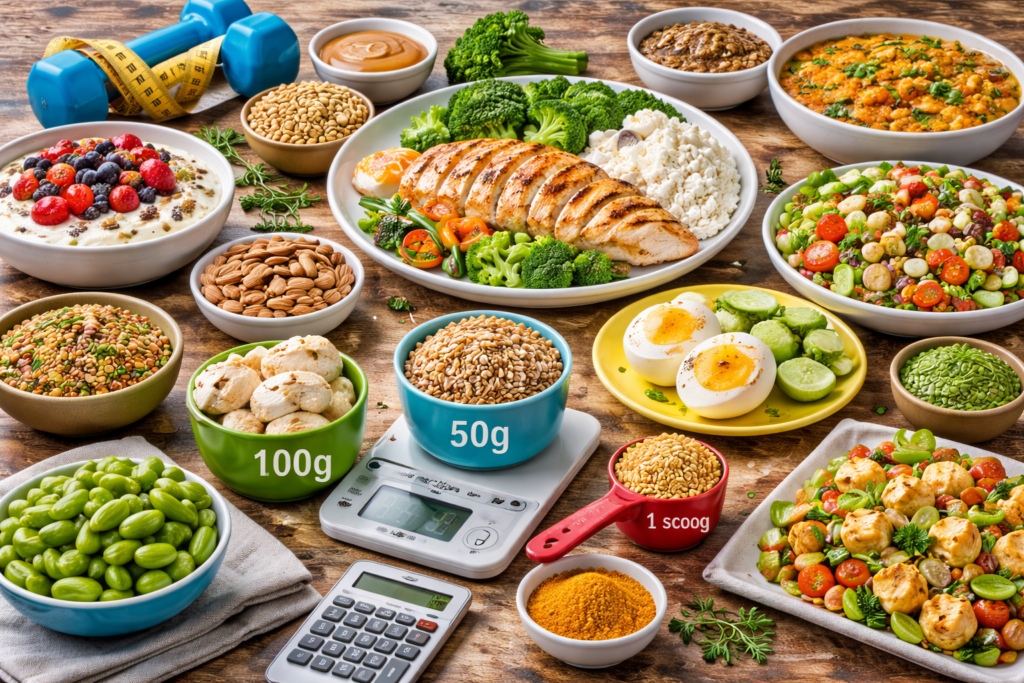
If you are trying to lose weight, then one of the most common questions first questions asked is quite straightforward: how much protein intake for weight loss be having a day? Well, this will be individual to your body weight, level of activity and goal. The correct amount of protein intake for weight loss can actually make fat loss easier for most people, because it can help you feel full, preserve muscle and stay satisfied longer
The best part is that you don‘t need any complex system. After you know how much protein per day, determining your daily requirement will only take seconds. Here we will show you exactly how much protein you need to lose fat, preserve muscle and keep healthy in general. It provides simple examples for 60 kgs, 70 kgs and 80 kgs body weight so you can apply it immediately. If you‘re interested in a full meal plan, then you can follow complete high-protein diet plan or even a high-protein diet for weight loss plan for your schedule
Why Protein Matters for Weight Loss
Protein is one of the most valuable nutrients for fat loss – not if you‘re interested in losing weight ‘to look good ’ but if you‘re interested in keeping all your body parts feeling weak, sore and hungry when you‘re losing weight. It will keep you feeling full, maintain muscle mass and keep you strong and healthy while you cut cals. This is important as most people, in their haste to cut calories, will lose muscle along with fat
If you get too little protein, you will get hungrier faster and have a harder time maintaining your regimen. You‘ll also shed more muscle during your cut, which isn‘t the most desirable thing for someone looking to have a firm, healthy body. A more appropriate protein amount makes all of this easier to handle
Protein Per kg Formula
The easiest way to figure out your daily need is by using your body weight in kilograms
Basic Formula

- Sedentary: 0.8g per kg of body weight
- Weight reduction / fatty reduction: 1.2 to 1.6 g per kg
- Active people/muscle retention: 1.6 to 2.2 g/kg
Indicating that the more you are active, or the more your body needs to hold on to muscle mass, the higher your target will be
For many people who have been trying to lose fat, the optimal amount is somewhere near 1.2 to 1.6 g per kg. If you are working out regularly, then you will probably want to aim for the higher end
How Much Protein Per Day for Different Goals
For Fat Loss
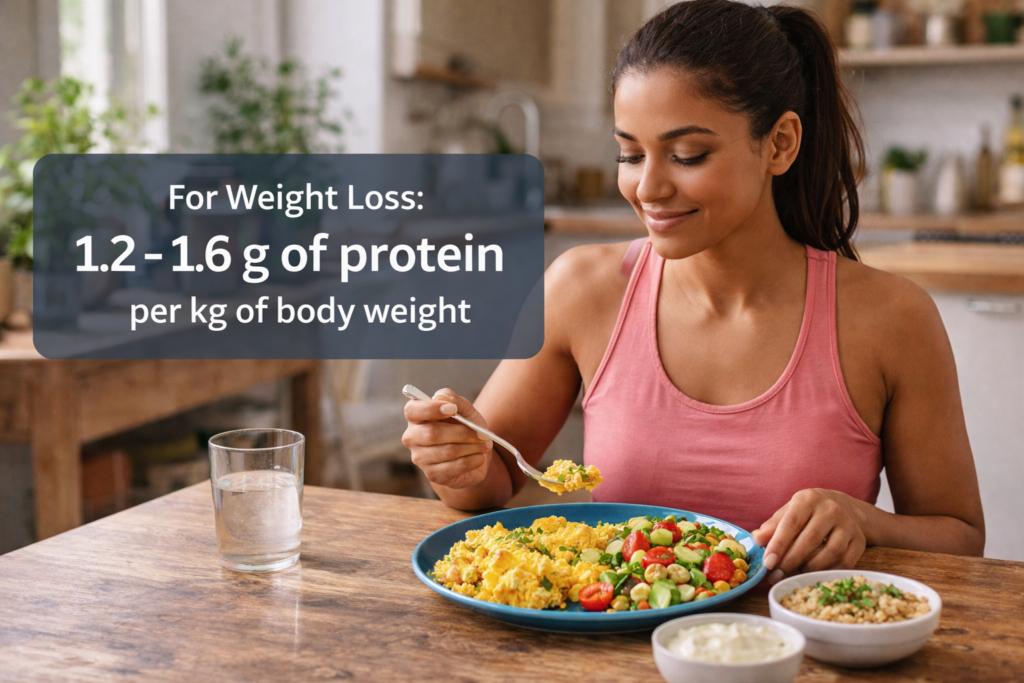
However, if your sole aim is weight loss, you only need to consume around 1.2 to 1.6 g of protein per kg of body weight. This range keeps you satiated and makes adhering to a calorie deficit realistic without being too limiting
For Muscle Retention
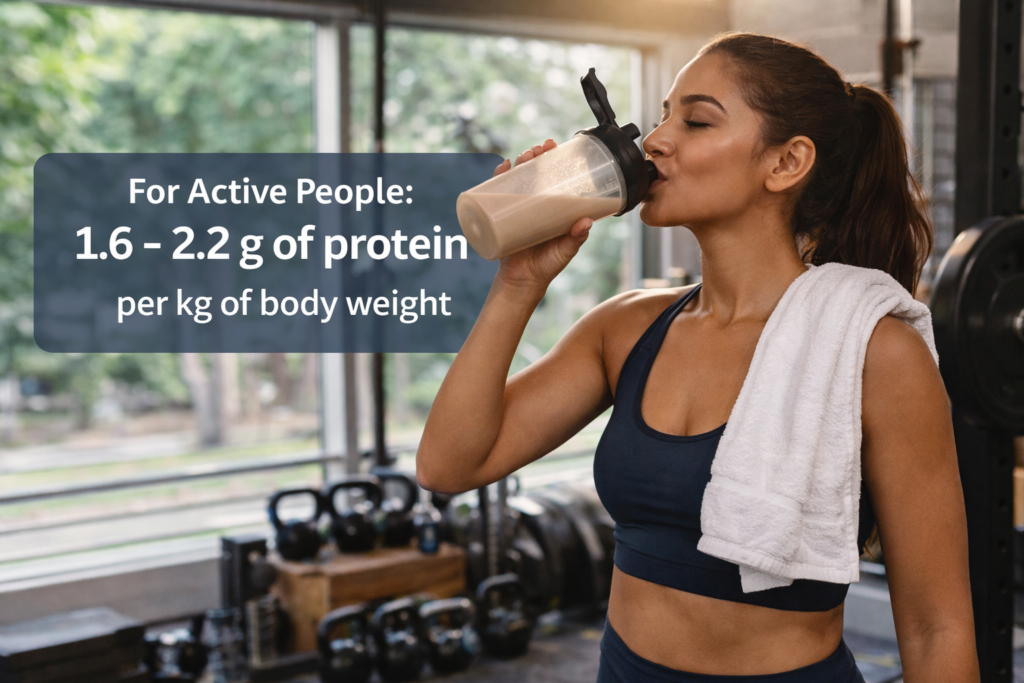
If you‘re reducing your weight and desire to preserve muscle, this range is 1.6 to 2.2g per kg
This is most recommended if you‘re a very active person and either have a high level of daily activity, such as walking, or doing lots of regular aerobic exercise or strength training
For General Health

If you‘re not concerned with fat loss and just need enough protein for everyday health (e.g., muscle maintenance), then 0.8 g per kg should be sufficient. However, for most people looking to lose weight, that dose will generally be too low
not anywhere close to all at one sitting.
Protein Examples by Body Weight

Here are simple examples so you can estimate your daily target more easily.
If you weigh 60 kg
- Fat loss target: 72 to 96 g protein per day
- Muscle retention target: 96 to 132 g protein per day
If you weigh 70 kg
- Fat loss target: 84 to 112 g protein per day
- Muscle retention target: 112 to 154 g protein per day
If you weigh 80 kg
- Fat loss target: 96 128 g protein/day
- Muscle maintenance target: 128 to 176 g protein per day
These numbers might seem scary initially, but they get much less intimidating if you have your protein over multiple meals and snacks and not anywhere close to all at one sitting.

Many people want to know not only how much protein per day they should consume, but also how they should include it in a meal. The simplest way is to divide it evenly.
A simple pattern could look like this:
- Breakfast: 20–25 g.
- Lunch: 25 to 30 g.
- Snacks: 10 to 15 g.
- Dinner: 25–30 g.
This keeps your hunger suppressed and makes your intake much easier to handle. It also promotes the utilisation of protein more efficiently by the body as a whole.
What Happens If You Eat Too Little Protein?
A very high protein diet will not promote fat loss despite body weight reduction. Excessive protein intake for weight loss can have, if any, serious side effects if your intake is not sufficient to support the high amount of intake. If your protein intake for weight loss is too low, then your satiety may not last as long, and you may find yourself hungry more often. Additionally, you may lose muscle mass and may also notice that your energy declines. This is precisely why smart ways of protein intake for weight loss are important. It is not just about the fat loss itself. It is also about making it tolerable and sustainable.
Who May Need More Protein?
Some people may need the higher end of the protein range. This includes:
- People who are into strength training.
- Female participants attempt to keep as much lean muscle as possible when losing weight.
- Men who exercise frequently.
- Teenagers and lively young lads.
- Working women who have a long day and irregular meals.
- Housewives who are looking for a satiety-inducing meal schedule that is easy to follow.
- For middle-aged men and women wanting to save muscle while losing fat.
For these groups of people, protein can be very valuable as it aids satiety, helps build strength and aids recovery. A healthy diet need not be hard to follow it just needs to be consistent.
Best Sources of Protein
To reach your daily target, choose foods you can eat regularly.
Vegetarian Options
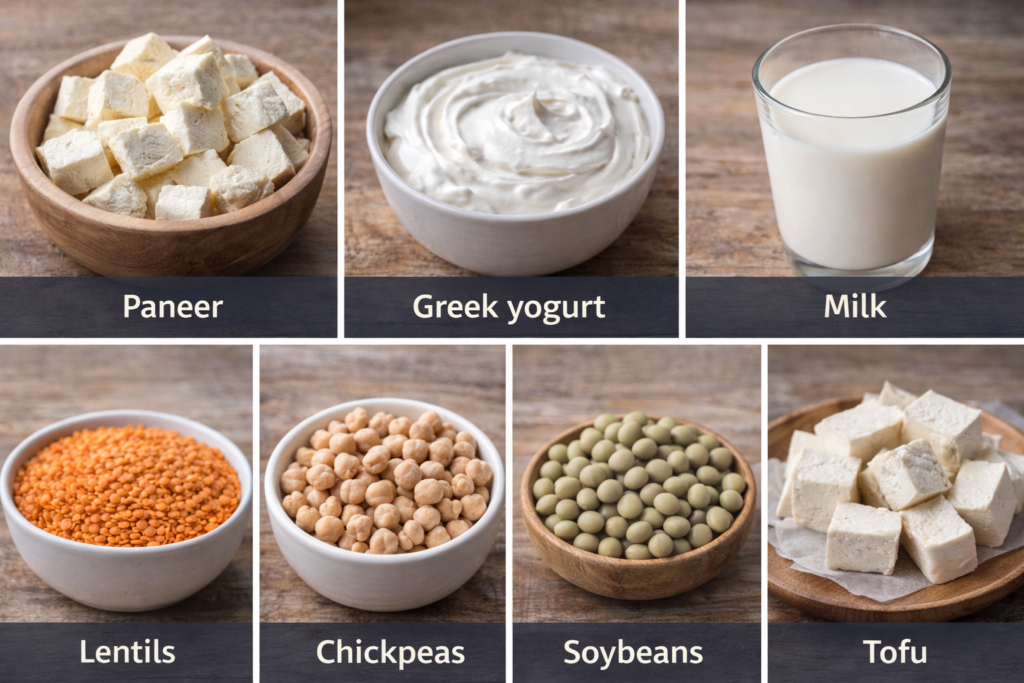
- Paneer
- Greek yoghurt
- Milk
- Lentils
- Chickpeas
- Soybeans
- Tofu
Non-Vegetarian Options

- Eggs
- Chicken breast
- Fish
- Tuna
- Salmon
The best approach is to mix protein with vegetables, fibre, and moderate carbs so your meals are balanced and satisfying.
A Simple Example

Here is a quick example for someone aiming for around 90 to 110 g of protein per day:
- Breakfast (again): 2 eggs + Greek yogurt
- Lunch: Dal + paneer + rice.
- Snack: Roasted chickpeas or some kind of protein smoothie
- Dinner: Chicken breast or tofu with vegetables
This sort of setup works well because it doesn‘t seem excessive it seems sensible
Common Mistakes to Avoid
- You eat very little protein, and it is hoped that this will produce better fat loss
- Trying to pack all the protein into one sitting
- High-fat protein (limit this)
- Forget total cal calories
- Neglecting vegetables and fibre
- Thinking protein on its own can be just as good as a healthy diet
Protein is helpful, but the others count too. Don‘t forget portion sizes, lots of water and a nutrition plan that will keep you on the wagon for the long haul.
Conclusion
If you want weight loss that‘s doable, make sure you have a good amount of protein on your agenda. The simplest way of calculating your needs is by bodyweight and the protein/ kg formula. During fat loss, the general recommendation for most is 1.2 1.6 g per kg, while those who are active or want to maintain muscle may need a higher range.
F&Qs
Q.How many grams of protein should I be eating daily to lose weight?
Nitrogen balance is better with doses from 1.2 to 1.6 g/kg of body weight for fat loss.
Q.Is more protein always better?
Not necessarily. More isn‘t necessarily better. You just need sufficient protein, but your overall intake and food balance continue to be significant.
Q.Is it possible to experience weight loss with low protein?
Yes, but it is generally more difficult. You are likely to feel hungrier and may also lose more muscle.
Q.Is it safe for daily protein intake for weight loss?
For most healthy people, yes. If you have any kind of kidney problems or any other medical conditions, speak to a doctor.

Anjali Raj Singh
I am a food writer and culinary content creator specializing in global cuisines, traditional recipes, food culture, and cooking techniques. Through extensive research and hands-on recipe analysis, I create accurate, informative, and engaging content that helps readers explore authentic dishes from around the world. My work covers recipe development, food history, ingredient guides, restaurant features, and culture-driven culinary stories.
At Foods Around the World, I focus on delivering well-researched, reader-friendly, and SEO-optimized content that reflects the traditions, flavors, and culinary heritage behind each dish. Every article is carefully reviewed for accuracy and relevance, ensuring readers can discover trusted recipes, cooking insights, and food experiences from diverse cultures worldwide.