
- What are Samosas?

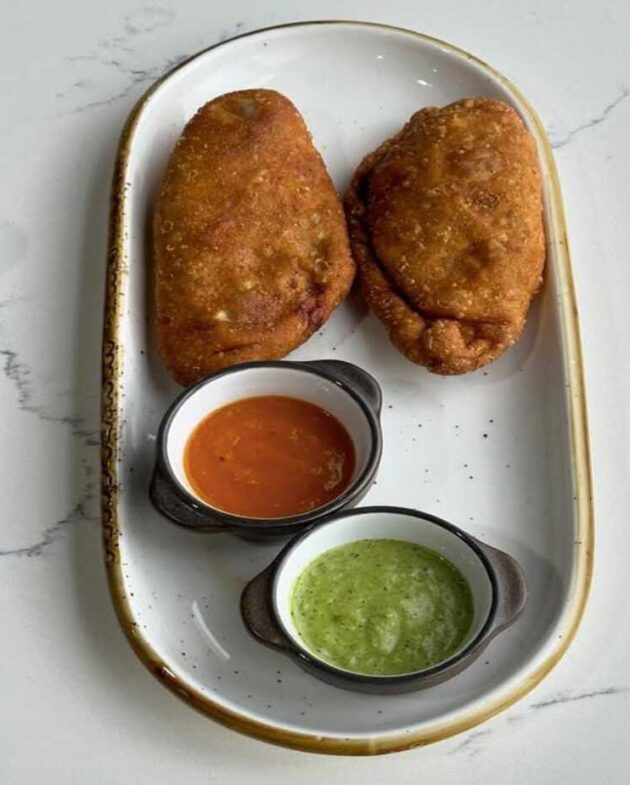
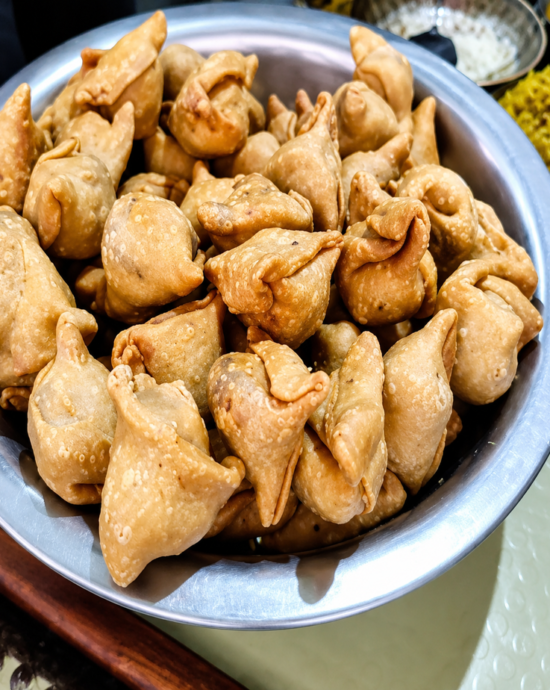
It is a quintessential Indian snack. Samosas have a hollow, crisp rolled outside with a filling that is bursting with taste. They are customary triangular-shaped pockets of dough filled with hot spicy potato, lentil, peas, or paneer combinations and deep-fried till they go golden brown
While samosas can be found just about anywhere in India, each region has its own style. For example, Northern India is known for their large potato-focused samosas, whereas singaras in Kolkata are much thinner and smaller. Coastal cities tend to have more diversity with pairing seafood, coconut, or spicy chutneys
Preparing homemade samosas is a patience process, as the dough needs to stand, the filling needs to cool, and the frying requires a slow process in order to result in a crispy snack. But they are one of the most rewarding to make at home.
When you need a snack at tea-time, a festival, a rainy evening, or a craving for a delicious street food, nothing beats a samosa!
- Regional Variations of Samosas in India
Delhi & North India – Large Punjabi Samosas
All of the samosas are large with generous fillings of mashed potatoes and peas, flavoured with fragrant spices. They are coated with a thick, crunchy crust.
Famous Spots
Munni Lal Halwai
Shri Bankey Bihari Samose Wale
Popular Variants
Chole samosa
Paneer samosa
Cheese-corn samosa
Taste Profile: Spicy, crispy, hearty
Best for: Filling evening snacks and winter tea-time mealsKolkata & West Bengal – Singara Culture
In Bhowani, kashrut Suthese, or singaras, are used. They tend to be smaller and flimsier and tend to be sweet.
Famous Spots:
Dadu Cutlet Shop
Popular Variants:
Fulkopir singara (cauliflower filling)
Mangsher singara (mutton filling)
Taste Profile: Flaky, mildly sweet, aromatic
Best for: Evening snacks with Bengali tea cultureMumbai & Coastal Maharashtra – Samosa Pav Style
In Mumbai, samosas are given a street-food spin in pav with some sticky-spicy, tangy chutneys.
Famous Spots
Gurukripa A1
Saurashtra Farsan
Popular Variants
Samosa pav
Mutton kheema samosa
Taste Profile: Buttery, spicy, tangy
Best for: Quick roadside snacks and college food cultureVaranasi & Uttar Pradesh – Ghee-Fried Samosas
In Varanasi and Lucknow, bahajees often fry the samosas in ghee and serve them with chutneys.
Famous Spots:
Ram Bharose Samosa Wala
Sharma Tea Stall
Taste Profile: Rich, crunchy, deeply spiced
Best for: Traditional North Indian snackingIndore & Central India – Chaat-Style Samosas
A popular delicacy in Indore is crushed samosas covered generously with various chutneys, sev and curd.
Famous Spots:
Shri Narayan Samosa
Popular Variants:
Corn-cheese samosa
Chaat samosa
Taste Profile: Sweet, tangy, spicy
Best for: Street-food lovers and late-night snacksHyderabad & Coastal South India – Spiced Mini Samosas
In Hyderabad and other coastal South Indian cities like Chennai, samosas are small and heavily spiced.
Popular Variant:
Lukhmi (square meat-filled samosa)
Famous Spots:
Local Irani cafés in Hyderabad
Tea stalls across Chennai
Taste Profile: Spicy, crisp, savoury
Best for: Tea-time and Ramadan snacksCoastal Goa & Kerala – Seafood & Coconut Influences
In certain coastal towns such as Goa and Kerala, samosas also contain other seafood fillings and may also have coconut flavours.
Popular Variants:
Prawn samosa
Coconut-spiced vegetable samosa
Taste Profile: Coastal spices, slightly smoky, aromatic
Best for: Fusion-style coastal snacking - Why You’ll Love This Recipe
Samosas are perfect for combining all three: crunch, fiery zest and hearty satisfaction in one package. As a snack, they are highly adaptable as there are countless fillings, a delicious ‘fusion’ of regional ingredients and individual family tastes. This is a crowd-pleasing recipe which works for festivals, teatime, parties or lazy Sunday lunch. Learn to master the art of dough making and frying, and homemade ones can be far superior to those purchased
- Ingredient Tips
Use less water in dough: Makes samosa crust crispier. The tighter the dough, the fewer bubbles there will be in the crust, which will keep it flaky. Soft dough may absorb excess oil and lose crispness
Cool filling before stuffing: Avoids soggy pastry. When the hot filling hits the pastry, it emits steam, which can cause the dough to become soggy and not hold together. It is also easier to shape and seal when cool
Boil potatoes properly: Pre-cooking the potatoes. Well-prepared potatoes will fill better; a little more mash is edible filling, so well-cooked potatoes provide a better fill. Well-cooked potatoes tend to absorb flavour, so it's more efficient to add spices after they've been cooked. Over boiling! Soft-turned potatoes make a sticky filling, so take care to make sure the potatoes aren't too soft
Fry on medium-low heat: Provides an evenly crispy texture. Slow frying allows the crust to be well cooked on both the exterior and interior. Quickly-scorched at high temperature may turn the Samosa outside colour and leave the pastry uncooked
- How to Prepare Samosas
A. Preparation
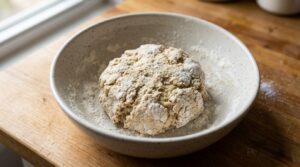
Start with a dough using flour, salt, oil and a small amount of water – it should be quite stiff rather than soft
Allow the dough to rest for at least 20–30 minutes. Resting will make the dough more elastic and crunchy when fried
While the mash is cooking, boil potatoes and make the spiced filling with the peas, and after the filling is cooled right down, it is ready for stuffing (should be cooled right down; otherwise, the pastry can tear and get gooey)
B. Cooking Method
Prepare the Filling
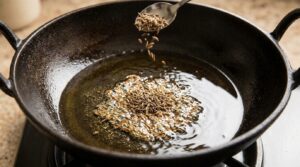
Fry oil and cumin seeds and spices, and cook potatoes and fried peas until the mixture has cooked well. The filling must be dry because the remaining moisture of the crust will relax
Roll the Dough

Separate dough into several portions and roll out into ovals. Cut each of these into halves to make samosa cones. You don't want to roll out too thin, or the crust can break when frying
Fill & Shape

Fill cones with potato mixture, but do not overfill. Seal edges securely with water/flour paste to ensure that samosas do not open in the oil
Fry Slowly
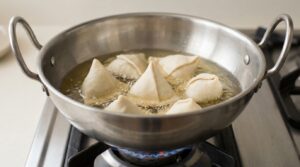
Fry in oil over moderate-low heat and slow fry. The slow frying is what gives restaurant-type crispy samosas. Too slow creates bubbles with odd textural effects
Rest & Serve

Serve the samosas slightly cooled. Samosas that are freshly fried are best eaten at the moment, they will still be crispy and full of flavour
- Variations You Can Try
1. Paneer Samosa: Add paneer cubes and spices to make the soya more flavorful and tastier. This type has more moisture content due to the addition of paneer, and soya will be more filling. First of all, paneer will absorb the flavour of spices, and the taste will become creamy inside the cumin crust. This is very much a favourite among vegetarians who are looking for a snack with more protein content
2. Cheese Corn Samosa: Blending sweetcorn and cheese gives a very modern taste. Favoured among those who are more into eating out and snacking. The sweetness of the corn contrasts nicely with the melted cheese interior. May be enjoyed as a party-finger food or an attractive cafe-style snack
3. Coastal Seafood Samosa: Use prawns or fish masala filling. Enhances the distinct coastal Indian flavours. Using coastal spices and seafood makes a more fragrant and vibrant filling. Popular among coastal areas that are influenced by Goa and Kerala cuisines
4. Keema Samosa: Occasionally, minced meat with spices is consumed in Hyderabad and Mumbai. Use of spicy keema made the samosa more filling and tastier. Usually served during festivals, Iftaar gatherings, and for evening snacks
5. Baked Samosa: Bake, rather than deep fry, to achieve a lighter consistency. This alternative allows for healthy-style food preparation. Baked food minimises the amount of oil needed but still achieves the required effect of a crisp surface. This variation is great for health-conscious individuals
- Serving Suggestions
With chai: The hot tea is a very good pair with the spicy samosas. This is a very traditional way of having samosas. The hot tea and the crispy outer covering go very well. It is mainly served on rainy evenings and with the family
With green chutney: The mint chutney gives a feeling of freshness and a nice sharp flavour and helps to add contrast to the crispy texture as well. It also cuts through the richness of the fried pastry with its tartness and herby taste. A squeeze of lemon juice will brighten the flavours of this chutney
With chole: Samosa with spicy Chickpea Curry completes the meal. Commonly eaten in North India. Deep chickpeas go well with crunchy samosa shells. Usually eaten as crunchy street food for lunch or dinner
With pav: Samosa pav from Mumbai is filling and flavorful. Suitable for a quick snack in the street-food style. Soft buttered bread complements fairly well with spicy potato filling. It is suitable for busy people
- Expert Tips & Recipe Notes
Don’t use soft dough: Soft dough retains the excess oil. Hard dough forms a flaky crust. The dough of a tighter consistency will also allow the samosas to hold their shape during frying, and proper dough consistency is one of the biggest secrets to maintaining crispy samosas
Fry slowly: Low-to-medium frying results in crispy. Hastily frying results in a bad texture. (Slow frying) After the filling has been put in, they are fried slowly so that the filling is cooked evenly from the outside and inside. It also produces the crisp, golden brown colour on the resulting product.
Avoid watery filling: The inside can be damaged by the wet filling, which can lead to a burst samosa. The drier mixtures provided a better structure. Installing appropriately beforehand can keep it crispy
Rest dough properly: Rested dough is more pliable to shape. The rested dough can also improve the texture after cooking. Resting relaxes the gluten strands and stops the dough shrinkage. Resting will help to produce a more uniform and flaky pastry
Use fresh oil: Old oil results in poor taste. Oil used while it is fresh creates a cleaner taste and odour. Using fresh oil also results in a lighter and less greasy finish. Oil that is re-used will probably cause the samosa to turn a darker shade very quickly and potentially compromise quality
Q. How can I ensure my samosas are crispy?
It can be caused by soft dough or high frying temperature. When fried slowly gets crispy.
Q. Is it possible to bake the samosas rather than fry them?
Yes, baking is perfectly fine if making lighter versions. However, traditional frying produces a more flavoursome taste.
Q. Will I be able to make these ahead of time?
Shaped samosas can be refrigerated before frying, yes. It is useful at parties and get-togethers.
Q. Which filling is most traditional?
Potato and peas are still considered the most classic combo. Each area of the country has its own local variation
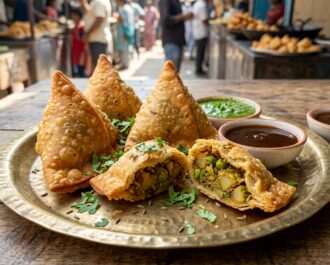
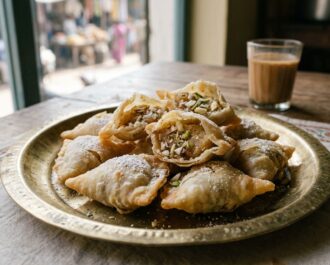
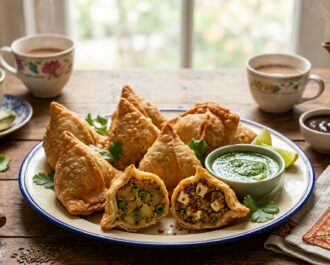
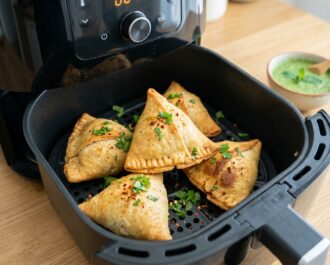
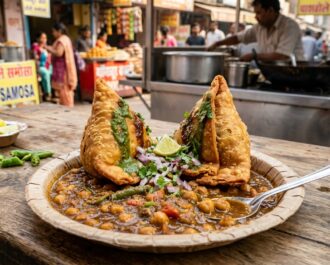
Samosas are much more than simple snacks—they represent India’s diverse street-food culture from Delhi’s giant Punjabi samosas to Kolkata’s delicate singaras and coastal seafood-inspired versions
Although proper samosa-making requires time and patience, the result is deeply rewarding. Once you master dough preparation, filling balance, and slow frying, homemade samosas become one of the most satisfying Indian snacks you can create

Anjali Raj Singh
I am a food writer and culinary content creator specializing in global cuisines, traditional recipes, food culture, and cooking techniques. Through extensive research and hands-on recipe analysis, I create accurate, informative, and engaging content that helps readers explore authentic dishes from around the world. My work covers recipe development, food history, ingredient guides, restaurant features, and culture-driven culinary stories.
At Foods Around the World, I focus on delivering well-researched, reader-friendly, and SEO-optimized content that reflects the traditions, flavors, and culinary heritage behind each dish. Every article is carefully reviewed for accuracy and relevance, ensuring readers can discover trusted recipes, cooking insights, and food experiences from diverse cultures worldwide.