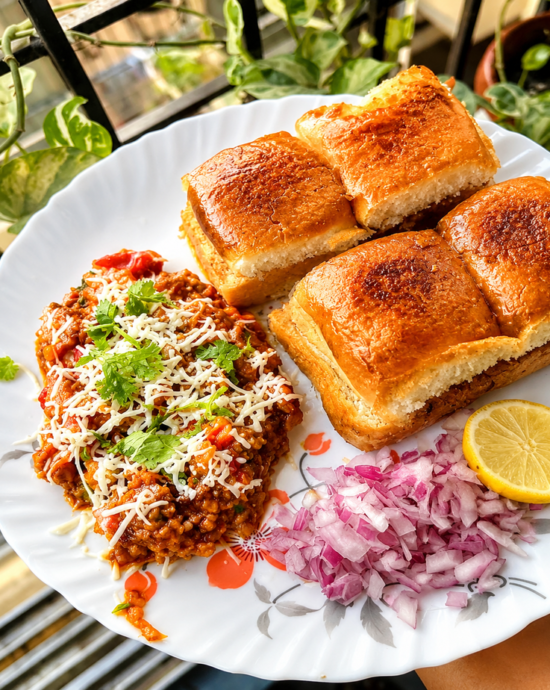

- What is Pav Bhaji?

Pav Bhaji is now sold across India and is one of Mumbai's most famous street foods. Pav Bhaji consists of a thick vegetable mash with butter, tomatoes, onions and a mix of spices, with soft butter-toasted pav
Pav Bhaji was first designed to be a quick meal for the textile mill workers of Mumbai. Now, Pav Bhaji is a restaurant item, a street food and a household meal.
Taste, visual appeal and texture are its defining factors. Perhaps the most widely recognised street food in India
- Regional Variations of Pav Bhaji
Mumbai Street-Style Pav Bhaji
The original version was sold at the Chowpatty and sold by street vendors.
Taste Profile: Buttery, spicy, tangy
Nutritional Highlights
Rich in vegetables.
Good source of carbohydrate
Average amount of fibres.
Supplies nutrients due to a mix of vegetables
Amul Butter Pav Bhaji
A Mumbai variation loaded with butter.
Taste Profile: Rich, creamy, indulgent
Nutritional Highlights
More calories
Higher fat percentage
Additional Vitamin A from butter
Jain Pav Bhaji
The dish was made without garlic, onions or potatoes.
Taste Profile: Sweety, delicate flavour.
Nutritional Highlights
Digestion easier
Rich with vegetables
Suitable for Jain dietary preferences
Cheese Pav Bhaji
Welcomed by the new generation of food enthusiasts.
Taste Profile: Creamy and cheesy
Nutritional Highlights
Higher protein
Others added calcium
Higher calories
Nutritional Value (Per Serving)
Nutritional Value
Calories: 400–500 kcal
Protein: 10–12 g
Carbohydrates: 50–60 g
Fat: 18–22 g
Fibre: 8–10 g
Sodium: 600–800 mg
- Basic Ingredients Used in Pav Bhaji
Vegetables
3 potatoes
1 cup cauliflower
½ cup peas
1 carrot
1 capsicum
Nutritional Value (Combined Vegetables)
Calories: 180–220 kcal
Fibre: 8 g
Vitamin A
Vitamin C
Potassium
Tomatoes
4 large tomatoes
Nutritional Value (100g)
Calories: 18 kcal
Vitamin C
Lycopene
Potassium
Onions
2 large onions
Nutritional Value (100g)
Calories: 40 kcal
Fibre: 1.7 g
Antioxidants
Butter
4–5 tablespoons
Nutritional Value (1 tbsp)
Calories: 100 kcal
Fat: 11 g
Vitamin A
Pav Bhaji Masala
2–3 tablespoons pav bhaji masala
Nutritional Value
Minimal calories
Rich aromatic spices
Digestive properties
Pav Bread
8–10 pav buns
Nutritional Value (1 Pav)
Calories: 90–110 kcal
Carbohydrates: 18 g
Protein: 3 g
Fat: 1–2 g
- Ingredient Tips
Use Fresh Vegetables: Fresh vegetables are better for flavour and nutritional value. They are packed with naturally occurring vitamins, minerals and fibre that collectively make the meal healthier and better balanced. Moreover, they improve the colour, texture and presentation of the dish. Furthermore, they are best because they are fresher and crunchier
Use Good Quality Butter: Authentic Pav Bhaji is also much to do with the butter itself. Fine quality butter adds richness to the foundation, lifts the taste of the spices and gives it its usual luscious feel. It also contributes to the typical smell it usually has in Mumbai-style Pav Bhaji. The fresher the butter, the better taste it seems to impart
Mash Vegetables Thoroughly: Street-style bhaji should have a very smooth texture. Properly blending the vegetables and spices will ensure a smoother and more cohesive flavour. Not only does it deepen the flavour of the dish, but it also provides a creaminess to spread onto the pav and makes it easier to eat. Blending the vegetables thoroughly after boiling is one of the best tricks to make an authentic Pav Bhaji
- How to Make Pav Bhaji
Boil the Vegetables
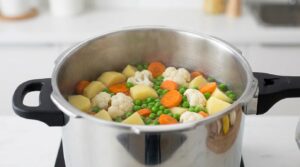
Add the potatoes, cauliflower, carrots and peas to a pressure pan with sufficient water. Cook under pressure until the vegetables have become soft and tender. Undercooked vegetables are simply not mushy enough to mash down smoothly into the bhaji, resulting in an inaccurate Pav Bhaji. Leave to cool slightly before mashing down thoroughly.
Nutritional Benefits
Fibre
Vitamins
Complex carbohydrates
Mash the Vegetables
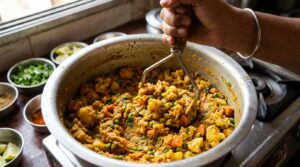
Mash the cooked vegetables up until they are smooth but still retain some ‘breaking up’ of them. A little bit of texture is better for an authentic street-style bhaji that is purely blended. Mix the vegetables in really well so the flavours of all of the vegetables are well dispersed throughout. Mashing helps the spices be absorbed more into the vegetables during cooking.
Nutritional Benefits
Easier digestion
Retains nutrients
Creates a creamy consistency
Prepare the Bhaji Base
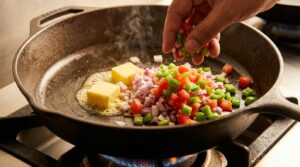
In a large pan, heat butter. Once hot, add the onions, tomatoes and capsicum and fry on a medium heat until thoroughly soft. Turn the heat down and add the rest of the ingredients, stirring well. The first step is to fry the vegetables as they start to release their flavours and produce the ingredients needed for the bhaji. By cooking the vegetables through, it also means they create the smooth Pav Bhaji consistency.
Nutritional Benefits
Tomatoes provide lycopene
Onions contain antioxidants
Capsicum supplies Vitamin C
Add Spices

Add Pav Bhaji Masala, red chilli powder and salt into the cooked vegetable mixture and cook until fragrant and well combined with the onions, tomato and capsicum. Keep stirring so that the spices don't burn. This step in the Pav Bhaji recipe is where the spicy, bold and pungent flavour comes into play. Let it cook for a few minutes for the flavours and aroma of the spices to fully release.
Nutritional Benefits
Antioxidants from spices
Improved digestion
Enhanced flavour without excessive calories
Add Vegetables

Incorporate the mashed vegetables into the garam masala mixture and mix well so that all ingredients are evenly coated. Continue to cook on a low heat for approximately 15–20 minutes, whilst stirring regularly to prevent burning and sticking. This slow cooking process causes the vegetables to absorb the flavours of the homemade masala and eventually become more aromatic and fuller in taste. At this point, the bhaji will begin to thicken and become creamier. If it becomes too thick, add a tiny amount of water to prevent this.
Nutritional Benefits
Balanced carbohydrates
Vegetable-rich meal
Good fibre content
Toast the Pav

Heat the butter on a tawa and toast the pav until golden brown and slightly crispy on the outside. The butter adds flavour and gives the roll that iconic aroma. It also creates a nice contrast between the crispy exterior and the soft interior.
Nutritional Benefits
Energy-rich accompaniment
Complements vegetable nutrients
- Why You'll Love This Recipe
Pav Bhaji is a popular dish because it combines convenience, flavour, and versatility in a single meal. As a one-pan recipe, it is easy to prepare and requires minimal cleanup, making it ideal for busy households. The rich blend of vegetables, butter, and spices creates a satisfying and comforting dish that appeals to people of all ages. It is also highly family-friendly, as the spice level can be adjusted to suit different preferences. Another advantage is its flexibility, allowing you to customise the ingredients, toppings, and accompaniments to create a version that perfectly matches your taste.
Nutritional Advantages
Contains multiple vegetables
Good fibre content
Provides vitamins and minerals
Filling and satisfying
- Variations You Can Try
Cheese Pav Bhaji
Sprinkle over some grated cheese just before you bring it to the table. The simple heat from the bhaji will melt the cheese a little, producing a creamy and very tasty consistency.
Nutritional Value
Additional calcium
More protein
Higher calorie content
Tawa Pav Bhaji
Sprinkle grated cheese over it before you are ready to serve. The heat of the bhaji will cause the cheese to melt slightly, making it ultra creamy and smothering.
Nutritional Value
Similar nutritional profile
Enhanced smoky flavour
Healthy Low-Butter Version
Make Pav Bhaji lighter. Halve the amount of butter and add more vegetables - this will reduce the overall fat in the dish but will also add more fibre, vitamins and minerals. Hence, making your Pav Bhaji healthy yet tasty.
Nutritional Value
Lower fat
Lower calories
Higher vegetable ratio
Extra Spicy Pav Bhaji
Add some green chillies and more masala for a more intense, punchy experience, great for those who like a punchy beat street-food kick. Use more or less of the chilli to suit your heat and spice preferences.
Nutritional Value
Similar calories
Higher antioxidant content from spices
- Serving Suggestions
Butter-Toasted Pav: The buttery, crisp pav is a delightful contrast to the rich and tasty bhaji. Toasting enhances the smell and adds texture to the meal
Chopped Onions: The chopped onions bring an easy crunch and gentle bite to each mouthful. They also offer a zingy complement to the fatty, spicy bhaji
Lemon Wedges: A squeeze of lemon juice adds a tart zing, and this lifts the overall flavour of the dish
Fresh Coriander: Fresh coriander brings colour and a fresh herbaceous note. It brightens the presentation and taste of Pav Bhaji
Green Chillies: As an additional workup of the taste buds of the intrigued, spalled green chillies are often offered to add an extra fire to those who like to spice up their feast
Nutritional Benefits
Lemon adds Vitamin C
Onions contribute antioxidants
Coriander adds micronutrients
- Expert Tips & Recipe Notes
Potato Masher: Use a potato masher for that authentic street-style Pav Bhaji, as it aids in evenly mashing the vegetables without losing too much of their texture for a more wholesome consistency. Mashing the vegetables properly ensures the flavours are mingled throughout the dish
Cook More Slowly after Mashing: cooking slowly will help the flavours to “mingle” with each other and become less shallow. By cooking at a low heat, the spices will be able to absorb into the vegetables and make a thicker, more fragrant " bhaji"
Do Not Skip Capsicum: Do not skip capsicum. The signature Pav Bhaji taste comes from the capsicum. The aroma and subtle sweetness make it an integral part of the bhaji. On cooking it well, the capsicum can come in equal amounts with other vegetables and enhance the taste
Nutritional Benefits
Rich in Vitamin C
Supports immunity
Adds freshness
- Frequently Asked Questions (FAQs)
Why is Pav Bhaji famous in Mumbai?
Pav Bhaji was eaten widely in Mumbai because it was an economical and filling meal for textile mill workers. Slowly, it gained popularity because of its hearty flavor and convenience and is today one of the most well-known Mumbai street foods.
Q.Can I enjoy Pav Bhaji great, but without using Potatoes?
Yes, you could also double up the cauliflower and peas and it would still taste equally nice, and the nutritional content would be increased and you‘d make it a little lighter on the diet.
Q.‘Is Pav Bhaji healthy?’
If cooked with less butter and in a large serving of vegetables Pav Bhaji can be a healthy meal. It is high in fibre as well as vitamins and nutrients.
Q. What makes capsicum wonderful?
Capsicum is a vital component as it provides the unique flavor associated with Pav Bhaji, its gentle sweetness and its scent aids in imparting the special taste, Penicillin.
Q.Can I freeze Pav Bhaji?
Absolutely! The bhaji can be frozen for up to a month in an airtight container. Make sure to defrost and reheat it properly to get the best flavour.
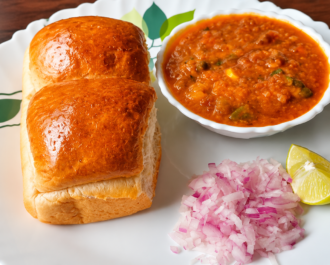


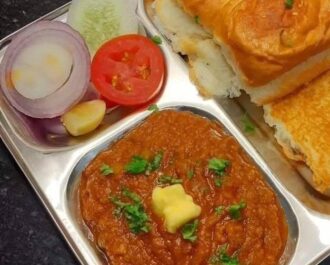
Pav Bhaji is a true representation of big, hearty, budget-friendly and tasty street cuisine of Mumbai. Originally conceived as a cheap meal for hard-working labourers, it is now enjoyed by people all over the country and all over the world
The generous dollop of butter mixed into the Pav Bhaji, combined with the spicy vegetable bhajis, crunch of onion rings, tang of lemon and freshness of coriander, makes it a tasty, tempting meal you’ll never forget. Offering plenty of fibre, vitamins, minerals and energy, it is a diverse and hearty dish just like your street-food street-food

Anjali Raj Singh
I am a food writer and culinary content creator specializing in global cuisines, traditional recipes, food culture, and cooking techniques. Through extensive research and hands-on recipe analysis, I create accurate, informative, and engaging content that helps readers explore authentic dishes from around the world. My work covers recipe development, food history, ingredient guides, restaurant features, and culture-driven culinary stories.
At Foods Around the World, I focus on delivering well-researched, reader-friendly, and SEO-optimized content that reflects the traditions, flavors, and culinary heritage behind each dish. Every article is carefully reviewed for accuracy and relevance, ensuring readers can discover trusted recipes, cooking insights, and food experiences from diverse cultures worldwide.