

Some meals not only feed people but also nourish them, down into their souls. It is one of those meals. With their Asturian roots in the green, rainy mountains of northern Spain, this dish is not glamorous. It does not depend upon spiced-up garnishes and intricate preparations. It is easy, luxurious and very satisfying. A lemon spoonful is like a hug with a grandmother you never met, who happens to be Spanish
If you have never had the privilege of stuffing yourself with a portion of Fabada, you need to get to trying it out.
Something About the Origin: How Fabada Came Into Being
Fabada is a traditional Asturian stew, deeply rooted in the rural kitchens where galushas or fillings, as we know, were a must to help a person get over the cold weather that reigns in the North of Spain. Farmers and villagers required something healthy after they spent long hours in the field, and Fabada became their food
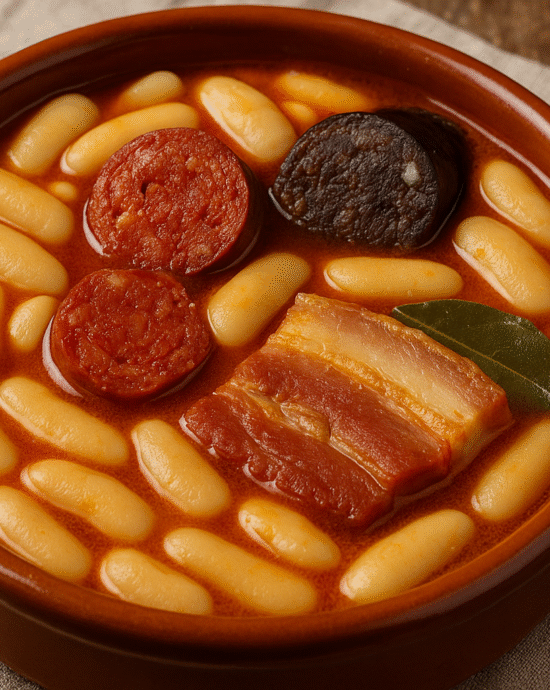
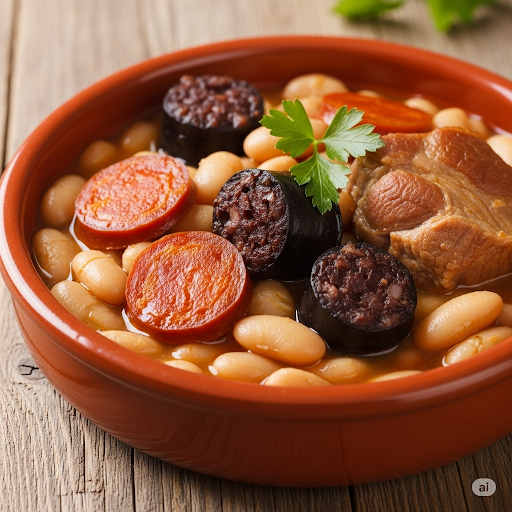
The thing that makes it special is the use of the fabes, big, creamy-fleshed white beans grown in the Asturias region. These beans are different; they absorb the flavours as quickly as sponges and become creamy during the cooking process. This is often accompanied by chorizo, morcilla (blood sausage) and either pancetta or salt-cured belly of pork being cooked together in a garlic broth. It’s rich. It’s smoky. It has a very rich taste
Whether it is served as a Sunday lunch dish, a family reunion dish or on a cold, winter night when one needs something literally to satisfy the belly, Fabada is as much a feature of home-cooked Spanish food as par excellence.
Ingredients
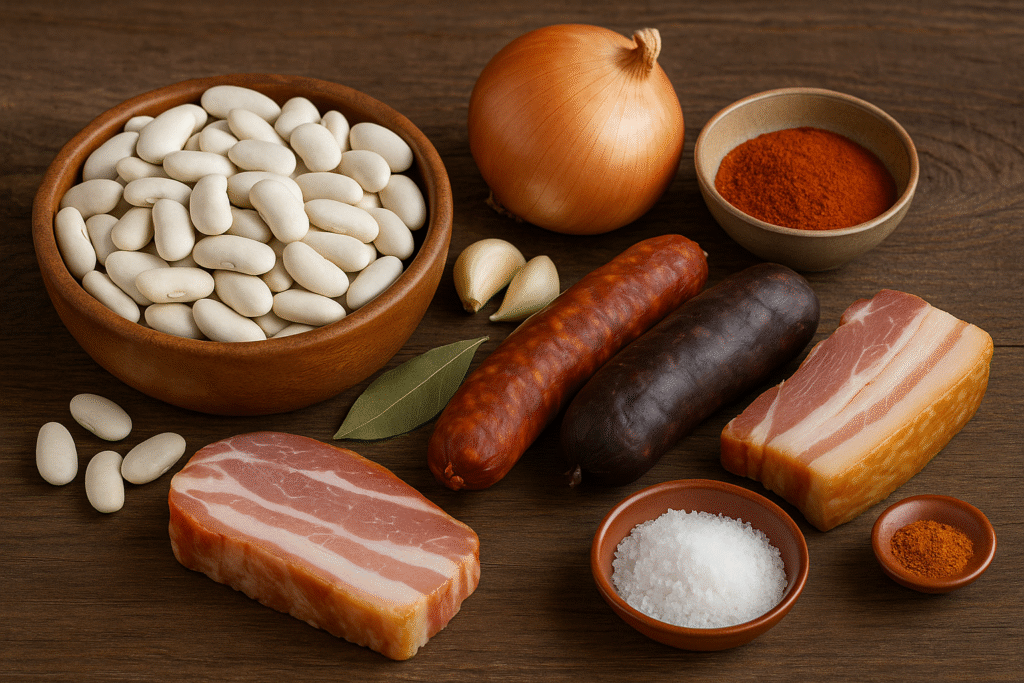
The following are all the ingredients you should prepare to bring this comforting dish to life:
- 2 cups dried Fabes de La Granja (Asturian beans)
- replace: Any large white butter beans or cannellini beans in case faves are not available
- 2 sausages of chorizo
- This is best done by using Spanish chorizo; smoked sausage is a second choice
- 1 morcilla (a Spanish blood sausage)
Otherwise, use black pudding or skip it if you are not a blood sausage fan.
- 150g pancetta or thick-cut bacon
- Salted pork belly works beautifully, too
- 1 small onion, peeled
- 2 cloves garlic, whole (peeled)
- Salt to taste
- 1 bay leaf
- 1 tsp sweet Spanish paprika (pimentón dulce)
- Water ( sufficient to cover everything, some 2 inches)
Instructions
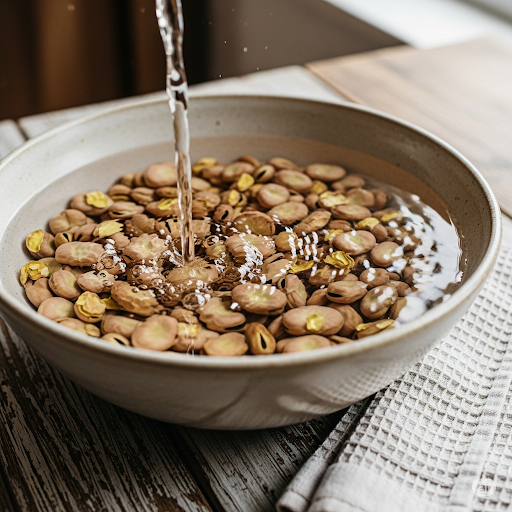
Step 1: Rinse your fibres and soak them in cold water overnight. They need time to plump up and soften
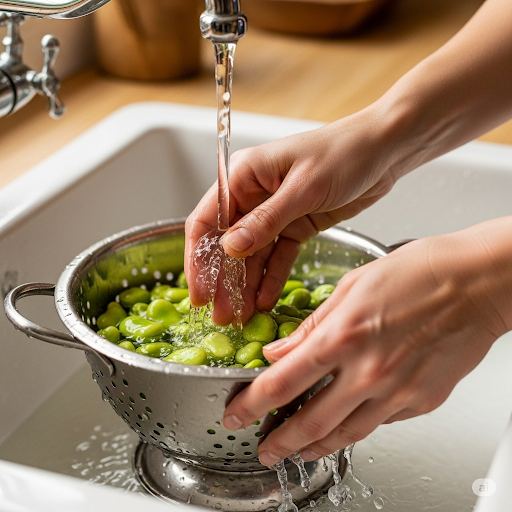
Step 2: The next day, drain the beans and give them a fresh rinse
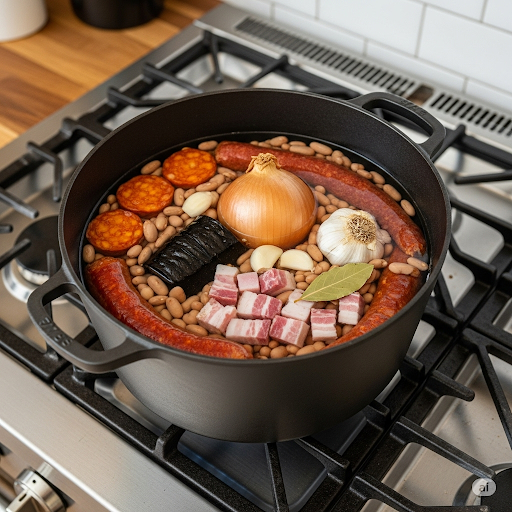
Step 3: In a large pot or Dutch oven, add the beans, chorizo, morcilla, pancetta, whole onion, garlic cloves, bay leaf, and enough water to cover them all generously
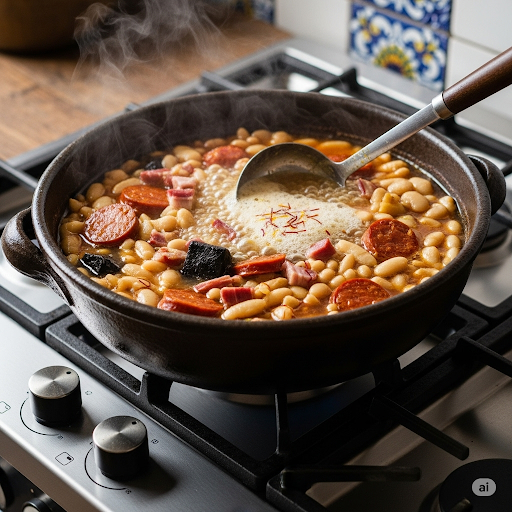
Step 4: After it begins to bubble, remove the foam that comes up to the top. It is just impurities in the meat
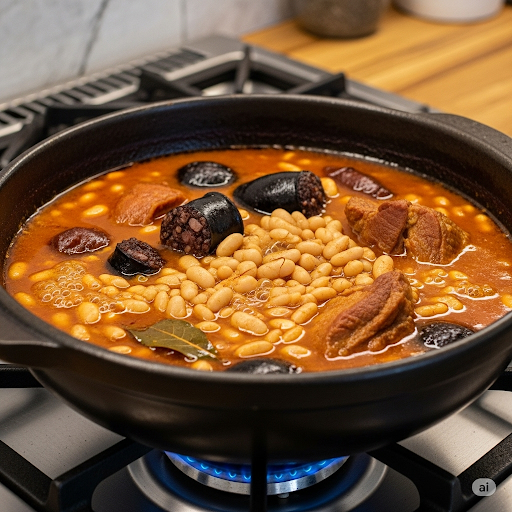
Step 5: Reduce the heat and simmer it on a low flame until it is done, 2-2.5 hours. You do not want the beans to simmer, but to absorb all that fleshiness
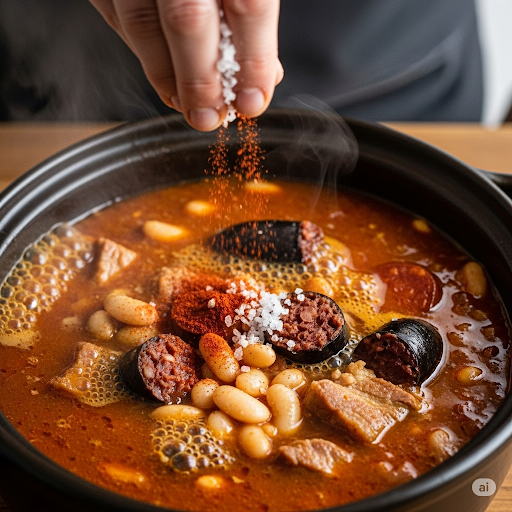
Step 6: Fifteen minutes before the roast is through, add salt with paprika. You can be apprehensive of the salt, as some sausages are already rather salty
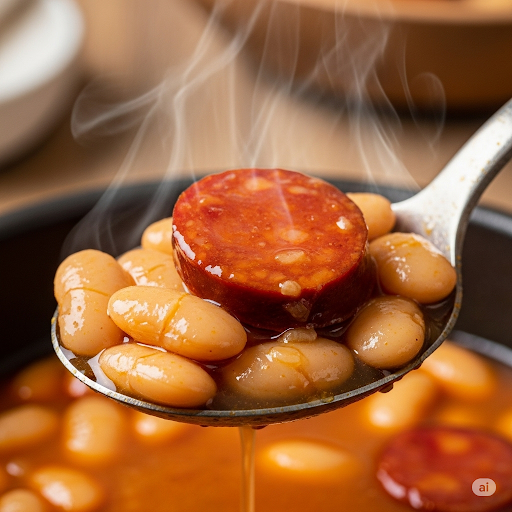
Step 7: What you want are tender (not mushy) beans. The broth must be thick and rather dense
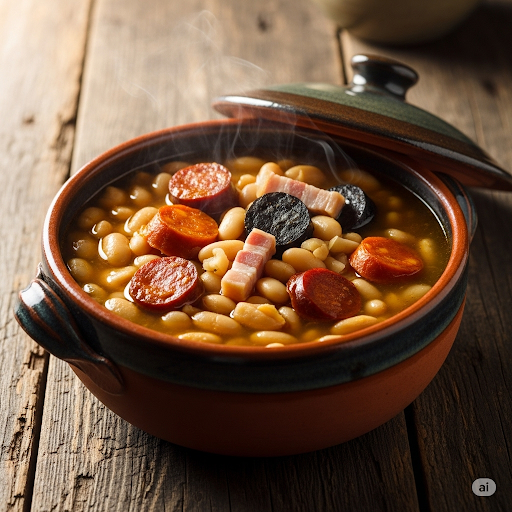
Step 8:This dish actually tastes better after resting for 30–60 minutes once off the heat. The flavours deepen as it cools
Serving Tips
- It is hottest when it is eaten, and the crusty bread is best to mop up the broth
- It goes well with a dry Asturian cider or a full-bodied red wine such as Rioja
- Historically, this soup is a first course, especially during cold days or during special events within families
- Do not provide too many sides with it. It is a meal by itself, this dish–heavy, filling, and satisfactory
A Few Things to Consider
- Don’t boil too hard. A rolling boil can break up the beans and make them grainy
- Use good-quality sausage. Cheap chorizo or overly spiced blood sausage can overpower the dish
- Soaking should not be omitted. Without soaking, it will take an eternity (or leave a stringent texture) if you are using dried beans
- Wait it out. There is no need to be in a hurry with this recipe. Give the beans and meat time to converse
More About Fabada Asturiana
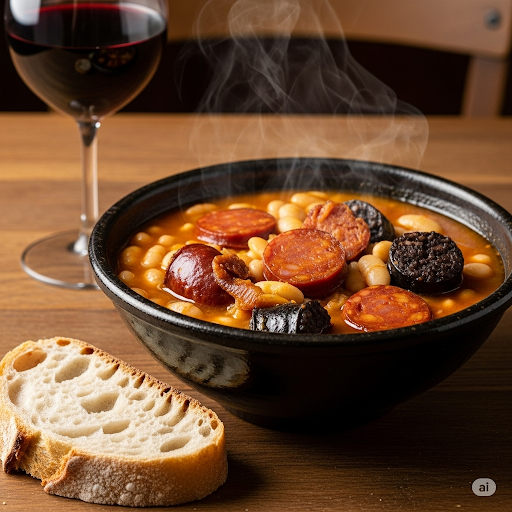
- Fabada Asturiana is not only food. It is an emotion. It narrates about the land which cherishes simplicity, flavour and old-fashioned values. It is not a stew that you can put together in minutes after work, but a Sunday sort of stew, and you are supposed to take your time and share it
- Therefore, when you just need something to warm up the heart, that is comforting, warming and really, really soulful, then you can eat Fabada; it is worth splurging on. It just feels like you are inside a Spanish blanket on a rainy day. Trust me.
Buen provecho!

Anjali Raj Singh
I am a food writer and culinary content creator specializing in global cuisines, traditional recipes, food culture, and cooking techniques. Through extensive research and hands-on recipe analysis, I create accurate, informative, and engaging content that helps readers explore authentic dishes from around the world. My work covers recipe development, food history, ingredient guides, restaurant features, and culture-driven culinary stories.
At Foods Around the World, I focus on delivering well-researched, reader-friendly, and SEO-optimized content that reflects the traditions, flavors, and culinary heritage behind each dish. Every article is carefully reviewed for accuracy and relevance, ensuring readers can discover trusted recipes, cooking insights, and food experiences from diverse cultures worldwide.