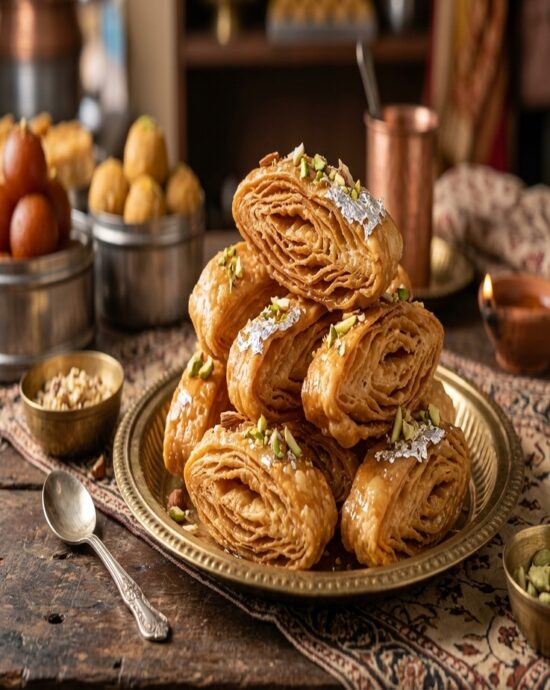

- What is Khaja?

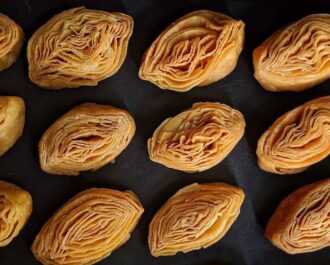
Khaja, a traditional layered, crispy and flaky sweet made of refined flour, ghee and sugar syrup, is an ancient Indian sweet. It is a popular traditional sweet having a fine flaky texture, which is considered to be one of the oldest Indian sweets and is regarded as a religious delicacy, available at Jagannath Temple, Puri, Odisha, as Mahaprasad.
But comparatively less known than in Odisha, Khaja is popular all over Bihar, Andhra Pradesh and some areas in West Bengal. It is served in every wedding, pilgrimage, and festival. Because of its crunchiness and little sweetness, khaaja has become one of the best traditional desserts of India.
- Regional Variations of Khaja
Puri Khaja (Odisha)
The real version is provided as Mahaprasad in the Jagannath Temple at Puri. It consisted of fragile, little crispy layers and was lightly coated with sugar syrup.
Taste Profile
Crispy, flaky, a little bit sweet
Why It Is Popular
The strong religious selling and the traditional preparation process that has been used for ages have made Puri Khaja a great Odisha speciality that attracts devotees from all over the world.
Nutritional Highlights
Quick energy source
Traditional festive sweet
Rich carbohydrate content
Bihari Khaja
A thick and crunchier version can be found at traditional weddings and Chhath Puja across Bihar.
Taste Profile
Rich, crunchy, buttery
Why It Is Popular
With its crisp texture and having over a year to store it is a popular celebratory sweet that can be prepared in advance of festivities.
Nutritional Highlights
Energy-rich dessert
Satisfying sweet
Moderate fat content
Andhra Khaja (Kakinada Khaja)
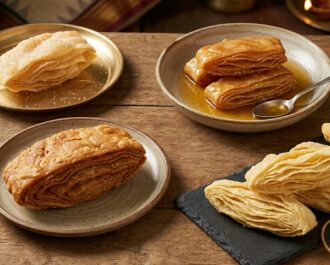
Made from several thin layers heavily soaked with sugar syrup and is softer and juicier than other types.
Taste Profile
Sweet, juicy, flaky
Why It Is Popular
The bits soaked in syrup are so melt-in-the-mouth that this is yet another famous Andhra dish.
Nutritional Highlights
Rich carbohydrate source
Festive dessert
Quick energy
Dry Khaja
Another lighter version was served plain, so the crisp, flaky layers stayed terribly crunchy.
Taste Profile
Lightly sweet, fresh, crunchy, buttery
Why It Is Popular
Its lesser sweetness and longer shelf life make it ideal for gifting and travelling.
Nutritional Highlights
Lower syrup content
Crisp texture, Moderate calories
Nutritional Value (Per Serving)
Nutritional Value
Calories: 280–380 kcal
Protein: 4–6 g
Carbohydrates: 40–48 g
Fat: 10–15 g
Fibre: 1–2 g
Iron: 1–2 mg
- Basic Ingredients Used
Refined Flour (Maida)
Quantity:3 cups
Nutritional Value (100 g)
Calories: 364 kcal
Protein: 10 g
Carbohydrates: 76 g
Nutritional Benefits
Provides structure
Rich energy source
Creates flaky layers
Ghee
Quantity: 5 tablespoons
Nutritional Value (100 g)
Calories: 900 kcal
Fat: 100 g
Nutritional Benefits
Rich flavour
Creates crisp layers
Traditional cooking fat
Cornflour
Quantity: 2 tablespoons
Nutritional Benefits
Improves layering
Adds crispness
Creates a delicate texture
Sugar
Quantity: 2 cups
Nutritional Value (100 g)
Calories: 387 kcal
Nutritional Benefits
Quick energy
Sweet flavour
Forms a syrup coating
Water
Quantity: 1 cup (for syrup) + as required for dough
Nutritional Benefits
Dough consistency
Syrup preparation
Cardamom Powder
Quantity: ½ teaspoon
Nutritional Benefits
Natural aroma
Digestive properties
Traditional flavour
Lemon Juice
Quantity: ½ teaspoon
Nutritional Benefits
Prevents sugar crystallisation
Balances sweetness
Oil or Ghee
Quantity: For deep frying
Nutritional Benefits
Crispy texture
Golden colour
- Ingredient Tips
Knead a firm dough so that there are all the perfect layers of flaky dough after frying.
The sugar syrup should be one string consistency so that the Khaja is properly coated and not soggy.
- How to Make Khaja
Prepare the Dough

Gently knead all ingredients into a firm, smooth consistency of the dough by mixing well. Keep aside for 20 minutes.
Nutritional Benefits
Proper structure
Better texture
Prepare the Layering Paste
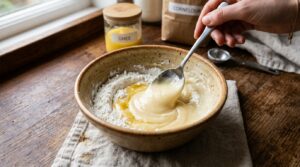
Mix ghee and cornflour into a smooth paste.
Nutritional Benefits
Creates flaky layers
Crisp texture
Roll and Fold
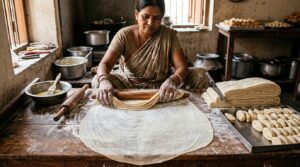
Roll the dough into very thin sheets. Spread the paste and make foldings again and again. Roll again, then cut into pieces.
Nutritional Benefits
Even layering
Traditional texture
Deep Fry
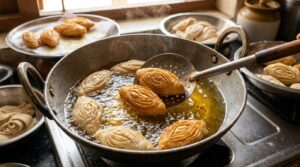
Fry over medium heat until crisp, golden, and evenly cooked.
Nutritional Benefits
Crisp finish
Rich flavour
Coat in Sugar Syrup

Dip the warm Khaja into the prepared sugar syrup and allow it to cool completely.
Nutritional Benefits
Energy-rich, traditional sweetness
- Why You'll Love This Recipe
Crispy, layered and just lightly sweet, Khaja is a delicious Indian sweet that is simply out of this world! Its glamorous looks, festive ties and irresistible crispness make it one of the most popular of all traditional Indian sweets.
Nutritional Advantages
Rich energy source, traditional festive dessert
Long shelf life
Satisfying sweet treat
Perfect for celebrations
- Serving Suggestions
Hot Saffron Milk: The creamy richness of saffron milk pairs wonderfully with crispy Khaja. Its warm, aromatic flavour enhances the delicate sweetness of the dessert, making it an ideal festive combination.
Masala Chai: A cup of spiced tea balances the sweetness and crisp texture. The fragrant blend of spices complements the flaky layers of Khaja, creating a comforting tea-time snack.
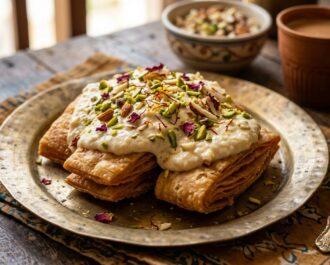
Rabri: Thick chilled rabri transforms Khaja into an indulgent festive dessert. The creamy texture and rich flavour of rabri perfectly contrast the crisp, flaky pastry for a luxurious treat.
Fresh Seasonal Fruits: Balance the sweetness. Their natural juiciness provides a refreshing contrast that makes the dessert feel lighter and more enjoyable.
- Expert Tips
Roll the Dough Thinly: The many thin layers give the signature flaky texture. Rolling more than once helps the layers to become defined and light and fry to a crisp texture.
Maintain Medium Frying Temperature: If the Khaja fries too fast, the centre may not cook. Using the medium heat source, fast frying is avoided so that the Khaja is fried evenly and reaches a consistent golden brown colour.
Use Fresh Ghee: The aroma and flavour considerably reflect the quality of ghee used for the process. The ghee used has made the Khaja taste rich and has imparted the characteristic traditional texture to the Khaja
Cool Completely Before Storing: This preserves the Khaja in an airtight container for a few days. It is better to keep it only after it has cooled down, so it becomes dry and not mealy
- Frequently Asked Questions (FAQs)
Q. Why is Puri Khaja so renowned?
Puri Khaja is one of the sacred Mahaprasad offerings at the Jagannath Temple and was traditionally prepared for hundreds of years.
Q. For how long does Khaja remain fresh?
If stored in an airtight container, Khaja stays crunchy for approximately one week.
Q. Is it possible to bake Khaja?
Traditional Khaja is deep-fried, but can also be baked with a slightly different texture.
Q. What are the layers?
The numerous flaky layers of Khaja are responsible for the signature crunch and tender mouth feel.
Khaja is one of the oldest, deepest-loved sweets in India, treasured for its flaky, multi-layered sweetness and celebratory acceptance. Be it the holy Puri Mahaprasad, the Bihari crunch, the Andhra syrup Splash or the dry Crispy, Khaja is a sweet that is built on the rich Indian legacy, perfected over the span of centuries. Khaja has the elegance to add to festivals, marriages or family get-togethers and is beautiful for sweet lovers all around the country

Anjali Raj Singh
I am a food writer and culinary content creator specializing in global cuisines, traditional recipes, food culture, and cooking techniques. Through extensive research and hands-on recipe analysis, I create accurate, informative, and engaging content that helps readers explore authentic dishes from around the world. My work covers recipe development, food history, ingredient guides, restaurant features, and culture-driven culinary stories.
At Foods Around the World, I focus on delivering well-researched, reader-friendly, and SEO-optimized content that reflects the traditions, flavors, and culinary heritage behind each dish. Every article is carefully reviewed for accuracy and relevance, ensuring readers can discover trusted recipes, cooking insights, and food experiences from diverse cultures worldwide.