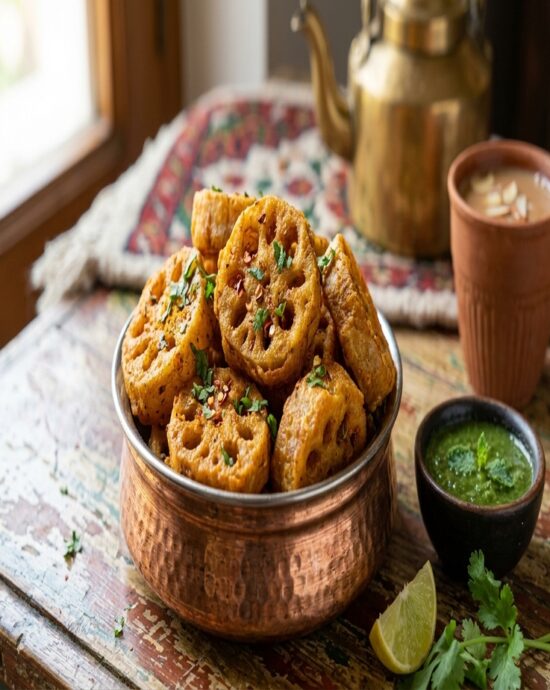

- What is Nadir Monji?

Nadir Monji is a Kashmiri delicacy. It is a spa of fresh Lotus stems (Nadru), which are dipped in a strongly seasoned Gram flour frittered batter and deep fried till golden. The pallid soft Lotus stems develop a perfect coating of crispy golden colour. It is a much-loved snack in and around Kashmir
Marketed regularly by vendors on the streets, Nadir Monji is a winter and rainy season delicacy eaten with green chutney, tomato chutney or Kashmiri noon chai. The distinct soft, thick consistency of Nadir Monji, which has an earthy flavour, is one of the most famous vegetarian dishes of the Kashmir Valley
- Regional Variations of Nadir Monji
Traditional Kashmiri Nadir Monji
Authentic version made fresh lotus stems dipped in a mildly spiced gram flour batter.
Taste Profile
Crispy, earthy, with a little spice;
Why It Is Popular
For ages, this unique texture of crispy batter followed by soft lotus stem has been a part of grocery and households of Kashmiri people.
Nutritional Highlights
Rich in dietary fibre
Low cholesterol
Good mineral content
Srinagar Street-Style Nadir Monji
Made by a vendor on the roadside with additional Kashmiri chilli powder & aromatic spices.
Taste Profile
Crispy smokey
Why It Is Popular
The heavy and bold flavour of the seasoning is combined with the taste of a freshly fried snack.
Nutritional Highlights
Rich spice profile
Good fibre
Filling snack
Masala Nadir Monji
Another version is sprinkled with chaat masala, roasted cumin seeds powder, and black salt after being fried.
Taste Profile
Tangy, spicy, crunchy
Why It Is Popular
Additional herbs improve the earthy flavour of the lotus stem, which would make this dish more popular among the younger generation of food lovers.
Nutritional Highlights
Digestive spices
Moderate fibre
Rich flavour
Herb Nadir Monji
Prepared by mixing coriander, mint and carom seeds in the batter.
Taste Profile
Nice, fresh, aromatic, mildly spicy.
Why It Is Popular
The herbs bring aroma and balance the fried batter‘s richness, but still keep the flavour of traditional taste.
Nutritional Highlights
Fresh herbs
Antioxidants
Better digestion
Nutritional Value (Per Serving)
Nutritional Value
Calories: 240–320 kcal
Protein: 7–9 g
Carbohydrates: 28–35 g
Fat: 10–14 g
Fibre: 5–7 g
Iron: 2–3 mg
- Basic Ingredients Used
Fresh Lotus Stem (Nadru)
Quantity: 300 g
Nutritional Value (100 g)
Calories: 74 kcal
Protein: 2.6 g
Fibre: 4.9 g
Nutritional Benefits
Rich dietary fibre
Good potassium source
Supports digestion
Gram Flour (Besan)
Quantity:2 cups
Nutritional Value (100 g)
Calories: 387 kcal
Protein: 22 g
Fibre: 10 g
Nutritional Benefits
Rich plant protein
Gluten-free
High fibre
Rice Flour
Quantity: 2 tablespoons
Nutritional Benefits
Extra crispiness
Light texture
Better coating
Kashmiri Red Chilli Powder
Quantity: 1 teaspoon
Nutritional Benefits
Rich colour
Mild heat
Antioxidants
Turmeric Powder
Quantity:1 teaspoon
Nutritional Benefits
Anti-inflammatory properties
Natural colour
Antioxidants
Carom Seeds (Ajwain)
Quantity: 1 teaspoon
Nutritional Benefits
Improves digestion
Traditional spice
Aromatic flavour
Cumin Powder
Quantity: 1 teaspoon
Nutritional Benefits
Supports digestion
Earthy aroma
Rich flavour
Coriander Powder
Quantity: 1 teaspoon
Nutritional Benefits
Rich antioxidants
Mild citrus flavour
Digestive support
Fresh Coriander
Quantity: 2 tablespoons
Nutritional Benefits
Vitamin C
Fresh aroma
Antioxidants
Mint Leaves
Quantity: 2 tablespoons
Nutritional Benefits
Refreshing flavour
Supports digestion
Rich antioxidants
Salt
Quantity: To taste
Nutritional Benefits
Enhances flavour
Water
Quantity: As required
Nutritional Benefits
Creates a smooth batter
Proper coating consistency
Oil
Quantity: For deep frying
Nutritional Benefits
Even frying
Crispy texture
- Ingredient Tips
Always choose fresh, tender lotus stems without dark spots for the best texture.
Add a small amount of rice flour to the batter for extra crispiness without making the coating heavy.
- How to Make Nadir Monji
Prepare the Lotus Stem
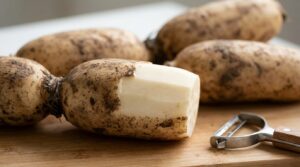
Clean and peel, if necessary, the rough outer stems of the lotus. Slice thinly into strips or rounds. Rinse again to loosen any dirt and/or excess starch if necessary.
Nutritional Benefits
High fibre
Fresh vegetables
Rich minerals
Prepare the Batter

Mix the batter thoroughly until smooth without lumps and allow to rest for 10 -15 minutes for a softer batter and better consistency.
Nutritional Benefits
Plant protein
Balanced flavour
Crispy coating
Coat the Lotus Stem

Submerge the sections of the lotus stem in the batter, covering them completely with the mixture. Dip thoroughly so that all sections of each piece are covered in a thin layer of mixture.
Nutritional Benefits
Even seasoning
Better texture
Deep Fry Until Golden

Fry in medium-hot oil until golden and crisp, cooked through. Turn frequently for even browning and crispness.
Nutritional Benefits
Crisp exterior
Tender interior
Delicious texture
Drain and Serve

Drain onto paper towels and sprinkle with chaat masala before serving. Best served straight away while hot and crispy for the best flavour and texture.
Nutritional Benefits
Reduced excess oil
Fresh flavour
- Why You'll Love This Recipe
Nadir Monji is one of Kashmir‘s most distinct snacks, with the flavour of the earthy lotus stem complemented by its good crisp covering. Easy to make, irresistible, fibre-rich and tasty, it can be enjoyed with a cup of tea or as a festival appetiser.
Nutritional Advantages
Rich dietary fibre
Good plant protein
Mineral-rich vegetables
Naturally gluten-free coating
Filling snack
- Serving Suggestions
Kashmiri Noon Chai: The well-known pink salted tea, which is a perfect match for the crispy laksa fritters. Its rich, subtle saltiness makes a delicious, authentic Kashmiri match that will blow your taste buds away.
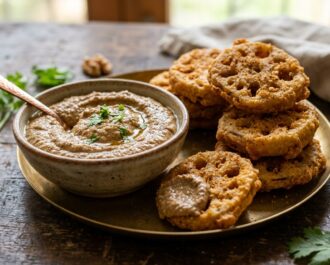
Walnut Chutney: The Kashmiri traditional walnut chutney lends a rich, nutty taste. It's nutty, earthy taste and smooth texture. They are a perfect partner to the crunchy outer crust of the fritters
Fresh mint yoghurt dip: A cooling dip to set off the warmth of the spices with the crispy texture. The fresh hint of mint with the sour yoghurt also adds a good temper to the overall taste
- Expert Tips
Cut the Lotus Stem into an Equal Thickness: Cook evenly, crispy and sticky. Equal thickness will aid each piece to be evenly browned when deep-fried.
Keep Oil at Medium Temperature: An overheated oil will burn the coating before the lotus stem has been cooked through. Keeping the oil at a constant medium temperature will result in crispy fritters without excess oil.
Thicker Batter: Deep-fried are crisp and marketable. It can also display the delicate taste and the smooth texture naturally.
Serve as soon as possible: Nadir Monji is best eaten when hot and fresh from the fryer. Serving it immediately means that it retains its crunchy texture and is at its most tasty!
- Frequently Asked Questions (FAQs)
Q. What is Nadru?
It is generally found in edible form & is also considered to be a part of Kashmiri delicacies.
Q. Is Nadir Monji a vegetarian?
Yes. It's an entirely vegetarian traditional snack.
Q.Would I be able to grill Nadir Monji?
Yes. Have a lighter version with less oil but still great crispiness.
Q. Why is the Lotus stem so popular in Kashmir?
Lotus Stem provides various nutrients and is widely available in the lakes of Kashmir. It still forms part of the popular cookery of the Kashmiris.

Nadir Monji is another street-food dai traditional snack from Kashmir and is a showcase for the Kashmiri love of using the lotus stem and aromatic spices. Available in many guises: the genuinely Kashmiri style, the tell it as it is spicy Srinagar street-food, the tangy masala one or the dense herb taste one, they all give you a satisfying crunch and tasty earthy taste. Sticky, nourishing and Kashmiri heritage to their very core, they are a Kashmiri classic and best enjoyed with a cup of tea and some traditional Kashmiri chutneys

Anjali Raj Singh
I am a food writer and culinary content creator specializing in global cuisines, traditional recipes, food culture, and cooking techniques. Through extensive research and hands-on recipe analysis, I create accurate, informative, and engaging content that helps readers explore authentic dishes from around the world. My work covers recipe development, food history, ingredient guides, restaurant features, and culture-driven culinary stories.
At Foods Around the World, I focus on delivering well-researched, reader-friendly, and SEO-optimized content that reflects the traditions, flavors, and culinary heritage behind each dish. Every article is carefully reviewed for accuracy and relevance, ensuring readers can discover trusted recipes, cooking insights, and food experiences from diverse cultures worldwide.