

There is a unique feature in such dishes that contain the smell of sea and the coziness of tradition. Pulpo a la Gallega, also known as Pulpo a Feira in Galicia, is not simply octopus on a plate, it is a culinary culture to be proud of and is accompanied by paprika and potatoes. It is simple, homely, soul-comforting, the sort of thing your abuela would bring out during a lazy day by the seashore
You have probably smelled it, at least once, if you have been to a Spanish food fair and have walked past huge copper pots filled with pulpo cooking tenderly. And in case you ever managed to eat it the way it is supposed to be, fresh meat, tender and sprinkled with some pimenton, then you should know that this one is something you do not forget about
Just a Little Background
Pulpo a la Gallega was born in Galicia, where emerald hills meet the wild Atlantic, and fishermen perfected octopus cookery on wave-battered rocks. While it is usually consumed at fairs (thus the name is a feira), this is taken during a large celebration of culture, food and community. Octopus used to be the dish of fishermen and workers’ families, but it became a symbol of Galician pride, which is completely justified
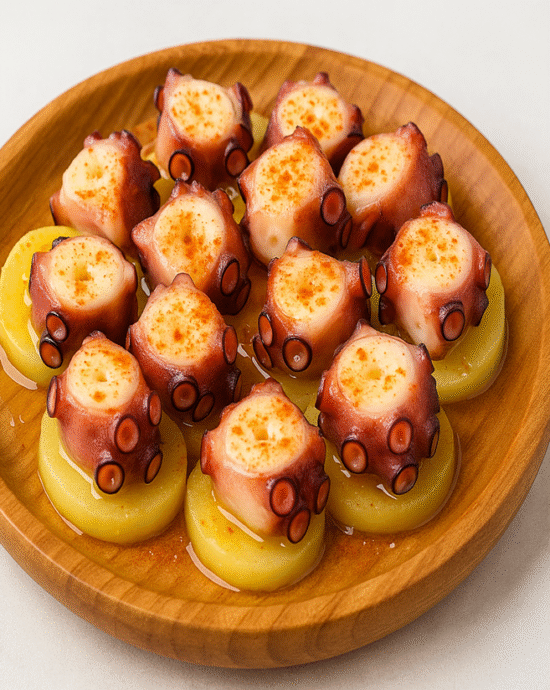
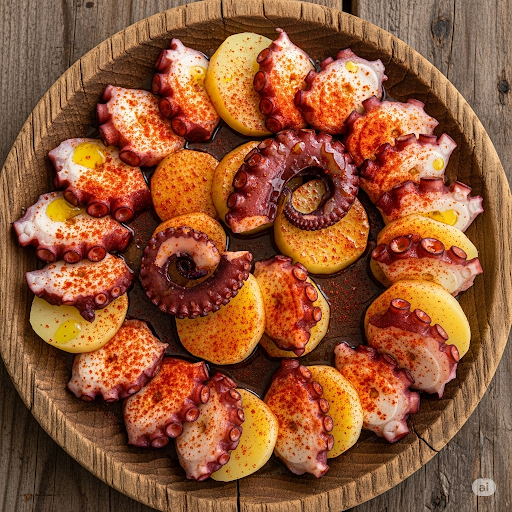
But this dish is really special in one important aspect, which is in preparation: using slow boiling, this dish reaches its most tender state, after which it is cut into coins with the accompaniment of boiled potatoes, coarse salt, olive oil, and a hefty dose of sweet or spicy paprika.
Simple? Yes. But dull? Never.
Ingredients
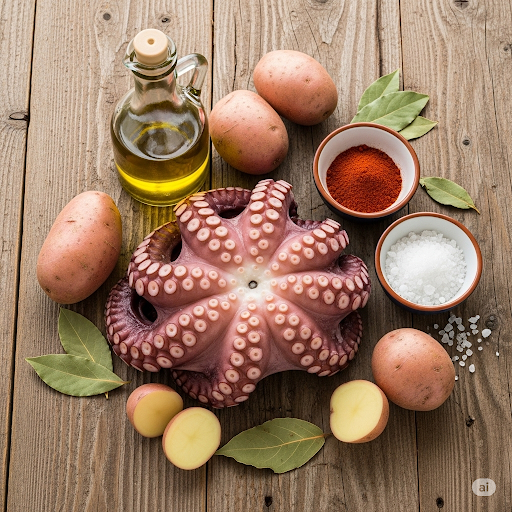
- 1 large octopus (roughly 2-2.5 kg) – You will most likely be able to buy it frozen at international markets. Frozen octopus surprisingly facilitates the breaking of fibres, thus becoming tender
- 4-5 medium potatoes. Yukon gold or red potatoes are the best waxy potatoes because they retain their shape best
- 2 tbs extra virgin olive oil – Do not scrimp on this part. A prime Spanish oil is everything
- 1 tsp sweet paprika (pimenton dulce) – Gives it that smoky undertone. You can also add a pinch of spicy paprika ( pimento on picante ) to it, just to make it spicy
- Kosher or coarse sea salt- Do not use any fine table salt, you want those little salty flavour pops
- Bay leaves (optional) -A couple of them in the boiling water is a nice low background flavour
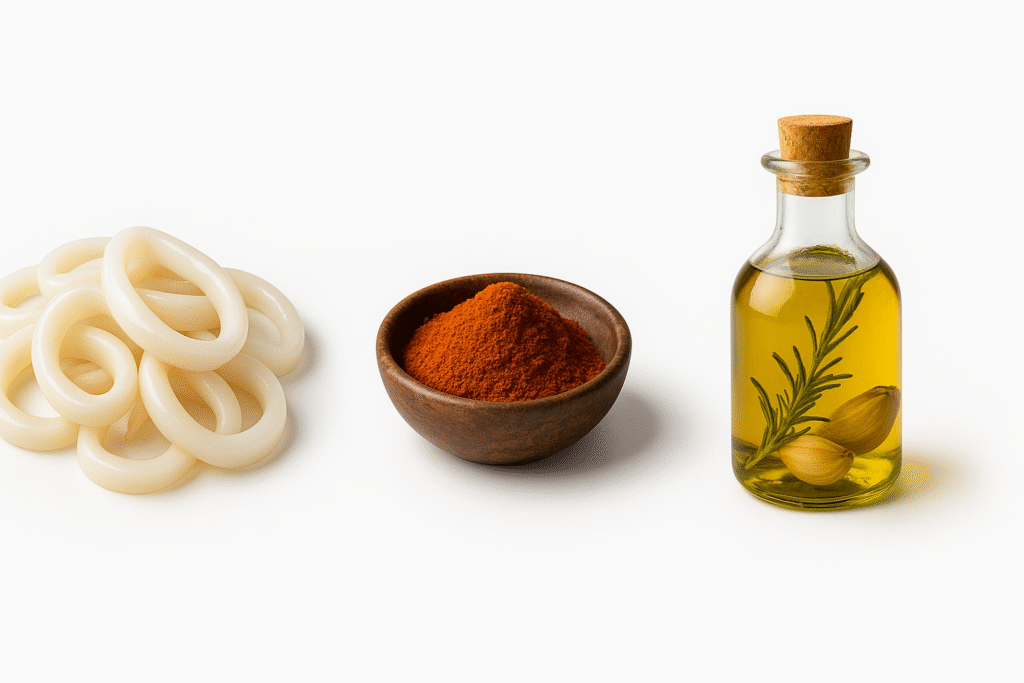
- No octopus to be found? Taste calamari, but is far less when it gets rubbery quickly
- No paprika? Hungarian sweet paprika or even the smoked paprika will suffice
When olive oil is mild or light, drizzle some drops of garlic-flavored oil to get extra flavor.
When to Make
This dish is perfect for:
- Tapas night
- Special dinners
- Summer parties
Or simply when you crave something out of the ordinary but still deeply comforting.
Instructions
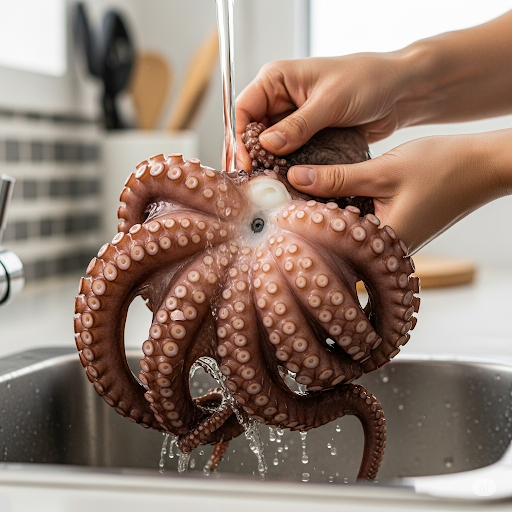
Step 1: If it’s frozen, let it thaw overnight in the fridge.
Rinse thoroughly under cold water and remove any internal bits if not already cleaned.
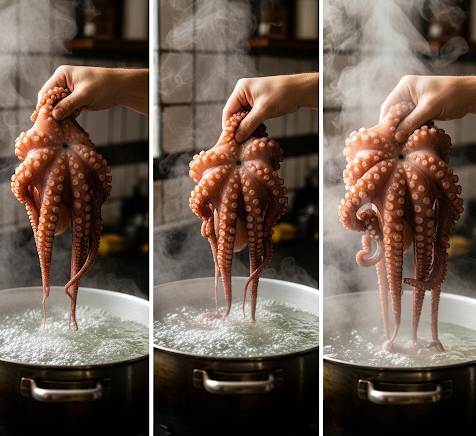
Step 2 : Bring a big pot of water to the boil (add bay leaves, in case)
Seize the octopus in the head, and immerse it in the water around 2 seconds, and raise. Do this 3 times. This makes the skin remain intact and the meat become tender
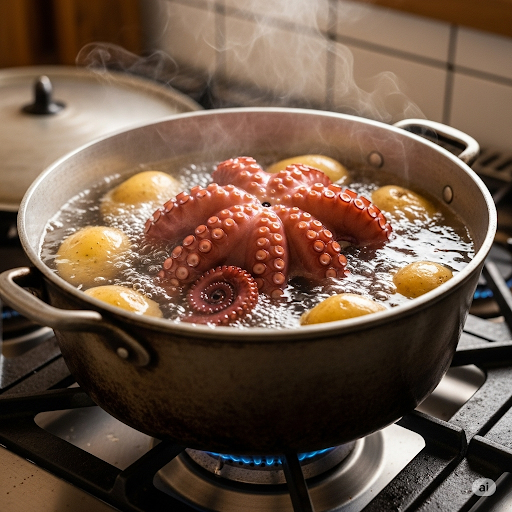
Step 3: Once the dips take place, cover the octopus with water and simmer down slowly
Cook for about 45-60 minutes, or until they are the size of your child’s fist. To test it, simply place a knife inside the thickest area; it ought to enter easily
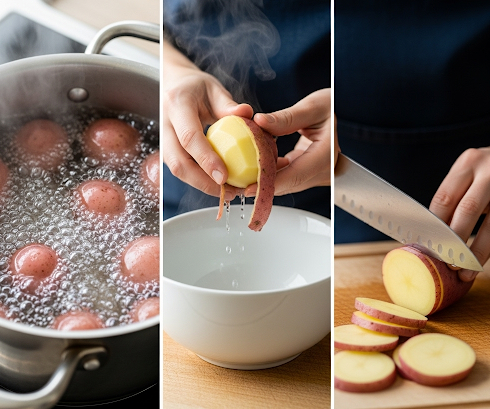
Step 4: Potatoes, when fresh, can be cooked in salted water in a separate vessel until tender. Fruit of this kind can then be peeled and cut into slices like coins
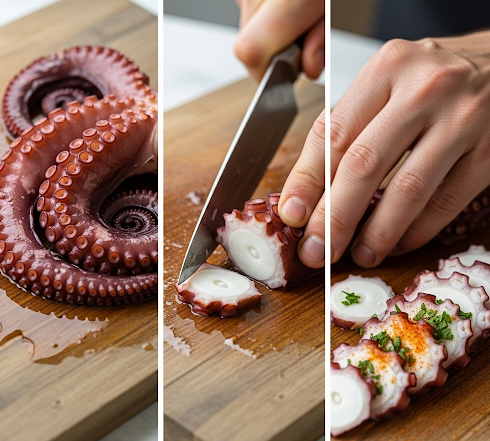
Step 5: When it is cooked, take out the octopus and after 10 minutes, cut it
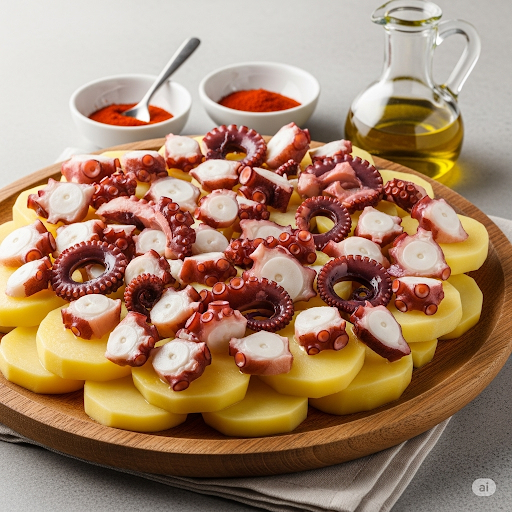
Step 6: Cut into little bite-sized pieces. Boiled potatoes should be layered on a wooden plate or a board, and then the octopus is put on top
Last Step to Drizzle

Pour over some quality olive oil and top it off with lots of coarse salt and paprika
Serving Tips
- Room temp or slightly warm—never let these hit the table cold
- A wooden plate is a classic touch; it will absorb excessive moisture and it also appears rustic
- Combine it with white wine made of Albariño grapes or light beer
- Skip the fork—locals stab these with wooden picks, keeping centuries of tradition alive one bite at a time
Precautions
- Don’t overboil – Octopus can turn chewy if left too long. Keep it tender
- Avoid fine salt – It disappears into the dish and doesn’t deliver that bold salty bite
- Use good paprika – Cheap ones can taste bitter or flat. Spanish pimentón is worth the investment
- If buying fresh octopus, freeze it first. This naturally tenderizes the meat
More About Pulpo a la Gallega
Pulpo a la Gallega is such a magic dish that shows that you do not need one hundred products or complicated ways to cook something to remember it. It is coastally comfy food that is classy, old fashioned and soulful. This is a dish that you serve to company or that you indulge yourself in on a night at home alone that will make you feel like a little bit of Galicia has come to your kitchen

Anjali Raj Singh
I am a food writer and culinary content creator specializing in global cuisines, traditional recipes, food culture, and cooking techniques. Through extensive research and hands-on recipe analysis, I create accurate, informative, and engaging content that helps readers explore authentic dishes from around the world. My work covers recipe development, food history, ingredient guides, restaurant features, and culture-driven culinary stories.
At Foods Around the World, I focus on delivering well-researched, reader-friendly, and SEO-optimized content that reflects the traditions, flavors, and culinary heritage behind each dish. Every article is carefully reviewed for accuracy and relevance, ensuring readers can discover trusted recipes, cooking insights, and food experiences from diverse cultures worldwide.