There are a few dishes that hold the spirit of a place in them, and Kalakukko is one of such delicacies of Finland. To the uneducated observer, it may just be a chunky loaf of bread, but secrets within the crust have been revealed- fish, usually with pork, often the most delicate of ingredients, slow-cooked until the ingredients blissfully blend into one another to become something so wonderful and so comforting. It isn’t a mere foodstuff; it is a slice of Finnish culture cooked to golden rye
History and background
Kalakukko originates from the Savonia district of Eastern Finland, as winter was long and ingestible food needed to be long-lasting. The foodstuffs that families needed were those that could be stored for a couple of days in addition to being easily carried to work in the woods, plantations or fishing vessels. The rye crust, however, was not added as an ornament–it has a practical purpose instrumental in keeping the meat or fish fresh, and it has sufficient roughness to last a journey. Eventually, Kalakukko became a traditional food prepared on special occasions or when travelling long distances and currently, the students of Finnish folklore have referred to the Kalakukko as a cultural icon of Finnish cuisine
Traditionally, vendace (a small freshwater fish) or perch is used most commonly, but pike and salmon are possible. The meat is normally pork belly, which gives fat and richness to the fish. The fish won’t become dry because of being in the oven for a long time.
Ingredients

To make Kalakukko at home, you don’t need to be in Finland—you just need patience and good ingredients.
- Rye flour – the backbone of the crust. (Substitute: whole wheat flour mixed with a little rye if rye flour is hard to find)
- Water – to bind the dough.
- Salt – enhances flavour and strengthens the dough
- Fish – traditionally vendace, perch, or pike. (Substitute: salmon or trout for accessibility)
- Pork belly or bacon. This isn’t optional—it’s the fatty, salty soul of the dish.
- Butter or pork fat – adds richness
When to Make It
When to eat Kalakukko? Kalakukko is a dish that serves gatherings of the family, festive or cosy weekends, when you have time to slowly bake it in the oven. It is also a great make-ahead one since it is even better the next day as the spices soak in.
Instructions
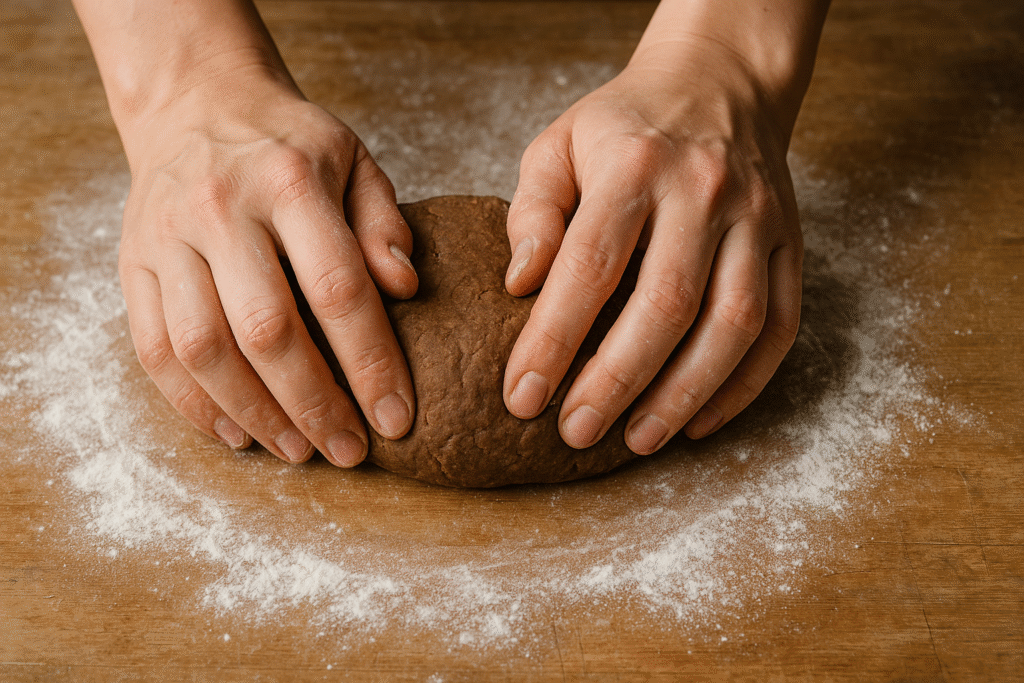
Step 1: Mix rye flour and salt with just enough water to form a stiff, workable dough—one that fights back a little but still bends to your will. Knead until smooth
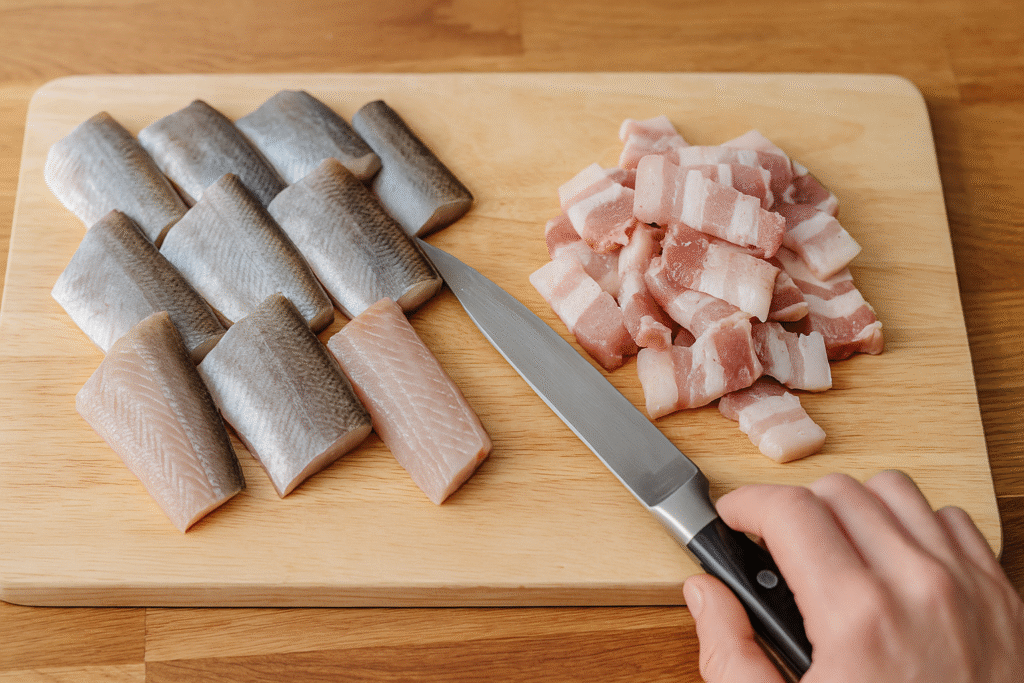
Step 2: Cut all the fish into serving pieces. Thinly slice a pork belly or bacon. Add salt to it to season lightly
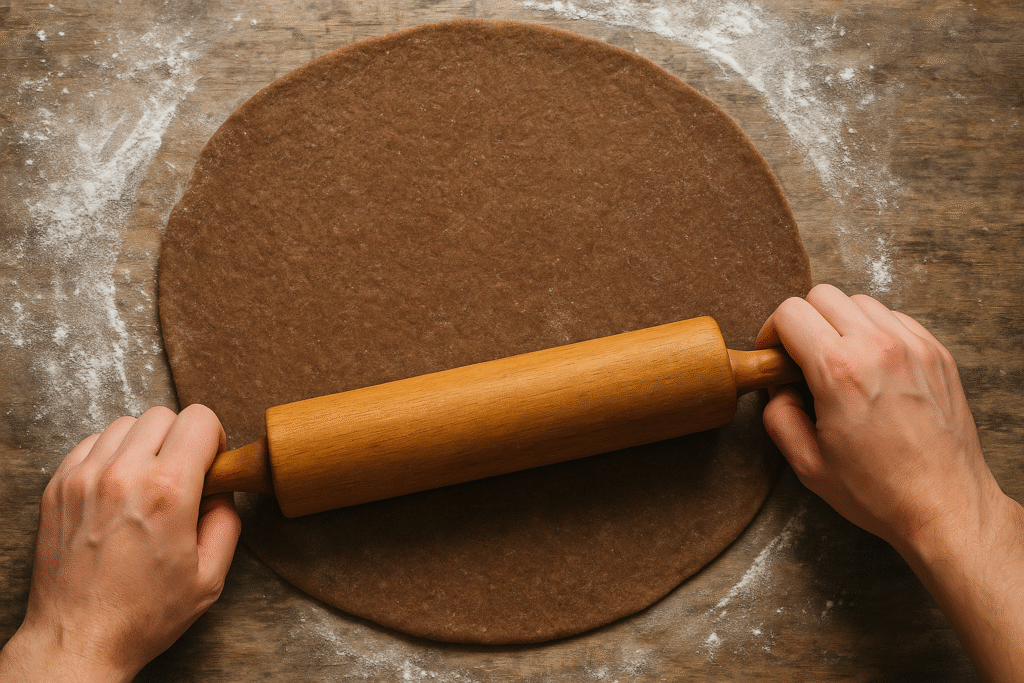
Step 3: Cut all the fish into serving pieces. Thinly slice a pork belly or bacon. Add salt to it to season lightly

Step 4: Lay a piece of pork belly on the dough, fish, pork and so on. As you do this, fold the dough over the filling in order to make a closed loaf. Pinch edges so that juices do not come out
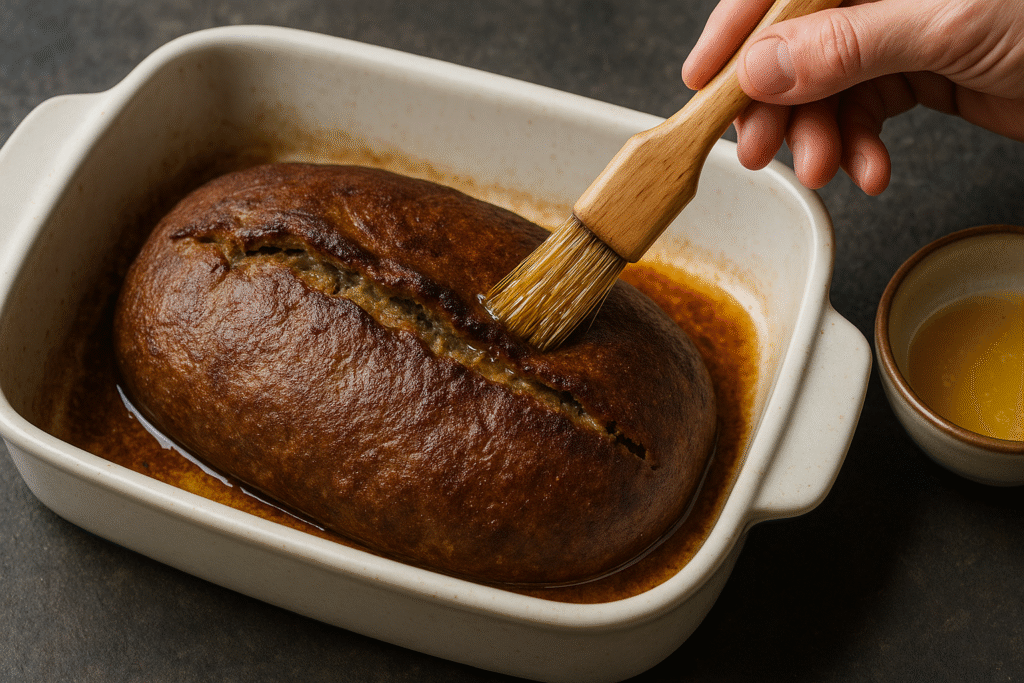
Step 5: Put the loaf down, with the seams downward, in a greased dish. Bake at 200 o c (390°F) for 30 minutes, then turn down to 125 o c (260°F) for 46 hours. Brush occasionally with melted butter to avoid drying of the crust
Rest Before Serving
So as to cool down a bit, cut into thick wedges. It ought to have a chewy crust, the inside juicy and salty
Mistakes to Avoid
- Failure to seal the dough properly- liquid juices will seep out, and the filling will dry up
- Baking too rapidly – Kalakukko won’t come out tender unless you give it time to bake; slow is what it does
- Use only lean fish – without fat (of pork or a fatty fish like salmon), the filling can be too dry
Kalakukko is not only bread, it is a tale crust-wise. It brings along the strength of the winters in Finland, the utilitarian nature of country life and the celebration of down-home food among people. This dish can take you to a wooden cottage by a frozen lake with rye bread warming the air, whether you make it in Finland or in your own kitchen.