
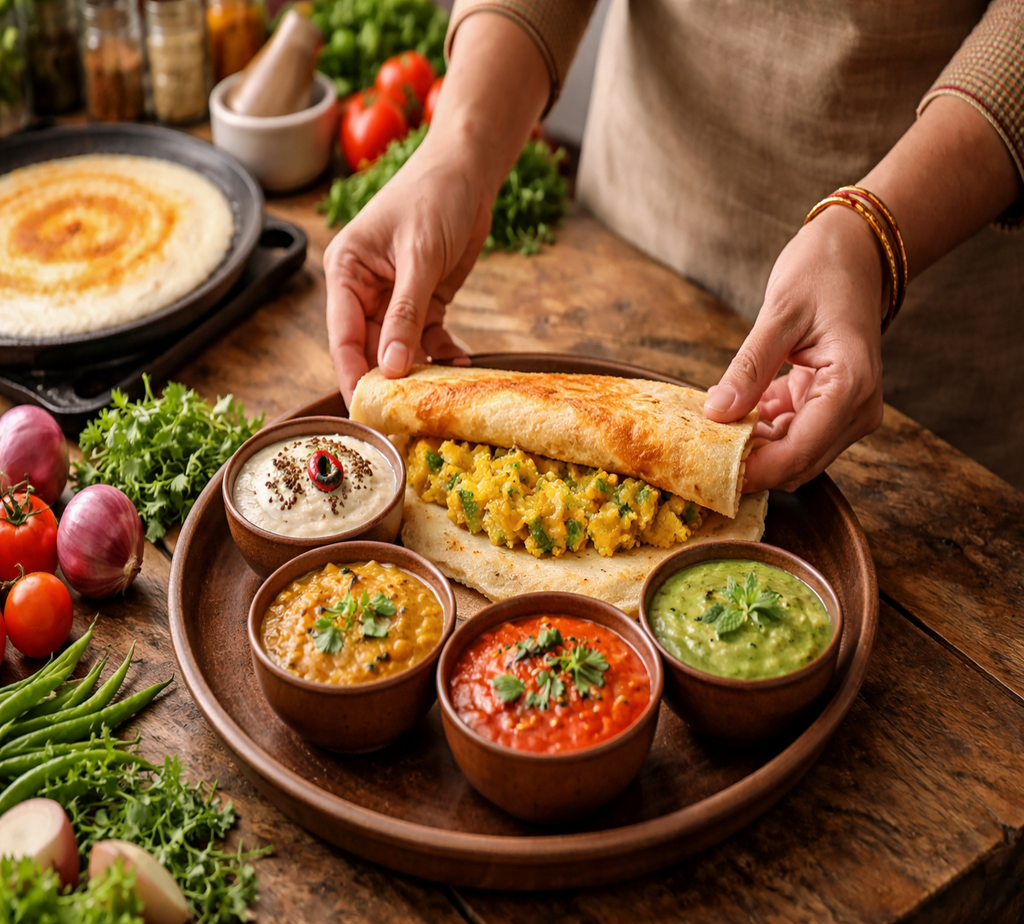
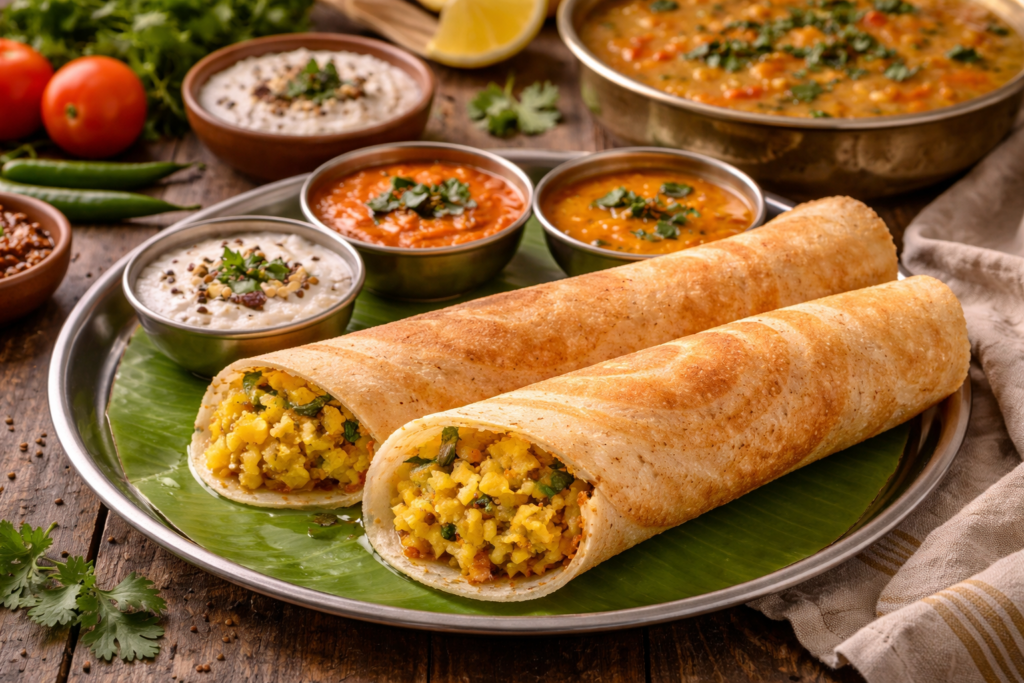
The Masala Dosa breakfast dish showcases Indian breakfast foods better than any other dish. This South Indian dish, popular with diners, has become a widely served menu item for its crispy, golden exterior and delicious potato filling. The street-side restaurant experience and the home cooking process both provide people with a comfort food experience through masala dosa, which combines delicious taste with cultural eating customs. The process of making masala dosa at home has been made easier through this guide. You can make this traditional dish at home by using the right ingredients and waiting until it is fully cooked.
What Makes Masala Dosa So Special
The traditional breakfast dish known as masala dosa serves as an emblematic representation of South Indian food traditions. The dish originated in Karnataka and Tamil Nadu but has now become an essential part of Indian culinary heritage.
The dish excels in its ability to create an ideal combination of different taste experiences and texture elements
- The dish consists of a delicate rice crepe, which has undergone fermentation to achieve a crispy texture
- The dish contains a potato filling that has been cooked with warm spices
- The dish comes with two traditional Indian side dishes, which include coconut chutney and sambar
- The dish combines basic elements which create a powerful taste experience that people refer to as the “King of Indian Breakfast.”
Ingredients Required to Make Masala Dosa at Home
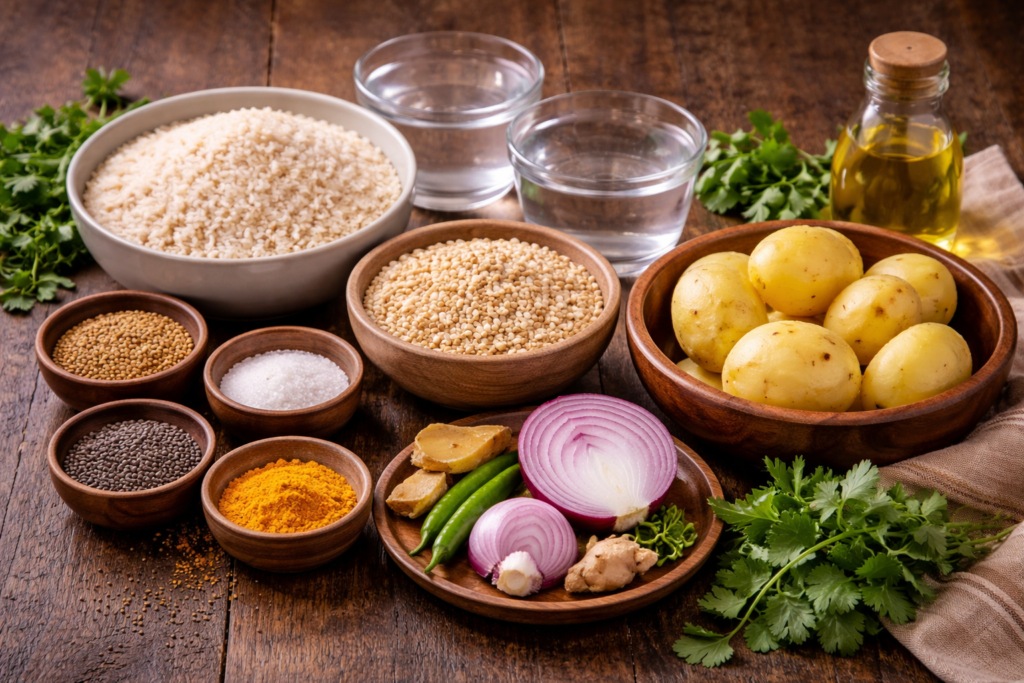
To prepare authentic masala dosa, you will need ingredients for both the dosa batter and the potato masala filling.
Ingredients for Dosa Batter
- 2 cups rice
- 1 cup urad dal (split black gram)
- 1 teaspoon fenugreek seeds
- Salt to taste
- Water for soaking and grinding
Ingredients for Potato Masala Filling
- Fresh coriander leaves
- 3–4 boiled potatoes
- 1 onion, finely sliced
- 1 green chilli, chopped
- 1 teaspoon mustard seeds
- 1 teaspoon turmeric powder
- Curry leaves
- 1 tablespoon oil
- Salt to taste
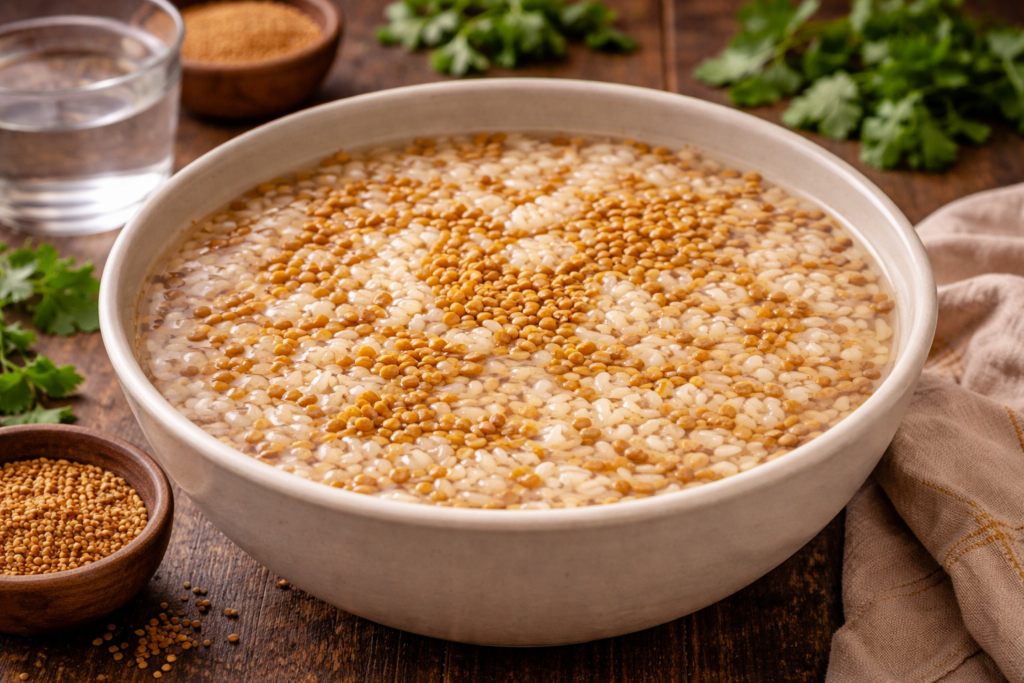
Step 1: Soaking the Ingredients
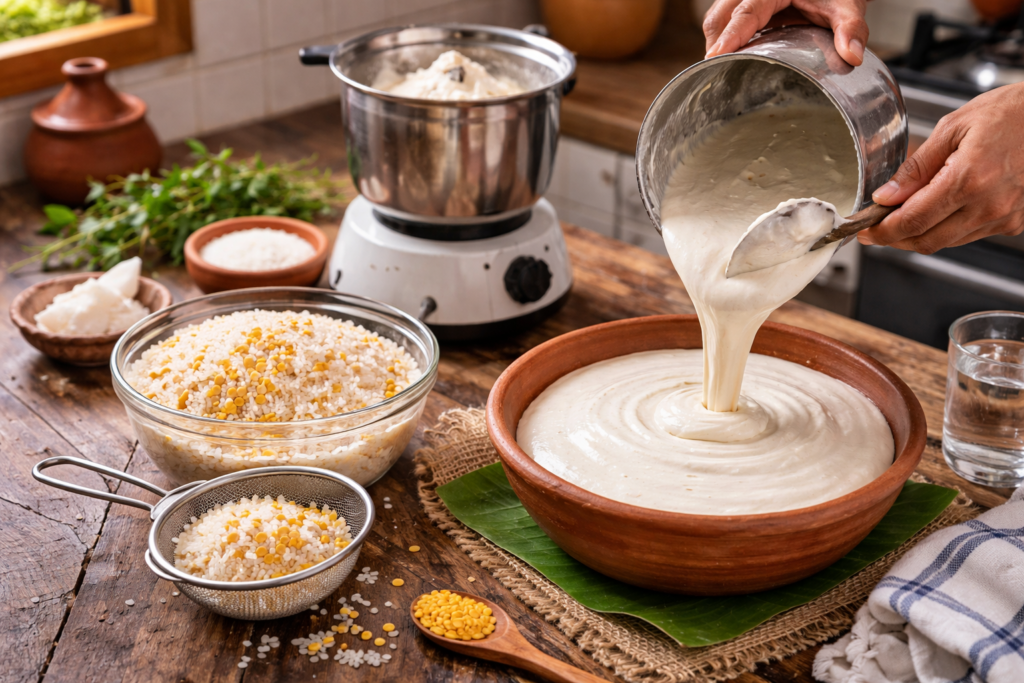
You must clean the rice and urad dal thoroughly. The two ingredients must be soaked together with fenugreek seeds for 5 to 6 hours
Step 2: Grinding the Batter
You need to empty the water from the soaked items before you start grinding them into a smooth batter
The process requires water to be added in small quantities until the mixture reaches a thick consistency, which can still be poured
Step 3: Fermentation
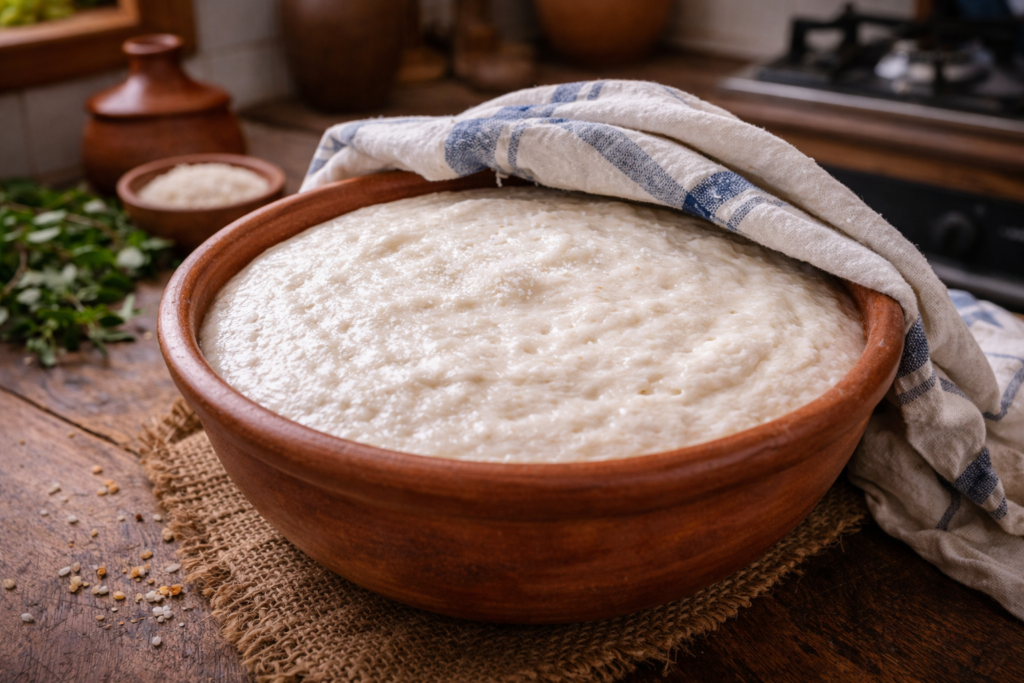
The batter needs to be moved into a big bowl where you will add salt and perform gentle mixing. The bowl needs to be covered and left in a warm area for an entire night, which is equivalent to 8 to 10 hours
The batter will develop a light texture through the fermentation process, which will start by the next morning
Preparing the Potato Masala Filling
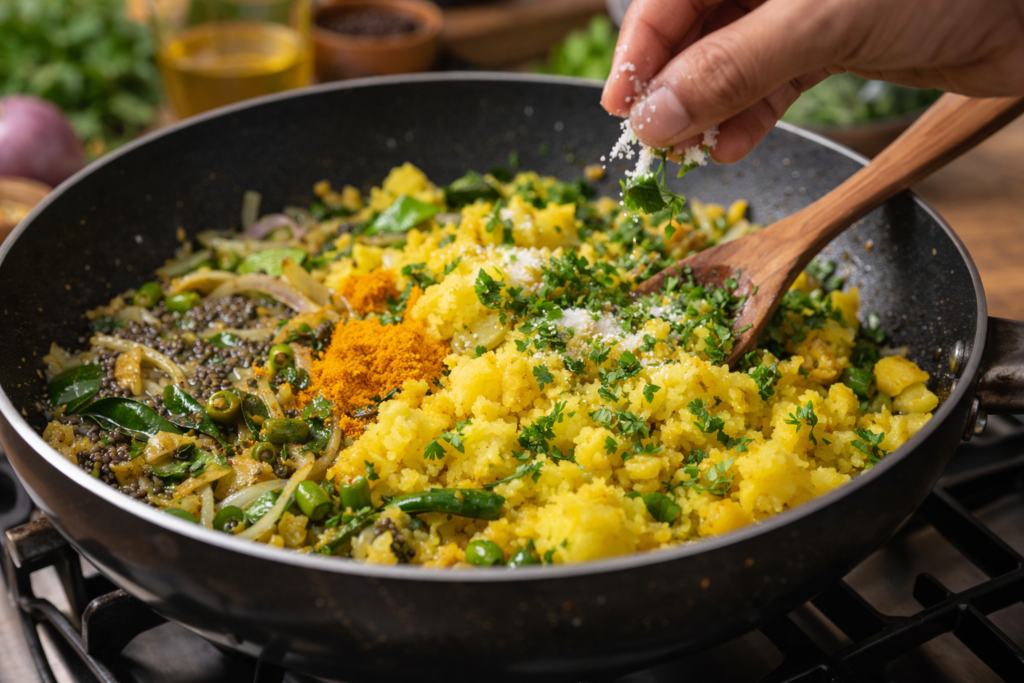
While the batter ferments, you can prepare the classic potato filling that gives masala dosa its name.
- You need to heat oil in a pan
- Next, add mustard seeds and wait for them to burst
- The other step add curry leaves and chopped green chillies
- Then add sliced onions and cook them until they become soft
- You need to add turmeric powder and combine the ingredients
- Mash the boiled potatoes and add them to the pan
- Do not forget to add salt and mix all the ingredients
- Make sure to finish the dish by adding fresh coriander leaves
The result is a warm, fragrant potato mixture that pairs beautifully with the crispy dosa.
How to Cook Crispy Masala Dosa
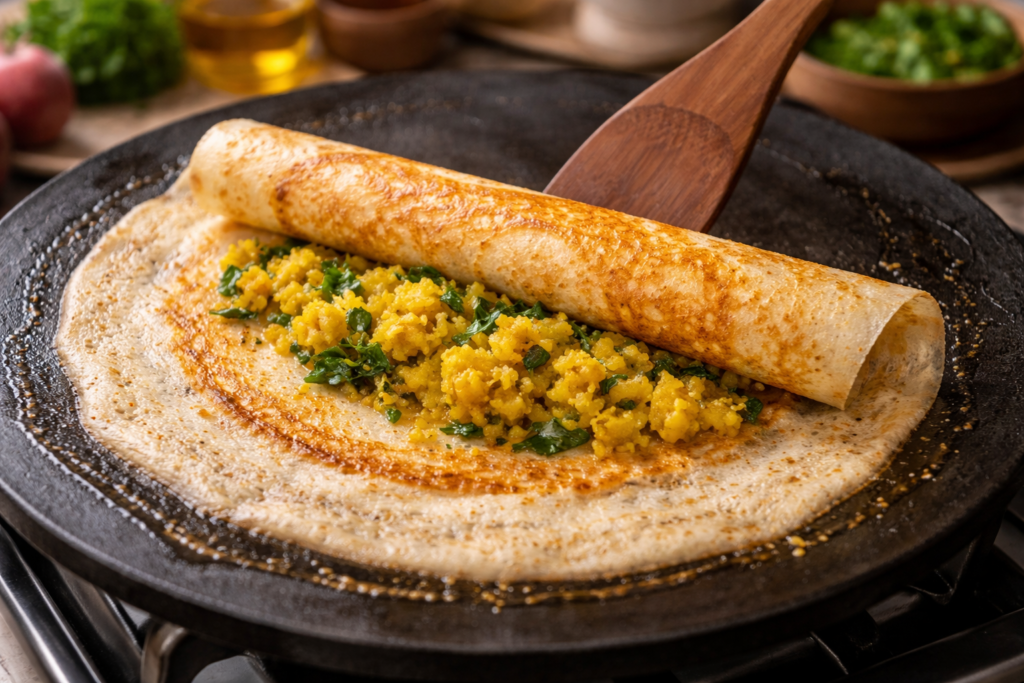
Once the batter and filling are ready, it’s time to bring everything together.
Steps to Cook
- You should start by heating a flat dosa pan or non-stick tawa
- You need to pour a ladle of batter into the centre of the pan
- The batter should be spread outward through circular motions to create a thin layer
- You should apply a small amount of oil or ghee around the outer edge of the pan
- The dosa should be cooked until it reaches a state of golden brown colour and crisp texture. You need to put the potato masala in the middle of the plate
- The dosa should be folded over the potato masala filling and served to customers while it is still hot
The dosa should be thin, crisp, and lightly browned.
Different Styles of Masala Dosa
Across India, masala dosa appears in several delicious variations.
Mysore Masala Dosa
This version includes a spicy red chutney spread inside the dosa before adding the potato filling.
Paper Masala Dosa
Extra thin and extremely crispy, this dosa is often served in large sizes at restaurants.
Butter Masala Dosa
Cooked generously with butter for a rich flavour.
Cheese Masala Dosa
A modern twist where grated cheese is added along with the potato filling.
Restaurant-Style Masala Dosa
Usually served with multiple chutneys and piping hot sambar.
Tips for Making Perfect Crispy Masala Dosa
Home cooking of dosa requires particular methods which make the process easier.
- Firstly, go through its complete fermentation process
- The cooking surface should be at a high temperature when you begin
- You need to spread the batter throughout his entire kitchen to create thin dosas
- After that, apply oil or ghee around the pan borders to make the dosas extra crisp
- Make sure to clean the cooking surface with a soft cloth after making each dosa
- Your practice will lead you to develop the authentic restaurant-style crispy texture
What to Serve with Masala Dosa
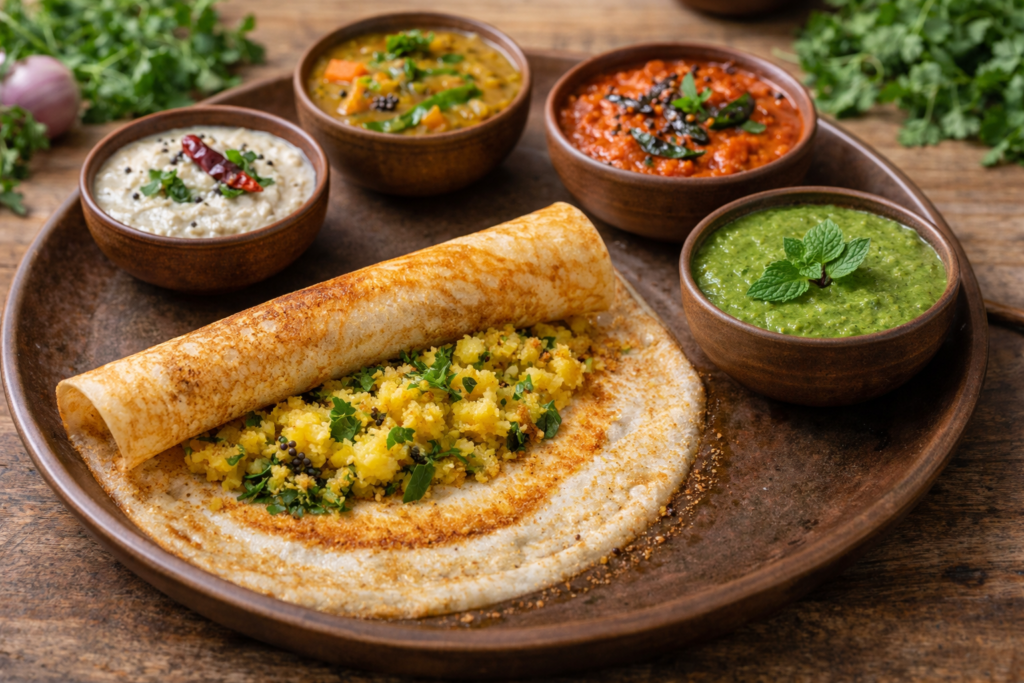
Masala dosa is traditionally served with a variety of side dishes that enhance its flavour
Popular accompaniments include:
- Coconut chutney
- Sambar (lentil vegetable stew)
- Tomato chutney
- Mint or coriander chutney
Together, these sides create the complete South Indian breakfast experience.
Why Masala Dosa is Loved Across India
The masala dosa is popular throughout the entire dining range, which includes small roadside stalls and upscale restaurants. Its appeal comes from two main qualities,s which are its simple design and its ability to adapt to different situations.
The meal can be eaten as a complete breakfast or a filling brunch, or as a light evening meal. The combination of crispy dosa and warm potato masala, together with chutneys, creates a dish that provides comfort through its taste. This dish provides a connection to South India’s traditional recipes while being simple enough for cooks from all corners of the globe to prepare.
Conclusion
You can make masala dosa at home because it requires specific ingredients and cooking time to create this restaurant dish. This popular dish will become a breakfast essential for you after you learn to make its batter and cooking method. You should try making masala dosa in your kitchen when you want to eat something crispy and comforting, which has strong flavours. You will see why this breakfast dish from India deserves the title “King of Indian Breakfast.”

Anjali Raj Singh
I am a food writer and culinary content creator specializing in global cuisines, traditional recipes, food culture, and cooking techniques. Through extensive research and hands-on recipe analysis, I create accurate, informative, and engaging content that helps readers explore authentic dishes from around the world. My work covers recipe development, food history, ingredient guides, restaurant features, and culture-driven culinary stories.
At Foods Around the World, I focus on delivering well-researched, reader-friendly, and SEO-optimized content that reflects the traditions, flavors, and culinary heritage behind each dish. Every article is carefully reviewed for accuracy and relevance, ensuring readers can discover trusted recipes, cooking insights, and food experiences from diverse cultures worldwide.