



Pizza in America functions as more than a dish because it serves as a culinary expression of different regional identities throughout the country. Every major style reflects where it came from: the pace of city life, local ingredients, immigrant influence, and even the shape of the pans people had on hand. The question of what Americans consider to be “real pizza” does not have one universal answer because people hold different beliefs about it. The presentation shows a friendly exploration of five fundamental American pizza styles, which represent different regions, particularly focusing on the three most important pizza cities of New York, Chicago, and Detroit.
New York–Style Pizza (New York City)

New York–style pizza becomes familiar to people who have eaten a slice by folding it and walking while they eat. This style originated in New York during the early 20th century as it developed from its Neapolitan roots to suit the needs of urban inhabitants. The combination of large pies and thin crusts, and wide slices created an ideal meal option for both quick lunch breaks and late-night dining. The elements that define it include hand-tossed thin crust. The base of the pizza has a crisp texture, which combines with the middle section that has a chewy consistency. The pizza contains light tomato sauce and mozzarella cheese. The essential characteristic of New York pizza lies in its ability to create flavour equilibrium through controlled ingredient usage. The design supports quick consumption while people stand with grease-stained paper plates serving as an essential part of the process.
Chicago Deep Dish (Chicago, Illinois)
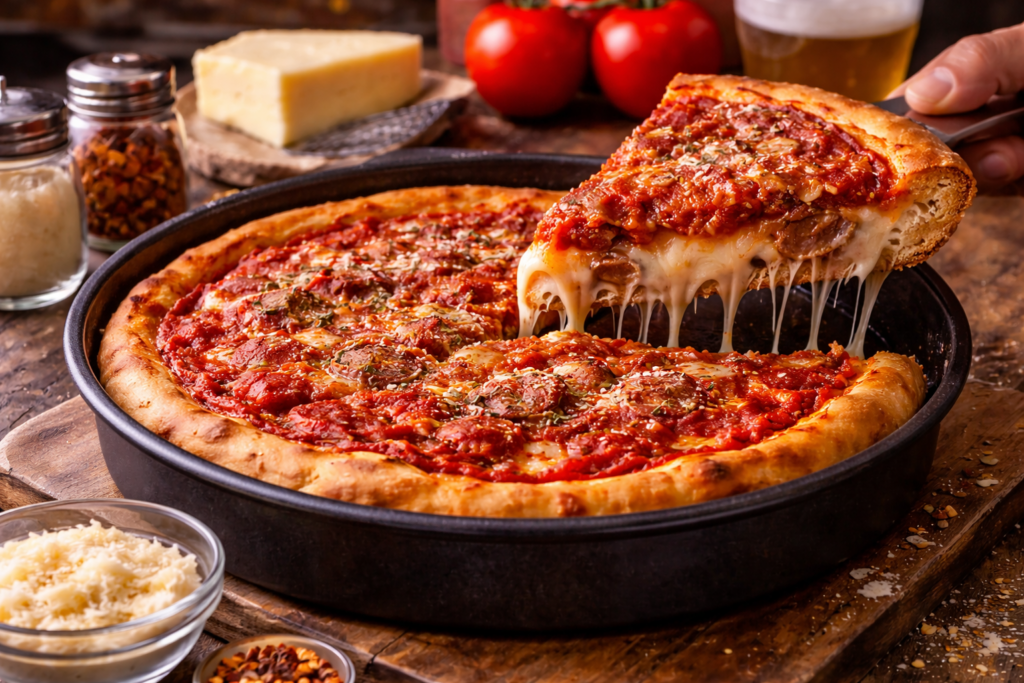
The Chicago pizza style did not attempt to match New York pizza standards but instead developed its own unique flavour profile. Deep dish pizza first appeared in the 1940s as a meal which required eating utensils instead of the traditional way of eating pizza from the street. The dish begins with a deep pan baking process, which creates multiple cheese layers together with toppings and thick tomato sauce on top of a buttery crust.
Iconic elements of the structure
- The building has a high structure which resembles a circular pie shape.
- The pizza base contains chees,e while the sauce is spread over the top.
- The dish requires an extended cooking process.
The dish delivers a satisfying experience through its rich flavours and its substantial weight. Fans of Chicago deep-dish pizza enjoy the dish because it represents Midwestern home cooking more than Italian culinary traditions.
Detroit–Style Pizza (Detroit, Michigan)

The Detroit-style pizza which once received insufficient recognition, now experiences a period of popularity which it rightfully deserves. This particular style originated during the 1940s when people first baked it in rectangular steel pans that auto factories used as their standard equipment. The baking process produces a thick crust which has an airy texture and develops crispy edges that experience frying in oil.
The fundamental traits of the product include:
- The food possesses a square design
- The cheese extends from the centre to the outer edges, which results in a caramelised crust formation
- The sauce typically gets applied to the dish through spooning in straight lines
The texture of Detroit pizza defines its entire eating experience. The combination of crunchy corners and soft interior with bold flavour creates a unique taste experience that brings complete satisfaction.
California–Style Pizza (West Coast)

California pizza isn’t about strict rules—it’s about creativity. The pizza style which developed during the late 20th century considers pizza to function as an artistic medium. Chefs began using thin crusts as their foundation to create dishes which included goat cheese, arugula, barbecue chicken and seasonal vegetables.
- The dish distinguishes itself through the following characteristics:
- The dish uses only fresh ingredients, which come from local sources.
- The dish uses toppings which do not fit traditional pizza recipes.
- The dish features a chef-driven culinary style which emphasizes lighter tasting dishes.
- The dish displays California food culture through its experimental cooking methods and produce-based dining, and tendency to defy culinary traditions.
St. Louis–Style Pizza (Missouri)

The regional nature of St. Louis pizza creates a split opinion among people who have different tastes. The pizza uses a thin cracker dough and Provel cheese, which melts in a different way from mozzarella cheese. The pizzerias slice their pizzas into square pieces instead of traditional pie wedges
The defining characteristics of the product include:
- The pizza features an extremely thin crust.
- The pizza is sliced into square pieces, which people commonly refer to as “party cut.”
- The cheese provides a unique flavour experience.
The food is made for people to share while they enjoy snacks at social events and bar-casual family gatherings.
Why Regional Pizza Styles Matter
The broad and diverse nature of the United States led to the development of American pizza as it exists today. The different environmental conditions, cultural traditions, manufacturing processes, and daily routines of people in that region determined the way pizza was prepared and consumed.
The various pizza styles provide different answers to their respective questions:
- New York: How fast can good food move?
- Chicago: How comforting can pizza be?
- Detroit: How much texture can one slice have?
Final Thoughts
The United States does not have one supreme pizza because its various regions serve traditional pies which represent their unique cultural heritage. The New York slice demands folding while the Chicago deep dish requires dining, and the Detroit corner piece offers a crunchy eating experience.
You taste the food of your current location, which shows how Americans consume their meals.