
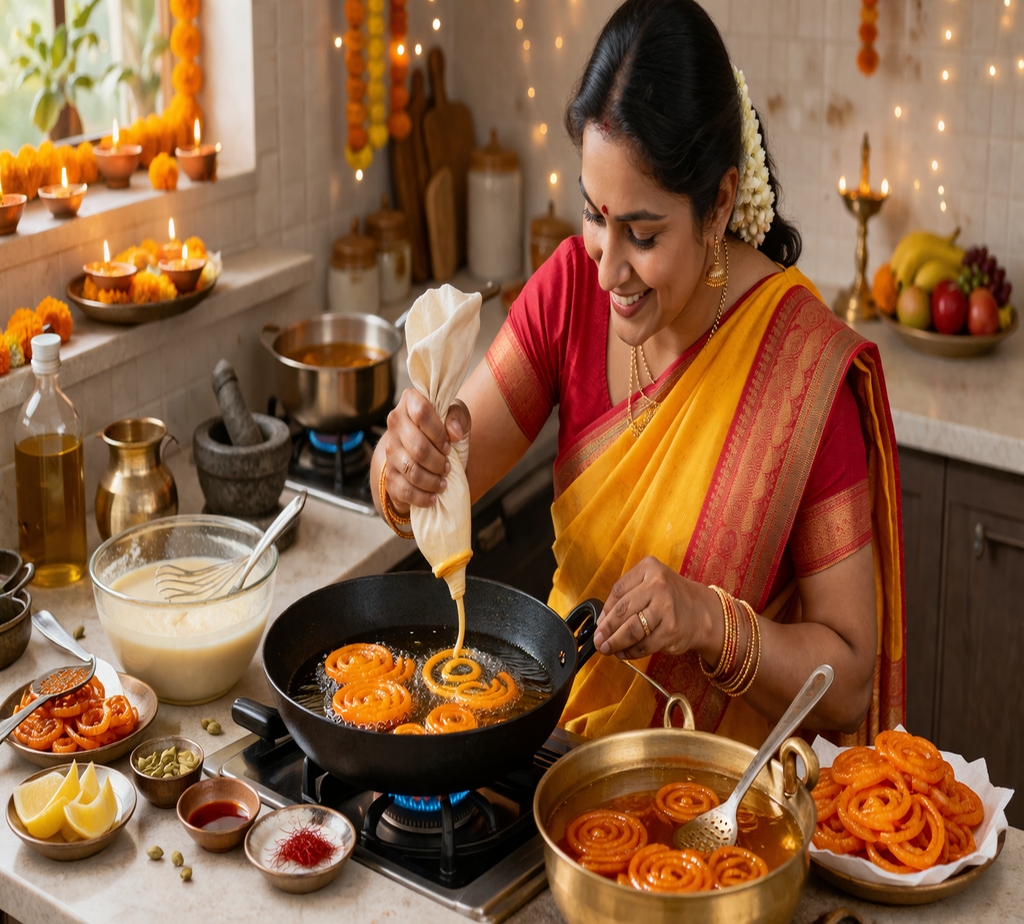
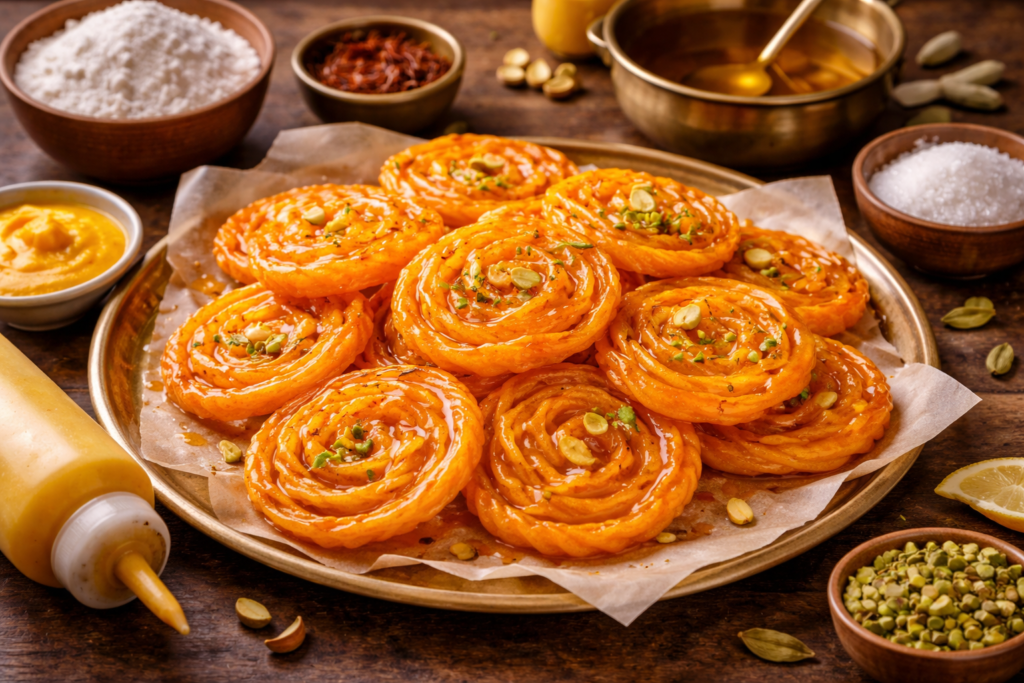
India experiences less festive excitement than people show for their enjoyment of freshly made jalebi. The kitchen receives a festive sweet aroma when the golden spirals drop into hot oil and soak into fragrant sugar syrup. Indian food culture designates jalebi as a special dish which people consume during Diwali festivities and as breakfast on weekends and with hot milk on winter mornings. If you’ve only tasted jalebi from sweet shops, you might be surprised to know that making it at home is easier than it looks. You can create perfectly crispy and syrupy jalebi at home by using the right batter and following proper techniques while being patient
What is Jalebi?
The sweet jalebi consists of deep-fried batter, which has been fermented and shaped into spiral forms before being dipped into sugar syrup. The dessert has a crunchy exterior, which leads to a sweet and liquid mouthfeel experience
This sweet treat is loved all over India and in the countries that border India. The traditional dish of jalebi is prepared in numerous locations, such as:
- A festive dessert during celebrations
- A street food snack
- A breakfast item paired with milk or fafda
- A treat during weddings and special occasions
Despite its simple ingredients, jalebi has a distinctive flavour and texture that makes it unforgettable.
Ingredients Required for Jalebi
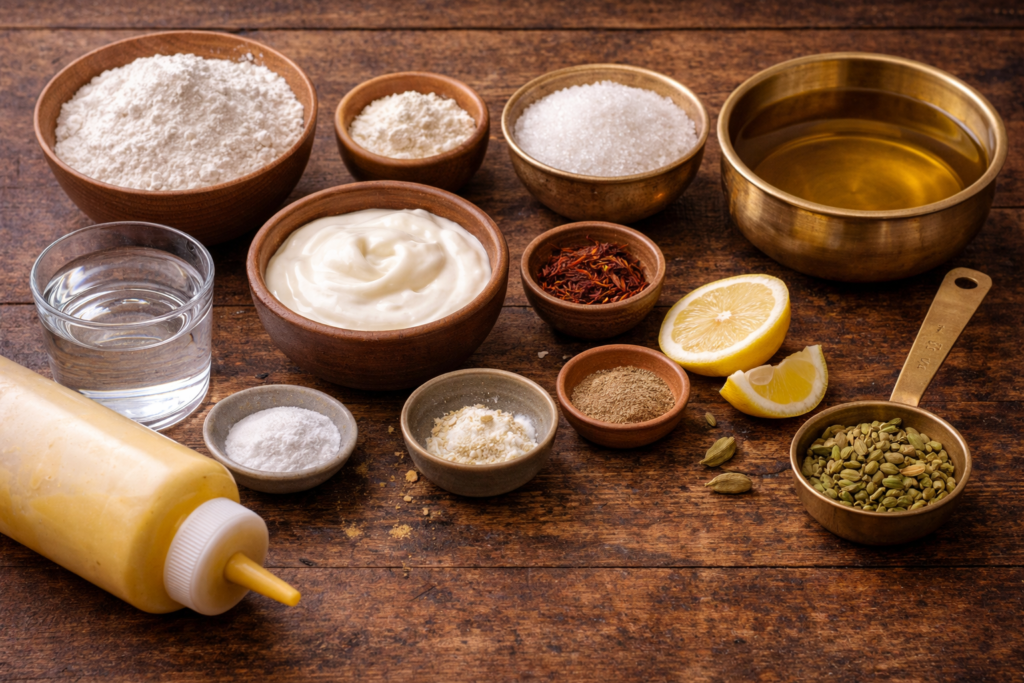
Before you begin, gather all the ingredients. Most of them are easily available in every kitchen.
For the batter
- 1 cup all-purpose flour (maida)
- 2 tablespoons cornflour
- ½ cup yoghurt (curd)
- ½ teaspoon baking soda
- Water as needed
For the sugar syrup
- 1 cup sugar
- ½ cup water
- A few strands of saffron (optional)
- ¼ teaspoon cardamom powder
- ½ teaspoon lemon juice
For frying
Oil or ghee
Easy Steps to Follow
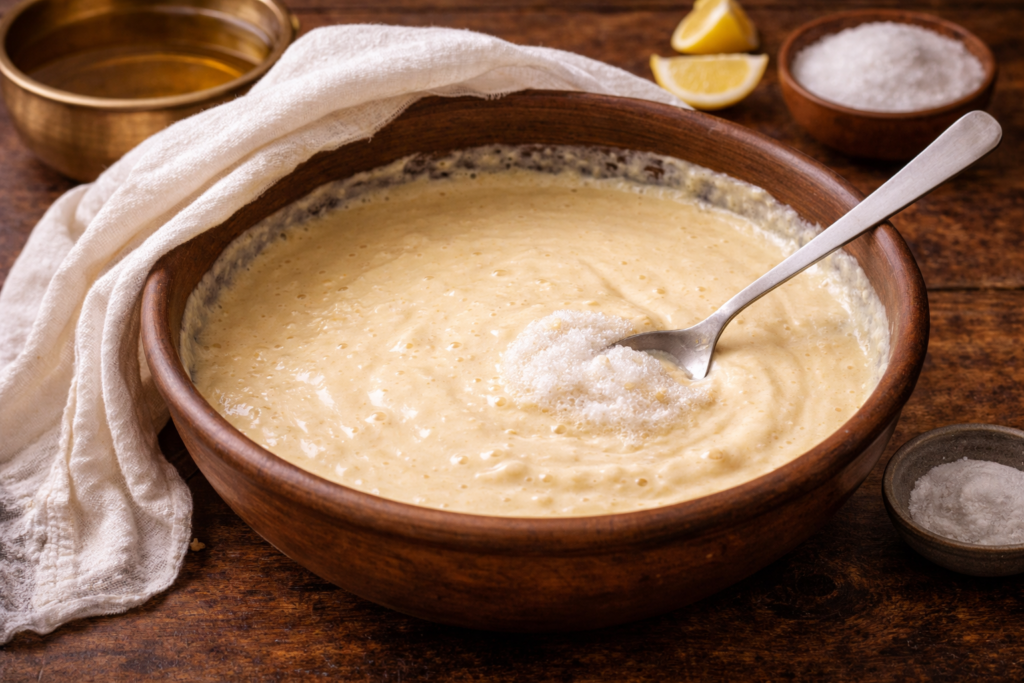
You should begin the recipe by combining flour and cornflour in a bowl. The combination requires you to add yoghurt to water until you achieve an uninterrupted smooth batter
The batter needs to have a thickness that enables pouring. The mixed ingredients require a bowl cover to protect them during an 8 to 10 hour period of fermentation, which can also be extended to overnight
The fermentation process develops the light and airy texture that characterises jalebi. You should combine baking soda into the mixture right before frying, while using gentle stirring motions
Making the Sugar Syrup
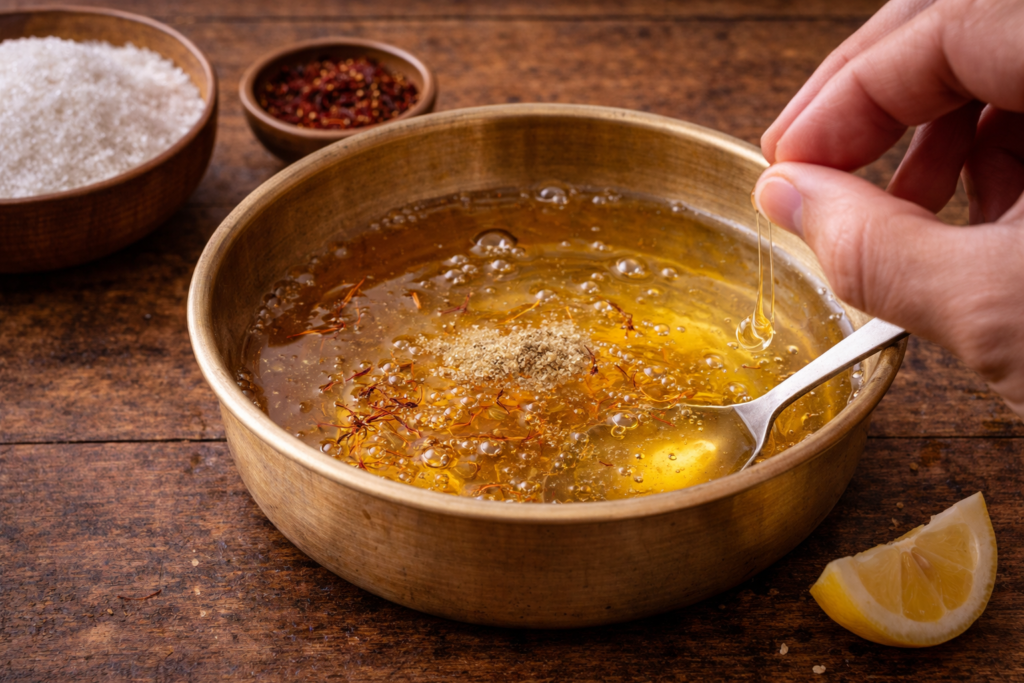
You can make sugar syrup during the time that the batter needs to rest. The sugar and water should be combined in a pan and cooked at medium heat until the sugar has dissolved
Saffron and cardamom powder should be added to the dish to enhance its taste. The cooking process should continue until the syrup achieves its one-string stage, which occurs when you touch a drop between two fingers and pull them apart to see a fine string
A small amount of lemon juice should be added as the last step. The lemon juice acts as a barrier to stop the syrup from forming crystals. The syrup needs to stay warm during the process of frying jalebi
Frying the Jalebi
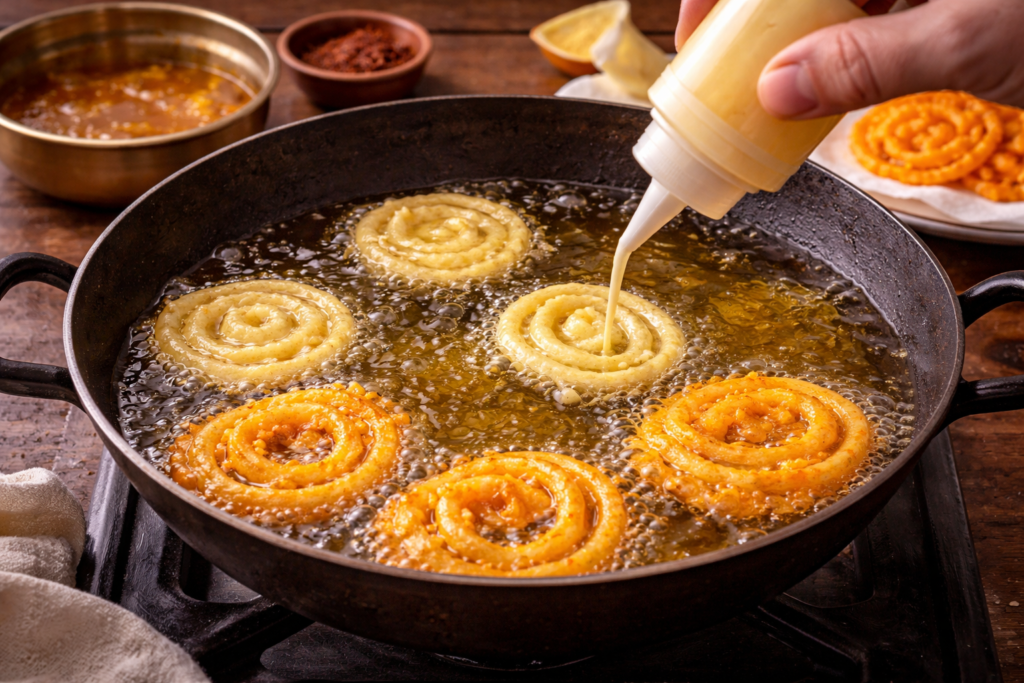
You should transfer the batter into a squeeze bottle, a piping bag or a plastic bag which has a small cut at its corner. The cook should heat oil or ghee in a wide pan, which he should set to medium heat
The chef should gently squeeze the batter into the hot oil to create spiral shapes when the oil reaches its cooking temperature
Fry the jalebi until they develop a golden colour and become crisp on all their surfaces
Soaking in Sugar Syrup
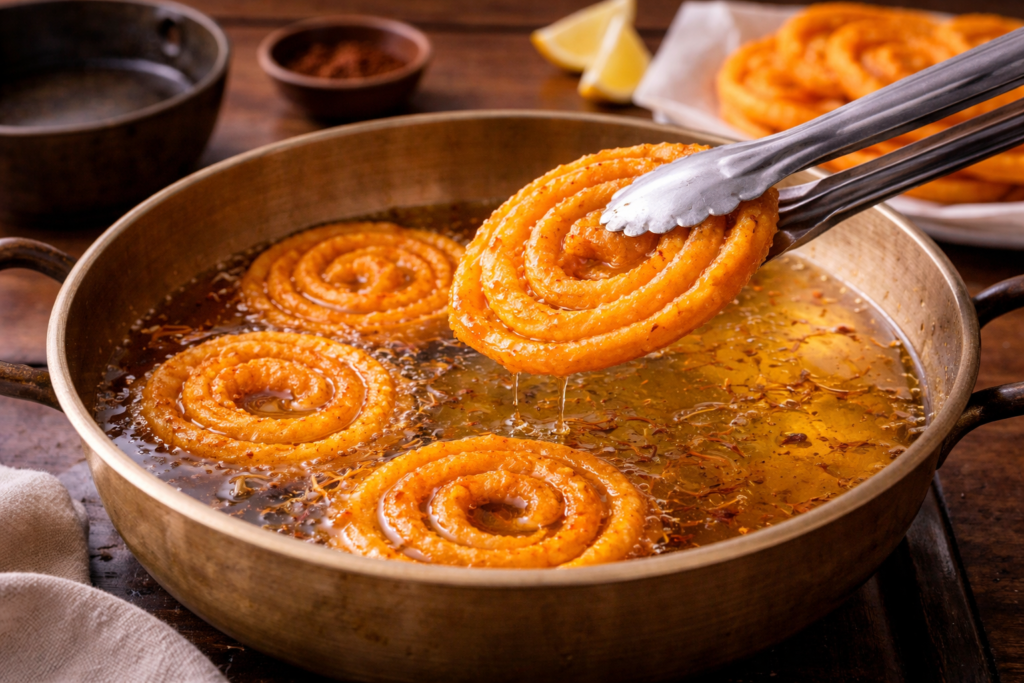
The hot jalebi should be moved to the warm sugar syrup immediately after frying. The items need to be soaked for 30 to 40 seconds, which allows them to take in sweetness but keeps their crisp texture. The dish should be taken out of the oven and served to guests while it is still hot
Tips to Make Perfect Crispy Jalebi
- Getting the perfect jalebi takes a little practice. These tips can make the process easier
- The batter should have a smooth texture with a thickness that prevents it from being watery.
- Fermentation should be allowed to complete its process because it results in improved flavour and texture development
- Frying should be done at medium heat because it helps prevent food from burning
- The sugar syrup should have a thickness that falls between the two extremes of being excessively thick and excessively watery
- The best results for jalebi require hot jalebi to be soaked in warm syrup at all times
Over time, many creative variations of jalebi have become popular across India.
Popular Variations of Jalebi
Some favourites include:
- Instant Jalebi – Made without fermentation for quicker preparation.
- Paneer Jalebi – Uses paneer-based batter for a softer texture.
- Kesar Jalebi – Infused with saffron for rich flavour and colour.
- Rabri Jalebi – Served with thick sweet rabri for a decadent dessert.
Each version offers its own unique twist on this classic sweet.
Serving Suggestions
Fresh and warm jalebi provides the best taste experience. The snack is consumed throughout India because it creates enjoyable flavour combinations with other dishes. People enjoy eating jalebi in these three ways:
- The dessert becomes more extravagant when served with rabri
- People drink hot milk with jalebi during winter mornings
- People in Gujarat commonly have fafda with jalebi for breakfast
- People enjoy drinking tea with jalebi as their only food
Common Mistakes to Avoid
Even though jalebi is simple to prepare, a few mistakes can affect the final result.
Avoid these common issues:
- A batter that is too thin, which makes the spirals lose shape
- Oil that is too hot, causing uneven frying
- Sugar syrup that is too thick
- Skipping fermentation, which affects texture
A little attention to these details can make a big difference.
Conclusion
The experience of making jalebi at home provides a fulfilling outcome. The process requires complete dedication of time, but the outcome is achieved every minute of effort. The fresh jalebi with its crispy edges and sweet syrupy taste can transport people to their happy memories of festive street markets and candy store displays
The first time you prepare this jalebi recipe, you will discover that it becomes your go-to dish for family events and special occasions and for satisfying your sweet tooth. The experience of tasting warm jalebi, which has been freshly prepared from scratch, provides a level of happiness that very few desserts can achieve.

Anjali Raj Singh
I am a food writer and culinary content creator specializing in global cuisines, traditional recipes, food culture, and cooking techniques. Through extensive research and hands-on recipe analysis, I create accurate, informative, and engaging content that helps readers explore authentic dishes from around the world. My work covers recipe development, food history, ingredient guides, restaurant features, and culture-driven culinary stories.
At Foods Around the World, I focus on delivering well-researched, reader-friendly, and SEO-optimized content that reflects the traditions, flavors, and culinary heritage behind each dish. Every article is carefully reviewed for accuracy and relevance, ensuring readers can discover trusted recipes, cooking insights, and food experiences from diverse cultures worldwide.