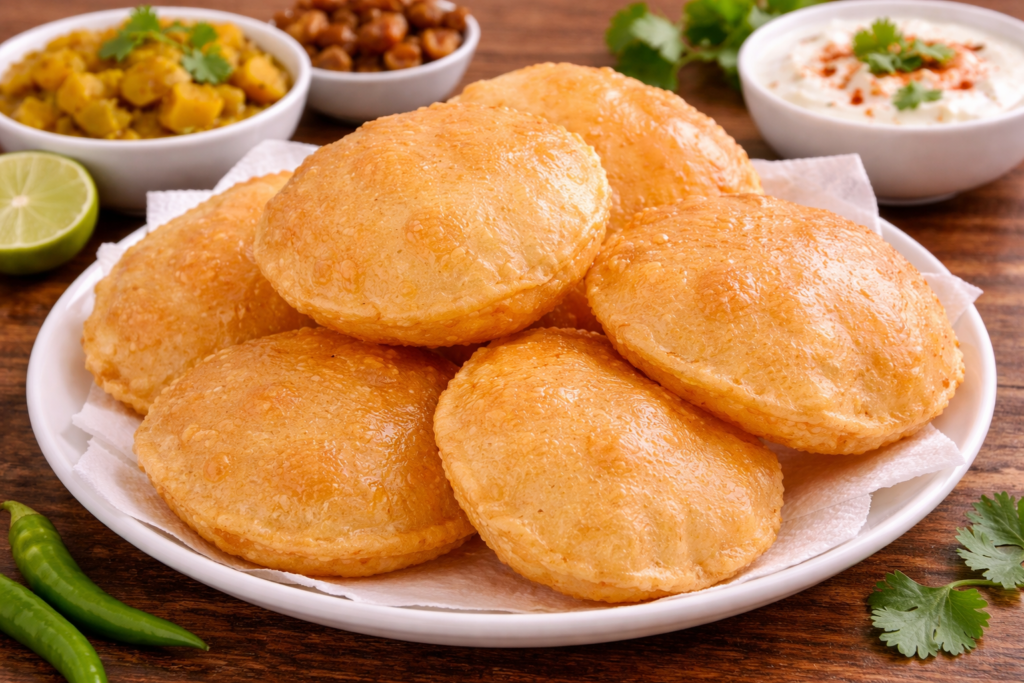
The Indian kitchen produces a unique fragrance when freshly fried poori is cooked. Golden, fluffy, and slightly crisp, poori is one of the most loved traditional breads served for breakfast, festive meals, and weekend family gatherings. The combination of potato curry with chole and sweet halwa creates a dish that brings back childhood memories for many people
The good news is that making the perfect poori recipe at home is much easier than it looks. With just a few basic ingredients and the right technique, you can prepare soft and puffy pooris that taste just like those served in restaurants or at traditional celebrations
The following guide will help you prepare this traditional dish step by step.
What is Poori?
The Indian bread known as Poori is deep-fried because it uses whole wheat flour as its main ingredient. The cooking method for pooris involves frying them in hot oil, unlike the flat pan cooking used for chapati and roti. The dough disc puffs up into a round balloon shape when it is dropped into hot oil. The special texture of poori develops through the process, which creates an airy interior and a lightly crispy exterior
Poori is commonly served with:
- Aloo masala (spiced potato curry)
- Chole (chickpea curry)
- Vegetable kurma
- Halwa during festive occasions
It is especially popular during celebrations, weekend breakfasts, and traditional family meals.
Ingredients Needed for Poori Recipe
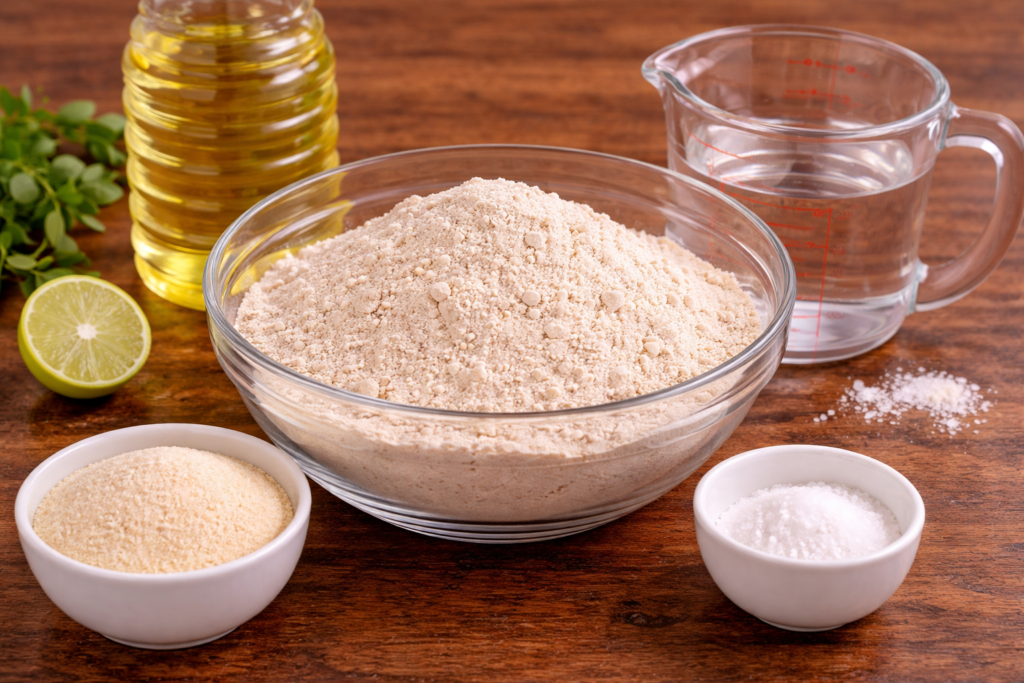
Pooris are very popular as they are made from very simple items. Usually, they can be found in every home, so creation is easy.
Basic ingredients:
- 2 cups whole wheat flour
- ½ teaspoon salt
- Water (as needed for kneading)
- Oil for deep frying
Optional additions
Some people like to add a teaspoon of semolina (sooji) to make the pooris slightly crispier.
Step-by-Step Method to Make Poori
Prepare the Dough
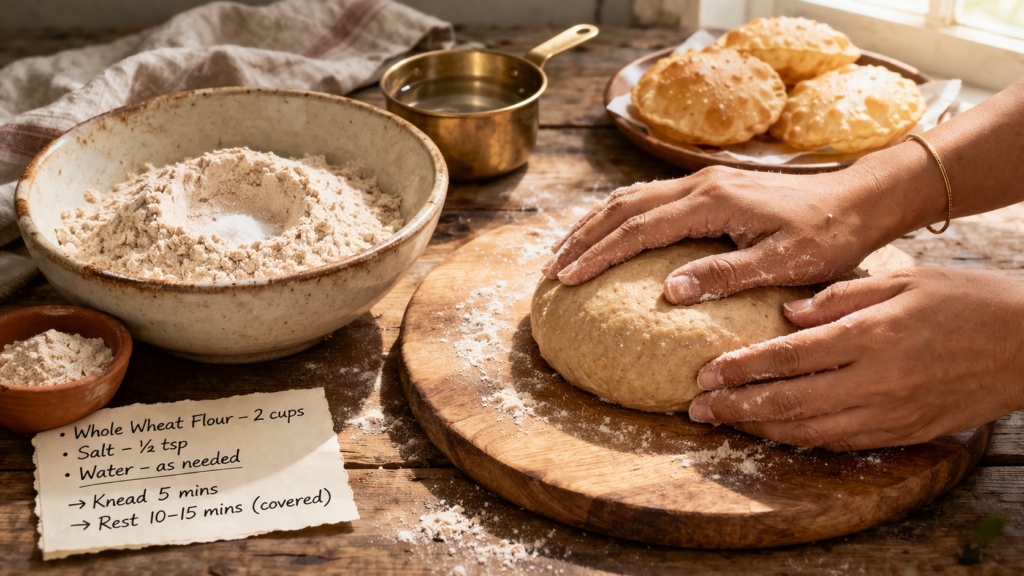
You should combine whole wheat flour and salt into a big bowl and mix them thoroughly. Water should be added in small amounts during kneading until the dough is complete
The dough should be slightly firm rather than soft. A tight dough helps the pooris puff up properly while frying
The dough needs 5 minutes of kneading time to achieve a smooth texture. The dough needs to rest for 10 to 15 minutes after you cover it
Roll the Poori
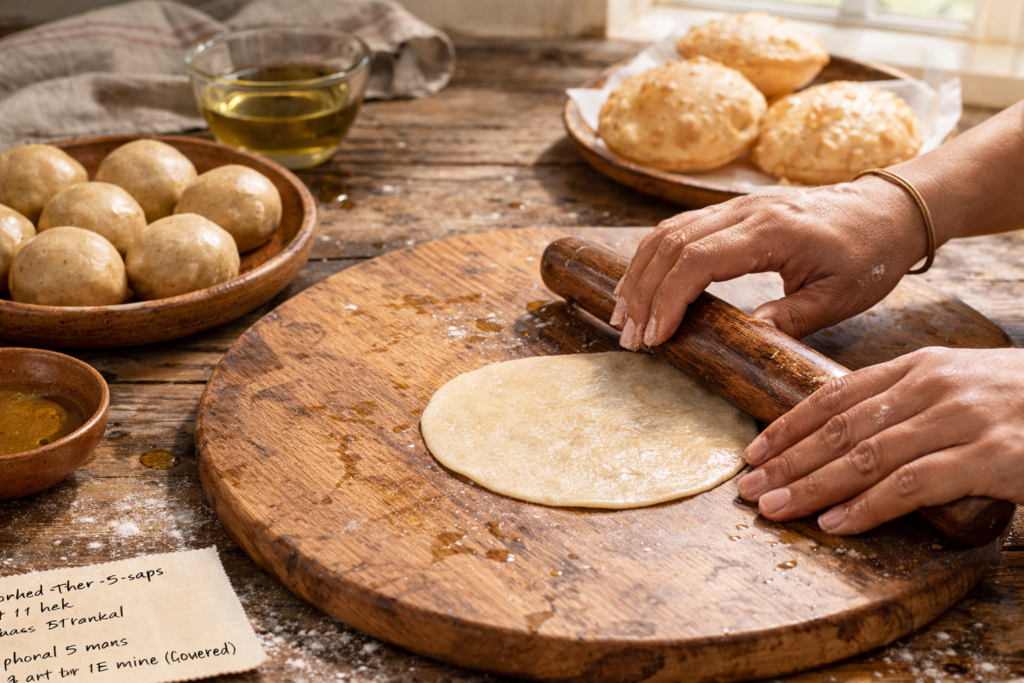
The dough needs to be separated into multiple small portions, each of which should be the size of a lemon
The rolling surface requires a small amount of oil to be applied for light greasing purposes. Each dough ball needs to be rolled out into small circles that measure 3 to 4 inches across
The dough needs to be rolled out to a medium thickness because this is the optimal thickness for producing puffy results. The pooris require even rolling throughout their entire surface area to achieve proper cooking results when they are fried in hot oil
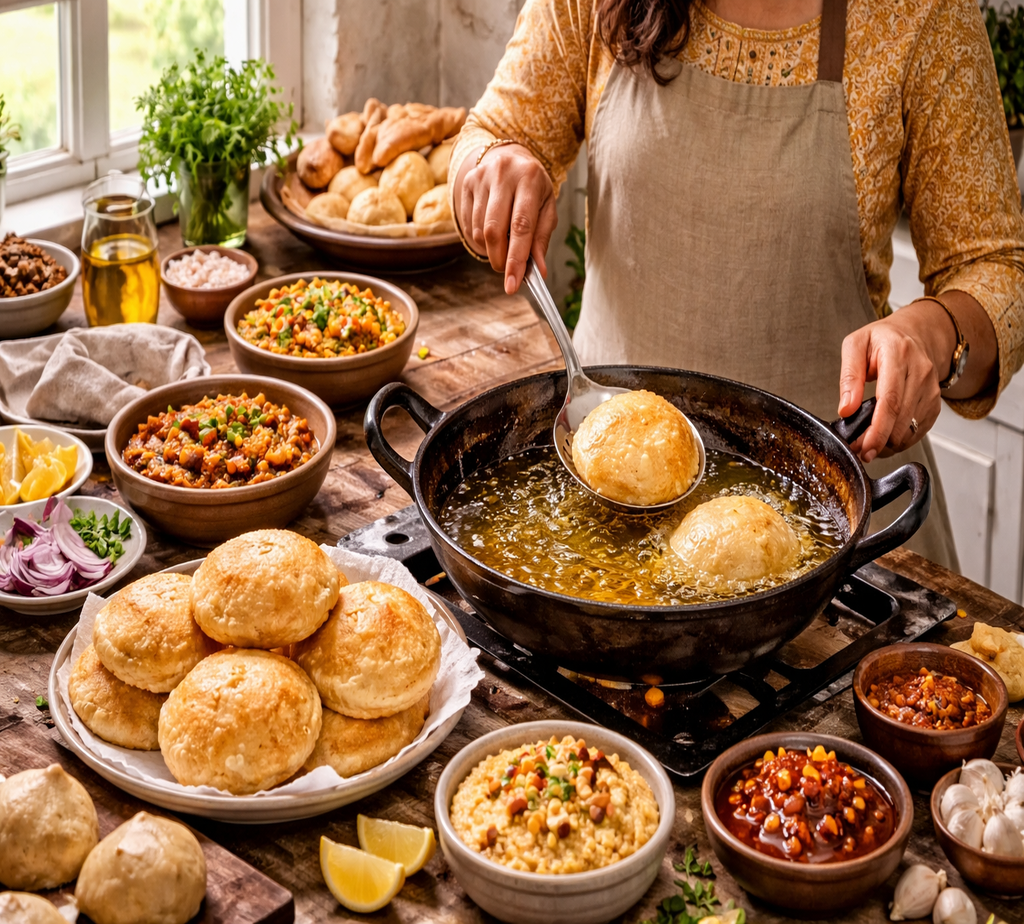
Fry the Poori
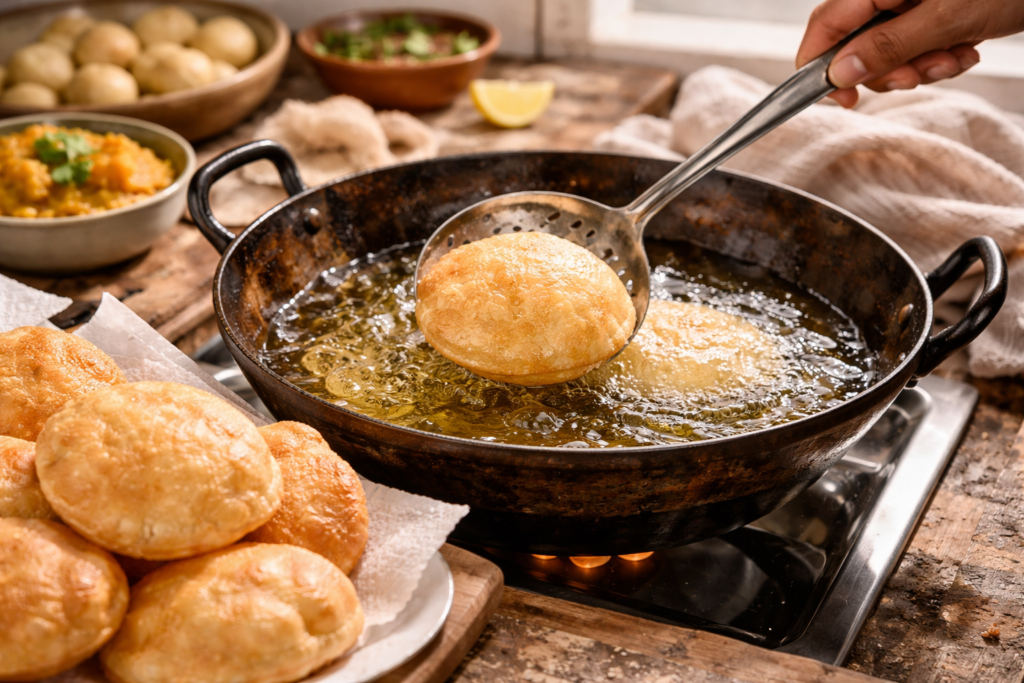
Firstly, heat oil in a deep pan or kadai on a medium-high temperature setting. The oil readiness test requires dropping a small dough piece into the heated oil
The oil temperature reaches its ideal point when the dough piece rises to the surface. The cook should put one poori into the hot oil by sliding it carefully into the cooking oil
The poori will start to puff up after several seconds of cooking
The cook should use a slotted spoon to push down on the poori because this technique will make the poori expand to its maximum size. You should turn the poori over and start cooking it until both sides achieve a light golden colour
Take the food item out of the fryer and place it onto a paper towel sheet, which will remove excess oil from the food. The chef needs to continue this procedure until all of the dough has been processed
Tips to Make Perfect Puffy Pooris
If you want your pooris to puff beautifully every time, keep these tips in mind:
- Use slightly stiff dough instead of soft dough
- Roll the pooris evenly, not too thin.
- Make sure the oil is properly hot before frying
- Fry one or two pooris at a time for the best results
- Press gently with a spoon while frying to help them puff
These small tricks can make a big difference in achieving perfectly fluffy pooris.
Popular Variations of Poori
Poori can also be prepared in different styles by adding vegetables or spices to the dough.
Masala Poori
Masala-poori is ace when sided with potato curry. Sometimes the dough itself is made spicy with a pinch of cumin or cayenne.
Palak Poori
The process of making Palak poori begins when spinach puree is combined with wheat flour during the dough preparation stage. The green colour of the pooris results from this process, which also provides them with additional nutritional value.
Beetroot Poori
Beetroot puree can be added to the dough to create bright pink pooris. These are especially popular with children.
Methi Poori
Fresh fenugreek leaves are mixed into the dough to create aromatic methi pooris
Best Side Dishes to Serve with Poori
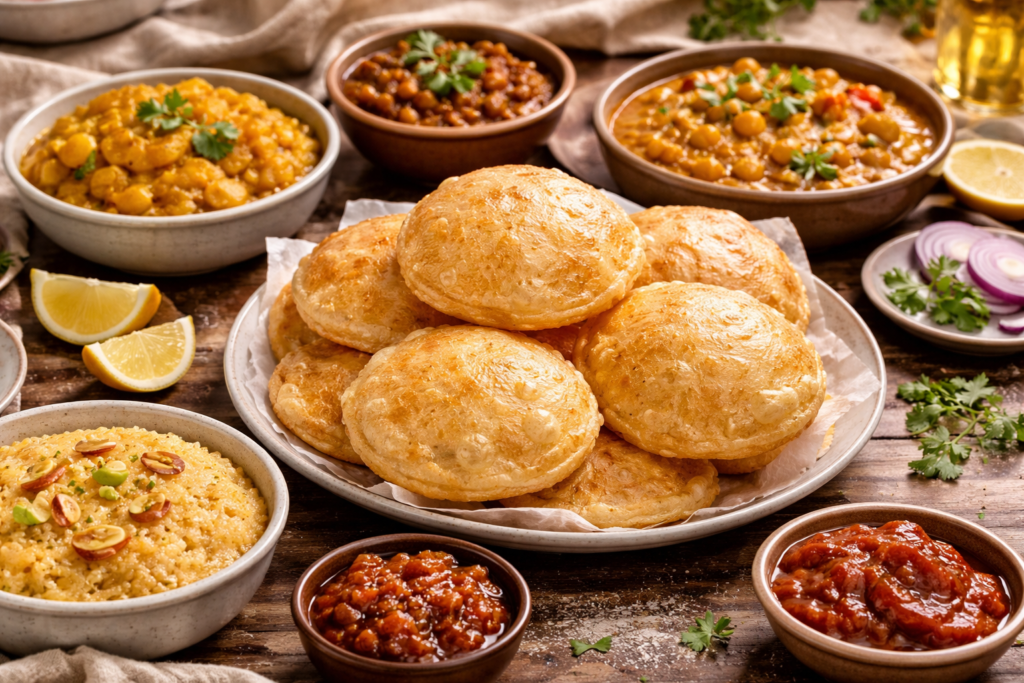
Poori tastes best when paired with flavourful curries or accompaniments.
Some classic combinations include:
- Aloo masala – the most traditional pairing
- Chole – spicy chickpea curry
- Vegetable kurma – creamy mixed vegetable curry
- Mango pickle – for a tangy flavour
- Sooji halwa – a sweet dish often served during festivals
These combinations make poori meals both satisfying and comforting.
Common Mistakes to Avoid
Many beginners face issues when making pooris for the first time. Here are a few mistakes to avoid:
- Dough that is too soft may prevent pooris from puffing
- The oil temperature must reach a specific point to prevent pooris from becoming greasy
- The first step to make proper puri dough requires creating a thick dough that needs rolling into thin sheets
- Organising the frying process to handle smaller groups of pooris allows better control over maintaining oil temperature
Paying attention to these details helps ensure perfect results.
Why Poori is Loved in Indian Homes
The dish known as poori functions as a culinary experience which connects people to their most treasured food memories. From festive breakfasts during Diwali to special Sunday meals with family, poori has always held a place on Indian dining tables. The dish operates as a classic comfort food which people of all ages enjoy because of its easy preparation process and tasty flavour, which uses basic ingredients
Conclusion
The perfect poori recipe becomes easy to execute at home after you learn its fundamental cooking techniques. You can achieve soft and puffy pooris through proper dough handling combined with specific oil heating and essential ingredients. Your meal will reach traditional dining status when you serve hot food alongside your preferred curry. Your first attempt to make pooris at home will lead to more frequent baking than you initially planned.

Anjali Raj Singh
I am a food writer and culinary content creator specializing in global cuisines, traditional recipes, food culture, and cooking techniques. Through extensive research and hands-on recipe analysis, I create accurate, informative, and engaging content that helps readers explore authentic dishes from around the world. My work covers recipe development, food history, ingredient guides, restaurant features, and culture-driven culinary stories.
At Foods Around the World, I focus on delivering well-researched, reader-friendly, and SEO-optimized content that reflects the traditions, flavors, and culinary heritage behind each dish. Every article is carefully reviewed for accuracy and relevance, ensuring readers can discover trusted recipes, cooking insights, and food experiences from diverse cultures worldwide.