
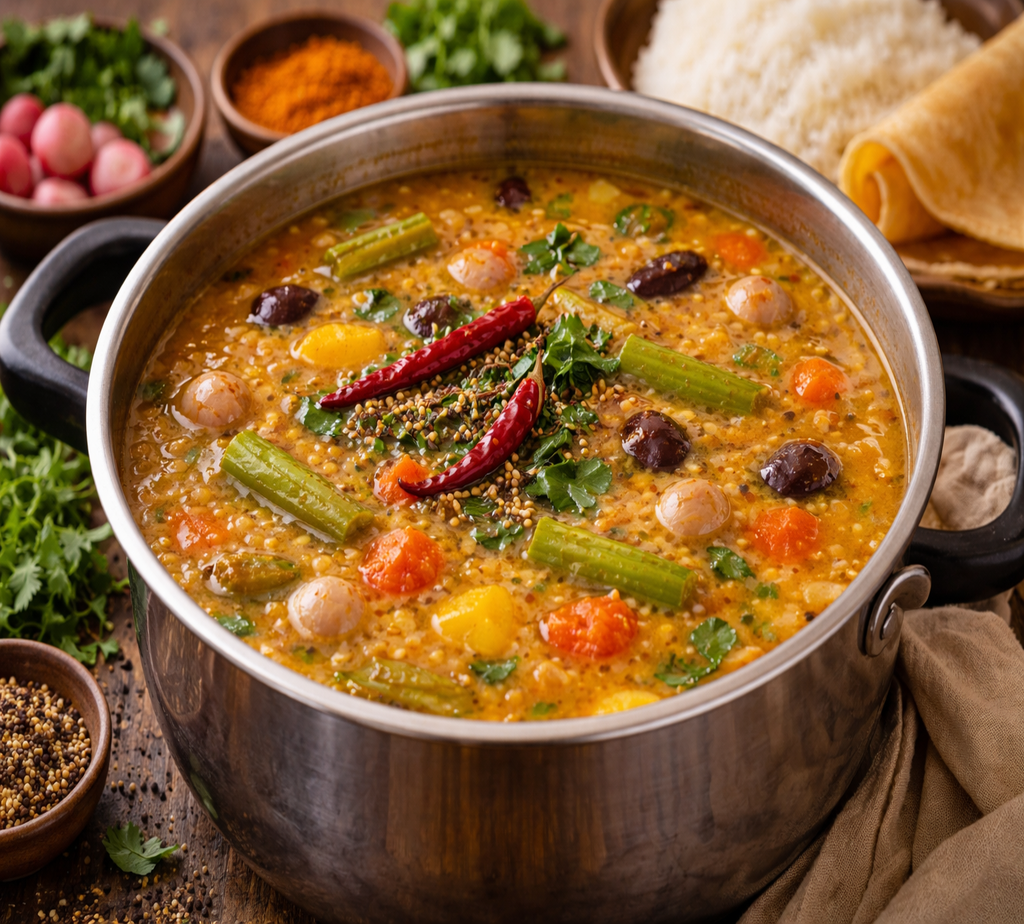
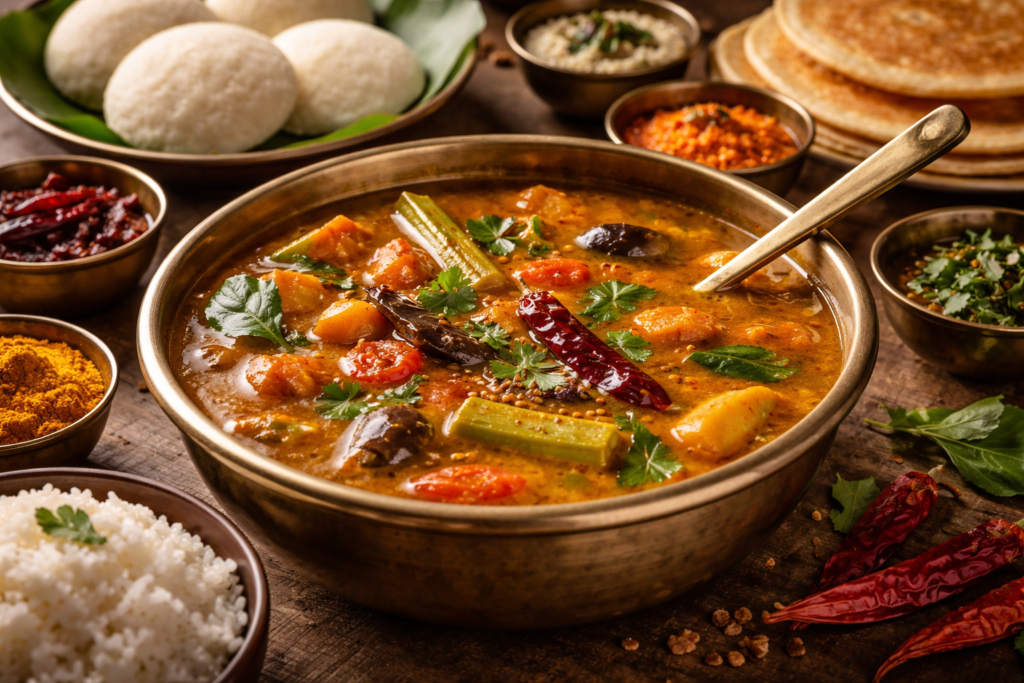
The dishes which exist in every home create its identity. In South India, sambar is one of them. Dal with vegetables receives cooking treatment, but it serves as a comfort food which people use as their main dish throughout their day. The kitchen creates a smell which combines toor dal with tamarind and roasted spices, which makes people feel hungry
Sambar brings people together for meals when it is served as a breakfast dish with idlis and dosas or as a side dish for ghee rice. The best part of the dish exists in its different methods of preparation, which each home uses to create its own version. That’s what makes it special
We will demonstrate the traditional method of preparing South Indian sambar, which cooks use in authentic home kitchens
Ingredients
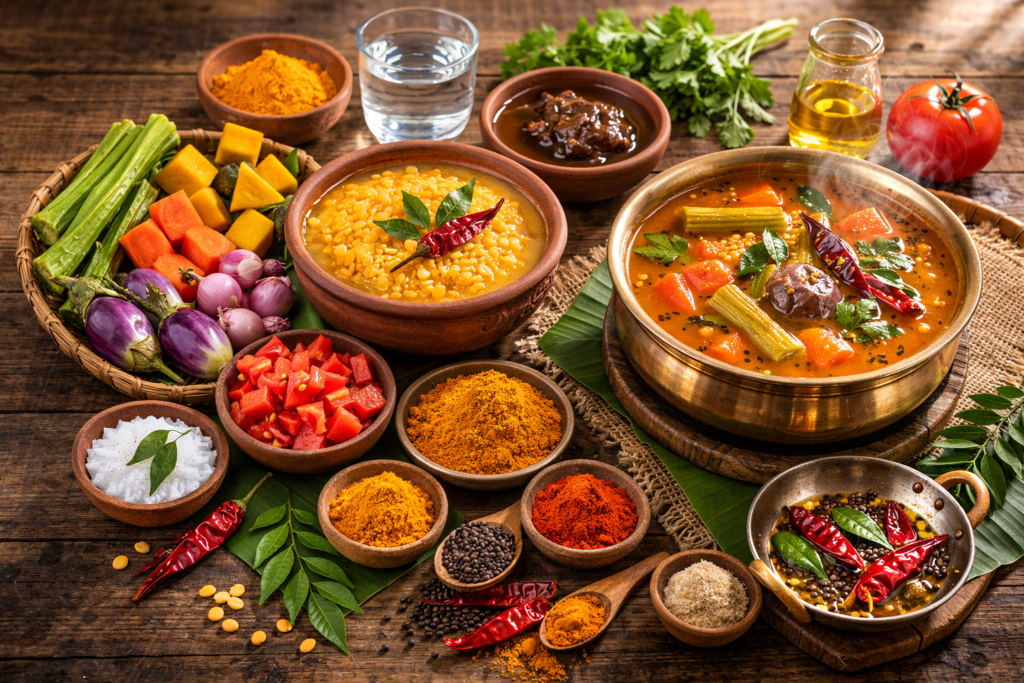
For the Dal Base
- 1 cup toor dal (split pigeon peas)
- ¼ teaspoon turmeric powder
- 3 cups water
For the Vegetables
- 1 drumstick (cut into pieces)
- 1 carrot (chopped)
- 1 small brinjal (cubed)
- A handful of pumpkin pieces
- 6–8 shallots (peeled)
- 1 tomato (chopped)
- Salt to taste
For Tamarind & Spice
- Small lemon-sized ball of tamarind (soaked in warm water)
- 2–3 tablespoons sambar powder
- ½ teaspoon red chilli powder (optional)
For Tempering (Tadka)
- 1 sprig fresh curry leaves
- 2 tablespoons oil
- 1 teaspoon mustard seeds
- 1–2 dried red chillies
- A pinch of asafoetida (hing)
Step-by-Step Method
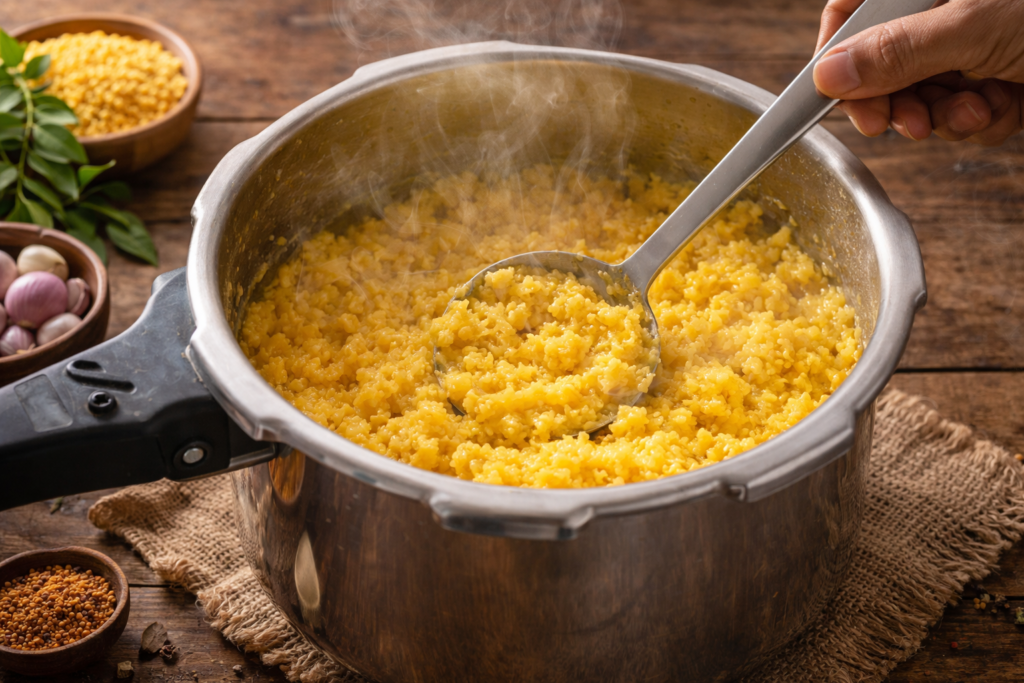
Cook the Toor Dal
The toor dal needs to be washed until the water runs clear. The dal should be cooked with turmeric and water until it reaches its soft mushy state, which takes 4 to 5 pressure cooking whistles. The cooked food should be mashed with a ladle for gentle handling. The texture of your sambar improves with smoother dal
Cook the Vegetables
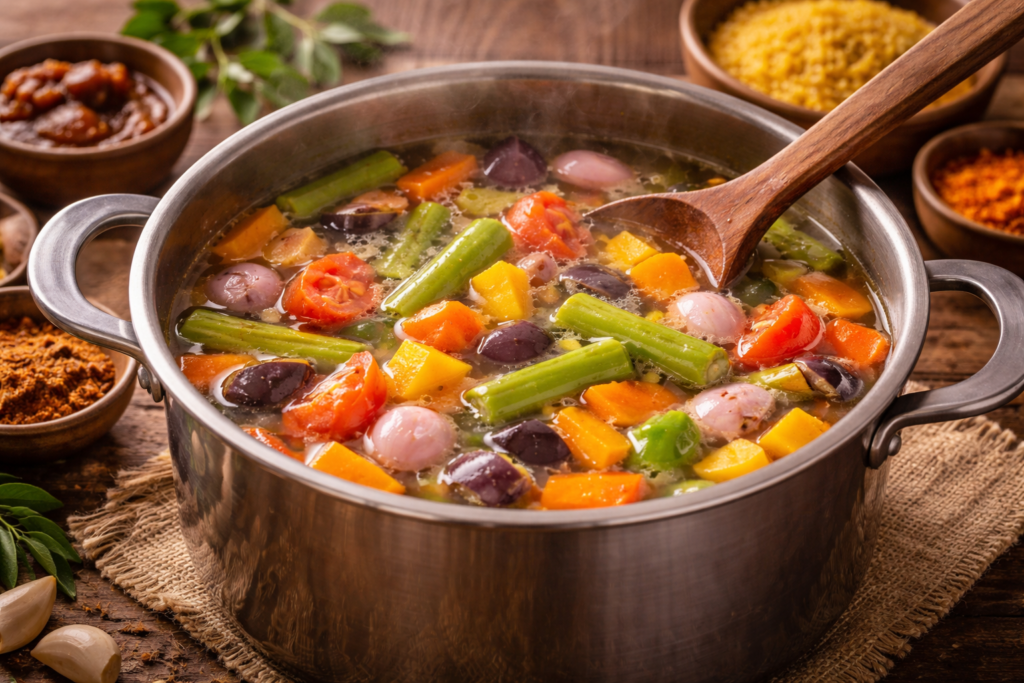
You should combine the chopped vegetables and tomatoes with salt in a separate pot and add enough water to cover the mixture. The cooking process should continue until the food reaches its optimal tender state
The vegetables need to be cooked until their optimal state, but should not be cooked beyond that point, because their texture and appearance should remain intact
Prepare the Tamarind Base
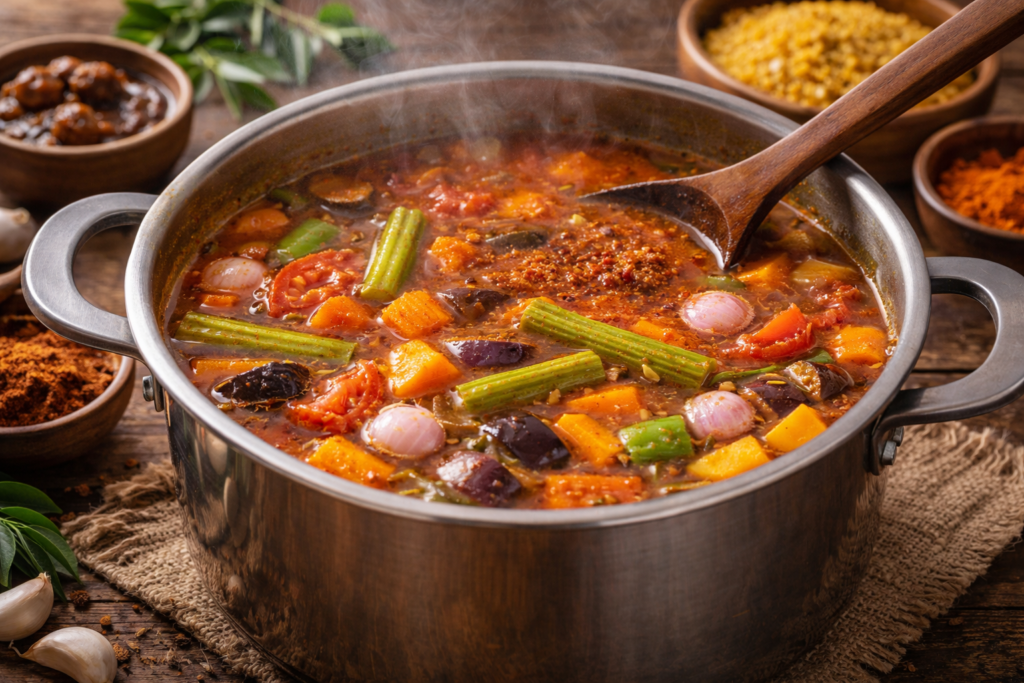
You should extract thick pulp from soaked tamarind by squeezing it. The cooked vegetables should receive the tamarind extract which you derived from the previous step. You should now add sambar powder together with red chilli powder, which you can choose to add or not
The mixture should be allowed to boil at a low temperature for a period of 8 to 10 minutes
The process of this step removes the raw flavour that tamarind contains. The kitchen will begin to produce a fragrant smell of tangy and spicy aromas during this period
Combine Dal and Vegetables
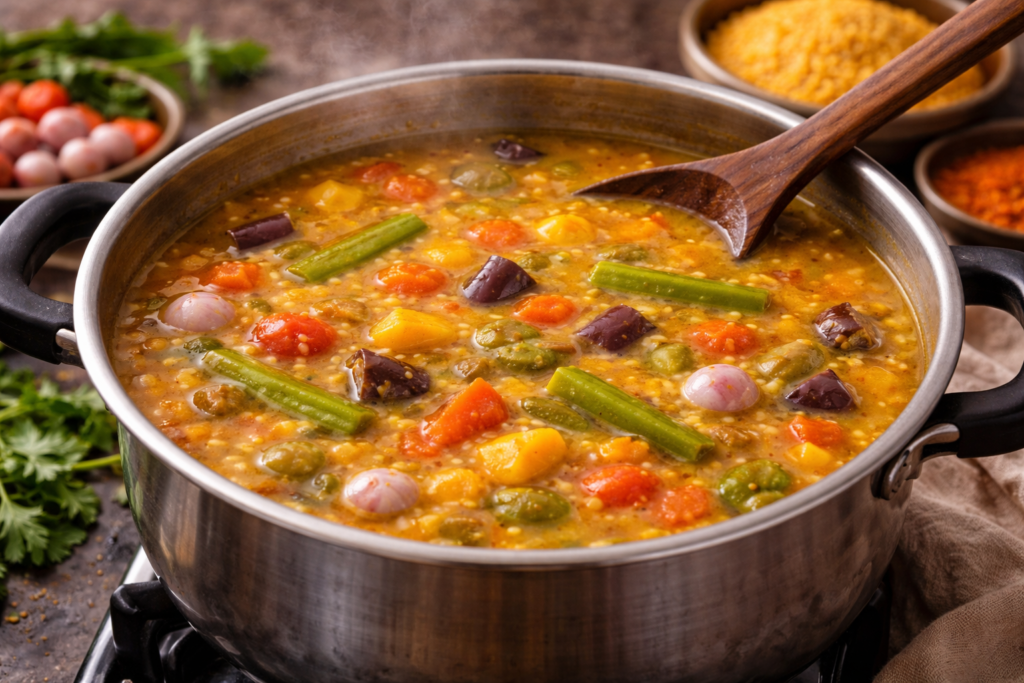
You should now combine the mashed dal with the vegetable and tamarind mixture. The mixture should be stirred until it reaches the desired consistency, which requires adding water
The sambar needs to have a flowing consistency between its two extreme thicknesses of dal and its watery state
The cooking process should continue for a duration of 10 to 12 minutes. The slow simmering process provides essential conditions for the special cooking process to take place. The dal absorbs the spices while the vegetables absorb the taste of tamarind
Prepare the Tempering
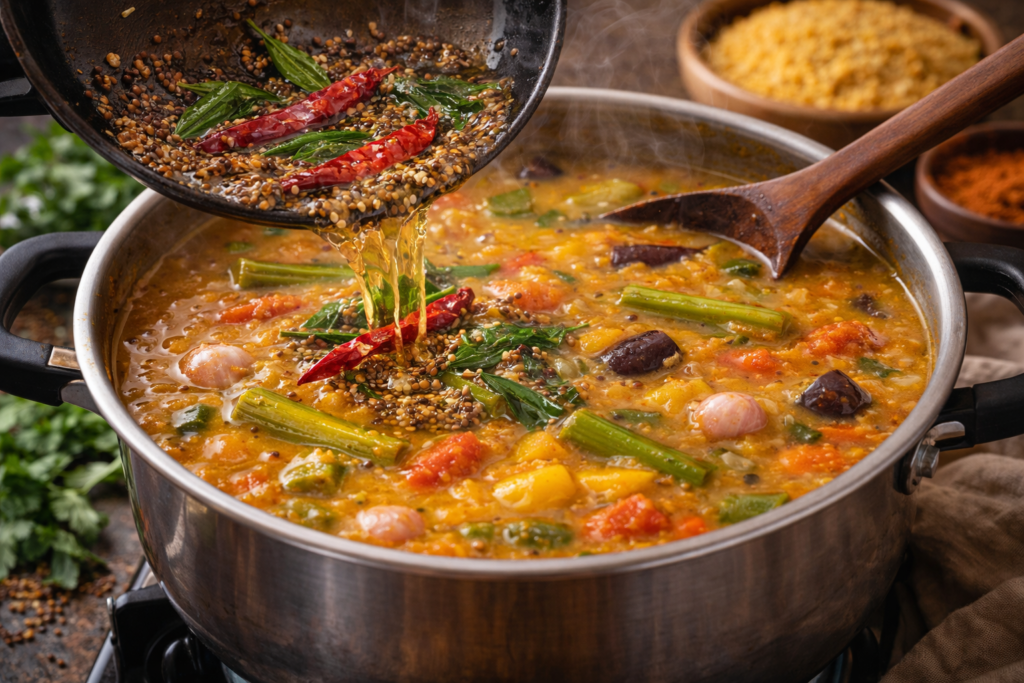
In a small pan, heat oil.
Add:
- Mustard seeds (let them splutter)
- Dried red chillies
- A pinch of asafoetida
- Curry leaves (be careful, they will crackle)
- Pour this hot tempering immediately over the simmering sambar.
- Cover the pot for a minute to trap the aroma
That final sizzling sound is what makes sambar truly irresistible.
Tips for Authentic Taste
- You should cook tamarind first before you add dal because it eliminates the raw, sour taste. The dish requires curry leaves because their presence creates the distinctive South Indian fragrance
- You should add jaggery to the sambar when it tastes too sour because it will help restore balance
- The use of freshly made sambar powder produces a major boost in flavour
- You should wait for 15 to 20 minutes after cooking the sambar because the dish needs time to develop better flavours
Regional Variations of Sambar
Sambar changes slightly from state to state:
Tamil Nadu Style
Balanced, tangy flavour with plenty of shallots
Karnataka Style
Slightly sweeter, often includes jaggery and ground coconut
Kerala Style
May include coconut paste and coconut oil tempering
Andhra Style
Spicier and more robust in flavour
Each version carries its own personality, but the soul remains the same
Serving Suggestions
Sambar is incredibly versatile.
Serve it with:
- Steamed rice and ghee
- Idli
- Dosa
- Medu vada
- Upma
A simple plate of hot rice, sambar, and papad is often enough to make a complete meal.
Storage & Reheating
Sambar tastes even better the next day.
- Store in an airtight container in the refrigerator for up to 2 days
- Reheat gently on the stove
- Add a splash of water if it thickens too much
You can even freeze it for up to a month.
A Dish That Feels Like Home
Sambar functions as a comfort dish which people share at their dining table and which reminds them of cooking their traditional family recipes. Every home has its own version, passed down quietly from one generation to the next. The beauty of sambar lies not just in its ingredients but in the warmth it brings to the table. A single pot containing multiple vegetables and a few spices transforms an ordinary meal into a complete dining experience.
F & Q
Q. Am I able to make sambar without sambar powder?
Sure. You could grind roasted coriander seeds, dried chillies, fenugreek seeds, and cumin as an alternative.
Q. Why does my sambar taste bitter?
Overcooked tamarind or burnt spices in tempering can purpose bitterness.
Q. How do I thicken thin sambar?
Mash a little more dal or simmer longer to lessen extra water.
Q. Am I able to skip tamarind?
Tamarind offers actual tanginess; in emergencies, you can use tomatoes by themselves.
Q. Which greens work first-class?
Drumstick, pumpkin, brinjal, carrots, and shallots are traditional favourites.

Anjali Raj Singh
I am a food writer and culinary content creator specializing in global cuisines, traditional recipes, food culture, and cooking techniques. Through extensive research and hands-on recipe analysis, I create accurate, informative, and engaging content that helps readers explore authentic dishes from around the world. My work covers recipe development, food history, ingredient guides, restaurant features, and culture-driven culinary stories.
At Foods Around the World, I focus on delivering well-researched, reader-friendly, and SEO-optimized content that reflects the traditions, flavors, and culinary heritage behind each dish. Every article is carefully reviewed for accuracy and relevance, ensuring readers can discover trusted recipes, cooking insights, and food experiences from diverse cultures worldwide.