
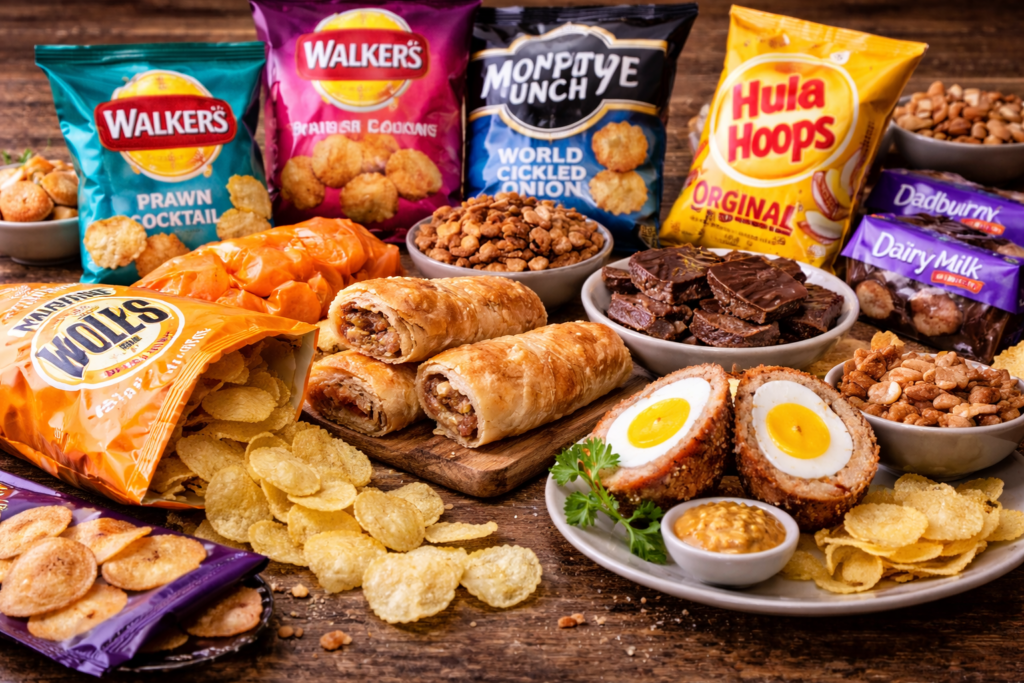
The UK snacking practice extends beyond meal-based eating because it forms part of people’s everyday life and their social interactions and their professional work patterns. British snacks provide consumers with two essential features because they combine recognizable flavors with comforting tastes and convenient eating possibilities for people who need to eat while moving about. The UK snacks market contains more products than only crisps, which make up most of its shelf space. The following section presents seven common UK snacks and crisps which people currently consume for specific reasons.
Walkers Crisps
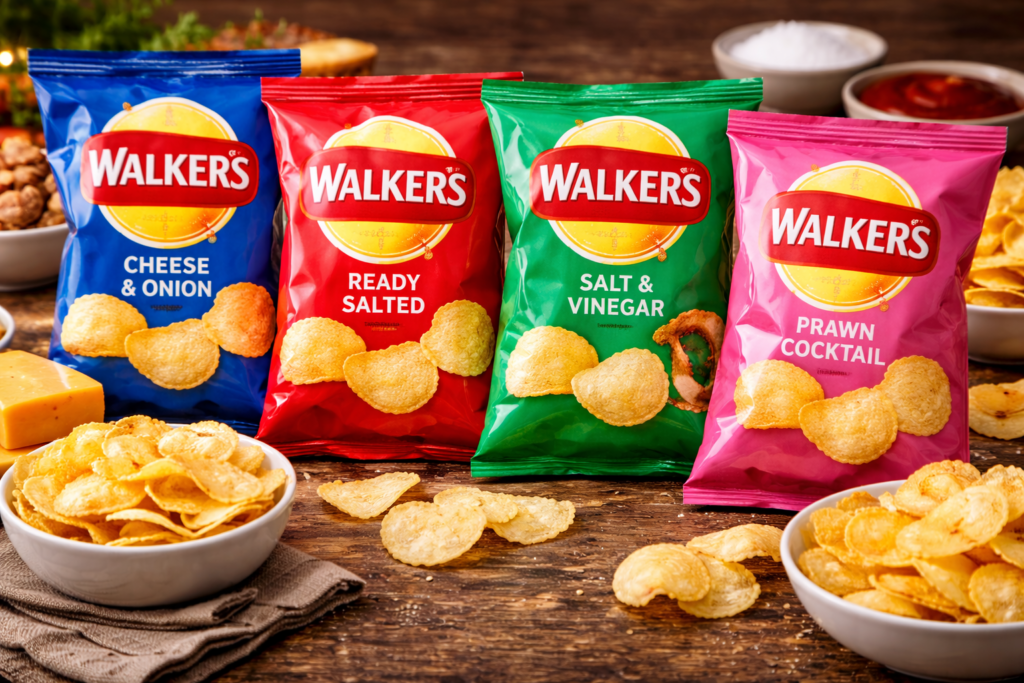
In the United Kingdom, people always associate Walkers snack brand with their crisps. Every supermarket and petrol station and vending machine contains these products which people choose for their midday meals and snack breaks. The most common lunch meal deal in Britain combines a sandwich with crisps and a drink. Ready Salted and Cheese & Onion and Salt & Vinegar remain the most popular flavors because people find them to be trustworthy and well-known.
McVitie’s Digestive Biscuits
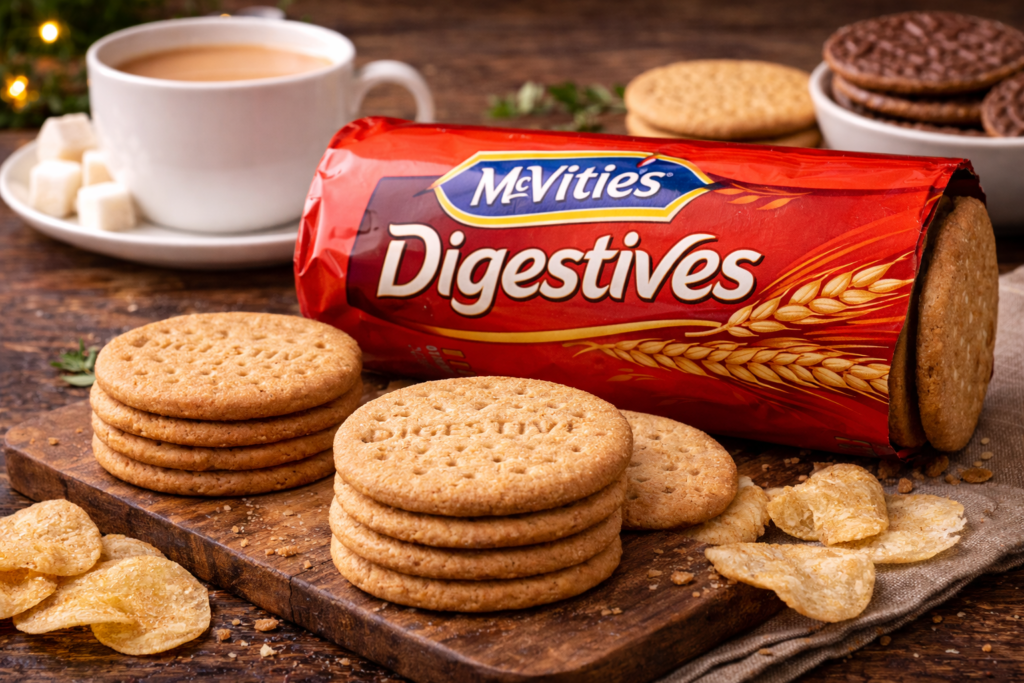
Digestives sit at the heart of Britain’s tea-break culture. They’re not flashy, but that’s exactly why they work.
Often eaten:
- With tea or coffee
- As an afternoon snack
- Dunked (carefully)
They reflect a British preference for snacks that feel earned rather than indulgent—something that fits naturally into the workday without feeling like a treat overload.
Cadbury Dairy Milk
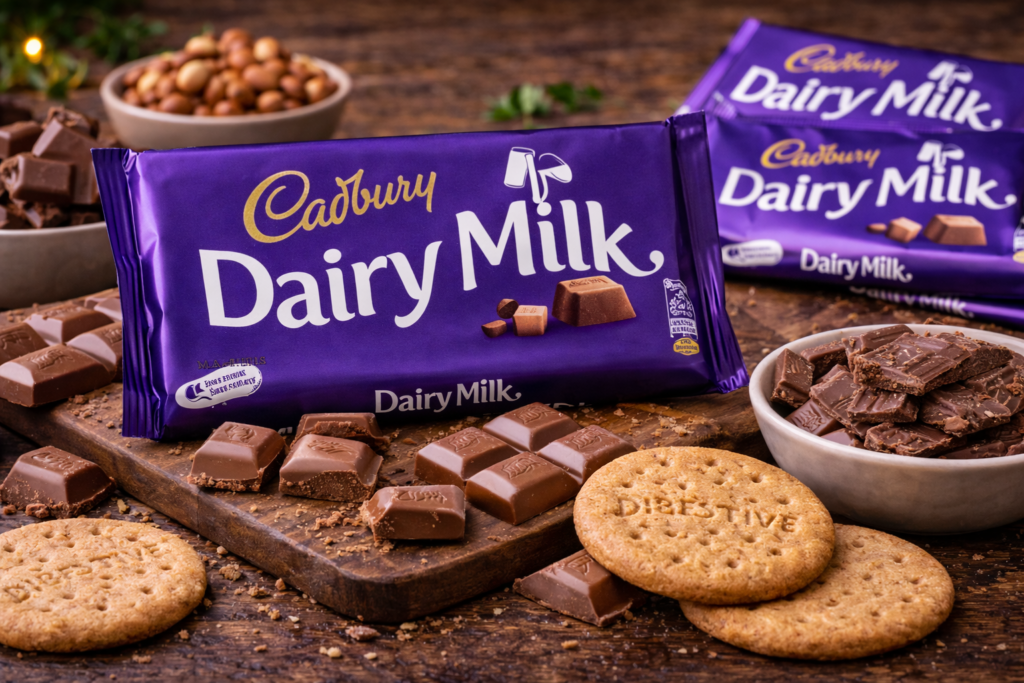
Chocolate serves as a primary snack in the United Kingdom, with Dairy Milk standing as the most well-known chocolate bar. People tend to share food when they break it into smaller parts or store it away because they think they’ll eat it another time which usually turns out to be a brief period.
British people use chocolate as an emotional snack because they consume it to treat themselves and find comfort and relax at night. Dairy Milk’s mild sweetness and creamy texture make it widely appealing across age groups.
Monster Munch
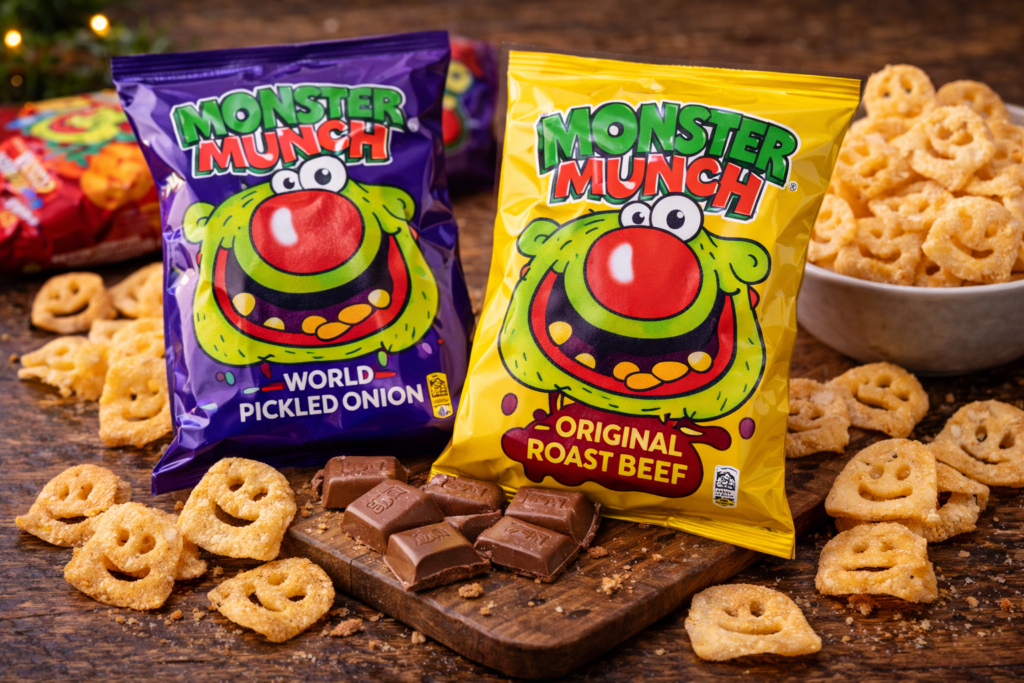
Monster Munch exists as a nostalgic snack which comes in a bright packaging. Its oversized shape and bold flavours make it popular with kids, but adults still reach for it out of habit. British crisps follow a snack trend which emphasizes texture and taste instead of choosing delicate flavours. The Pickled Onion flavour maintains its status as the most popular UK snack option because people have always preferred intense taste experiences.
Scotch Eggs
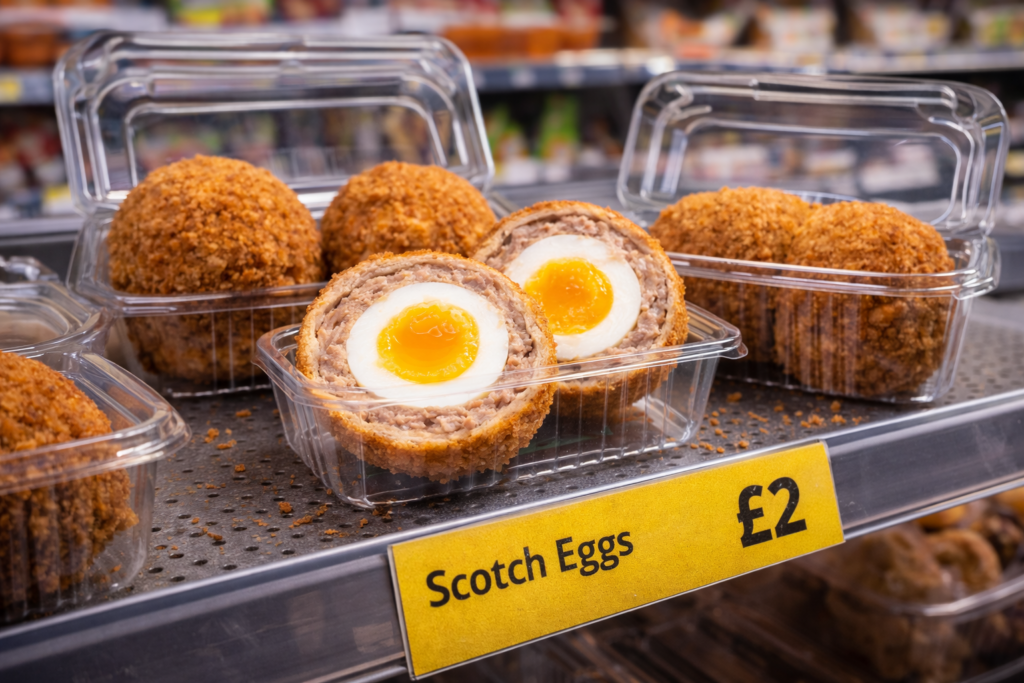
While not a crisp, the Scotch egg is a classic savory snack that fits squarely into British eating habits.
You’ll find it:
- In supermarkets
- At pubs
- Packed for picnics
The British way of eating snacks permits people to eat this food cold with their hands and without using any formal eating rituals. Modern versions of the product offer vegetarian and flavored options as extra choices but the main attraction of the product remains as a filling portable snack.
Twiglets
British people enjoy Twiglets since their taste divides people into two opposite groups. The yeast extract flavor of this snack builds on the United Kingdom’s established tradition of enjoying savory umami snacks.
Often associated with:
- Christmas snacking
- Party bowls
- Late-night grazing
The snack selection from Britain shows that some of their products are not designed to attract all customers because their particular taste creates their unique appeal.
Hula Hoops
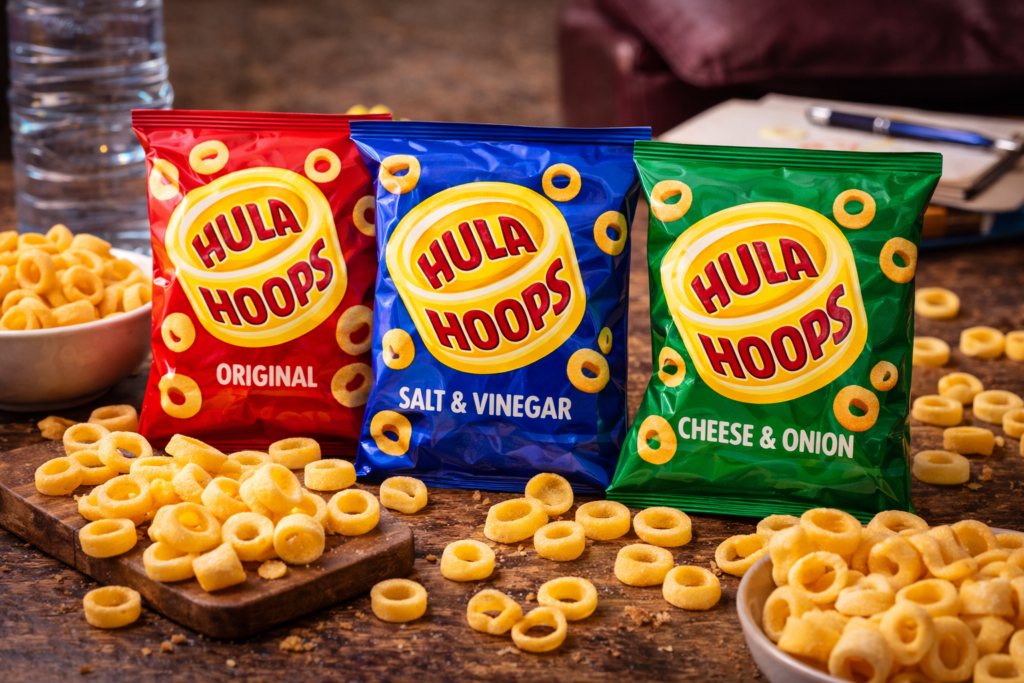
Hula Hoops offer a fun and crunchy snack that can be consumed at any time. The ring shape of the snack enables people to eat it without interruption, whether they are working at their desk or relaxing on the sofa.
They’re often eaten:
- Between meals
- During travel
- As a lighter alternative to thicker crisps
The United Kingdom maintains its tradition of serving snacks through its diverse range of flavors and textures which people can enjoy throughout the day.
UK Snacking Habits Today
Modern British snacking is shaped by:
- Busy workdays
- Commuting
- Frequent tea and coffee breaks
People tend to snack little and often, choosing to eat snacks which come in controlled serving sizes instead of consuming large portion sizes. People continue to share snacks between different locations which include their workplaces and their homes and their social gatherings.
Why These Snacks Endure
These snacks last because they fit real life. They’re:
- Familiar
- Easy to find
- Designed for routine moments
They don’t demand attention—they simply belong.
Final Thoughts
The United Kingdom does not focus on creating new snacks and crisps because their population prefers eating familiar products at regular times. The traditional British snack choices which include crisps and biscuits reveal the country’s between-meal eating patterns. The sound of a packet being opened from the cupboard allows people to discover British food culture whenever they want to listen.