

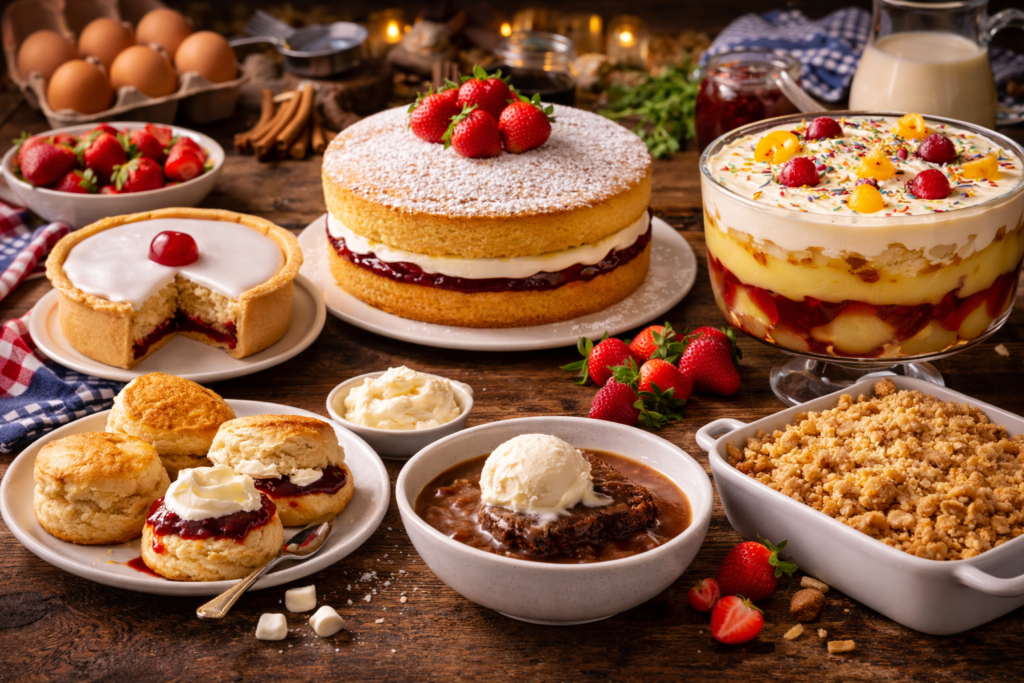
British desserts combine three essential elements, which include comfort, traditional flavours, and restrained sweetness. The food has a plain look with a taste that is between too much sweetness and bitterness. Seasonal items and home kitchen ovens function as the foundation for baking, which gives special desserts that people enjoy after their main meals. The Classic UK desserts came from home kitchens, village bakeries, and Sunday lunch tables before restaurants came. The 6 authentic recipes for British baking are vital for anyone who wishes to learn about Britain’s baking tradition.
Sticky Toffee Pudding
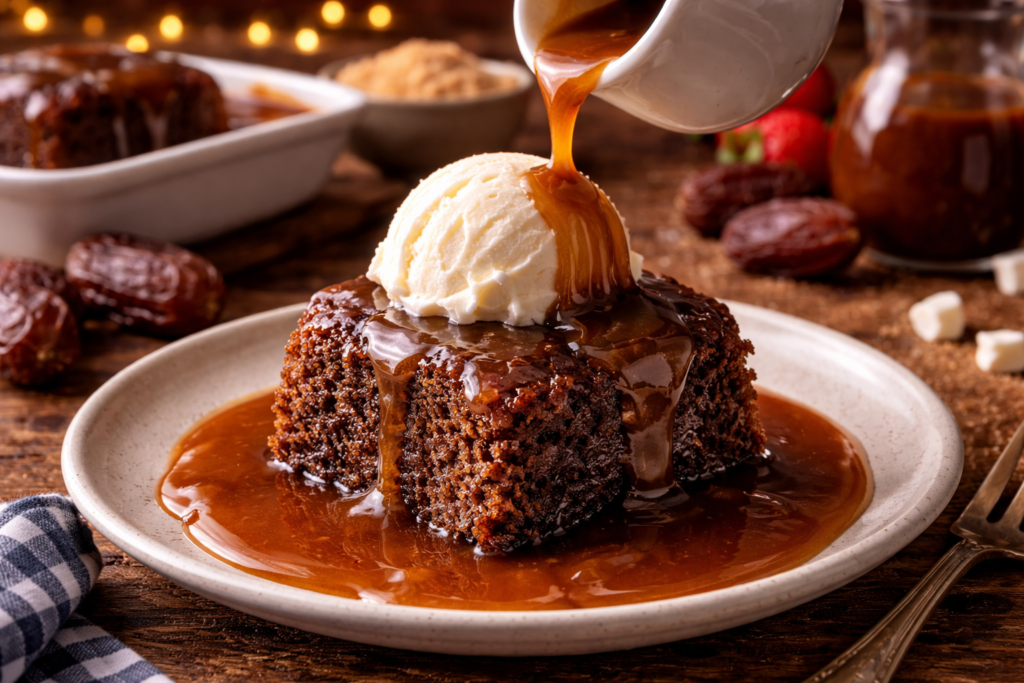
Sticky Toffee Pudding is now considered a quintessential British winter classic; it was not until after the 1950s and the advent of the postwar British food renaissance that it started gaining traction, first within the rest of Northern England, and eventually, the rest of the United Kingdom. It is a steamed sponge pudding made from finely chopped, steamed dates; the dates not only sweeten the pudding, but also lend additional moisture to the cake. Pudding etiquette has always dictated that custard or cream is poured over the pudding, but many British restaurants serve their pudding with a jug of hot toffee sauce, which diners pour over the pudding themselves. This sticky addition brings extra sweetness and stands out from the more traditional British cream. To eat the pudding is to experience the heart of British baking: warm, hearty, and uncomplicated to encourage slow consumption.
Victoria Sponge
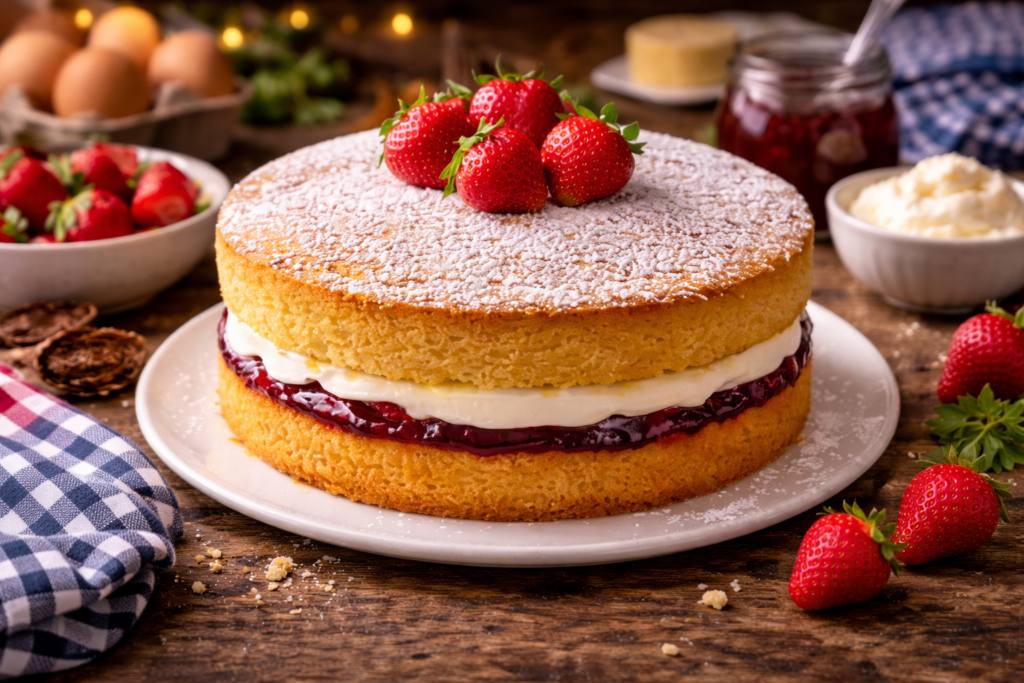
The Queen Victoria cake is the authentic dessert served during afternoon tea. The cake consists of 2 components, which includea light sponge cake and jam with cream filling. The best Victoria sponge cake is achieved through equal quantities of its different components. The cake needs to be light because its texture should not create a dry eating experience. The filling should add flavour to the food without affecting its taste. The 19th century marked a rise in baking popularity because people acquired access to refined flour and baking powder.
Apple Crumble
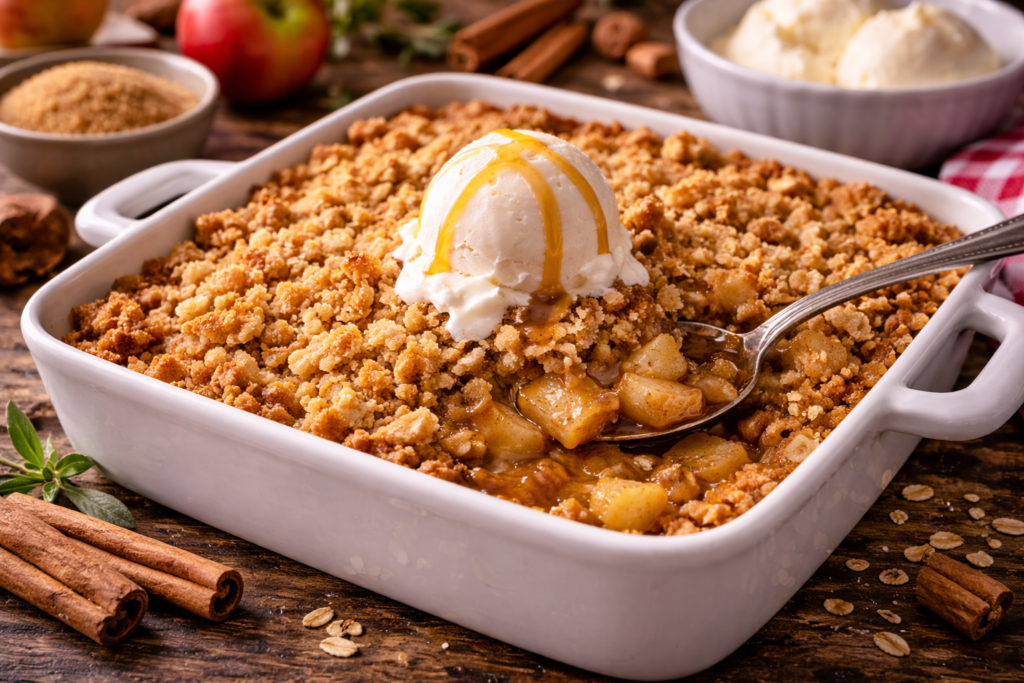
Apple crumble is one of Britain’s most demanded home desserts, which came during World War II when rationing restricted access to pastry materials. Cooks created a crisp topping by using a basic mixture of flour, butter and sugar instead of using pastry. The dessert celebrates British apples, which thrive in the country’s climate and store well during wintertime.
Treacle Tart
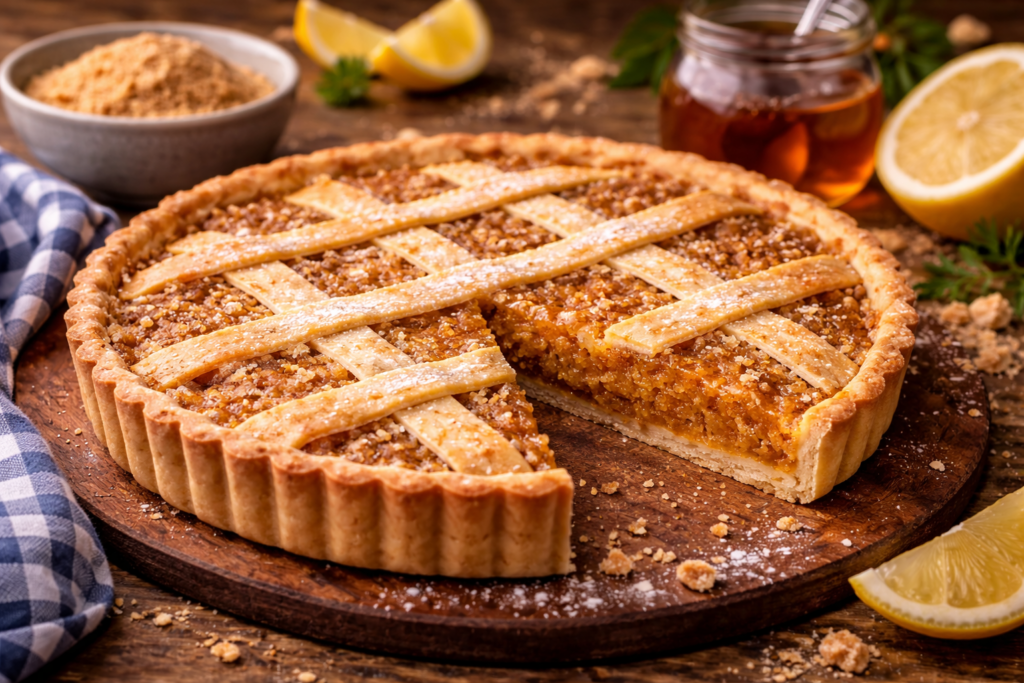
The treacle tart always makes me think of children’s memories from those old British school dinners and stories, but actually, it goes back much further than that, with a cool history. The way it is made uses ingredients you already have at home, like breadcrumbs mixed with golden syrup and some lemon juice. Those breadcrumbs absorb the syrup and turn into this soft pudding, which is quite interesting.
Bread and Pudding
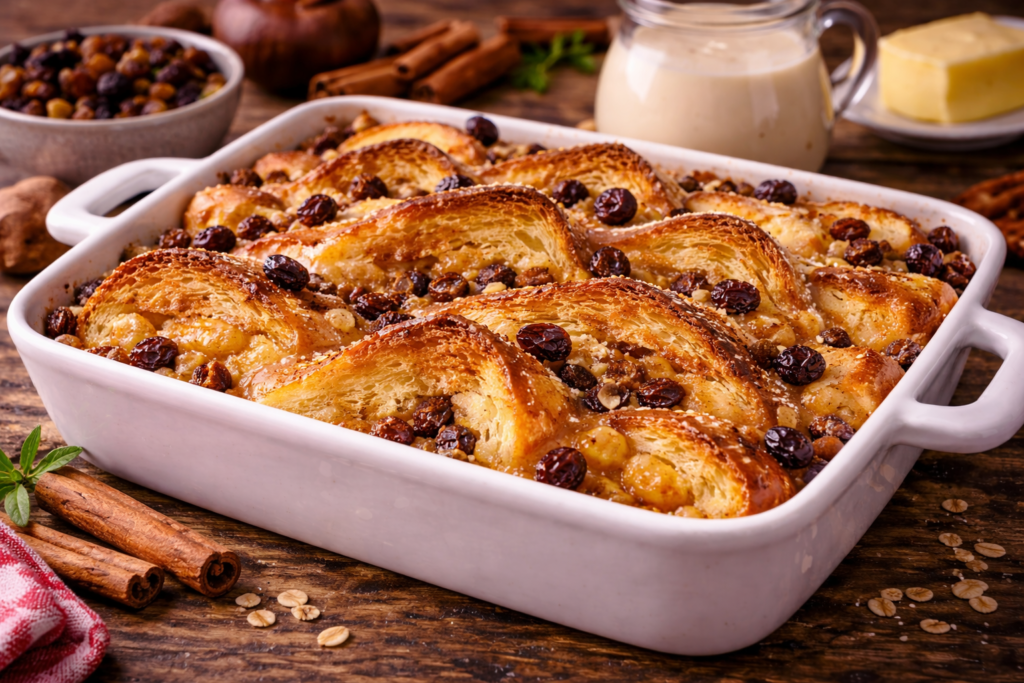
Bread and Butter Pudding Bread and butter pudding reflects the British idea of wasting nothing, turning old, stale bread into something sweet that still tastes delicious. First of all, apply butter on the slices of bread, then add dry fruits in between, pour custard on top of all this and bake until it sets. You know, the nutmeg and cinnamon give it a warm flavour, which makes the taste better overall.
Eton Mess
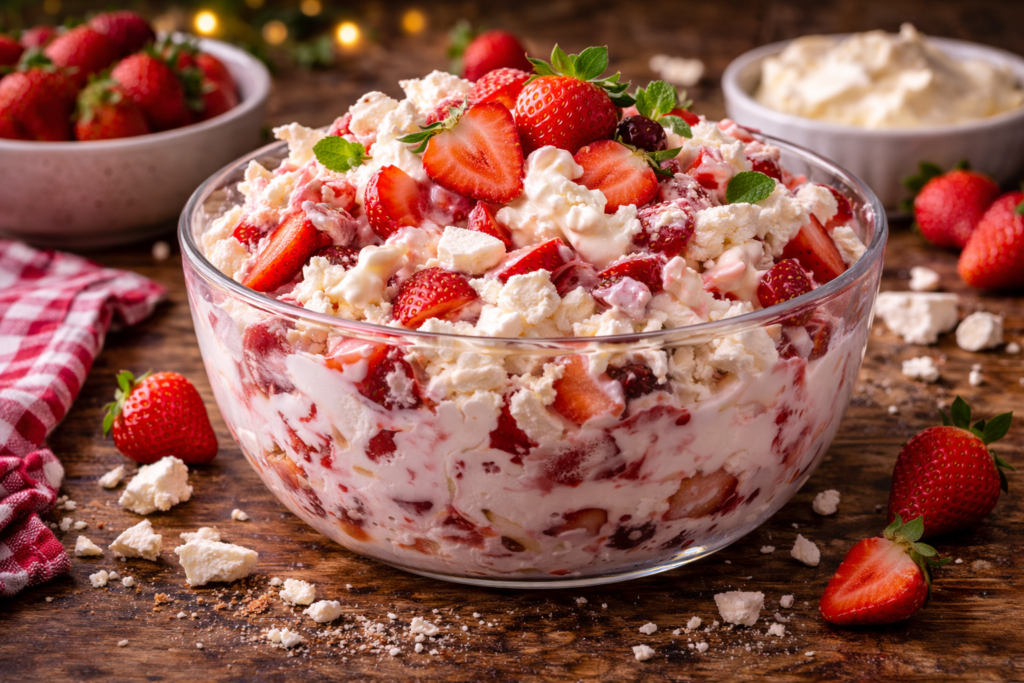
The simplest British dessert, Eton mess, does not require baking skills for preparation. This dessert originates from Eton College and combines crushed meringue with strawberries and cream. The secret to success lies in the flaws of execution. The bowl holds many textures, which create a battle between its crisp and soft textures and its juicy and rich flavours. The British enjoy their dessert in a light style, which this summer dessert shows.
Why British Desserts Feel Different
British desserts exist as unique creations because their design approach uses warm elements to achieve balanced results, which maintain the middle ground between flamboyant displays and sweet flavours. British desserts originated from two main sources, which included the requirements of daily life and the seasonal weather patterns. The cold and damp climate favoured hot puddings, baked sponges and steamed sweets, which provided both comfort and food that could be eaten. The combination of suet with dates, treacle, apple, and dried fruits created an affordable ingredient which functioned as the perfect material for making traditional desserts that required long cooking times.
How to Enjoy Them Properly
British desserts are best enjoyed:
- Warm, when possible
- With custard, cream, or simple accompaniments
- After savoury meals, not as standalone sweets
They’re meant to finish a meal, not overwhelm it.
Final Thoughts
The enduring popularity of traditional UK desserts exists because their creation process involves human craftsmanship. The process of making these dishes started because they wanted to create comfort for families who needed to use their available resources to transform everyday life into special occasions. The six dishes you should try will show you that British baking requires an appreciation of its current state rather than needing any major changes.