

To understand Britain, you have to understand the pub. It’s not just a place to drink—it’s a second living room, a meeting point, and, increasingly, a place to eat well. British pub food has evolved from basic sustenance into something more thoughtful, while still keeping its comforting, no-nonsense soul.
Meals in pubs follow their own rhythm. Lunch is relaxed, dinner is hearty, and food is designed to pair with conversation, pints, and long evenings. Here are five popular UK pub foods, explained through the lens of modern pub culture and British mealtime habits.
Fish and Chips

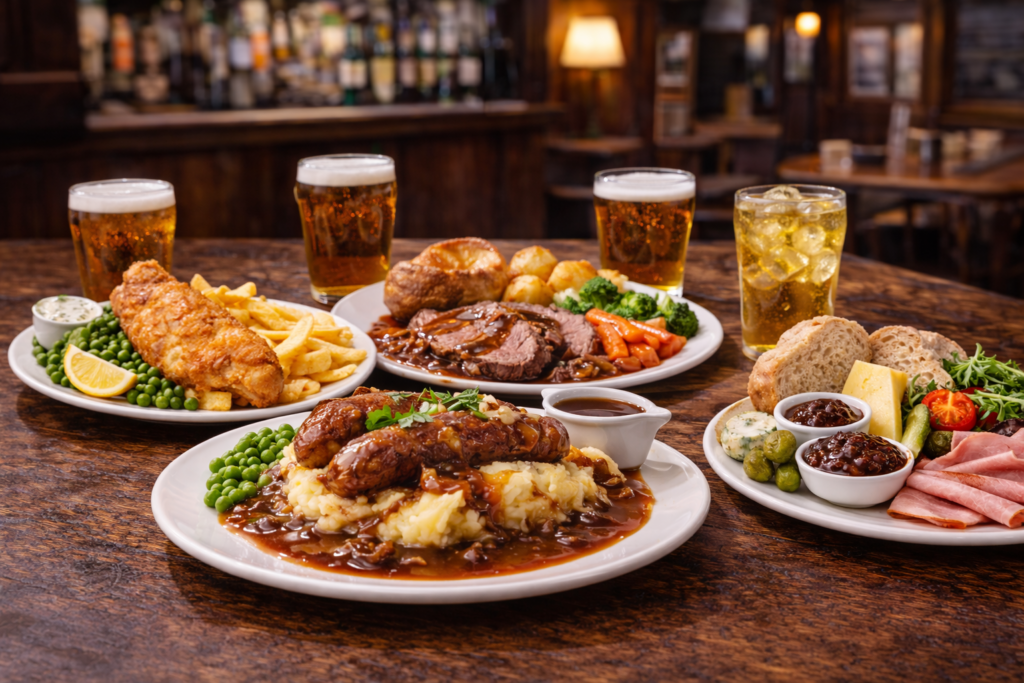
Fish and chips may have started in takeaway shops, but it has become a pub essential across the UK. In pubs, it’s usually served as a proper plated meal—crispy battered fish, chunky chips, mushy peas, and tartar sauce
Why it fits pub culture so well is simple. It’s filling, familiar, and satisfying without being rushed. Many pubs serve it as a Friday staple, reflecting the long-standing British habit of eating fish at the end of the working week. It’s a meal meant to be eaten slowly, ideally with a pint and plenty of conversation.
Steak and Ale Pie

Few dishes feel more “pub” than a steak and ale pie. Built around slow-cooked beef and local ale, it reflects Britain’s love for regional brewing and comfort food
In pub culture, pies are perfect because they:
- Hold heat well
- Can be prepared ahead of time
- Feel substantial without being fancy
They’re commonly served with mash, gravy, and seasonal vegetables, making them ideal for colder evenings when people settle in for hours rather than popping in briefly.
Sunday Roast

The Sunday roast is not just food—it’s a weekly ritual. While traditionally eaten at home, pubs have become the go-to place for roasts, especially for families and city dwellers without the time or space to cook
A typical pub roast includes roast meat (or a vegetarian option), potatoes, vegetables, Yorkshire pudding, and gravy. Served only on Sundays in many pubs, it turns lunchtime into an event.
This reflects a key British habit: Sunday is for slowing down, and pub roasts extend that tradition beyond the home.
Bangers and Mash

Bangers and mash is classic pub food because it’s honest and dependable. Sausages, mashed potatoes, onion gravy—nothing complicated, nothing rushed
In pubs, this dish appeals to:
- Regulars looking for familiarity
- Visitors wanting something recognisably British
- Anyone craving comfort without excess
It’s often ordered on weeknights, when people want something warm and filling after work, rather than a multi-course meal.
Ploughman’s Lunch

The ploughman’s lunch is a quiet pub classic that suits Britain’s casual daytime eating habits. Typically made up of cheese, bread, pickles, and sometimes cold meats, it’s designed for grazing rather than heavy dining
This dish works especially well in pubs because it pairs easily with beer and allows people to eat at their own pace. It’s often chosen during summer months or lunchtime, when diners want something satisfying without feeling overly full.
How Pub Food Fits British Mealtime Habits
British pub meals are shaped by a few unwritten rules:
- Food should be comforting, not complicated
- Meals should allow conversation
- Portions should be generous but familiar
Unlike restaurants, pubs encourage lingering. Plates are built to stay warm, be shared, and complement drinks rather than compete with them.
The Modern British Pub Food Scene
Today’s pubs balance tradition with quality. You’ll still find classics like pies and roasts, but often made with better ingredients and seasonal updates. What hasn’t changed is the purpose: food that brings people together
Final Thoughts
British pub food isn’t about trends—it’s about rhythm, routine, and community. These five dishes endure because they fit the way people actually eat in pubs: slowly, socially, and comfortably.
Order any one of them, take a seat, and you’re not just having a meal—you’re participating in one of Britain’s most enduring traditions.