


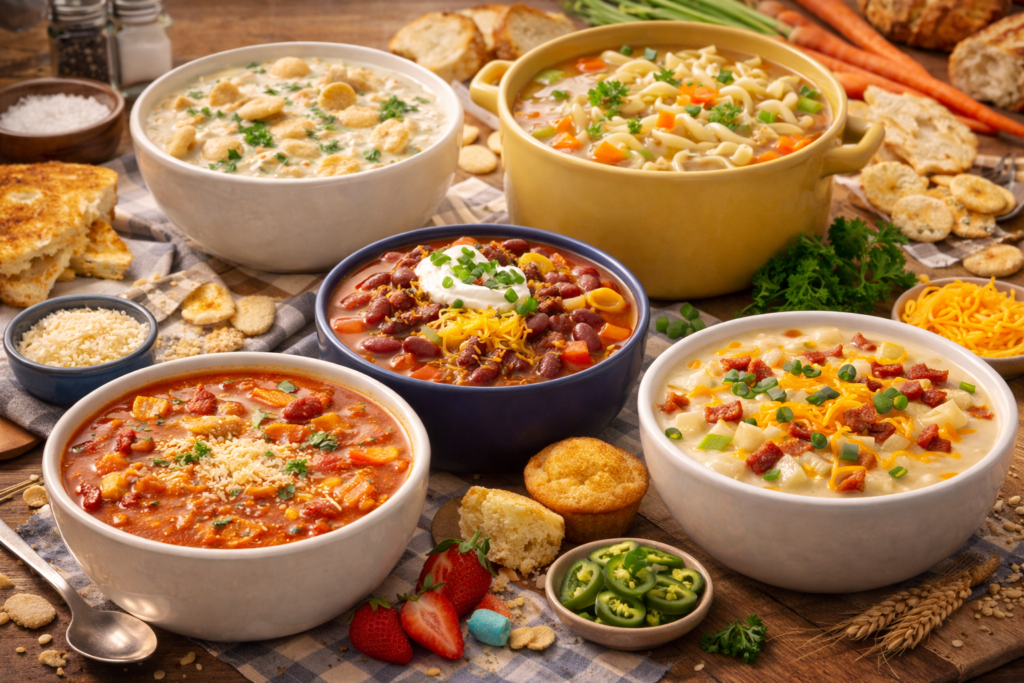
American food culture has a special place for comfort soups because they represent an important cultural tradition. The soups maintain close connections to their historical origins because people from different regions created them to cook for cold winter months in their home kitchens using their regional cooking methods. The practice of making soups existed before they became official menu items and canned products, because people used soups to extend their food supplies while providing warmth and creating opportunities for social dining
Here we will examine 5 American comfort soups which demonstrate their regional roots, winter-time cooking traditions and actual kitchen usage. Each soup from the study offers more than nostalgic value through its exploration of actual kitchen work and winter culinary traditions, and regional soup origins.
Chicken Noodle Soup (Nationwide)
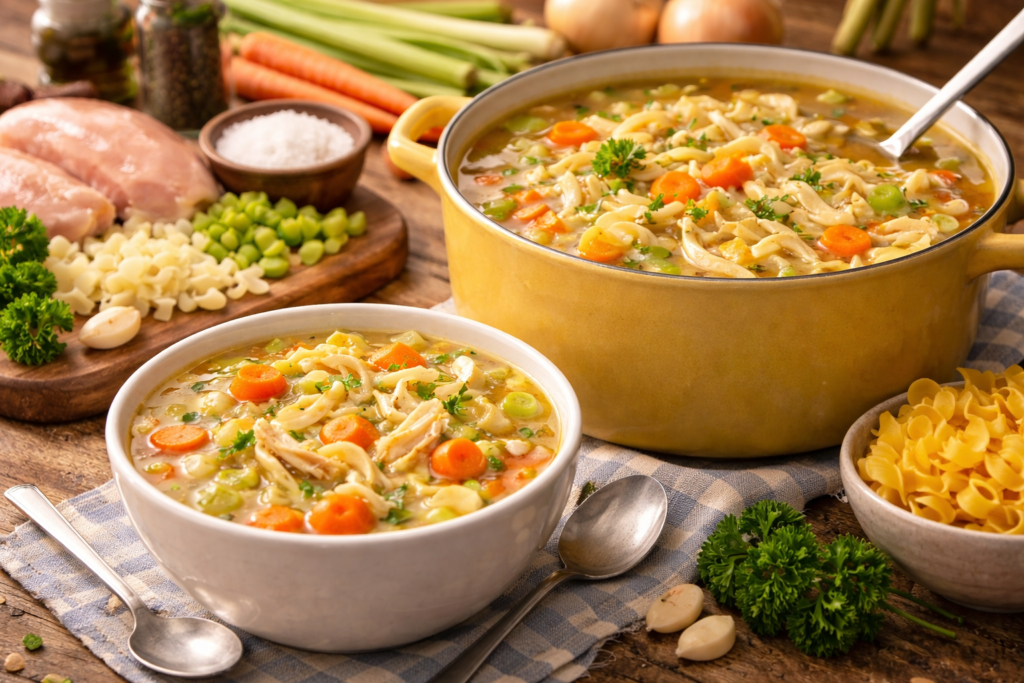
Chicken noodle soup is often called America’s universal comfort soup, and for good reason
Regional roots & tradition
During the early 20th century, American cuisine became very demanding because immigrants brought their original culinary practices to America and used local items that they found in their kitchens. The noodle soup became very much connected to three particular situations, such as cold winter weather, people who were required to recover from sickness, and those who needed home medication.
Cooking context
- The authentic process of preparing chicken broth consists of simmering these ingredients:
- Chicken bones for the purpose.
- Carrots, celery, onions
The chef added egg noodles to the cooking preparation. The dish has three elements that mix to produce a lightweight, warm food that people can easily digest.
New England Clam Chowder (Northeast)

Clam chowder shows the coastal identity of New England, especially Massachusetts.
Regional origins
Fishing communities created the soup using their easily accessible ingredients:
- Fresh clams
- Potatoes
- Milk or cream
The soup became essential during the severe Atlantic winters when fishing determined everyday activities
Cooking context
Authentic New England chowder is not tomato-based. The dish uses a slow cooking process to create its flavour from clam juice while maintaining a creamy texture without too much thickening.
Gumbo (Louisiana)
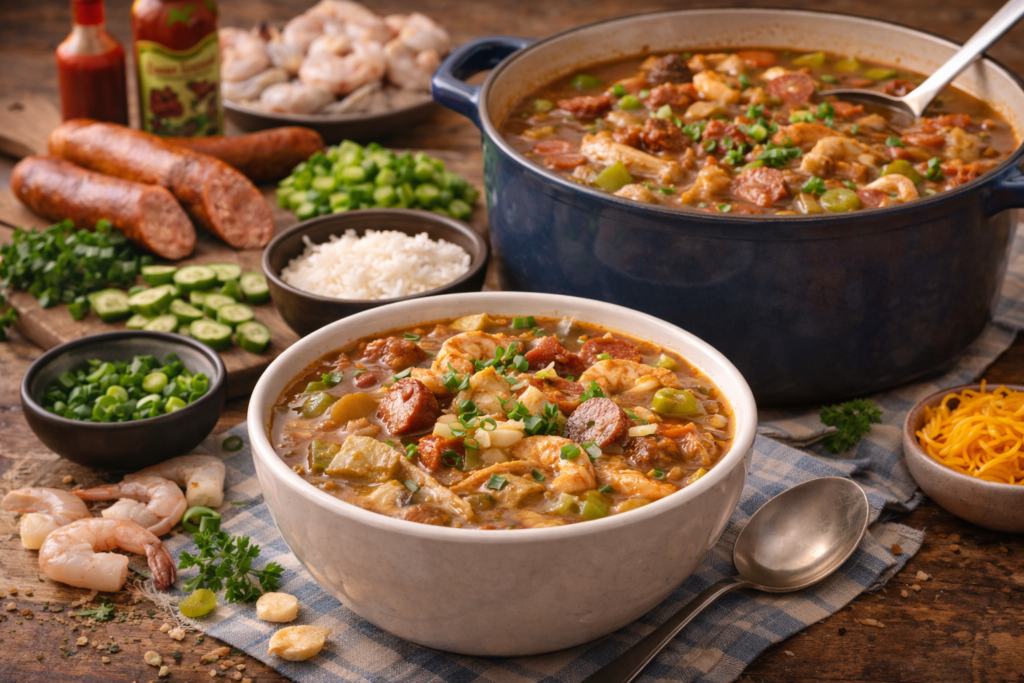
Gumbo is one of the most culturally layered comfort soups in America.
Regional origins
Gumbo originated in Louisiana because it consists of African cooking methods, French roux methods, and Native American food components
The dish establishes a Creole and Cajun connection through its communal cooking practices, which showcase s both traditions.
Cooking context
A proper gumbo begins with a brick roux, which chefs create through a slow cooking method to get deep flavour. The area influences which cooking items to make use of, but people usually cook the dish with sausage and chicken or seafood served on rice to deliver both warmth and sustenance.
Gumbo is one of the most culturally layered comfort soups in America.
Tomato Soup (Midwest & Northeast)
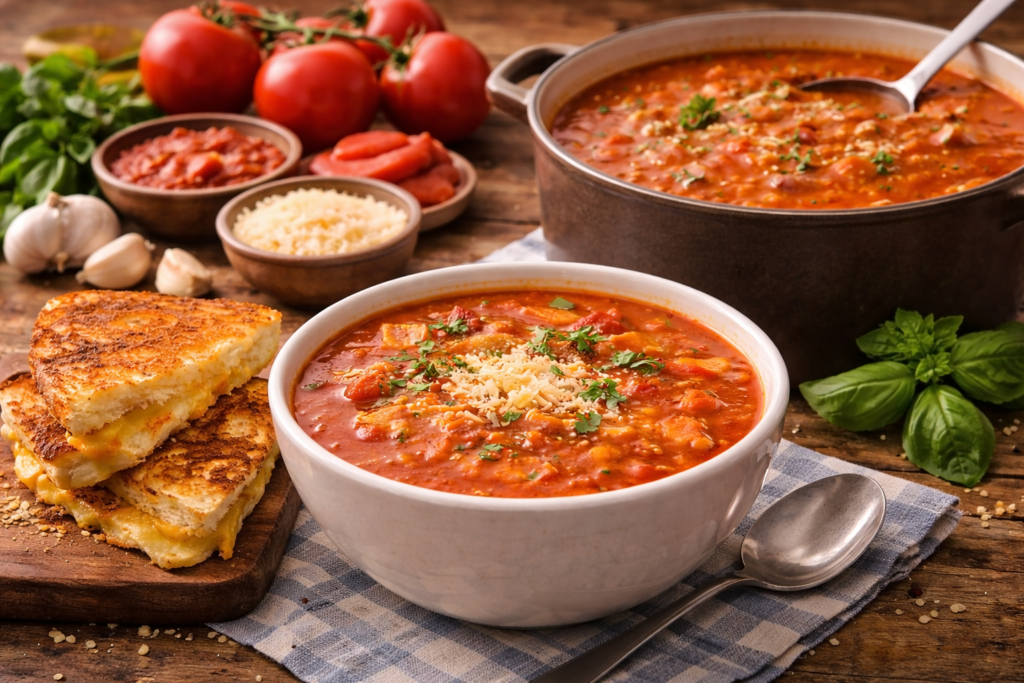
Tomato soup developed prominence during the early 20th century, especially alongside the increase in canned foods.
Regional tradition
The Great Depression made the product famous because people needed cheap food that could be stored for long periods. The combination of grilled cheese and the dish became a wintertime essential for both families and schools.
Cooking context
Traditional versions rely on:
- Slow-cooked tomatoes
- Onion and butter
- Simple seasoning
The recipe needs to achieve balance through fat acidity reduction, which prevents excessive sweetness from occurring.
Chilli (Midwest & Southwest)
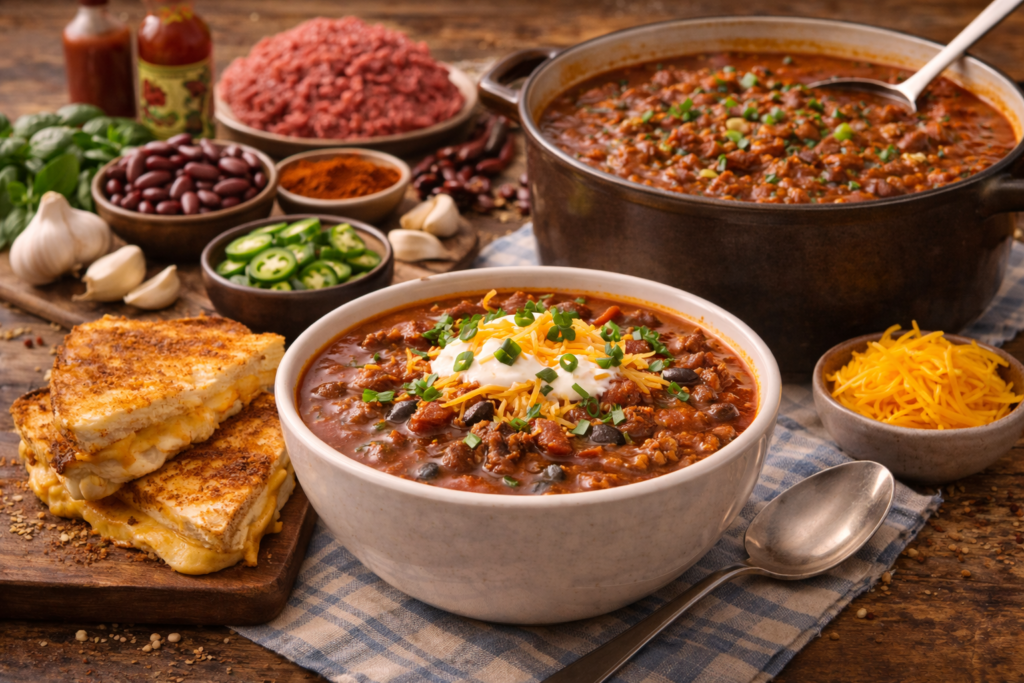
Though often debated as a stew, chilli remains one of America’s most beloved comfort soups
Regional origins
The chilli is an offspring of Tex-Mex and frontier cooking, whereby cowboys, farmers, and hunters needed beef and game dishes as a means to keep warm on the cold, upcoming nights of the plains.
Cooking context
Classic chilli focuses on:
- Ground or cubed beef Chili peppers, and spices
- Lon,g low cooking times.
- Beans vary by region, but the defining trait is depth of flavor which develops through hours of cooking.
Why Comfort Soups Matter in American Winters
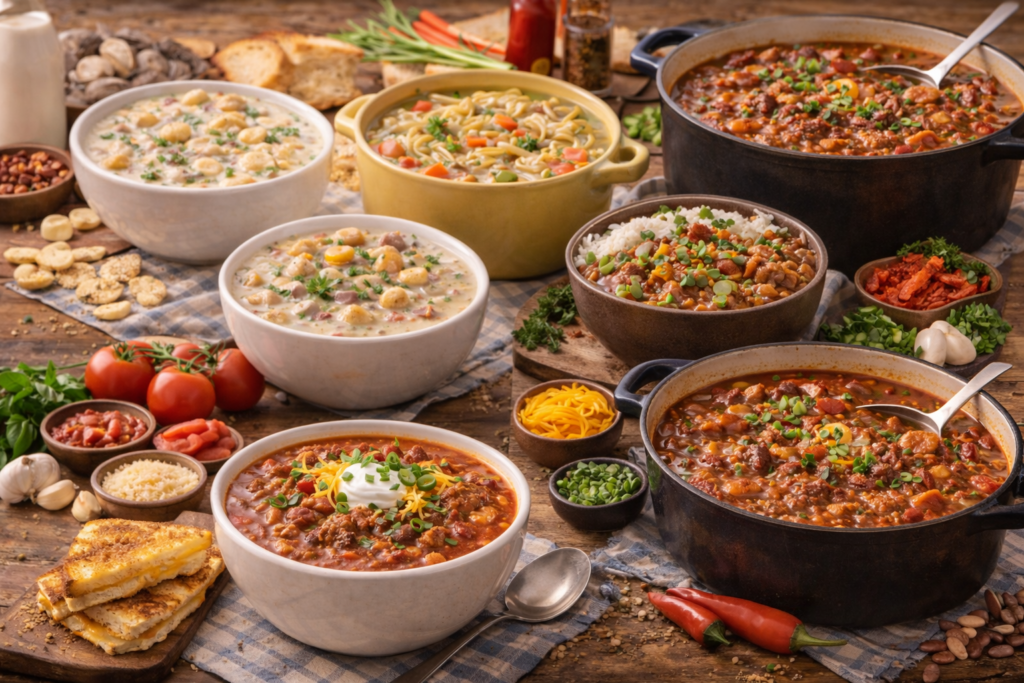
The comfort soup serves as a vital food option because it includes two essential functions
- Budget-friendly ingredients are used, which makes it available to most consumers
- The soup acquires better quality through repeated heating because its taste improves with each heating procedure
- It provides heat protection to users who experience cold weather conditions
The American tradition of making soup starts in winter when home cooking becomes less frequent, and people start preparing their meals more deliberately
Cultural Significance of American Comfort Soups
These soups are not trends—they are culinary anchors. Each one reflects:
- Local geographical features
- Seasonal agricultural requirements
- Shared family cooking customs
The United States developed comfort soups which ranged from coastal chowders to Southern gumbo as a response to their various climate conditions and cultural differences, and community practices.
Conclusion
The best American comfort soups sustain because they serve more than hunger. The soups create warmth and memory while providing people with something to eat. The essential American winter food tradition emerges from these soups, which people continued to make since their regional origins. The American dining experience reaches its most satisfying point through comfort soups, which people enjoy throughout the day by cooking them or eating them from the previous day.