Rice cultivation in Italy began in the 14th century, while Arabs added rice to Sicily, and then it spread
north. The Po Valley’s humid climate made it perfect for developing quick-grain rice sorts like
Arborio, Carnaroli, and Vialone Nano — all staples for risotto.
By the Renaissance, rice turned into a prized component, but risotto as a creamy rice dish emerged in the sixteenth to 17th centuries, evolving from easy boiled rice dishes. It became popular in Milan, famously with Risotto alla Milanese, which uses saffron
Adding mushroom risotto likely advanced naturally in areas like Piedmont and Lombardy,
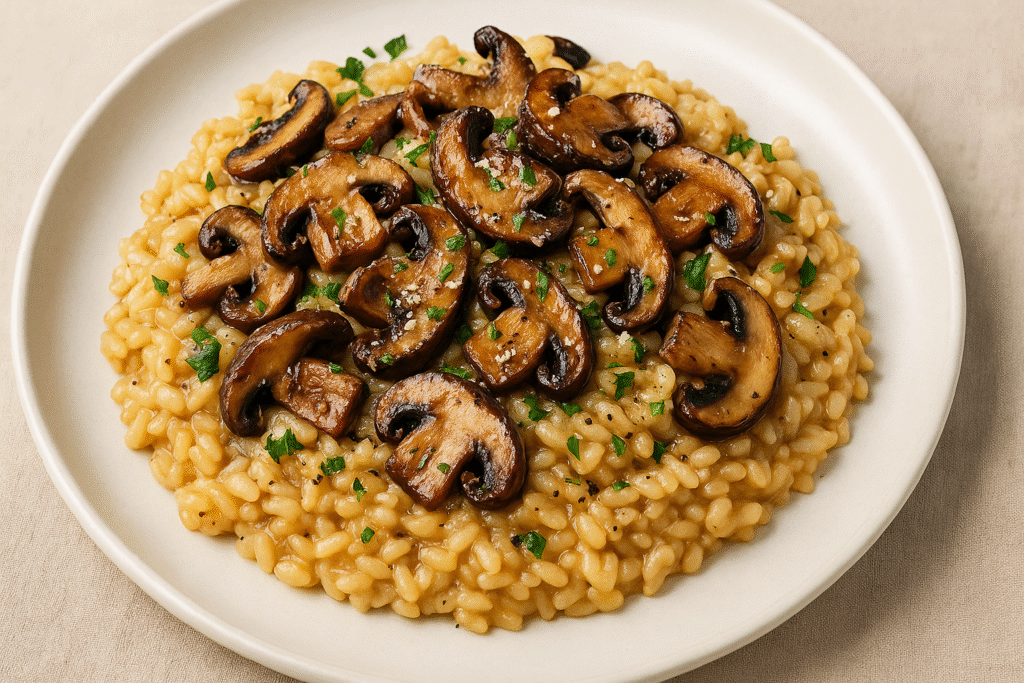
wherein wild mushrooms, in particular porcini, are plentiful in autumn forests. Mushroom Risotto
rose to prominence in the nineteenth and early twentieth centuries, as foraging and neighbourhood,
Seasonal cooking has been (and still is) relevant to Italian delicacies
The dish embodies the Italian culinary philosophy of the usage of easy, brilliant ingredients.
Today, Mushroom Risotto is a cherished dish globally, located in trattorias and first-rate eating alike.
Mushroom Risotto is praised for its rich presence, earthy flavours, creamy texture, and versatility
— the usage of wild or cultivated mushrooms like porcini, cremini, chanterelles, or shiitake. It has
emerged as an icon of Italian comfort food.

- 11⁄2 cups (300 g) Arborio rice (or Carnaroli/Vialone Nano)
- 400–500 g sparkling mushrooms (porcini, cremini, or mixed), sliced
- 1 small onion or 2 shallots, finely chopped
- 3–4 cups (750–950 ml) of hot vegetable or chicken stock
- 1⁄2 cup (one hundred twenty ml) dry white wine (elective, however conventional)
- 3 tbsp unsalted butter
- 3 tbsp olive oil
- 1⁄2 cup (50 g) freshly grated Parmesan cheese
- 2 cloves garlic, minced (optionally available)
- Salt and freshly ground black pepper
- Fresh parsley, chopped (for garnish)
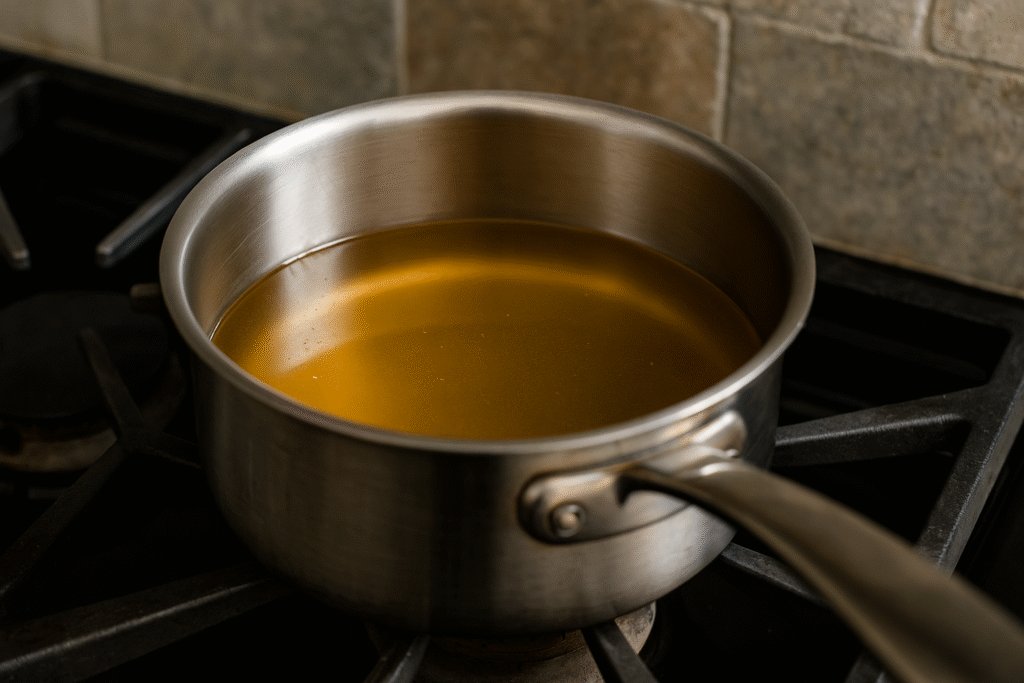
Step 1: Take a saucepan and on a low flame, heat your chosen stock
(vegetable, chicken meat, etc.)
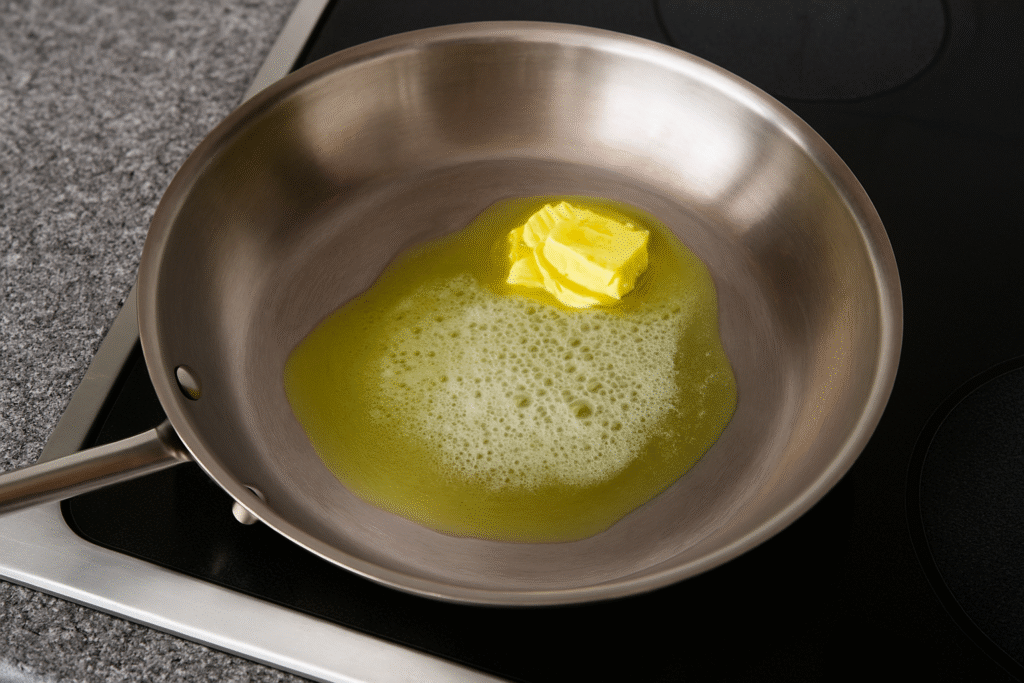
Step 2: In a large pan, warm 1 tbsp olive oil and 1 tbsp butter over medium heat

Step 3: Add sliced mushrooms (and garlic if desired). Sauté till they lose their moisture and turn golden brown
Step 4: Season gently with salt and pepper. Transfer to a bowl and set aside
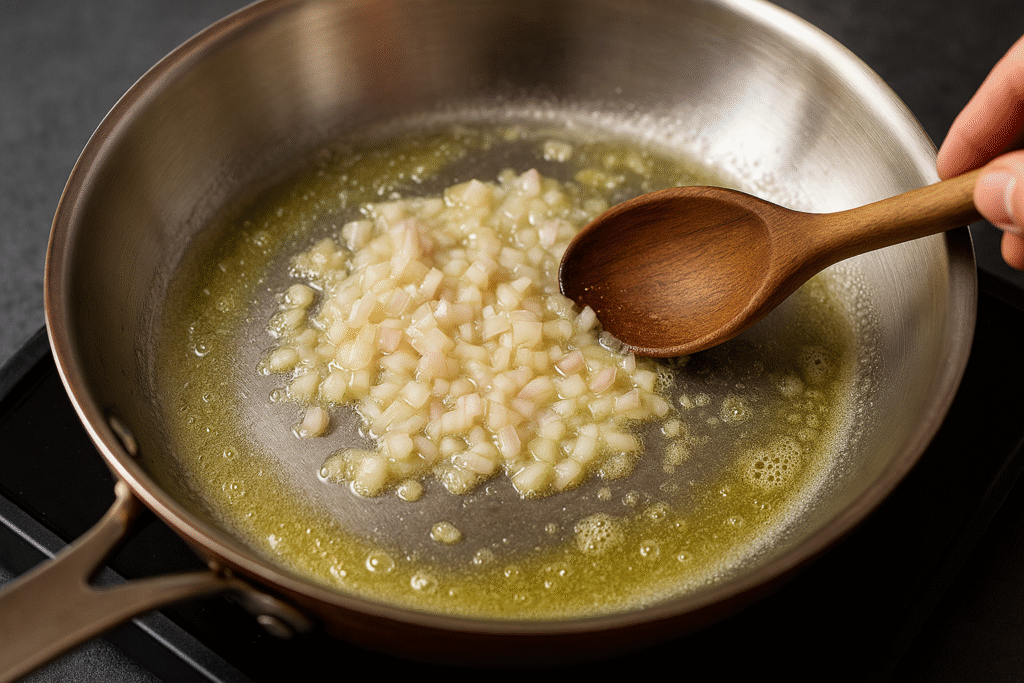
Step 5: In the identical pan, add the final olive oil and butter
Step 6: Add chopped onion or shallots and let it cook over medium heat till gentle and translucent, approximately five minutes
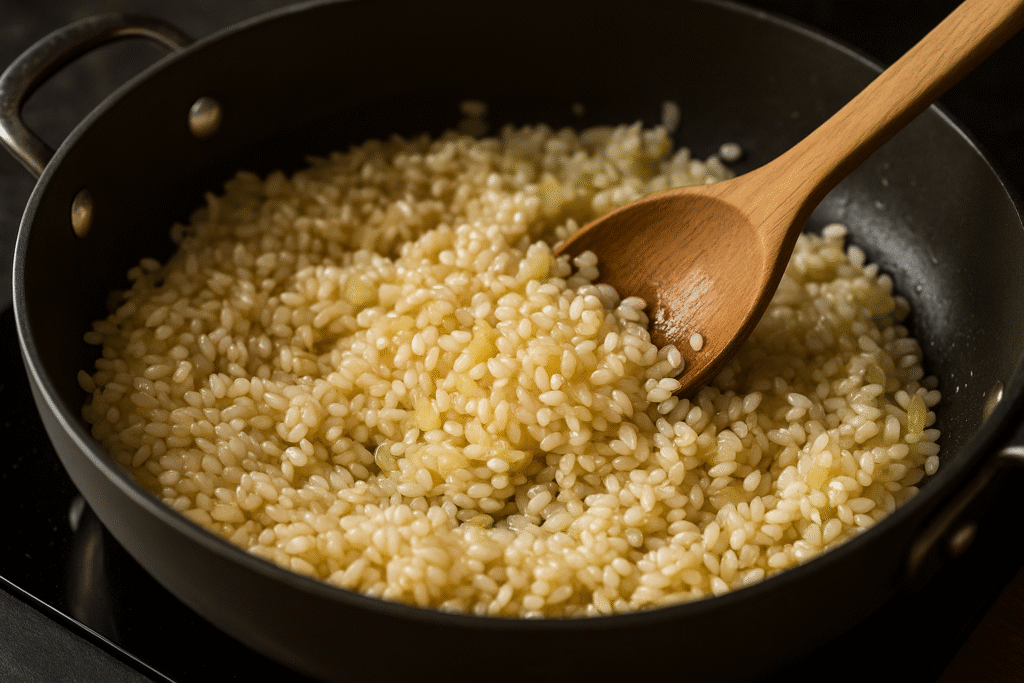
Step 7: Add the rice to the pan. Stir for 2–3 mins until the rice is coated and slightly translucent at the edges — this step is crucial for exact texture!

Step 8: Pour the white wine and stir until it is absorbed
Step 9: Add 1 ladleful of warm stock and stir gently until absorbed. Repeat, including broth one ladle at a time, stirring often
This will take about 18–20 minutes — the rice ought to be gentle, however al dente, and the risotto must be creamy, not soupy.

Step 10: When the rice is almost done, stir the sautéed mushrooms back in
Step 11: Remove from the warmth, add the final butter and Parmesan, and stir vigorously to make it creamy.

Step 12: Season with salt and pepper to flavour.
Step 13: Spoon into heat bowls, garnish with clean parsley and further Parmesan, if you want.
Tips
- Always use warm inventory — cold inventory shocks the rice
- Stir often, however lightly — this releases starch for creaminess
- Don’t overcook — risotto should drift slightly on the plate (“all’onda”)
More Facts
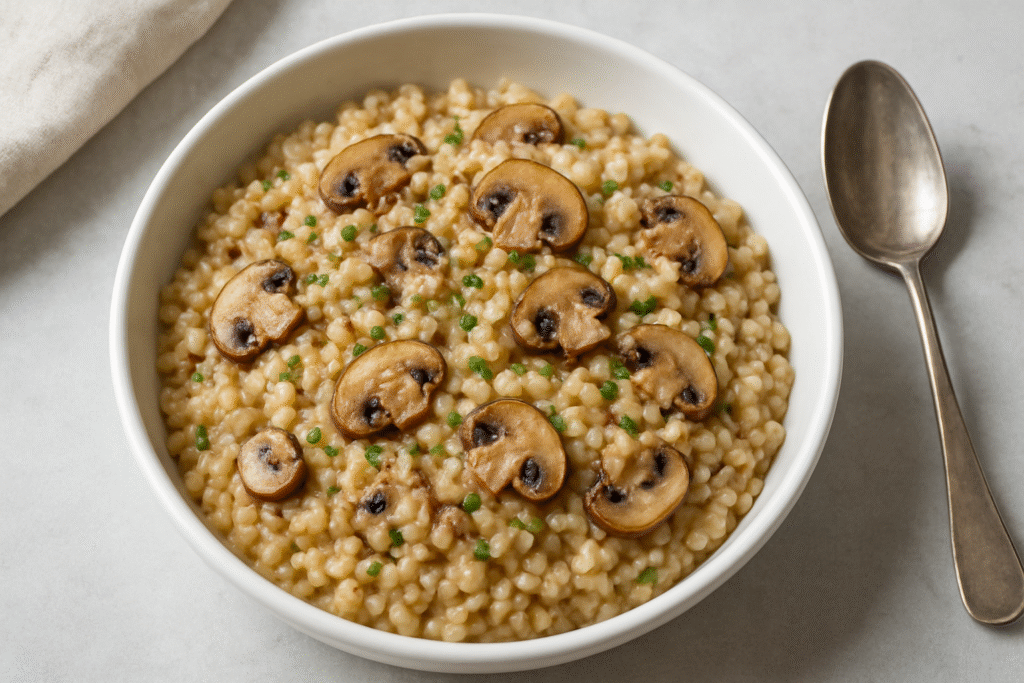
- Mushroom Risotto is most strongly related to the regions of Lombardy and Piedmont, wherein rice cultivation and mushroom foraging are culinary traditions. Arborio is the most famous; however, Carnaroli and Vialone Nano are prized by cooks for generating an even creamier texture and preserving their form better
- In Italy, clean wild mushrooms are utilised in autumn, but dried porcini are used 12 year-round because they % intense flavour
- A genuine risotto should be “all’onda” — actually “like a wave.” It ought to unfold barely at the plate and appear fluid, in no way stiff or dry. The consistent stirring allows the rice grains to rub together, releasing the starch that creates risotto’s signature creaminess. Italians call the final full of life stir with butter and cheese the “mantecatura”, which makes the risotto glossy and luscious
- Adding white wine deglazes the pan and gives a diffused acidity that balances the richness of butter and cheese. Although a country farmhouse dish, Mushroom Risotto has turned out to be a quality eating staple
- Many chefs add expensive twists like truffle oil, wild foraged mushrooms, or a very last drizzle of aged balsamic. The technique inspired dishes globally — like Spanish Arroz Meloso, which is analogous in its creamy texture, but frequently makes use of specific broths and seasonings
- It highlights the Italian way of life of using neighbourhood, seasonal materials and remodelling them into comforting, fashionable dishes
- This way of life keeps alive the art of foraging, seasonal consuming, and culinary sustainability. Making risotto teaches endurance and technique: The proper rice variety, Gentle stirring, gradual broth addition, and the very last “mantecatura” (vigorous stirring with butter and cheese). All those steps showcase the precision and admiration for ingredients that define Italian cooking.
- Mushroom Risotto is a global symbol of Italian consolation food — creamy, warming, earthy, and gratifying. It bridges rustic farmhouse kitchens and delicate dining place tables
- Mushroom Risotto’s simple technique conjures up international cuisine
- It’s a canvas for creativity: including truffle, herbs, exceptional mushrooms, or pairing with meats and seafood. Chefs refine it endlessly whilst staying true to its roots. Using humble rice and foraged mushrooms shows how simple elements can create high-priced taste without pricey or wasteful substances — a lesson in sustainability and culinary mindfulness.