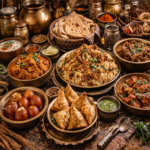
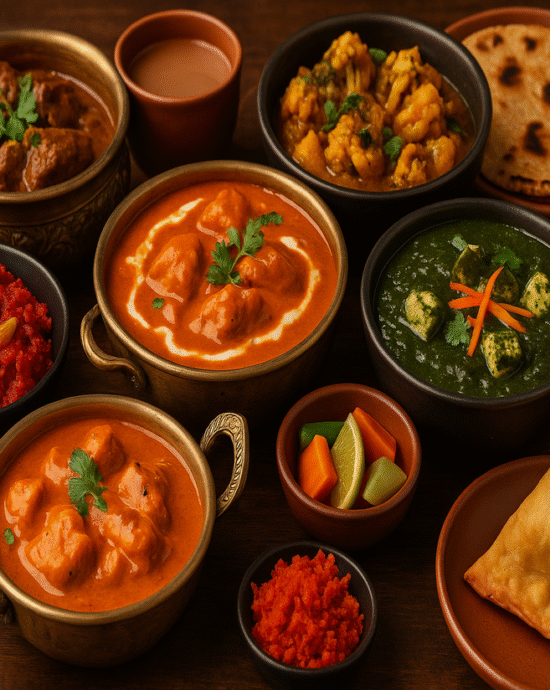

Winter, for India, is not just a season. Every Indian kitchen smells of hot gravies, toasted spices, caramelised vegetables, freshly made ghee and winter greens along with jaggery (gud), green cardamom (ilaichi) and more when the weather turns cold. In India, winter cooking is about bold and deep flavours. All regions have their own slow cooking legacies and dishes, ones made with affordable ingredients that comfort the soul
The following winter recipes are handed down through the generations. They hold memories of sooty chulhas, slow stirring on open fires, long, slow cooking and a natural cycle of eating with the seasons. This kind of cooking pays respect to the earth, exhibits local customs and supplies a unique flavour. Every Indian kitchen in a different state has its own story. There are a few winter comfort foods that have been popular for quite some time. People love them so much that they have been perfected for thousands of years. Let’s explore their flavours, recipes, cooking styles, histories, how they inspire modern versions and quick tips for home cooks.
Dish details and recipe topics
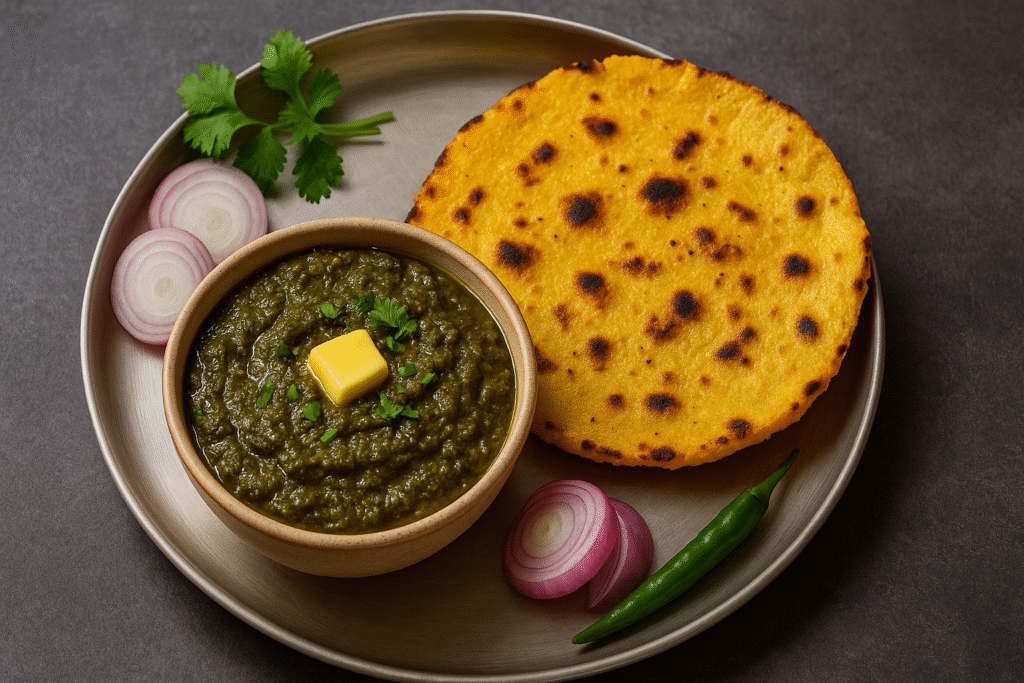
1. Sarson ka Saag & Makki ki Roti: Punjab’s Golden Winter Heritage
Punjab’s golden winter heritage
In India, the Punjabi classic Sarson ka Saag with Makki di Roti holds a certain deep emotion. It’s more than a dish – it is winter on a plate.
Why does Sarson ka saag holds importance in Indian winter cooking?
Winter is the best season to enjoy sarson ka saag, which is rich in fibre and nutrients. Mustard greens have a strong, peppery taste that becomes soft and rich when they are simmered. The dish typically contains the following ingredients:
- Sarson ke patte (Sarson leaves)
- Paalak (Spinach)
- Bathua (goosefoot greens)
- Adrak (Ginger)
- Lahsun (Garlic)
- Hari mirch (Green chillies)
- Makai aatta (a little maize flour)
To prepare sarson ka saag deliciously, cook it slowly until it becomes thick, soft, and full of aroma.
Traditional cooking process
- The traditional method to cook sarson ka saag is long and requires a lot of effort
- Sarson ke patte, Paalak, & Bathua are first boiled till they turn very soft, and then battered using a wooden churner
- The mixture is cooked on low heat for a long time till it becomes a little thick, as per your taste. After that, put sautéed onions & garlic, and plenty of ghee. If comfortable, add whole red chillies to enhance the taste
- The dish is served with fresh white butter as per the requirements.
Region-wise variations
- Punjab: Thick, rustic, buttery
- Haryana: Lighter, more bathua-heavy
- UP: Tangier, with added tomatoes
- Urban Indian homes: Cream or malai is added for richness.
Global Fusion
- Saag with grilled tofu
- Saag lasagna
- Saag-shakshuka
- Saag quinoa
Makki ki roti
- A popular dish in North India, made from coarse maize flour (Makai ka aatta). The roti is primarily prepared with ghee, is earthy & nutty in taste, which feels like a bit rural side dish and served with butter
- Saag and makki ki roti make a perfect combination – rich, light, warm and traditional
- Together, they create a classic winter comfort dish
2. Gajar Ka Halwa
The majority of Indians end their meals in winter with a bowl of hot gajar ka halwa. Delicious sweet that is made from the red carrots (Gajar) that come only in winter.
Why is it the perfect winter dessert?
The red carrot available in winter is naturally sweeter and juicier than the orange ones. Additionally, the slow cooking brings out a natural caramel taste. At home, it is typically prepared with milk, ghee, dry fruits, and Cardamom (Ilaichi). The commercial spots also mix khoya to provide extra flavour.
Traditional method
Carrots are grated and cooked slowly in milk till the mixture becomes thick. Then ghee, sugar or jaggery, khoya, and cardamom are added basis the quantity of the carrots & milk
Region-wise variations
- UP & Delhi: Classic milk-and-khoya version
- Rajasthan: Rich ghee, roasted nuts
- Bengal: Sweetened with nolen gur (date palm jaggery)
- South India: Coconut-based version
Global Fusion
- Gajar halwa cheesecake
- Halwa-stuffed donuts
- Vegan gajar halwa (almond milk & coconut oil)
- Halwa-filled croissants
This is a simple dessert with sweet flavours bursting in your mouth. A delectable dish in the winter.
3. Nihari: Slow-cooked stew
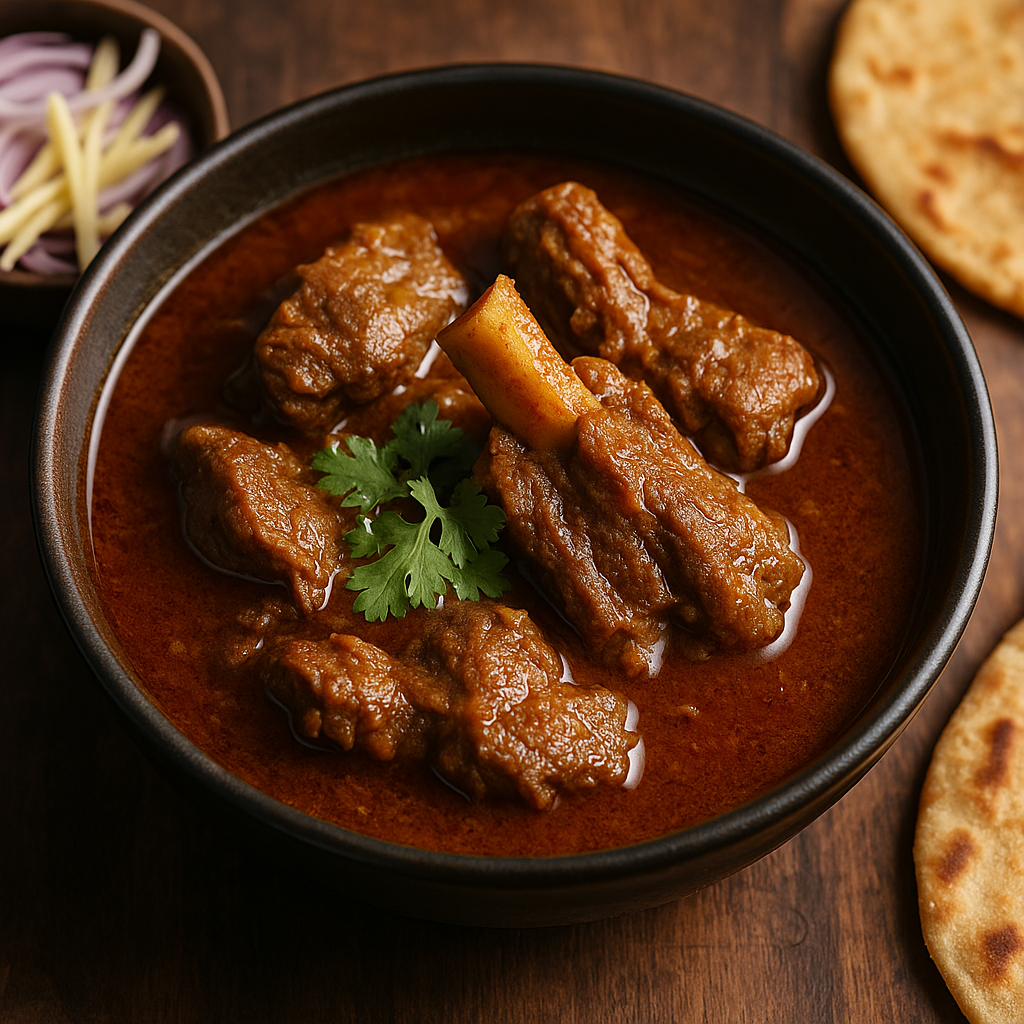
Winter mornings in India and other parts of the world start with a hot bowl of nihari – a rich, smooth, deeply spiced stew that cooks overnight.
The essence of Nihari
- Full of collagen, marrow, and warming spices
- Traditionally made with mutton (with beef in other parts of the world)
- Thickened with flour for a silky texture
- Garnish with ginger, green chillies, lemon, and fresh coriander
Historical roots
It is said that nihari originated with the royal soldiers of the Mughal era as a hearty, warm, and nourishing winter meal.
Regionwise variations
- Delhi: Spicy, deep red, full of marrow
- Lucknow (Awadhi): Mild and infused with saffron for fragrance
- Hyderabad: Slightly tangier with tomato
- Pakistan: Spicy and rich in gelatin
Global Fusion
- Nihari ramen
- Nihari pot pie
- Nihari tacos
- Nihari shepherd’s pie
It is cooked slowly, giving its own ingredients and meaty richness that makes nihari a true winter classic
4. Undhiyu – A Mixed Vegetable Dish: Gujarat’s Winter Special
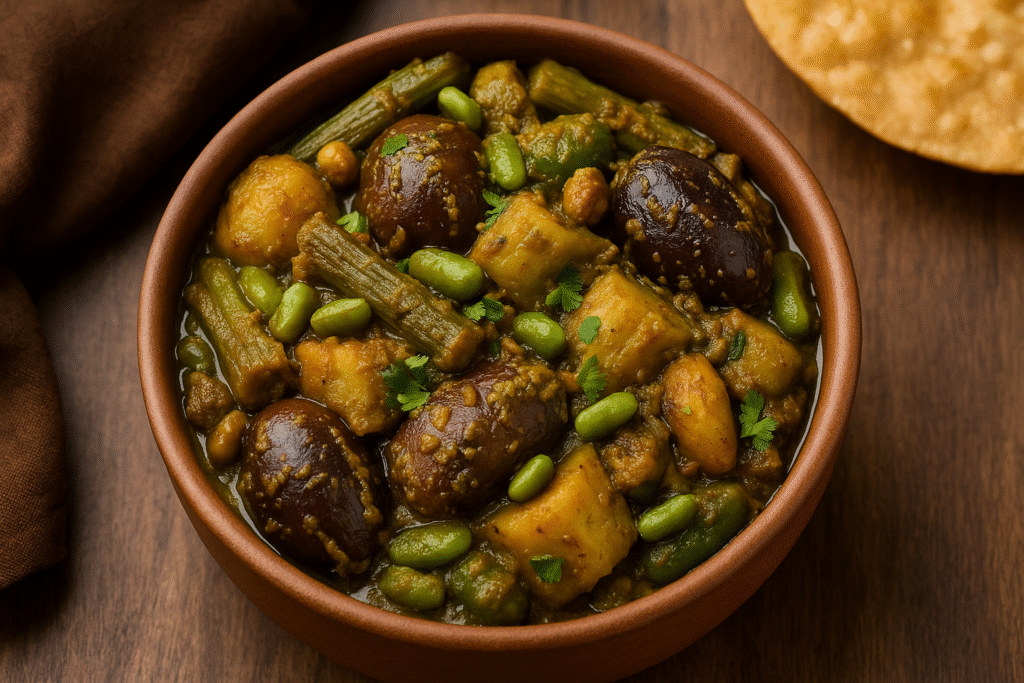
Undhiyu is a mixed-vegetable dish, popular during winter and festivals like Uttarayan.
Most of the vegetables grow only in winter, making the dish winter special and seasonal.
Ingredients
- Purple yam (bainganee rataaloo)
- Raw banana (kachcha kela)
- Flat beans (papdi)
- Fresh peas (taaja matar)
- Baby potatoes (chhote aaloo)
- Muthia (fenugreek dumplings)
How does it taste?
Undhiyu is a mix of sweet, spicy, tangy, and rich in garlic & cilantro flavour
Global Fusion
- Air-fryer undhiyu
- Undhiyu Buddha bowls
- Gluten-free muthias
The preparation of Undhiyu takes time, relished by the Gujaratis and is the pride of Gujarati winter feasts.
5. Rogan Josh: A meat-based dish from Kashmir
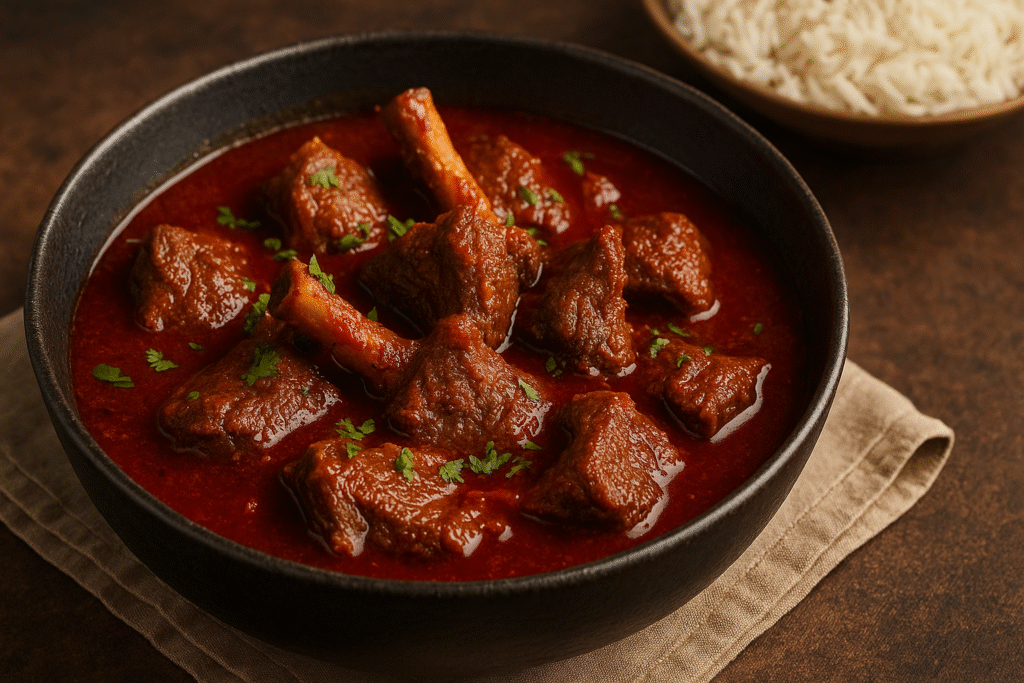
Kashmir’s extreme winters need food that warms the body and fills the stomach & soul. Mutton Rogan Josh (lamb curry) with its deep red colour and aromatic spices, is perfect for all seasons in the region and a comfort food in the winter.
Ingredients for the flavours
- Kashmiri red chillies
- Fennel (saunph)
- Ginger powder
- Black cardamom (kaalee ilaichi)
- Yoghurt
- Ghee
Variations
- Kashmiri pandit style: No onion or garlic
- Muslim style: Uses an onion-based gravy
- Global style: Add tomato and cream
Serving Pairings
- Saffron rice
- Sheermal
- Khameeri roti
- Millet rotis
6. Bajra roti with Lahsun chutney: Rajasthan’s winter meal
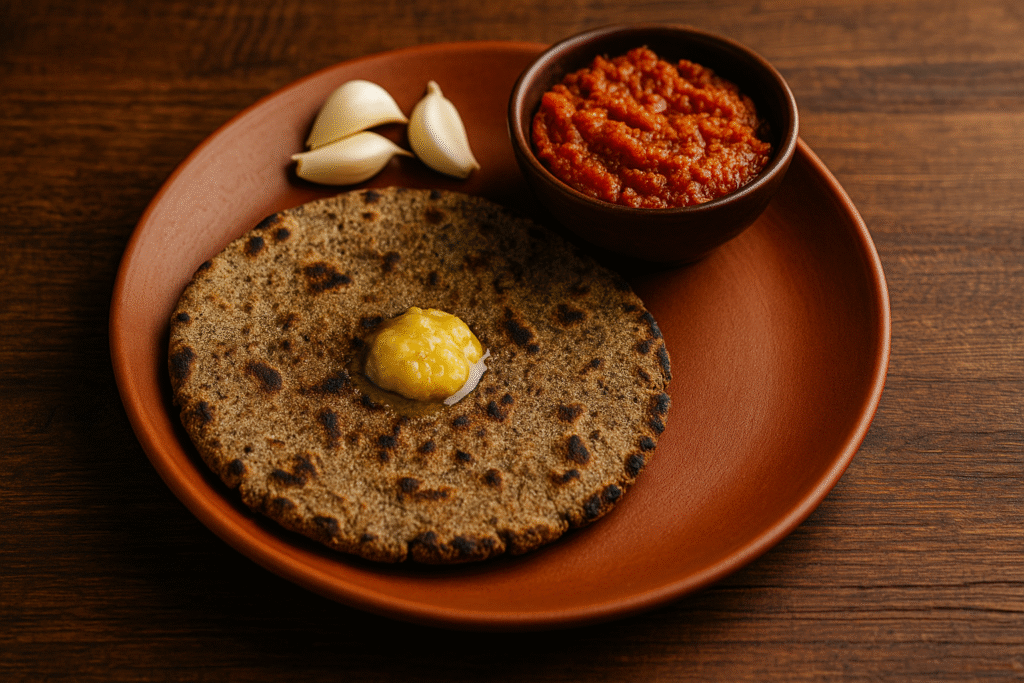
Bajra ki roti holds significance in Rajasthan food tradition. Bajra is a part of millet and a thick grain that is high in protein, minerals, easy to digest, and boosts the body heat, thus a delectable in winter.
Serving Pairings
- Spicy vegetable dishes
- Kadhi
- Garlic chutney
- Jaggery with ghee
Global Fusions
- Bajra tacos
- Millet bowls
- Bajra flatbread pizza
Relish this simple, healthy and warm meal in winter.
7. Tilkut, Chikki & Jaggery special: Traditional winter sweet
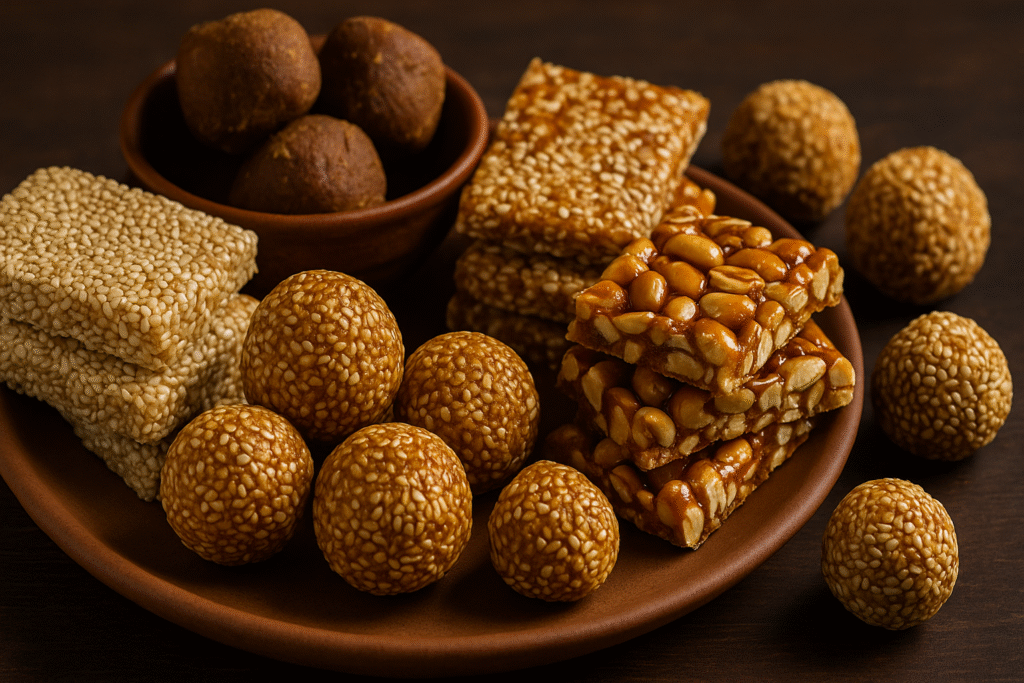
Indian winters bring joy to every home that is filled with sweets prepared with jaggery, sesame peanuts, dry fruit, etc., sweets. The primary reason to use these items is as follows:
- These foods are winter season harvests
- Provide warmth to the body
- High in proteins, carbs, and minerals that help increase immunity
Popular Winter Sweets
- Til ke ladoo (sesame balls)
- Peanut chikki (Moongfali)
- Gur revdi
- Gajak
- Gur til patti
Regional Variations
- Maharashtra: Use more of sesame
- Punjab: Loves to eat jaggery
- Rajasthan: Famous for varieties of gajak
- Bengal: Uses nolen gur (date palm jaggery) in many sweets
These sweets are simple, healthy, and bring festive warmth to winter
8. Mountains winter comfort foods: Noodles, Momos, Thukpa & Others
a. Thupka
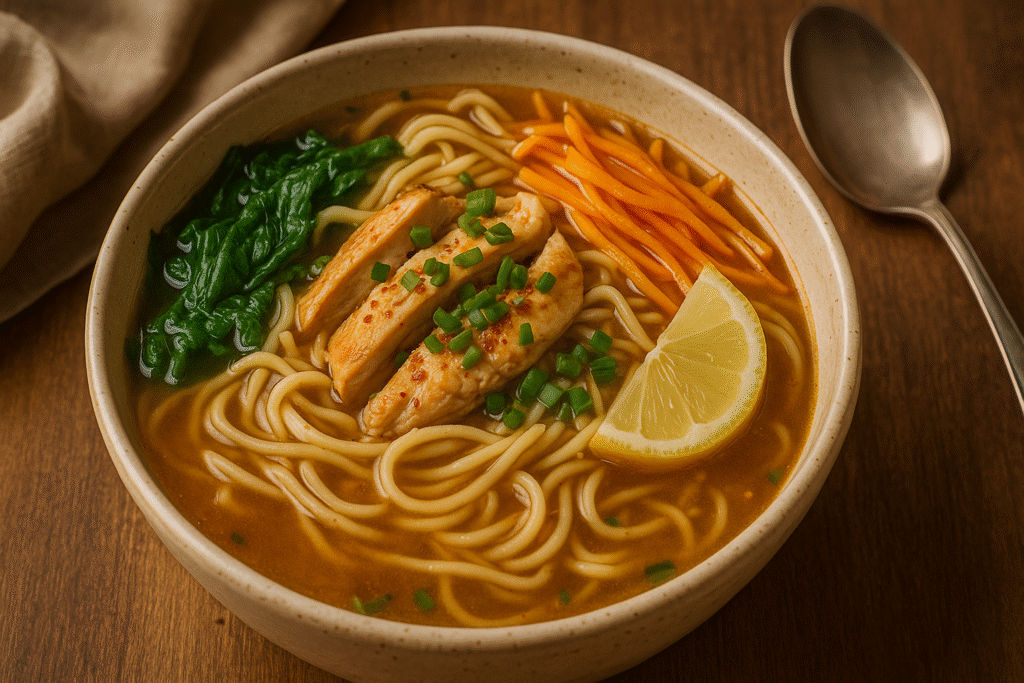
As mountain regions in India are cold in winter, the food typically comes from hot, steaming, broth-based dishes.
Thukpa is a noodle & meat or vegetable-based soup made with:
- Noodles
- Meat or vegetables
- Ginger, garlic, and chilli
- Broth simmered with warm spices
b. Momo
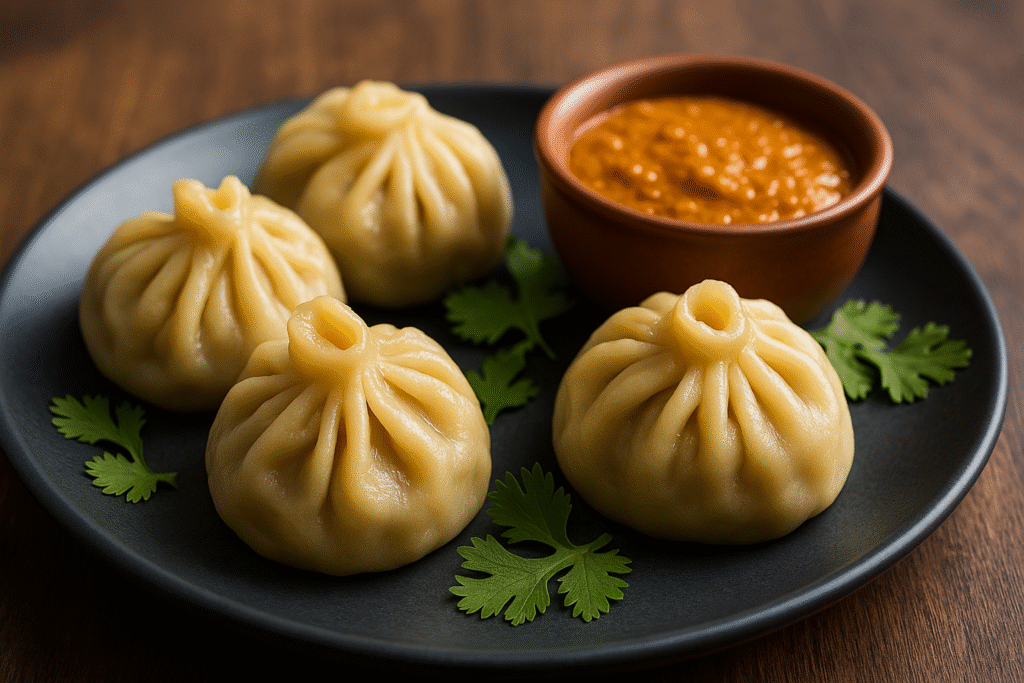
Soft dumplings filled with vegetables or chicken, or pork, sometimes mixed with cheese
c. Skyu
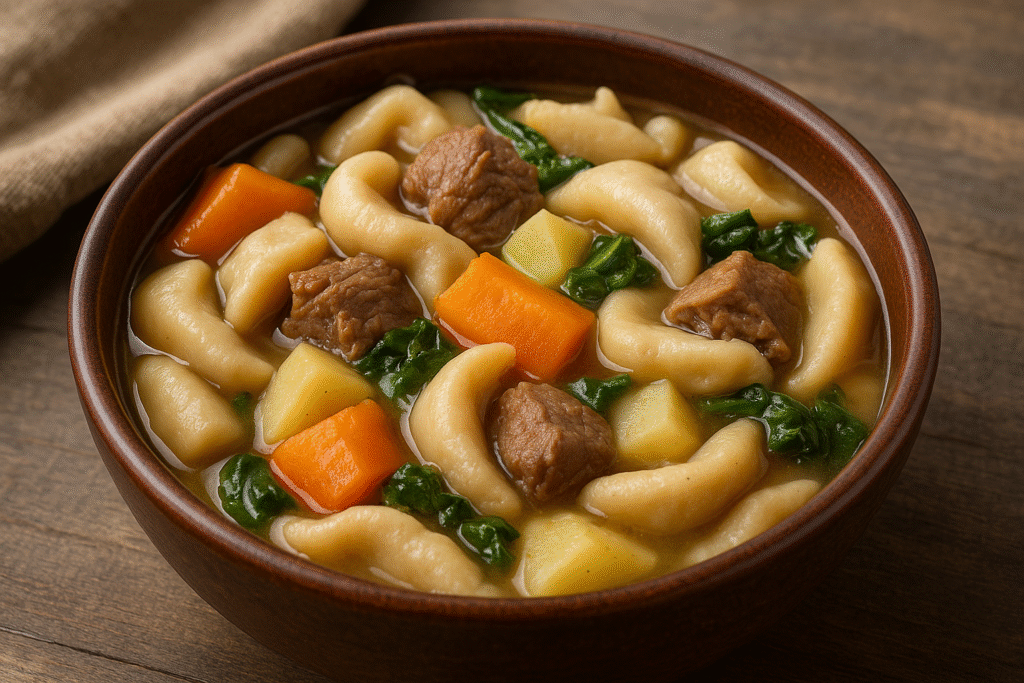
A traditional Ladakhi winter stew with wheat dough, meat, and vegetables
Global Fusions
- Momo sizzlers
- Momo filled with cheese
- Thukpa ramen bowls
- These dishes bring warmth and comfort to Mountain food in winter
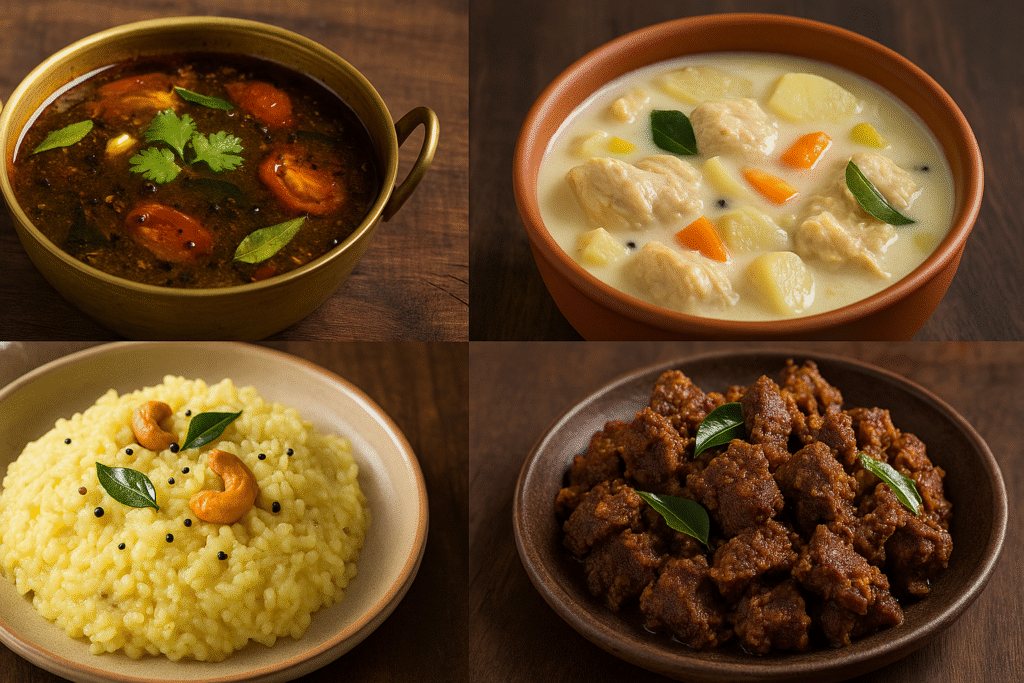
9. Rasam, Pongal & Kerala stews: South Indian winter foods
Though winters are mild in South India, it has its own foods to go for.
Pepper Rasam
Pepper rasam is water based dish that tastes sour & tangy. It is prepared with lots of black pepper, garlic, curry leaves, tamarind, etc. The drink is consumed hot, providing a refreshing taste in winter. It also helps in digestion
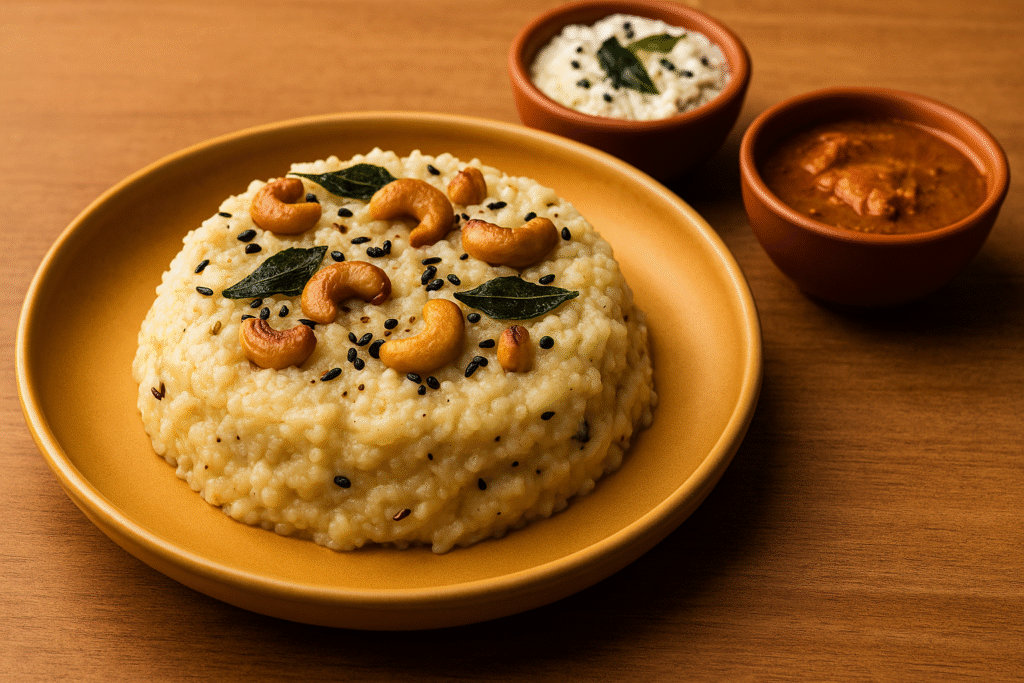
Ven Pongal
- Best served with coconut chutney or sambar for a complete winter meal
- Ven Pongal is a mix of rice, lentils, ghee, pepper, and cumin
- It is cooked slowly to bring out a soft and comforting texture
- Fried cashews and black pepper add crunch
Kerala Chicken: Coconut milk infusion
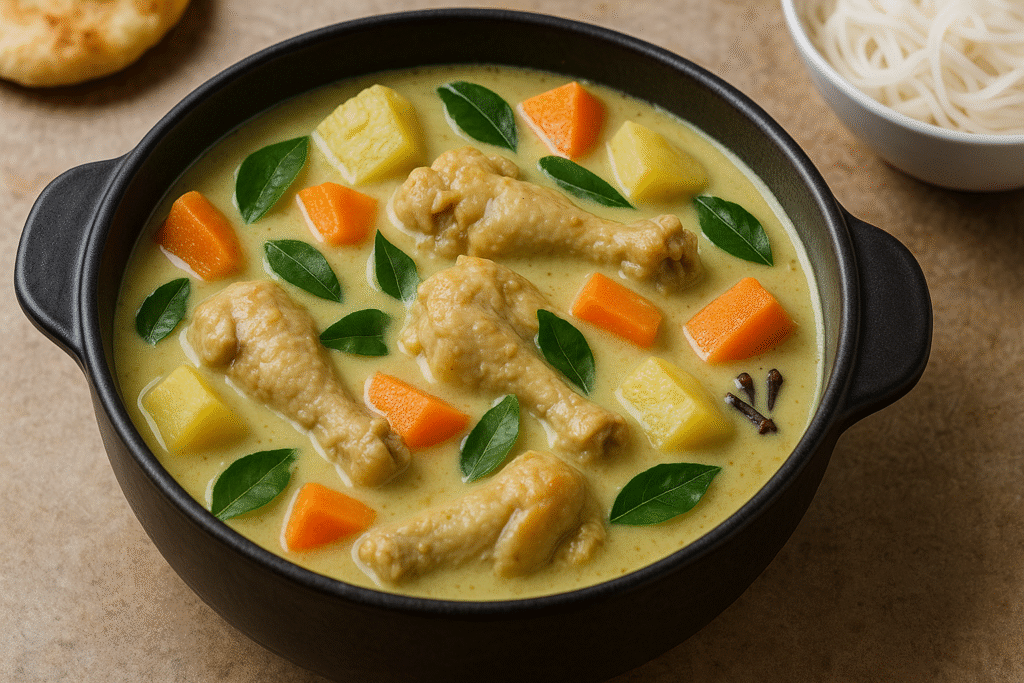
- A gentle and delicate base with mild spices-cardamom, cloves, and cinnamon
- Vegetables like potatoes & carrots sweeten the stew batter naturally and lend it body
- Best enjoyed with appam or idiyappam, to make for a great winter breakfast & dinner
Mutton Sukka: Fiery and dry
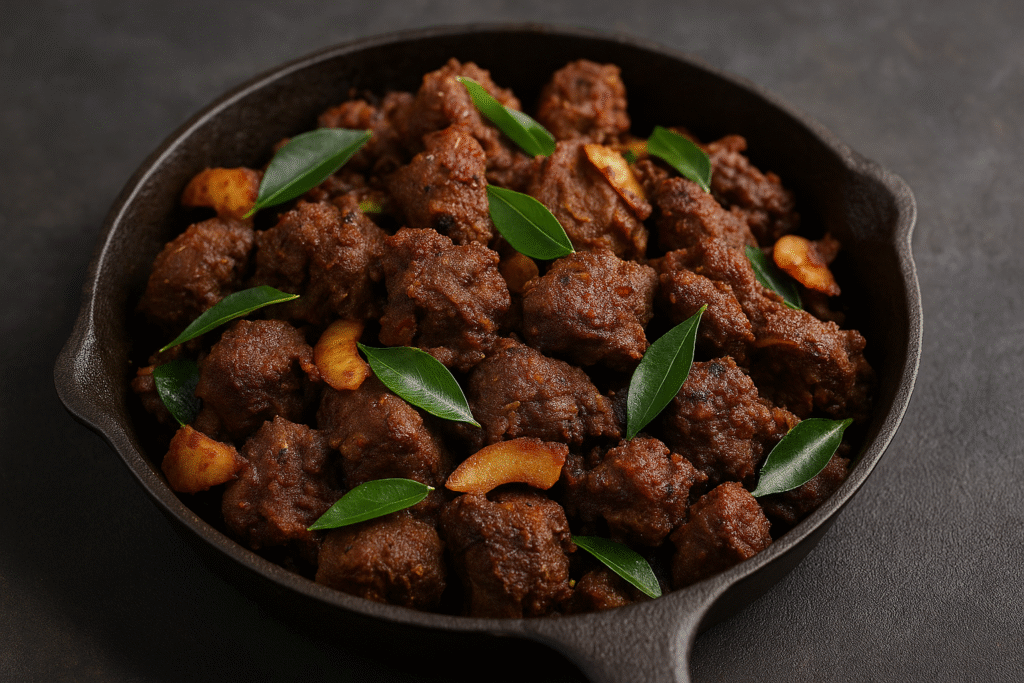
- Slow-cooked & roasted with coconut, fennel, and pepper for rich flavour
- Slow cooking helps spices penetrate the mutton, making it tender and aromatic
- Best served with dosa, parotta, or steamed rice for a hearty winter feast
Let’s explore a few modern fusions with Indian foods
Globe-travelling chefs love to experiment with foods to come out with modern comfort foods by mixing tradition with innovation
Popular Fusion Dishes
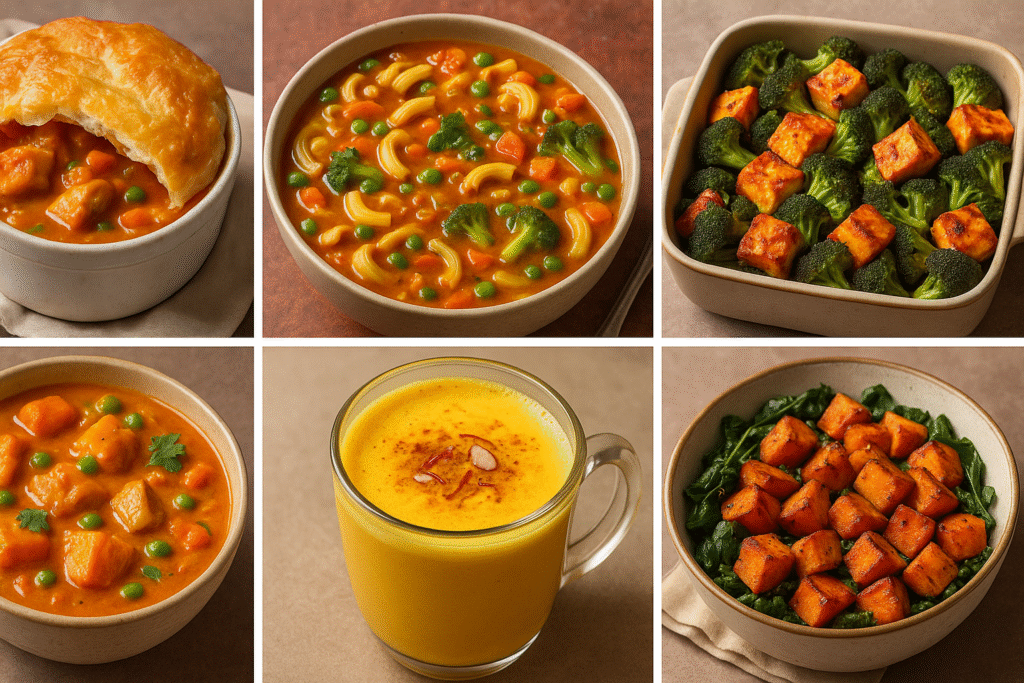
- Butter chicken pot pie
- Masala macaroni soup
- Paneer tikka broccoli bake
- Spiced pumpkin coconut curry
- Turmeric hot chocolate
- Ghee-roasted sweet potato bowls
- Kesar almond latte
Try out the above fusions. Let us know if you love it.
Spices, Vegetables, fats & sweetner: Indian winter cooking uses warm and nourishing ingredients
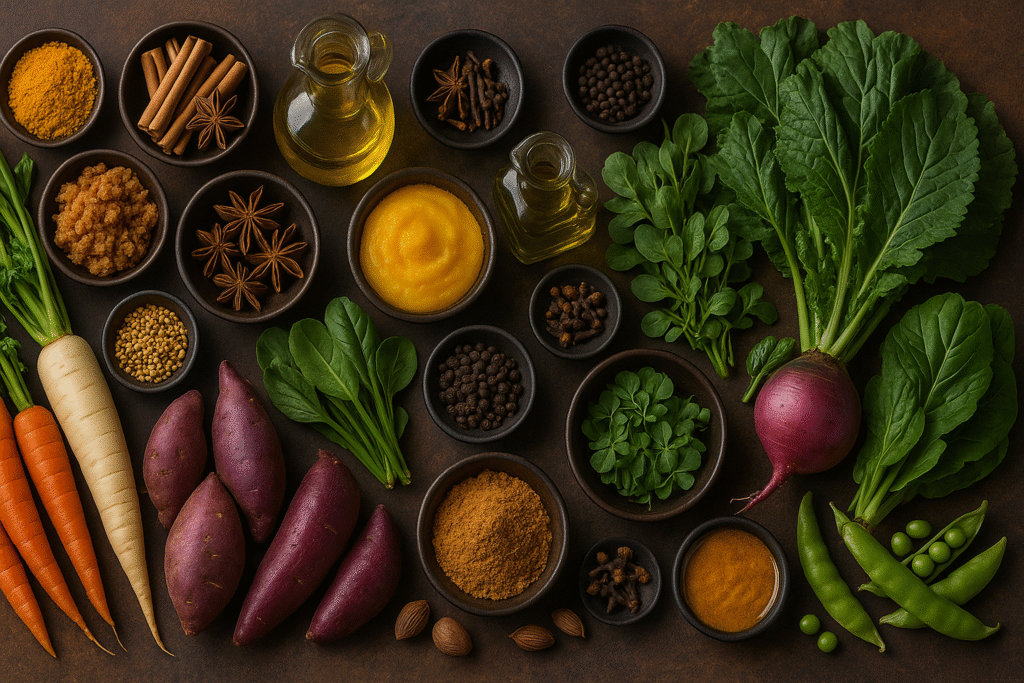
All these ingredients help build immunity and keep the body warm, supporting health during winter.
Spices
- Cinnamon
- Black cardamom
- Nutmeg
- Pepper
- Cloves
- Mace
- Garam masala
- Cumin
Ghee & Oil
- Ghee
- Mustard oil
- Sesame oil
- Rice bran oil
- Groundnut oil
- Coconut oil
- Olive oil
Green Leafs
- Mustard leaves
- Spinach
- Fenugreek (Methi)
- Bathua
- Coriander
Winter Vegetables
- Carrots
- Yams
- Radishes
- Turnips
- Purple sweet potatoes
- Peas
- Cauliflower
- Beetroot
Sweetners
- Jaggery
- Date palm jaggery
Serving Ideas for a Perfect Indian Winter Meal
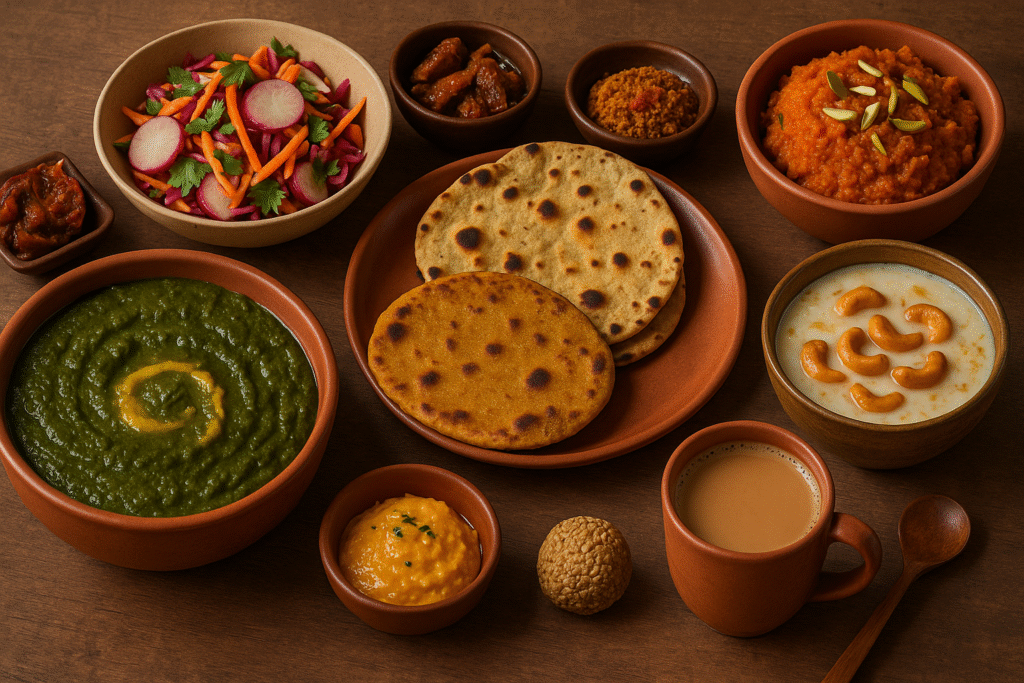
Main Dish
- Saag, curry, or stew
- Millet roti, Atta roti, Makki ki roti, Rice
Sides
- Roasted papad
- Salad
- Pickles
Desserts
- Gur ki kheer
- Gajar halwa
- Til ladoo
- Jaggery-based sweets
- Rice kheer
- Akhrot halwa
- Jalebi-Rabri
Beverages
- Chai: Masala, Tulsi-ginger
- Doodh (Milk): Plane, Kesar, Haldi, Malai
- Soup: Tomato, Vegetable, Chicken, Hot & sour, Lemon coriander
These create a full sensory experience of an Indian winter feast.
Practical Cooking Tips for Winter Dishes
a. For rich flavours: Cook at a low flame and slow
- Spices, herbs, and ingredients mix naturally over gentle heat
- Slow cooking makes meat and vegetables tender & luxurious
b. For sweetness: Use jaggery instead of sugar
- Adds mineral-rich sweetness & a caramel-like depth
- Supports digestion & immunity
c. Toast spices lightly before grinding
- Releases essential oils & intensifies aroma
- Transforms the character of the dish
d. Ghee increases immunity, strength, aroma, and taste
- Ghee has plenty of benefits in the food, whether breads, rice, curries, saag, etc
- Helps spices blend smoothly
- Fresh herbs for flavours, characters, and minerals
- Coriander, mint, & curry leaves lighten heavy dishes
- Add colour, aroma, & a refreshing taste
Conclusion
Using seasonal ingredients, cook well, taste fresh, & naturally support body health
during each season. Even Western countries must experiment and develop a taste for Indian winter food to live a healthy & flavourful life.
FAQ (Frequently Asked Questions)
Q. Why is there so much ghee and jaggery in the preparation of traditional winter
recipes?
A. Ghee is an important ingredient to prepare the masala, or put it in the daal, saag or put
it on the rotis. It gives strength, energy, flavour, heats the palate and helps with
digestion. Ghee is the best fat to use in the kitchen. However, the consumption must
be followed by physical activities for the best health. Jaggery comes with recess minerals, and its comforting sweetness neutralises the heat and earthiness of the soils.
Q. Are all winter dishes dull?
A. Every region in India has developed foods as per its local taste, right from Kashmir to
Kanyakumari and from Arunachal Pradesh to Maharashtra. People enjoy the foods with
heavy gravies and light broths such as rasam, thukpa, saag and curries, catering to
every whim or preference. One can use the winter ingredients to prepare flavourful
breakfasts, lunches, dinners, snacks, and desserts.
Q. Why is winter bringing more green foods such as sarson?
A. These green and leafy vegetables are seasonal, rich in fibre, healthy, and naturally
warming. Mustard greens, bathua, and spinach become really luscious in the winter.
Q. What do you think might be the easiest winter recipe to experiment with?
A. Rasam, Pongal, stew, broth-based dishes, rice, green leaves, etc., would be good bets for
a starter. These are all good recipes that require fairly simple techniques or ingredients
that can usually be found in most homes, while giving that fabulous taste associated
with Indian winter food.
They are very forgiving, so they are ideal for anyone who is brand new to Indian winter
food.