If you’ve ever sat down at a Brazilian table and wondered what that golden, crumbly stuff was next to the rice and beans — that’s Farofa. And once you try it, you’ll wonder why the rest of the world hasn’t caught on yet
It looks simple. It is simple. But when you taste it — that warm, nutty, toasty flavour — you get it. This isn’t just a side dish. It’s Brazil’s favourite crunchy companion, showing up on plates everywhere from backyard BBQs to family lunches on Sunday
Where Did Farofa Come From?
Farofa starts with something simple: toasted cassava flour, plain and humble. Cassava, or manioc as folks in Brazil call it, has been feeding people in South America for centuries — way before Europeans ever landed there. It’s been a key part of Indigenous cooking for countless generations. Over time, Brazilians started to toast the flour to make it more flavorful and easier to store.
Then they started adding things. Bits of bacon. Onion. Garlic. Sometimes eggs or a banana. Before long, Farofa became the go-to partner for almost every dish.
Why Do Brazilian People Love It So Much?
Two reasons: flavour and texture
Farofa doesn’t overpower your meal. Instead, it soaks up sauces like a sponge and adds that little crunch you didn’t know you needed. Eating Feijoada? Throw Farofa on it. Grilled meats? Farofa. Beans? Farofa. It’s like Brazil’s secret weapon on the plate
Ingredients
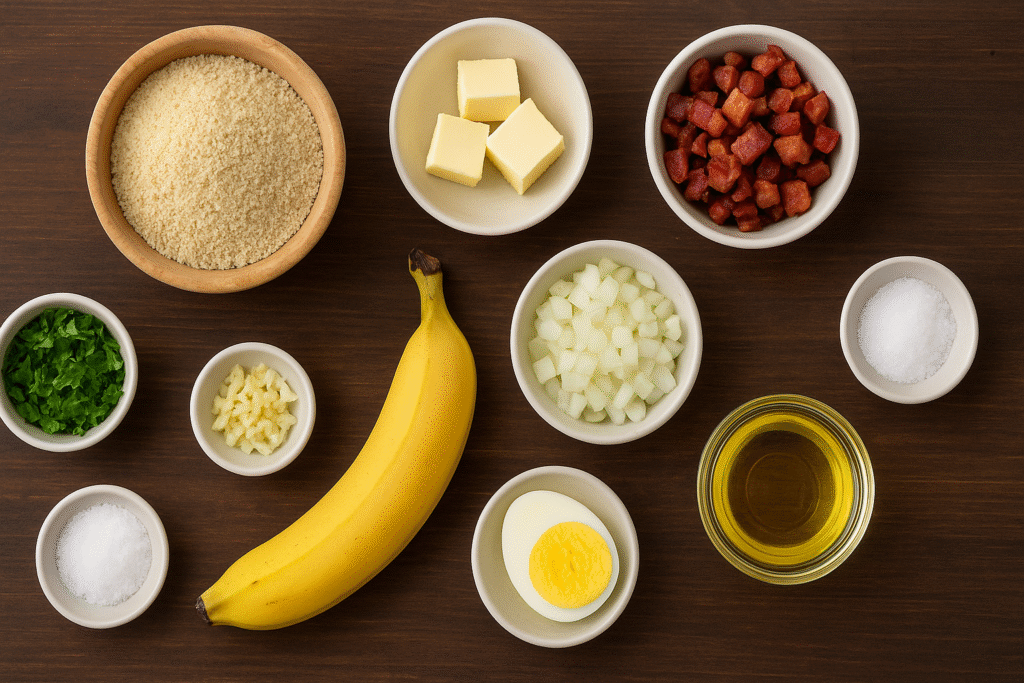
Here’s the beauty — you don’t need fancy ingredients to make good Farofa.
- Cassava flour (toasted) — look for farinha de mandioca at Latin grocery stores
- Butter or oil (or both)
- Onion — diced
- Garlic — minced
- Salt — to taste
Optional extras if you want to go wild:
- Diced bacon or sausage
- Chopped hard-boiled eggs
- Chopped banana (yep — sweet + savory works here)
- Parsley for garnish
Can’t Find Cassava Flour?
It’s worth hunting for it, but incase if you really can’t find it, you can use coarse cornmeal as a backup. It won’t be the same; however, it’ll still give you that crunchy, toasty vibe
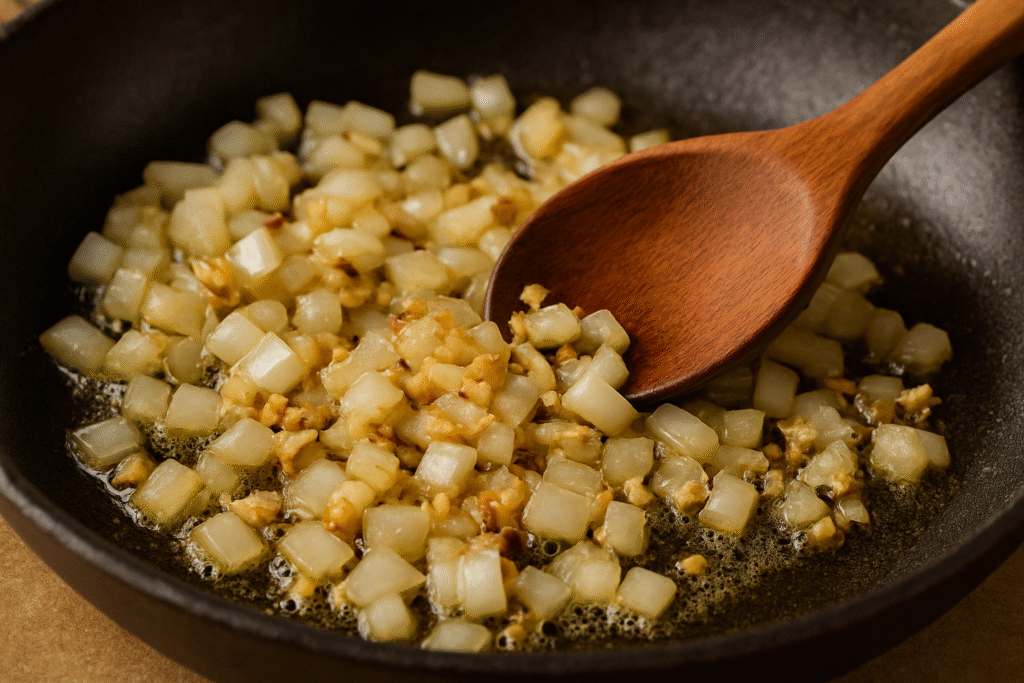
Step 1: Start by melting butter or heating oil in a pan over medium heat. Toss in the chopped onions. Let them go soft and sweet. Add the garlic — you know it’s working when it smells like you’re doing something right

Step 2: Want bacon? Fry it first before the onions go in. Want a banana? Add it after the cassava so it doesn’t turn to mush
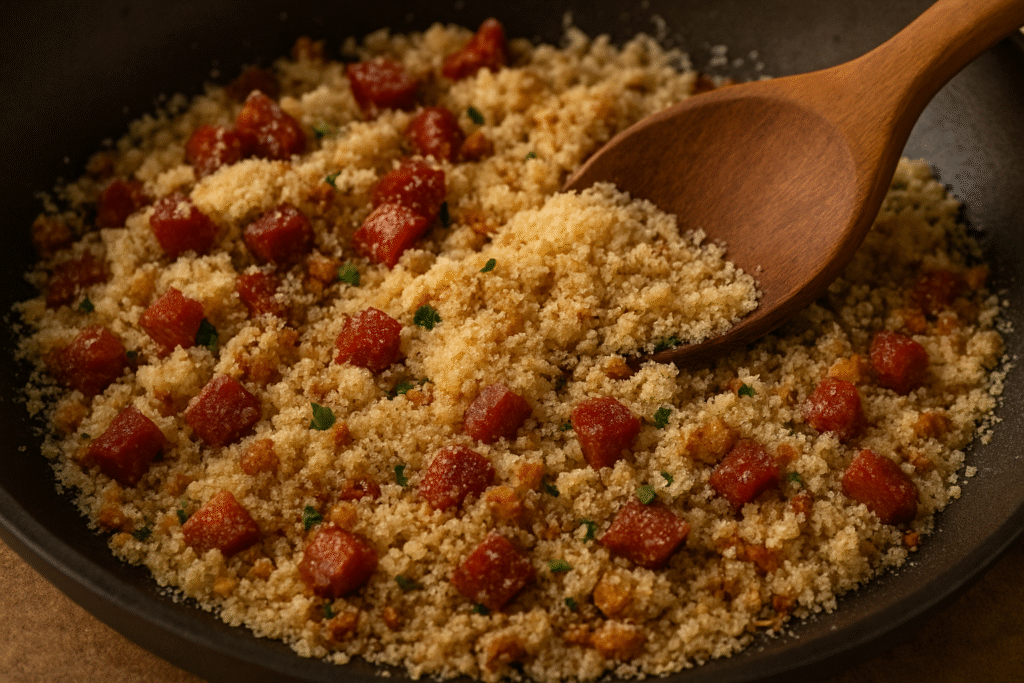
Step 3: Sprinkle the cassava flour over the buttery onions. Stir constantly. You want it to toast evenly — it’ll change colour slightly, turn golden, and start smelling amazing
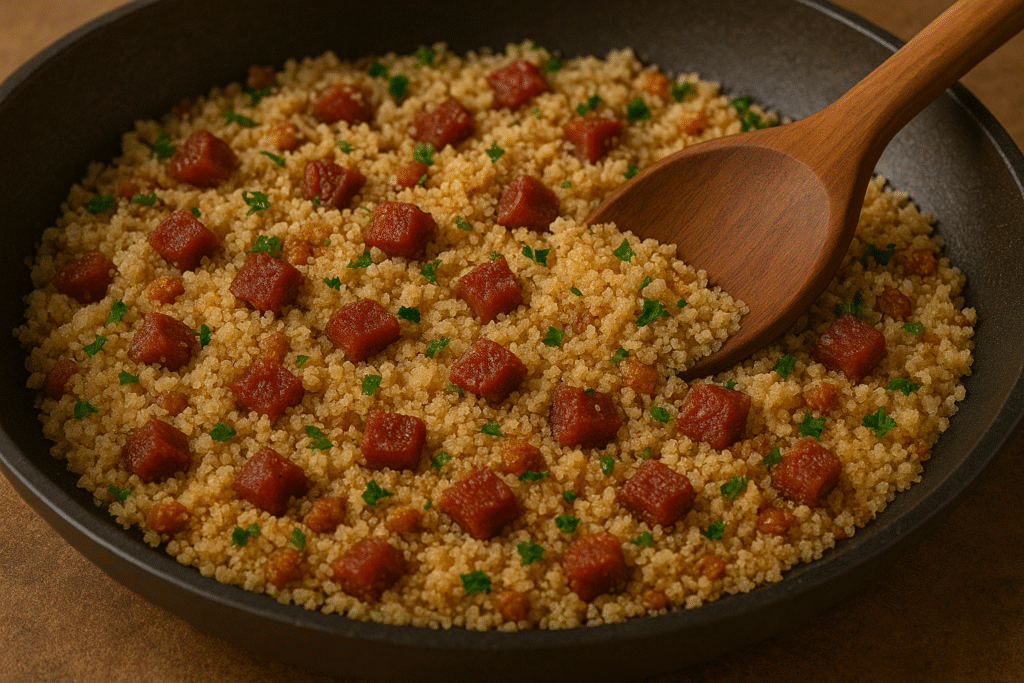
Step 4: Salt to taste. Throw in whatever extras you like. Serve it warm next to literally anything
Things Nobody Tells You (But Should)
- Don’t walk away while toasting the flour — it burns fast
- Are you willing for a smoky vibe? Don’t Worry !! Put in a spoon of smoked paprika
- Keep a bowl on the table and let people add as much or as little as they want
Now You Will Be Wondering When to Serve It
- Feijoada without Farofa feels incomplete
- Perfect with grilled meats — churrasco and Farofa are basically best friends
- Works with fried eggs, beans, and even over-roasted veggies
More About Farofa
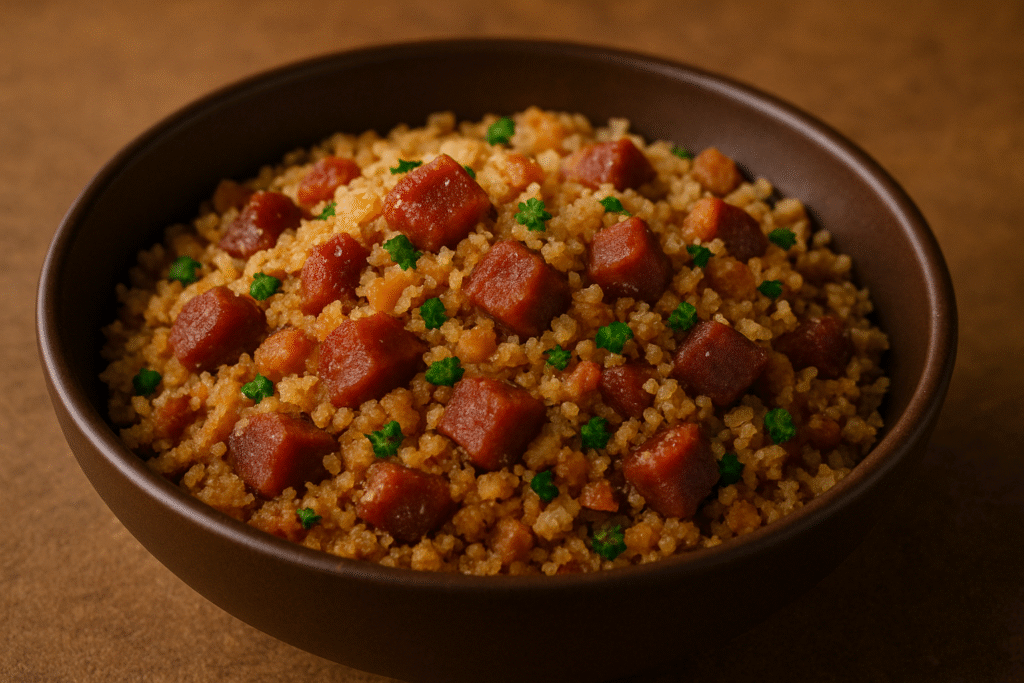
Farofa is one of those things that looks plain until you try it. Then it sneaks up on you — crunchy, warm, savoury, sometimes smoky or sweet. One spoonful, and you’ll get why Brazilians won’t eat a big meal without it
Next time you’re cooking something saucy or smoky, whip up a batch of Farofa on the side. Trust me — your plate will thank you.