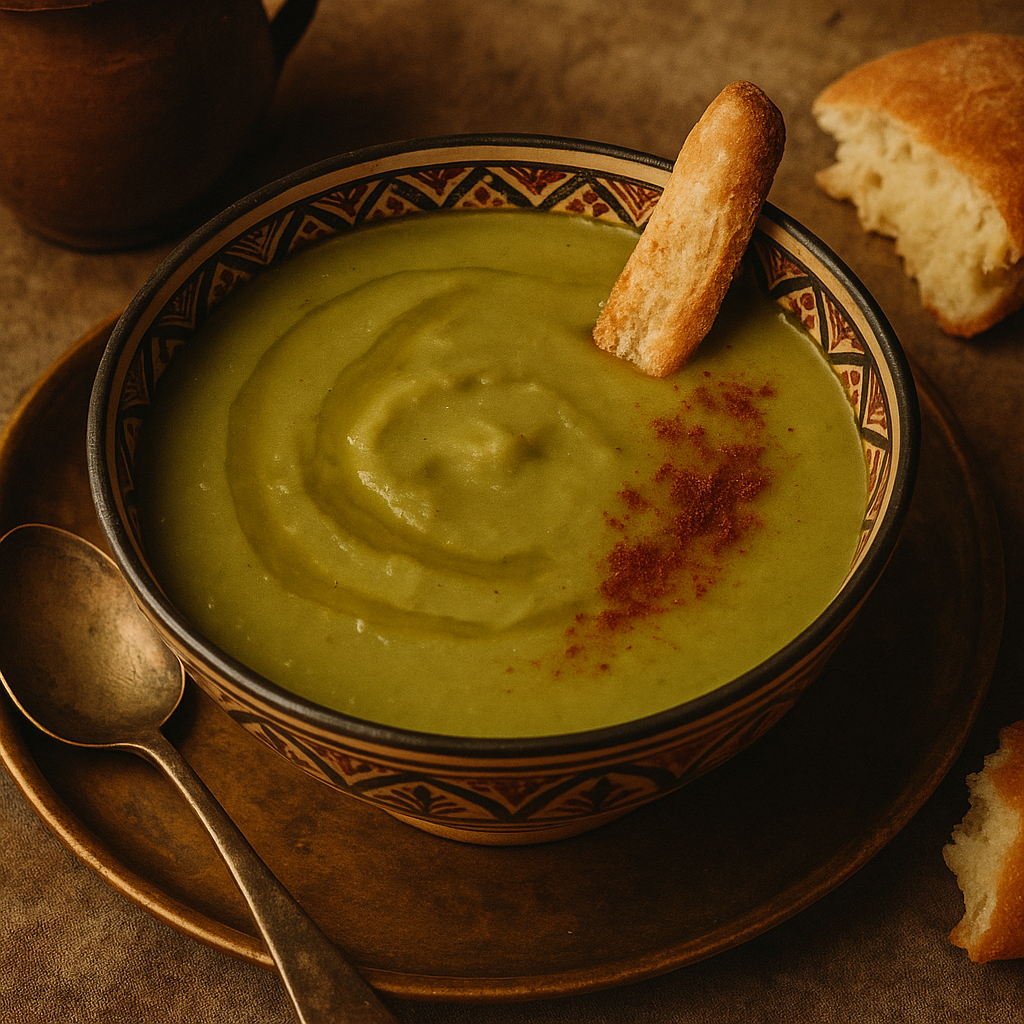
Not every dish needs a long list of ingredients or a big story behind it. Some people just need the warmth, good timing, and a quiet hunger. That’s Bissara for you. It’s not flashy. It’s not dressed in garnishes or surrounded by side dishes. But one spoonful, and you’ll understand why it means so much to so many people
If you’ve ever been to Morocco in the colder months, chances are someone handed you a steaming bowl of Bissara with a generous drizzle of olive oil on top and a chunk of crusty bread on the side. No big welcome, no speech — just a bowl full of care. That’s how it goes
The Roots of the Recipe
Bissara isn’t something invented for tourists. It started in small homes, in chilly kitchens, with pots bubbling slowly over coal stoves. Originally made with dried fava beans or split peas — whatever was cheap and filling — it was food meant to carry you through the day
In the north of Morocco, where the wind comes in cold off the coast, Bissara shows up early in the morning. Markets serve it hot in bowls to sleepy vendors setting up their stalls. In other regions, it’s eaten as a side, or even poured into a tagine to bulk it up. No two bowls taste quite the same. Some people make it thick and creamy, others leave it a bit runnier, more like soup. But the soul of it? That never changes.
Ingredients
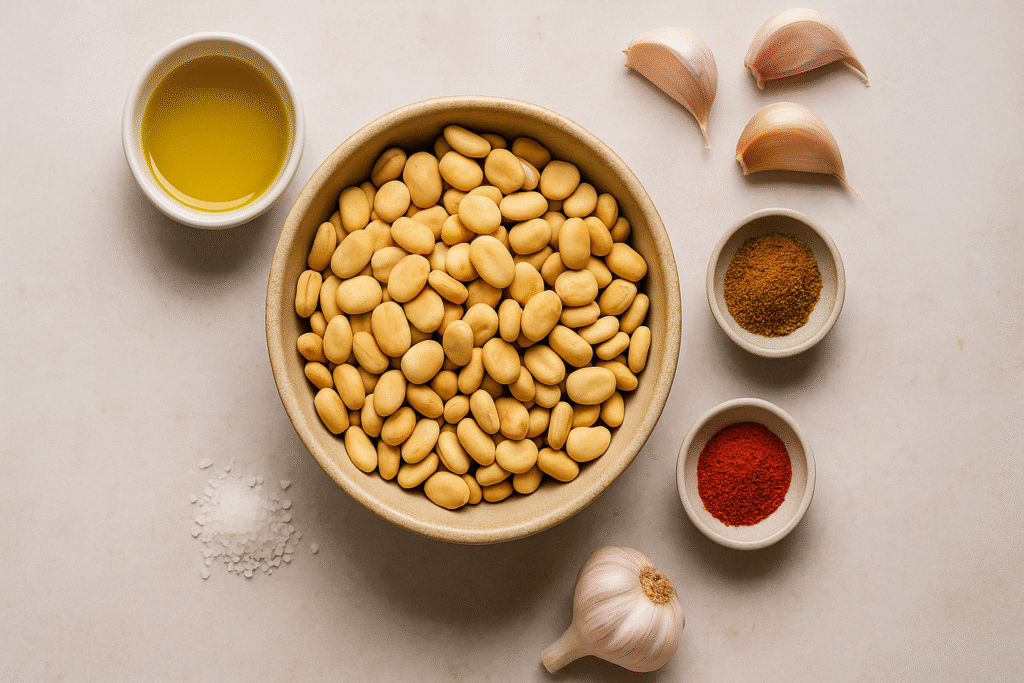
- 1 cup dried fava beans (peeled, if possible) or split peas
- 3 to 4 cloves of garlic, crushed
- 1 teaspoon cumin
- Salt to taste
- around 3 to 4 tablespoons olive oil
- A pinch of paprika or chilli flakes it’s just optional
- Water, as needed
Substitutes:
No fava beans? No Need To Worry, just use yellow split peas or dried lentils. If you don’t like cumin, I have a substitute for you, just try coriander. No olive oil? A knob of butter will do in a pinch, but honestly, olive oil is magic here
Instructions
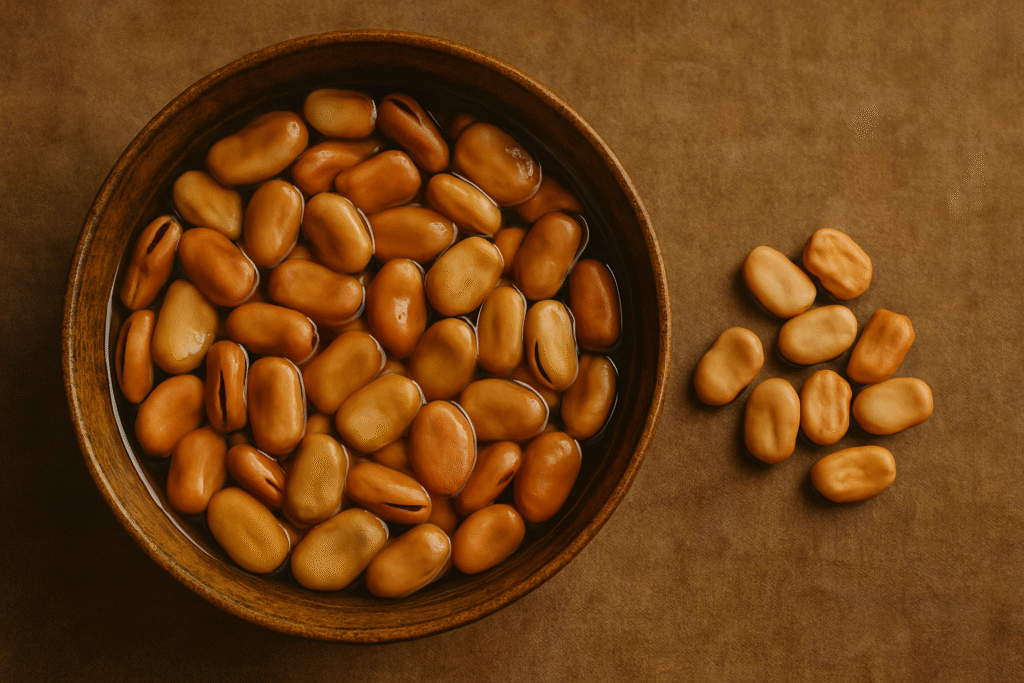
Step 1: If you’re using dried fava beans, give them a good soak the night before. That long rest in water softens them right up and makes cooking a breeze. If you’re in a hurry, a few hours will still help — but overnight is the sweet spot
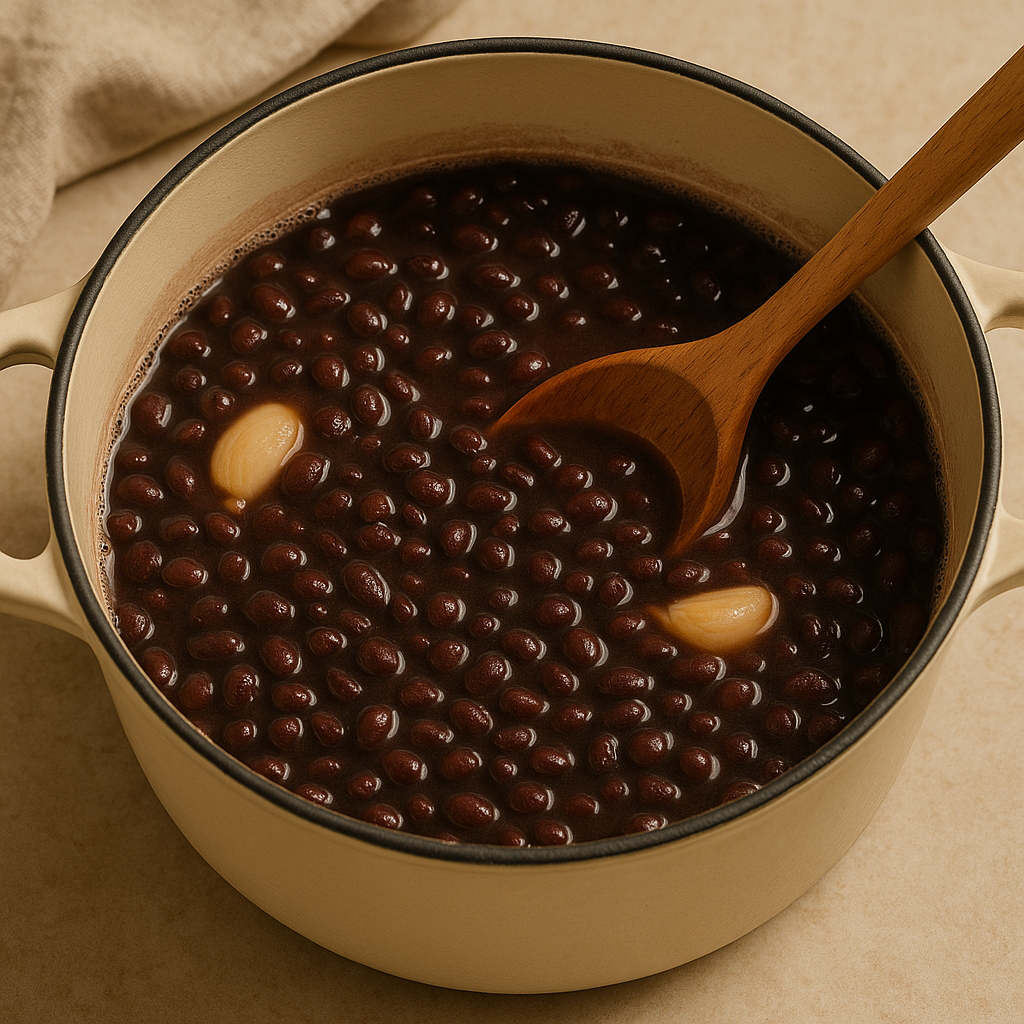
Step 2: Once soaked, drain the beans and toss them into a pot with some garlic and a generous pinch of salt. Cover everything with water and bring it all to a gentle boil. As soon as it bubbles, lower the heat and let it simmer gently. Give it time — you want those beans to get tender and almost melt apart
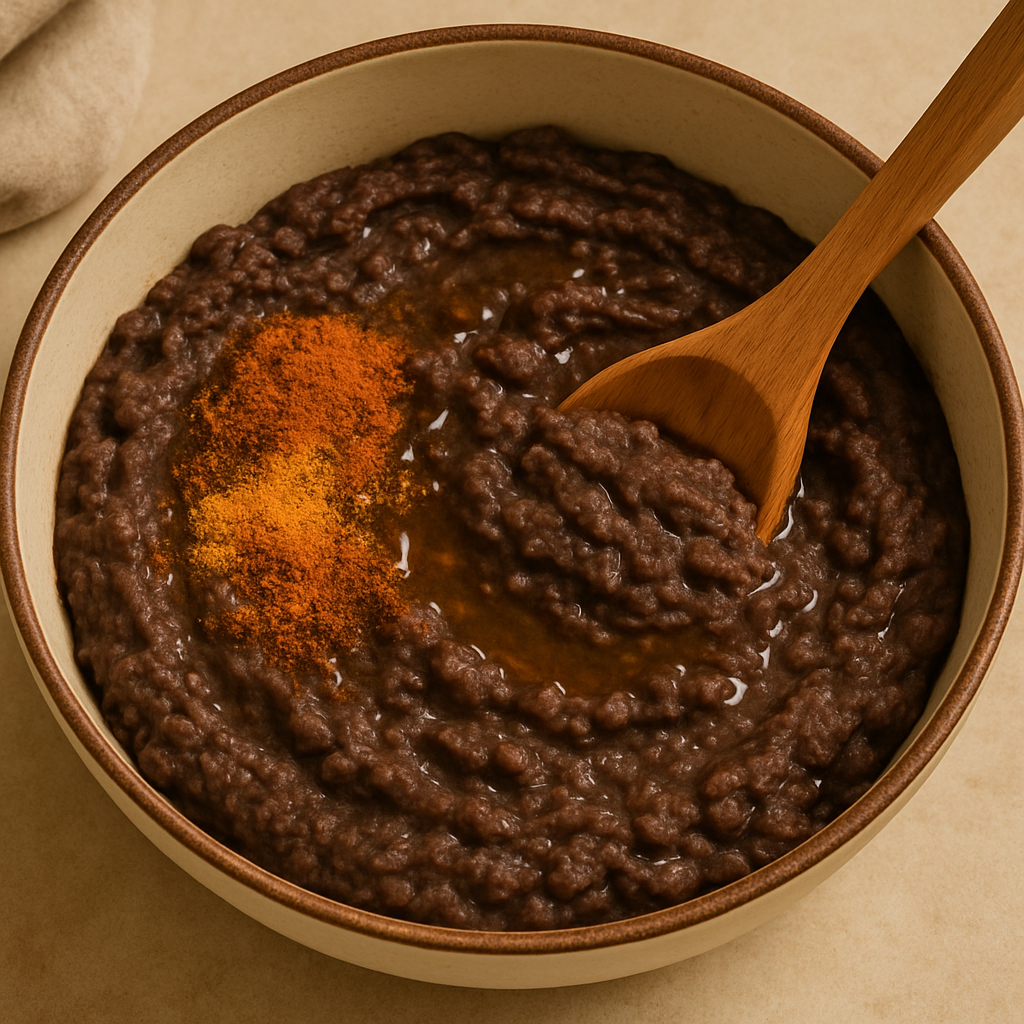
Step 3: Now comes the soul — stir in cumin, a pinch of paprika if you’re feeling it, and a swirl of olive oil. Taste it. Let your tongue guide you — it always knows what’s missing
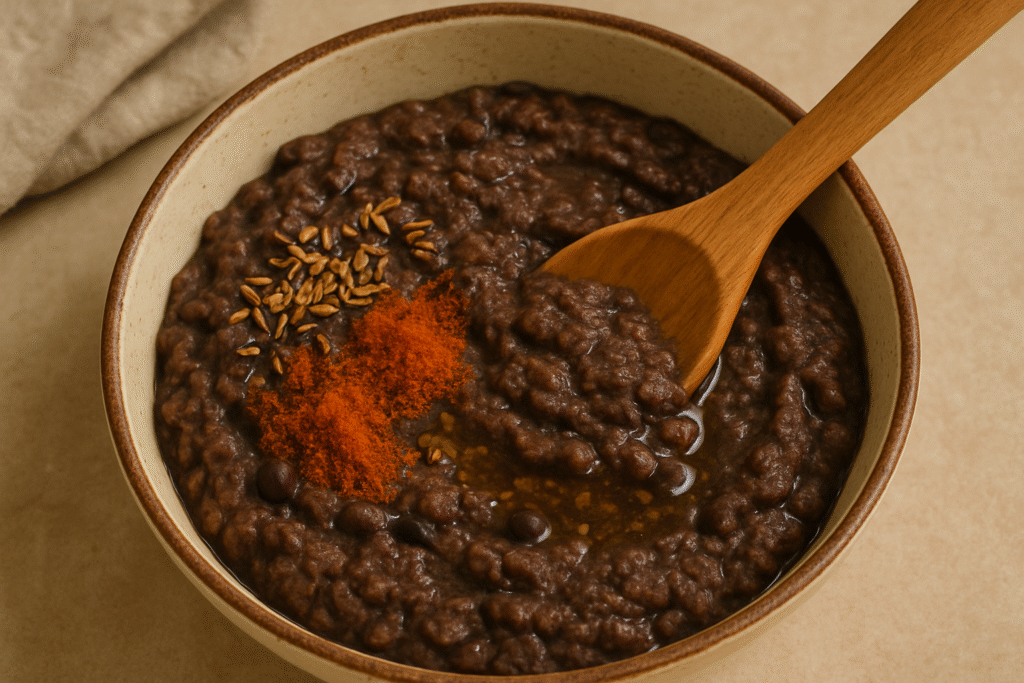
Step 4: Add in there some cumin seeds, a bit of paprika if you like, and olive oil. Give it a taste. Maybe it needs a touch more salt. Trust your tongue, it’ll know
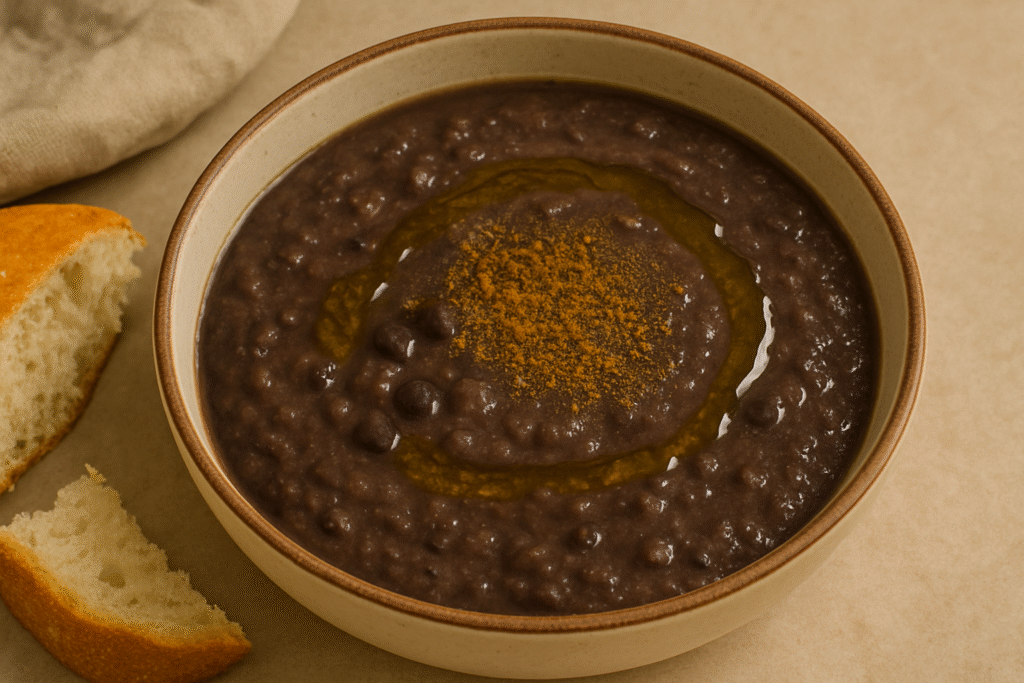
Step 5: Ladle that warm, garlicky goodness into your bowl. Make it pretty with a golden drizzle of olive oil and a final pinch of cumin – because we eat with our eyes first. Grab whatever bread you’ve got (ideal: fresh Moroccan khobz; acceptable: that half-baguette from yesterday) and get dipping. This is the kind of meal that tastes better with fingers and laughter
Serving Tips

Bissara doesn’t need dressing up. It just needs to be hot, honest, and ready. Eat it with your hands if you’re dipping bread. Sip it slowly if you’re having it like soup. And always, always enjoy it in good company — or in silence if that’s what your day needs
Wanna make it pop? Get your pan nice and hot, splash in some olive oil – just enough to coat the bottom. When it starts shimmering, throw in your garlic. Now here’s the trick: don’t blink! Keep stirring until those slices go from pale to perfect golden – that exact moment when your whole kitchen smells like your nonna’s cooking. That’s the sweet spot
A Few Points That You Should Always Keep in Mind
- Don’t rush it. Let the beans cook properly. That’s where the creaminess comes from
- Be generous with the olive oil. It’s not a garnish — it’s part of the soul
- Make some extra. It tastes even better the next day
More About Bissara
Bissara might not win any beauty contests, but it doesn’t have to. It’s not meant to impress — it’s meant to warm you. To remind you that good food doesn’t need to be complicated. Just simple, kind, and made with love
If you’ve never tried it before then make a small pot one afternoon I’M sure You might be wondering how something so quiet can leave such a lasting taste.