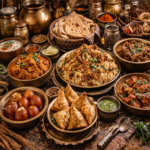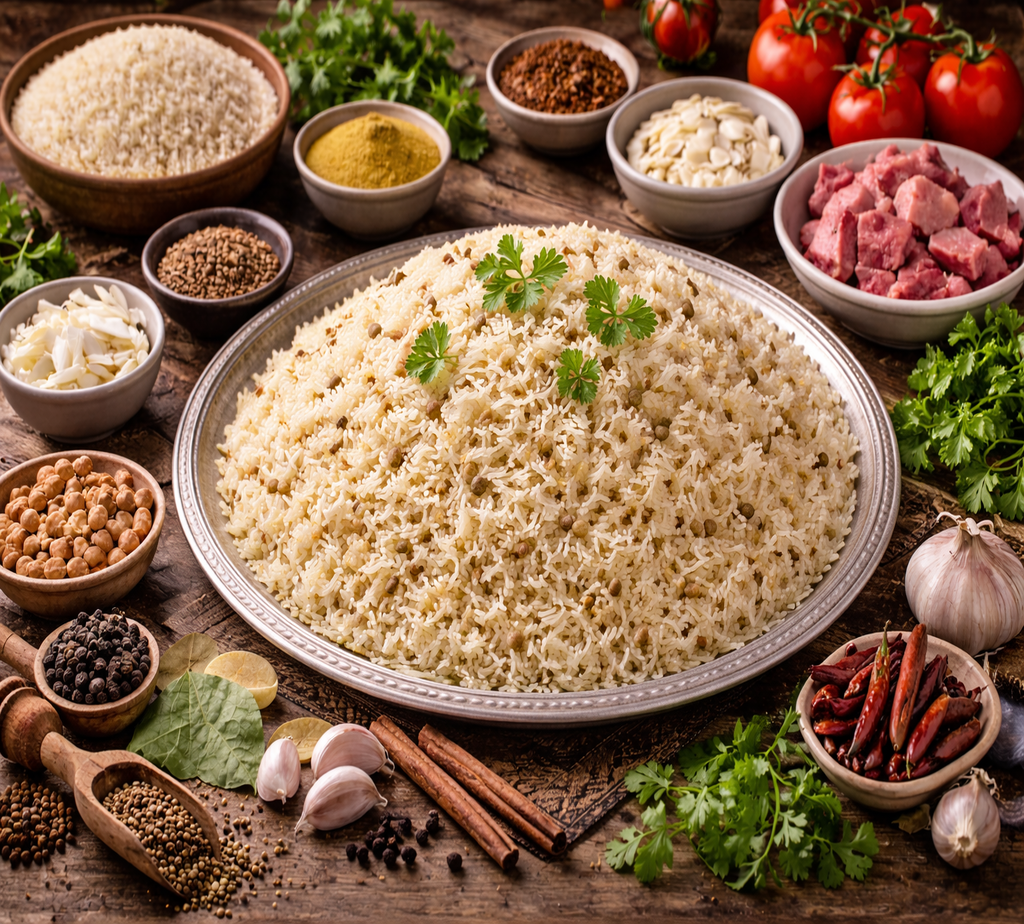
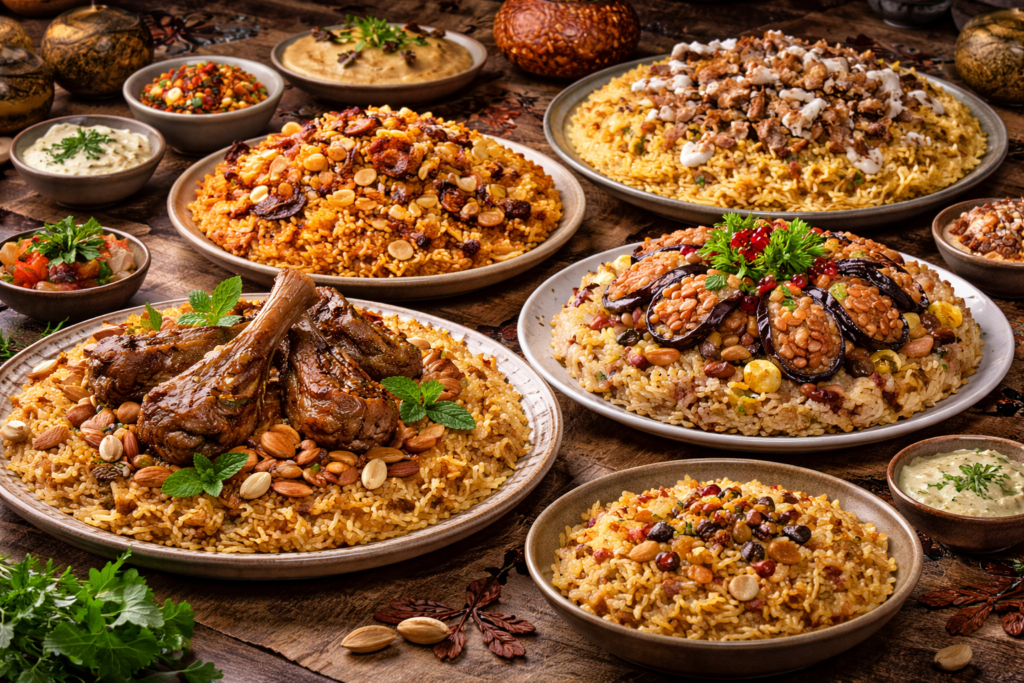
The Middle Eastern cultures view rice as an important food because it serves as their main dish, which shows their tradition of generosity, abundance, and hospitality towards guests. At weddings and religious holidays, Eid feasts, family gatherings, and community celebrations, rice becomes the main dish, which people prepare by cooking it with meat and spices and adding nuts or herbs. The guide presents the most popular festive rice dishes, which people love to eat, by showing their historical background, ingredient details, cooking method and serving customs in a friendly conversational style.
Khuzi (Quzi)
History
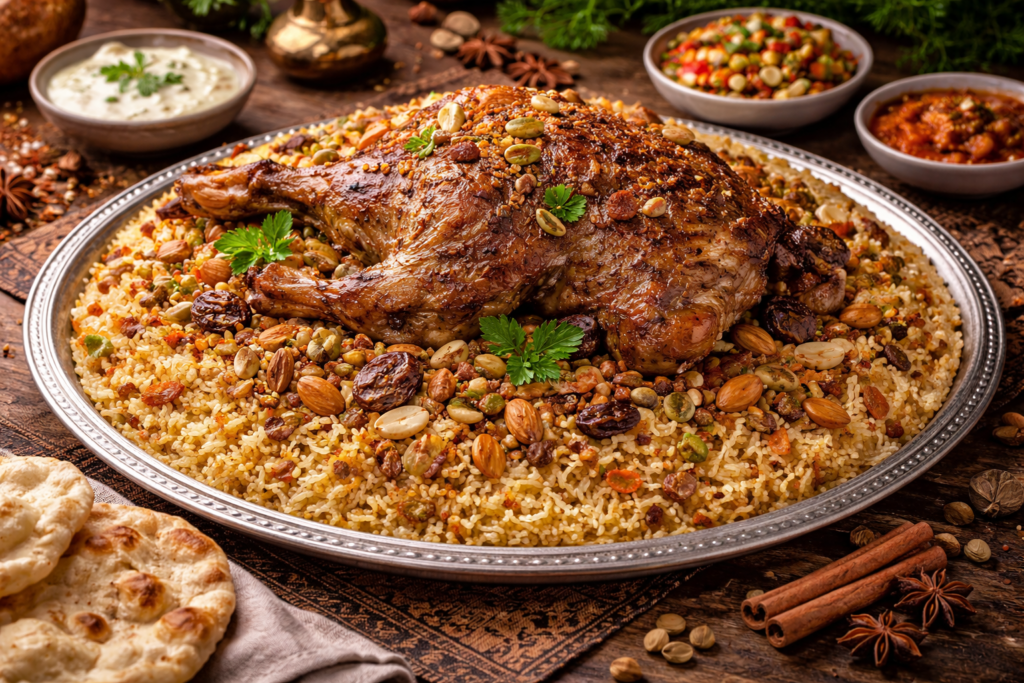
Khuzi, also known as Quzi, is one of Iraq’s most prestigious celebratory dishes. The traditional dish serves whole roasted lamb on top of aromatic rice during wedding celebrations and major social events. The dish reflects Bedouin hospitality, where generosity was measured by the abundance of food shared. Khuzi transformed into a Gulf region ceremonial dish which people used to demonstrate their respect for honoured guests throughout multiple centuries.
Ingredients
- Whole lamb (or large lamb shoulder)
- Basmati rice
- Onion
- Garlic
- Cardamom, cloves, cinnamon
- Raisins
- Almonds and cashews
- Salt and black pepper
Preparation
- Marinate the lamb with salt, pepper, and spices
- Roast slowly for several hours until tender
- Sauté onions and spices in a large pot
- Add washed rice and cook in spiced broth
- Stir in raisins and toasted nuts
- Arrange rice on a large platter and place the lamb on top
Suitable For
Weddings, Eid celebrations, and large banquets.
Serving Suggestions
The dish should be presented on a large serving tray, which needs to be positioned in the middle of the dining area. The dish should be decorated with an abundant amount of nuts as its main garnish. The food should be eaten by all diners together because this practice represents their shared bond.
Kabsa
History
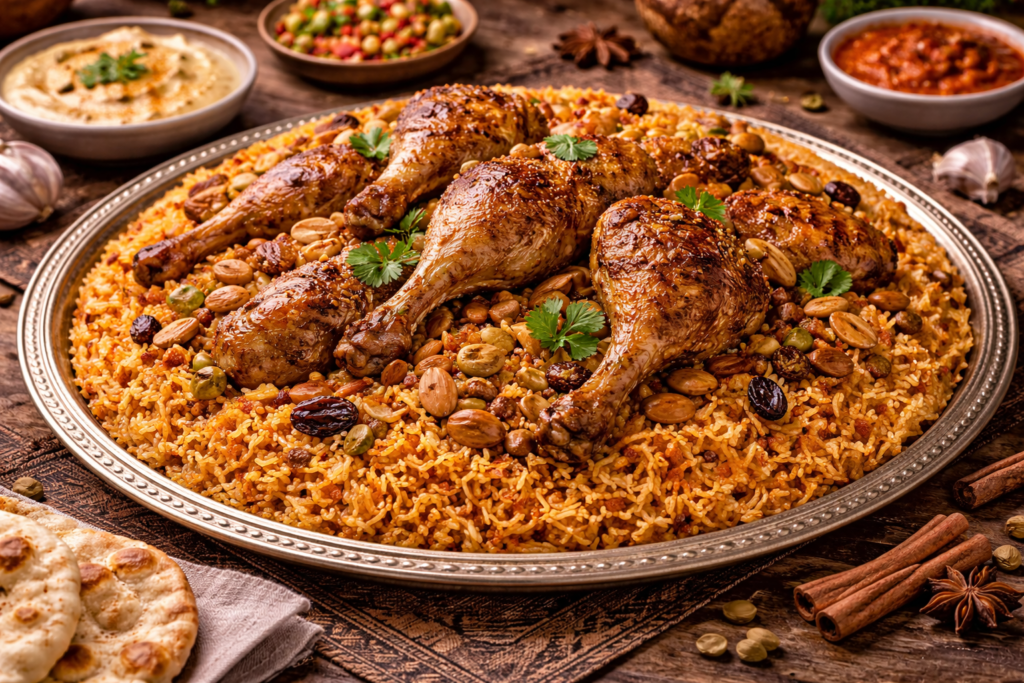
Kabsa originates from Saudi Arabia and is considered one of the Gulf’s most iconic dishes. The dish developed along ancient spice trade route,s which brought cardamom and cloves together with dried lime. Saudi Arabia adopted Kabsa as its traditional festive dish to display hospitality and regional cultural pride during communal celebrations.
Ingredients
- Chicken or lamb
- Basmati rice
- Tomato puree
- Onion
- Garlic
- Kabsa spice mix (cardamom, cinnamon, cloves, black pepper)
- Dried lime
- Carrots and raisins (optional)
Preparation
- Brown meat in a large pot
Add onion, garlic, spices, and tomato puree - Simmer until the meat is tender
- Add rice directly to the broth
- Cook covered until rice absorbs flavours
- Fluff gently before serving
Suitable For
Family feasts and Eid meals.
Serving Suggestions
The dish requires roasted nuts as a topping, which chefs should prepare with spicy tomato salsa. The dish requires roasted nuts as a topping, which chefs should prepare with spicy tomato salsa.
Mansaf
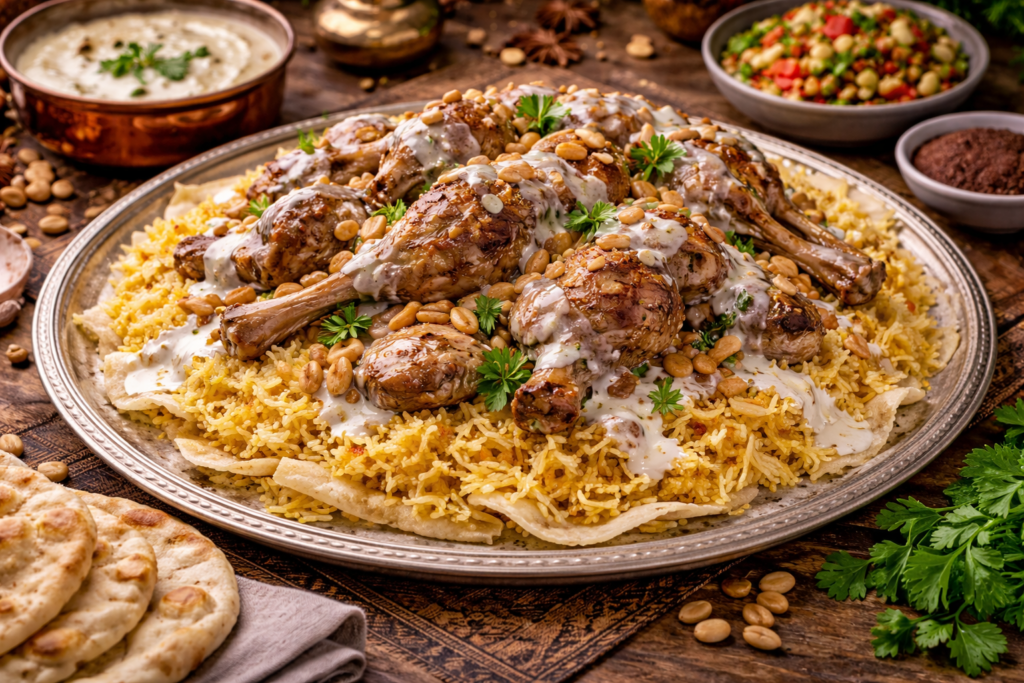
History
Mansaf functions as Jordan’s national dish, which serves as a strong representation of the country’s customs of hospitality. The dish uses lamb meat, which Bedouins traditionally prepare through cooking with jameed, a type of fermented dried yoghurt. The act of serving Mansaf to guests demonstrates both respect and generous hospitality.
Ingredients
- Lamb pieces
- Jameed (dried yoghurt sauce)
- Rice
- Almonds and pine nuts
- Flatbread
Preparation
- Boil the lamb until tender
- Prepare yoghurt sauce separately
- Cook rice in lamb broth
- Place bread on a large platter
- Spread rice over bread
- Arrange the lamb and pour the yoghurt sauce over the top
Suitable For
Weddings, tribal gatherings, national celebrations.
Serving Suggestions
People should eat together as a communal meal. The guests follow the custom of eating their food with their right hand. You should add a lot of toasted nuts as a garnish to your dish.
Maqluba
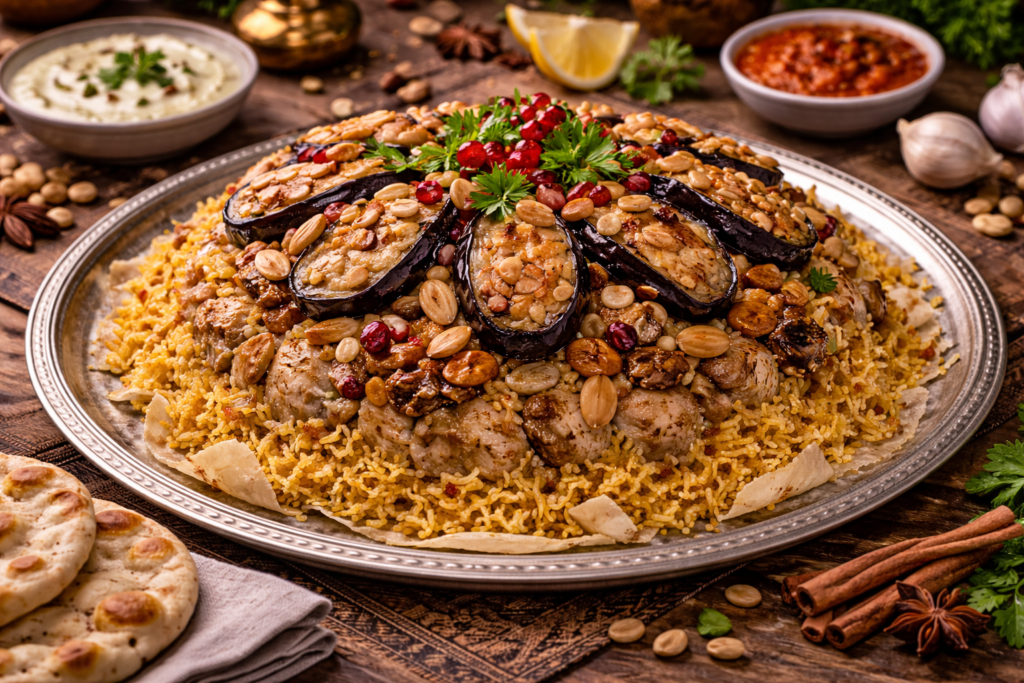
History
The word Maqluba in Arabic means “upside down.” The dish, which originated in Palestine,e has become a popular food throughout the Levant region. The pot is flipped in a dramatic manner to show both abundance and unexpectedness.
Ingredients
- Rice
- Lamb or chicken
- Eggplant, cauliflower, or potatoes
- Onion
- Allspice and cinnamon
Preparation
- Fry vegetables until golden
- Layer the meat at the bottom of the pot
- Add vegetables
- Cover with rice
- Add broth and cook slowly
- Flip the pot onto the serving platter carefully
Suitable For
Family celebrations and Ramadan iftar.
Serving Suggestions
The dramatic reveal is perfect for any guest to impress. It goes well with salad with yoghurt and fresh herbs.
Sayadieh
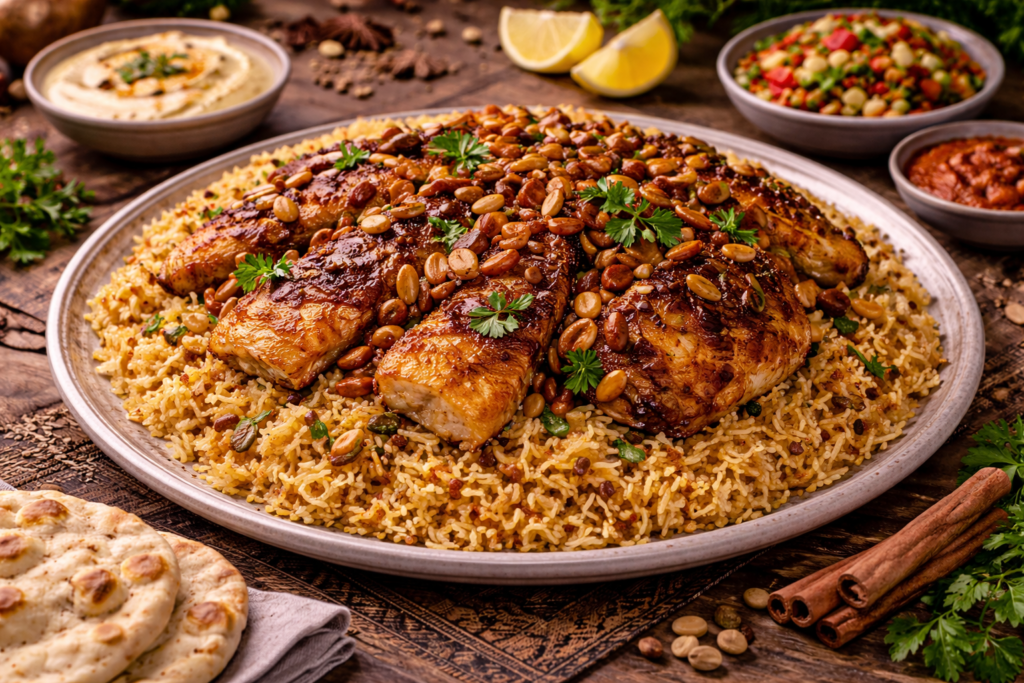
History
Sayadieh serves as a Lebanese coastal specialty, which reflects the fishing traditions of the region. The dish unites rice and fish with caramelized onions to represent the abundance found along the coast.
Ingredients
- White fish
- Rice
- Onion
- Fish stock
- Cumin and turmeric
Preparation
- Fry fish lightly and set aside
- Deeply caramelize onions
- Add rice and spices
- Pour in fish stock and cook
- Top rice with fish before serving
Suitable For
Coastal celebrations and Friday family meals.
Serving Suggestions
Serve with tahini sauce and fresh lemon wedges.
Shirin Polo
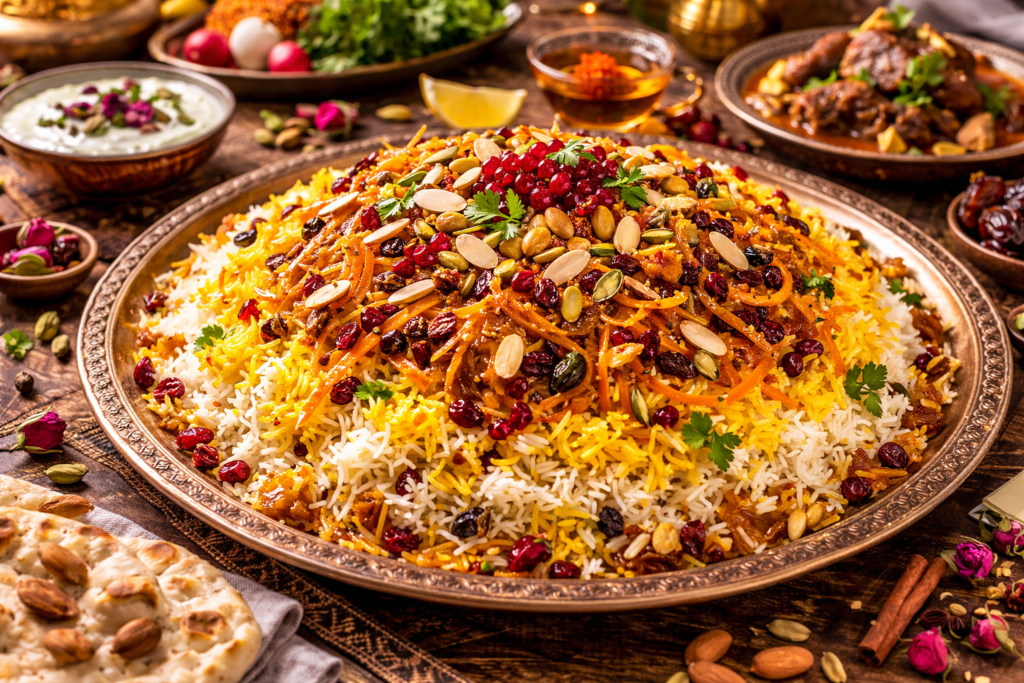
History
Shirin Polo means “sweet rice” and it comes from Persian royal cooking traditions. The dish is traditionally eaten at weddings because its sweet taste represents happiness and wealth.
Ingredients
- Basmati rice
- Candied orange peel
- Almonds
- Pistachios
- Saffron
- Sugar
Preparation
- Parboil rice.
- Layer with saffron and sweet toppings.
- Steam gently until fluffy.
Suitable For
Weddings and Nowruz (Persian New Year).
Serving Suggestions
Roast a lamb and serve it with great nuts on it.
Zereshk Polo
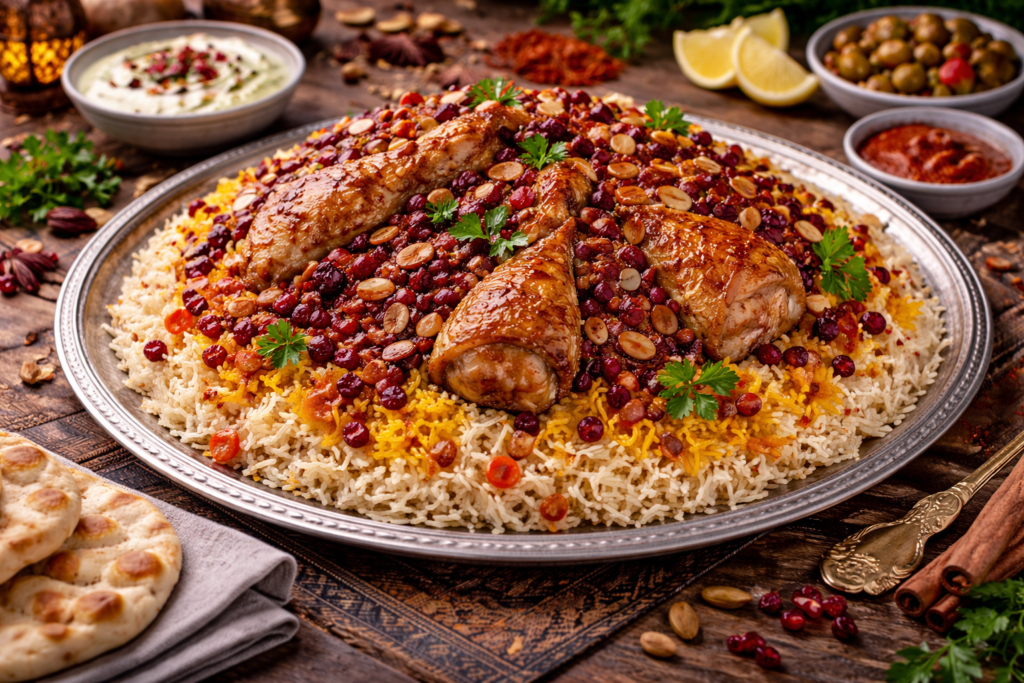
History
To balance the sweet and sour taste Iranian-style, the Persian favorite consists of semi-tart barberries dished up with saffron rice.
Ingredients
- Rice
- Barberries
- Saffron
- Butter
- Sugar
Preparation
- Soak and parboil rice
- Sauté barberries with sugar
- Steam rice with saffron
- Fold in barberries gently
Suitable For
Formal dinners and celebrations.
Serving Suggestions
Often paired with saffron chicken.
Kabuli Pulao
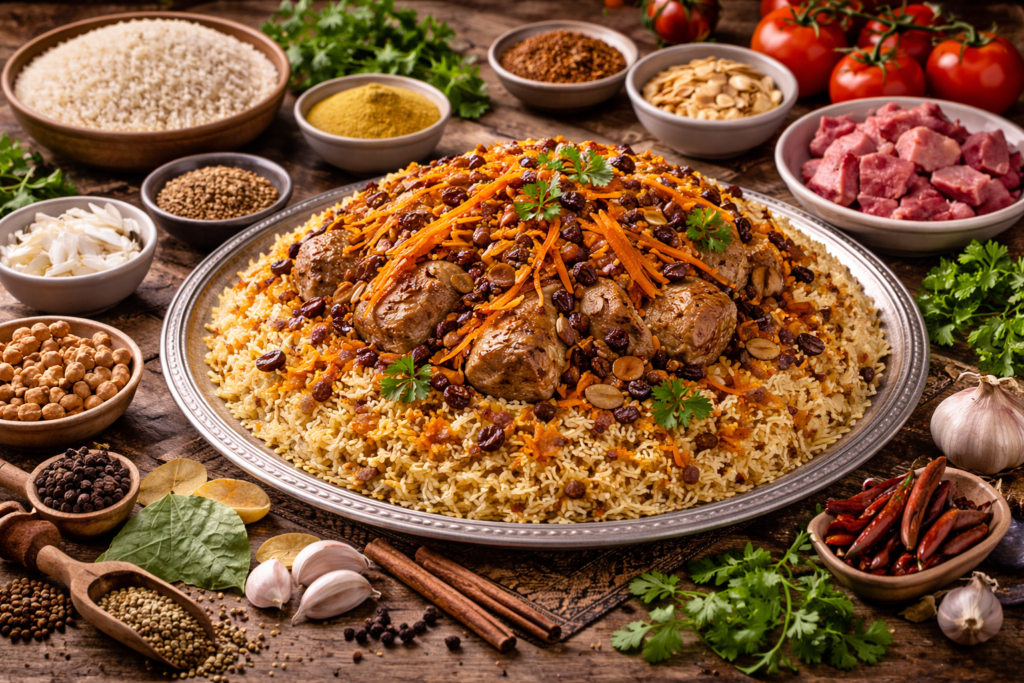
History
The national dish of Afghanistan, Kabuli Pulao, shows the Central Asian culinary traditions. The dish functions as a representation of both hospitality and honor.
Ingredients
- Lamb
- Rice
- Carrots
- Raisins
- Cardamom
Preparation
- Cook the lamb with spices
- Parboil rice separately
- Layer rice with carrots and raisins
- Steam gently
Suitable For
Weddings and large family feasts.
Serving Suggestions
Serve in generous portions with yoghurt and salad.
The Role of Rice in Middle Eastern Hospitality
Middle Eastern rice dishes need to be prepared in large amounts because they serve multiple diners. The act of placing a large platter in the centre of the table reflects openness and generosity. Many cultures believe that people who reject food also reject the hospitality which the food represents
People use spices, nuts, and dried fruits to create flavour while showing the presence of plentiful food. The dishes create connections between people who belong to different age groups.
Why Festive Rice Dishes Tell Cultural Stories
The rice dishes that people cook for celebrations show different regional cooking styles. The culinary customs of these regions create their individual flavor profiles, which show both their geographic location and their historical background. The ancient trade routes together with agricultural practices and climatic condition, related the basis for many dishes that developed through time. The food they prepare contains historical value which extends beyond its function as a meal
Conclusion
The Middle East uses rice dishes as essential components for their festive occasions, social gatherings, and their cultural identity. Each dish from Khuzi, Mansaf and Shirin Polo shows traditional values through its generous serving size. The two dishes, Kabsa and Mansaf, make perfect beginning options because they serve as traditional dishes which people eat during important cultural celebrations. Would you like me to expand the remaining dishes (Dolma Rice, Hashweh Rice, Roz Bel Laban, Roz Bel Lahma, etc.) in equally deep detail as the first few?