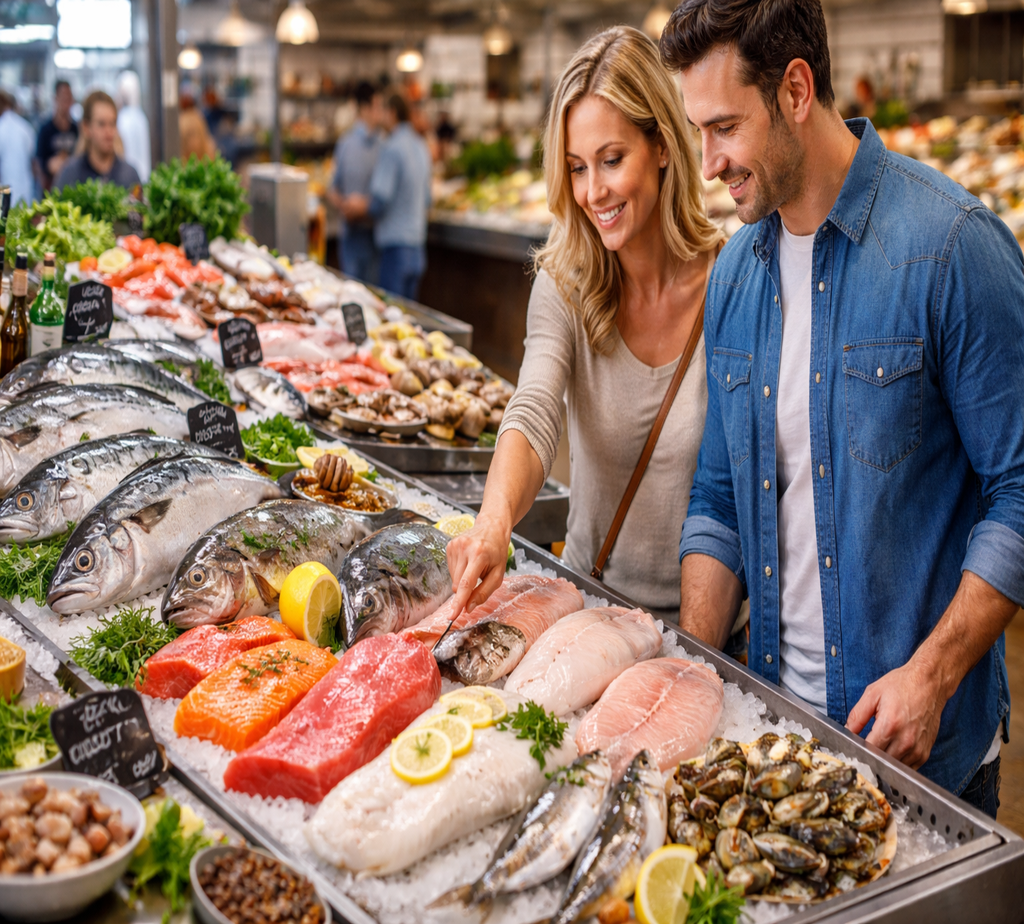
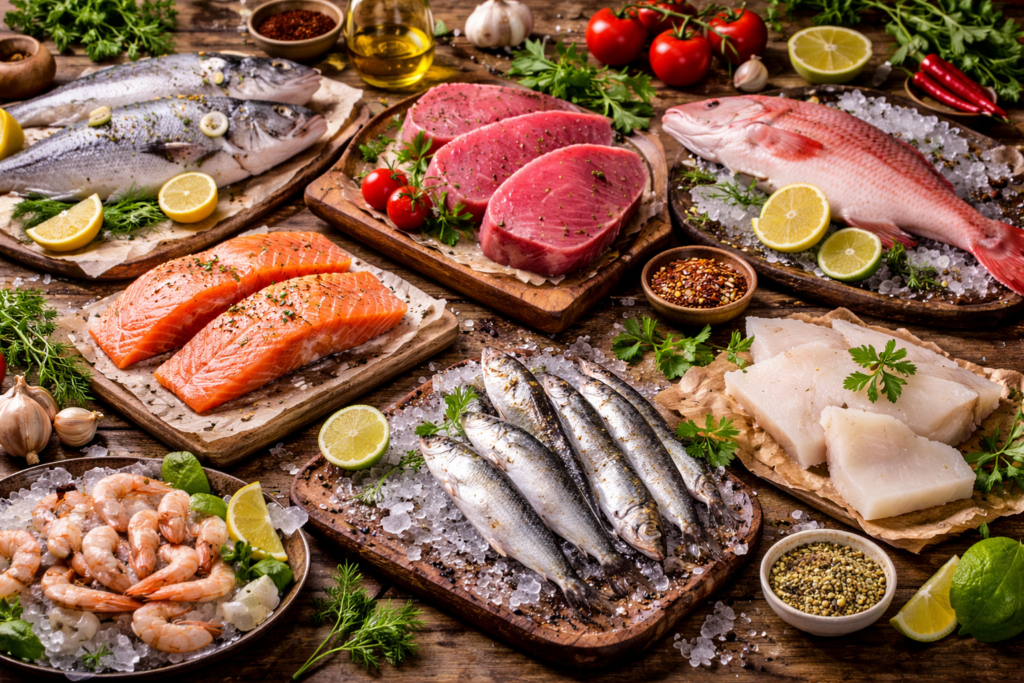
When it comes to fish, all the options can be daunting. At the market, you see fillets, entire fish, steaks, whites, oils, and even shellfish. And now the real question comes: what fish is best for grilling? Which fish can withstand a curry? What fish do you bake, fry or steam? Not all fish react the same in the kitchen. Some are meaty and firm, while others are delicate and flaky and require more gentle means of cooking. Understanding the structure, fat content, and texture of fish will help you cook and choose with confidence. While browsing the Fish category recipes, you will see different types of fish for different cooking methods. Instead of overwhelming you, we will simplify this.
Understanding Fish Texture and Fat Content
When cooking fish, there are two things to consider: texture and fat content. Tuna, swordfish, mahi-mahi, and salmon are some of the firm fish that have dense and fibrous flesh that hold together well and don’t fall apart when being cooked (or flipped) at high temperatures. On the contrary, fish that are more delicate (ie, flounder, sole, cod, and tilapia) are softer and tend to easily break apart
This is why they require more careful cooking. There is also fat content, which plays a huge role and can easily be determined by looking at the fish. Salmon, mackerel, and sardines are examples of fish that have more fat (and are more oily), while cod, haddock, and halibut lean fish (less fat) and are more prone to drying out when cooked for too long. It becomes much easier from here on out.
Best Fish for Grilling
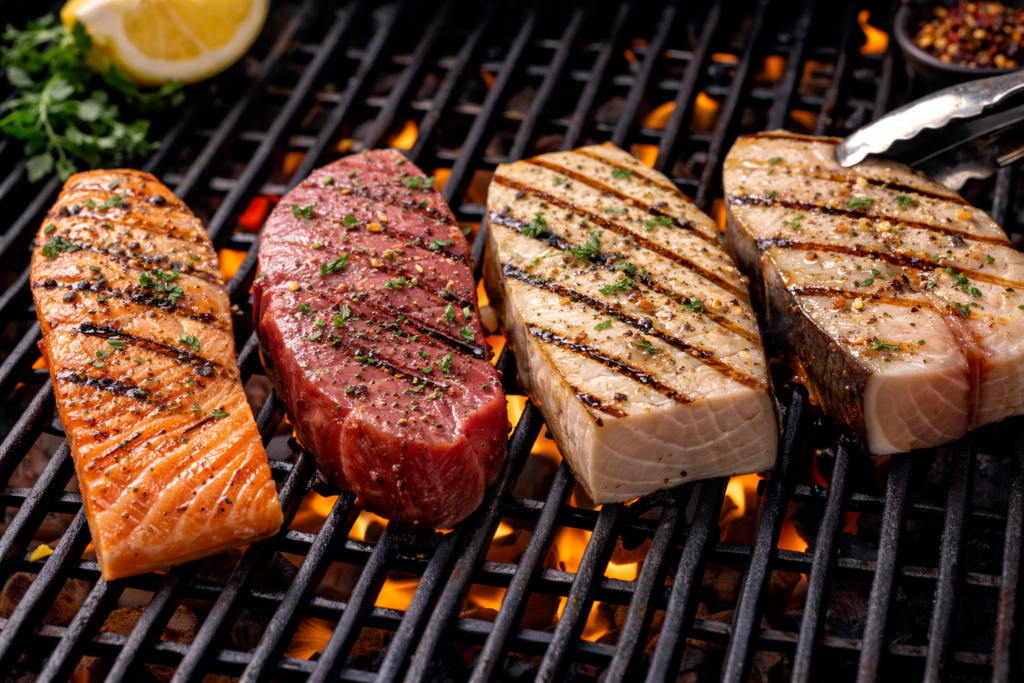
Grilling requires working with direct and intense heat. Because of this, fish that are suited to this intensity. Meaty and firm fish should be used, such as salmon and tuna steaks, as well as swordfish and thick-cut kingfish. These fish keep their structure and develop great markings from the grill, and also do not stick to the grill as easily as others. This method of cooking is not suitable for most white fish, like flounder, as they are too delicate. So if the fish gets broken apart, that is not a failure of the cooking method; the fish just isn’t suited for the method.
When choosing fish for grilling, look for:
- Thick fillets
- Visible firmness
- Even cuts
Because of their natural fats, oily fish tend to be more forgiving on the grill. If you look through our individual fish recipes, you will see that salmon, tuna, and swordfish are often grilled.
Best Fish for Frying
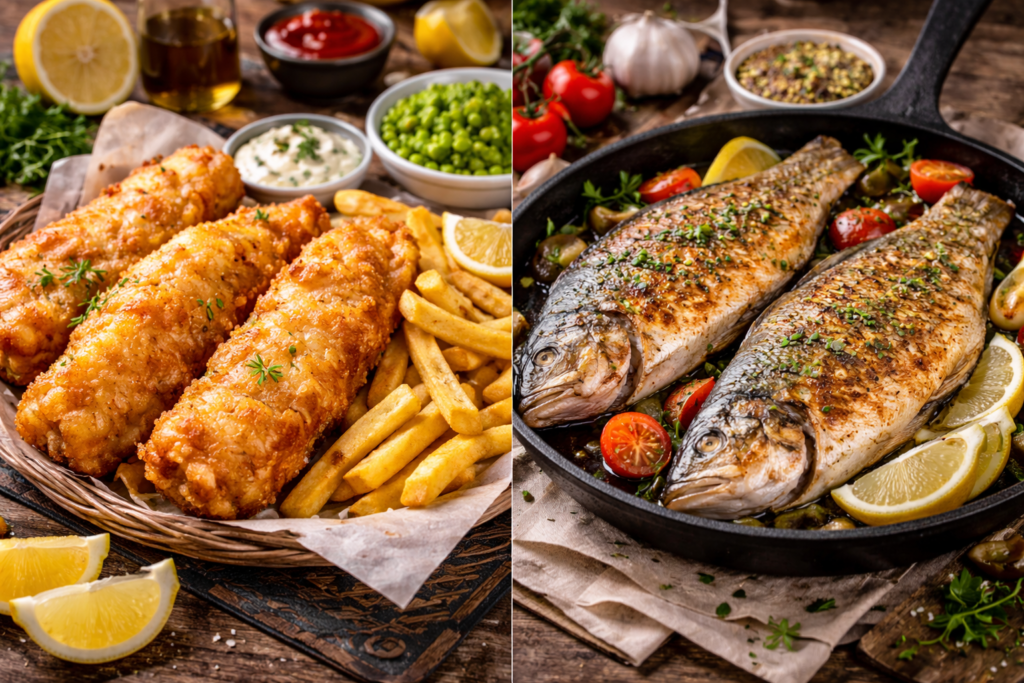
The frying method produces great results for fish that have both firm texture and moderate delicate texture. The frying process needs fish with strong structural integrity. White fish like cod, haddock, pollock, and tilapia are excellent for frying because they develop a crispy exterior while staying flaky inside. The fish serves as the main ingredient for this traditional dish called fish and chips
Fish such as sea bass or snapper demonstrate excellent performance for pan-frying needs that do not include batter. The items achieve an optimal result when they form a crunchy exterior while maintaining their original design. The fillet needs to have a specific thickness for deep frying. The thin fish will cook extremely fast, which results in dry fish meat. The freshness of ingredients determines the success of frying. The result improves with cleaner flavors which produce the best outcome.
Best Fish for Baking
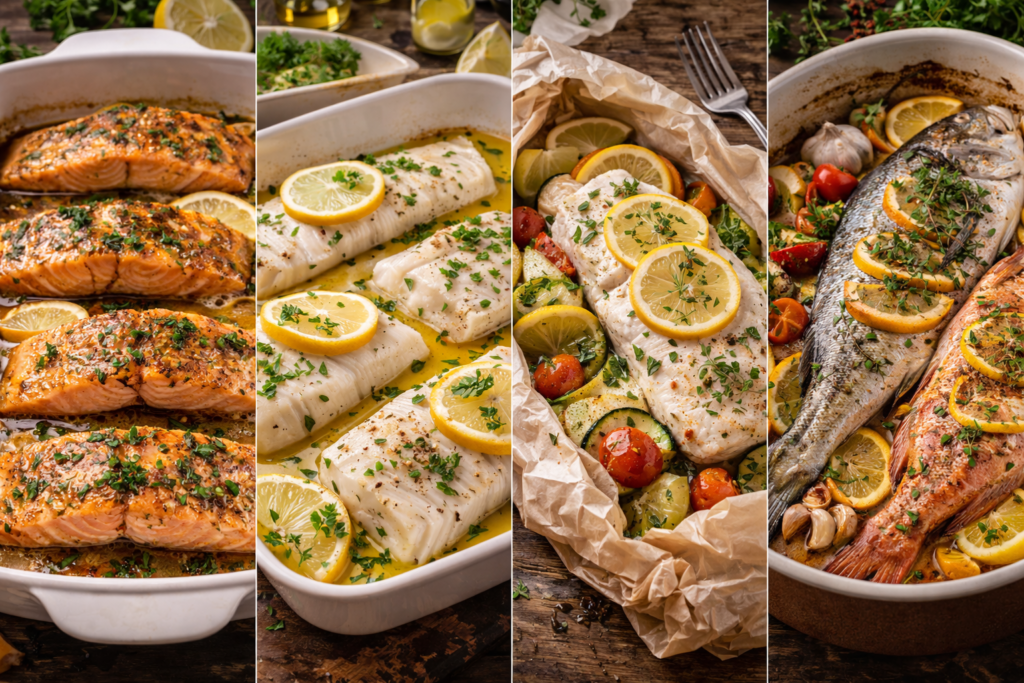
Baking uses a cooking process that enables chefs to create food through precise temperature control. Medium-firm fish and whole fish both respond well to this particular cooking technique. The optimal fish choice for baking is salmon, which maintains its moisture while effectively soaking up various flavours. Cod and halibut also bake well when paired with sauces or butter to prevent drying
You should use foil or parchment to wrap delicate fish when you bake it through en papillote style. This method creates a moisture barrier that maintains the food’s original texture and protects it from drying out. The baking process works best with whole fish, which include sea bream and snapper as suitable baking options. The bones function to keep moisture inside the fish while also boosting the fish’s natural taste. When searching for fish recipes, people choose baked options, which include salmon and stuffed whole fish, because of their particular culinary benefits.
Best Fish for Steaming and Poaching
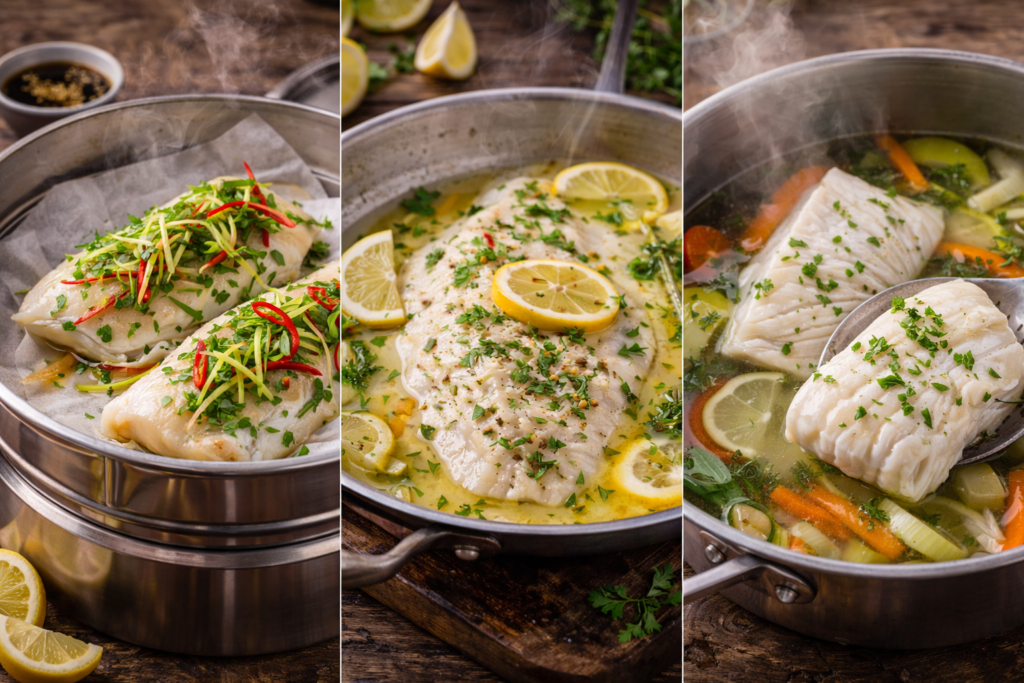
The methods of steaming and poaching operate as gentle techniques which preserve moisture for cooking delicate fish. The fish species sole, tilapia, cod and flounder demonstrate their best cooking results in this cooking method. The fish species in this dish require short cooking times, which results in their tender texture when chefs use gentle handling techniques
Steaming fish maintains its authentic taste because of its cooking method. The fish species which people typically choose for consumption include white fish because of their light taste. Both lean and medium-fat fish varieties become suitable for cooking through broth, coconut milk and wine poaching methods. The salmon fish can be perfectly poached through careful cooking control to prevent excessive cooking. New fish cooks should start with steaming techniques because they provide the best protection against cooking fish to dryness.
Best Fish for Curries and Stews
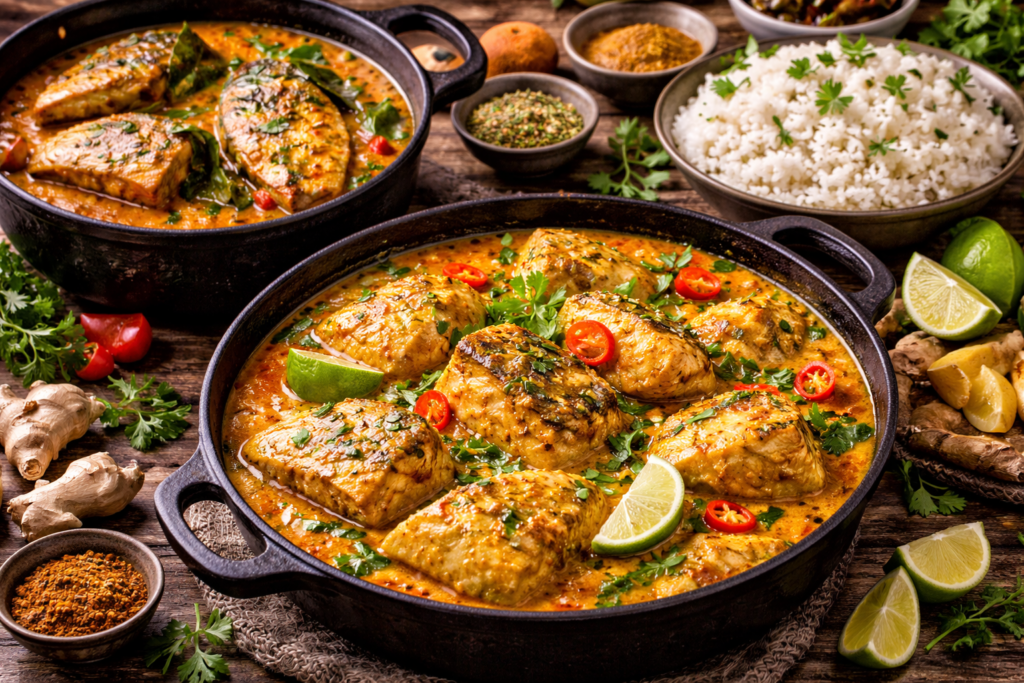
The best fish for curries needs to have durability so it can remain intact while cooking in the sauce. The fish types of snapper and grouper, cod (thicker cuts) and kingfish provide excellent results because they absorb spices yet keep their original structure. Coastal curries use mackerel as a traditional ingredient because its oily richness creates a perfect balance with strong spices
The cooking process of long-simmering stews requires you to avoid using very delicate fish because they will break apart during the cooking process. Coastal traditional culinary practices use strong fish types which can handle simmering heat as the foundation for their fish curry recipes.
Choosing Fish for Raw Preparations
Freshness forms the essential requirement for preparing ceviche, sashimi and carpaccio dishes. Only top-quality fish, which includes tuna, salmon, and sea bass, should be selected as the best choice for sushi. Sushi-grade fish requires proper handling to ensure it maintains its crucial handling standards. Raw dishes depend on texture because cooks need to show all dish imperfections through their unprocessed state. Raw fish preparation requires you to purchase fish from sources which you can trust.
Whole Fish vs. Fillets
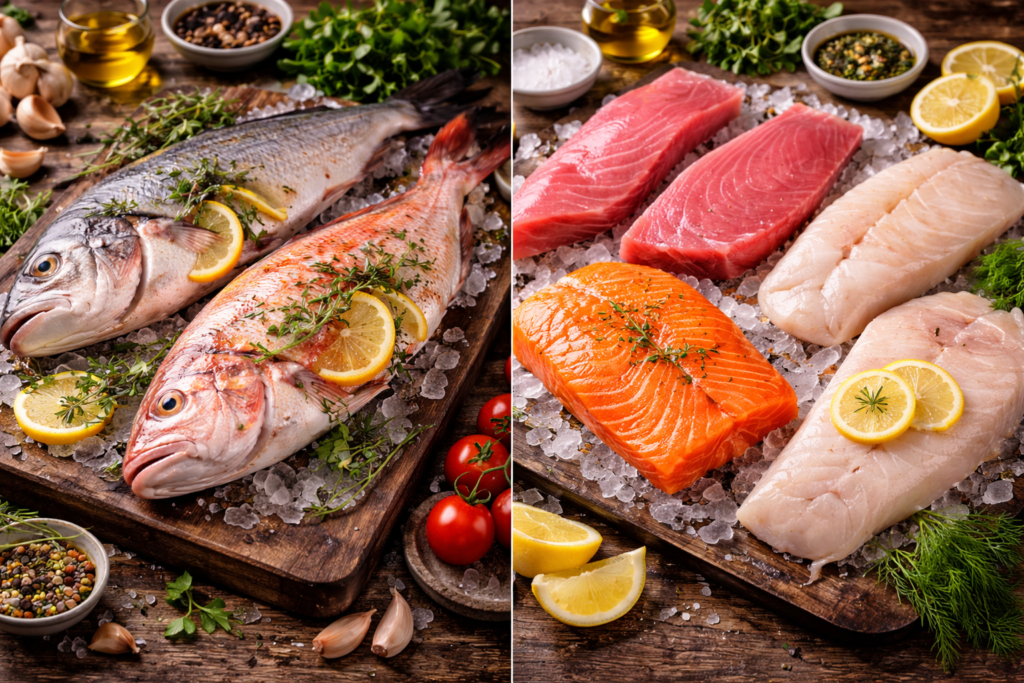
The complete fish offers superior taste because its bones and skin maintain the fish meat’s quality during the cooking process. Whole fish serves as an excellent choice for roasting and baking. The chicken fillets provide cooking flexibility because they can be used for frying and grilling purposes
When buying fillets, look for:
- Moist surface
- No strong fishy smell
- Firm flesh that springs back when pressed
Matching Fish to Flavor Profiles
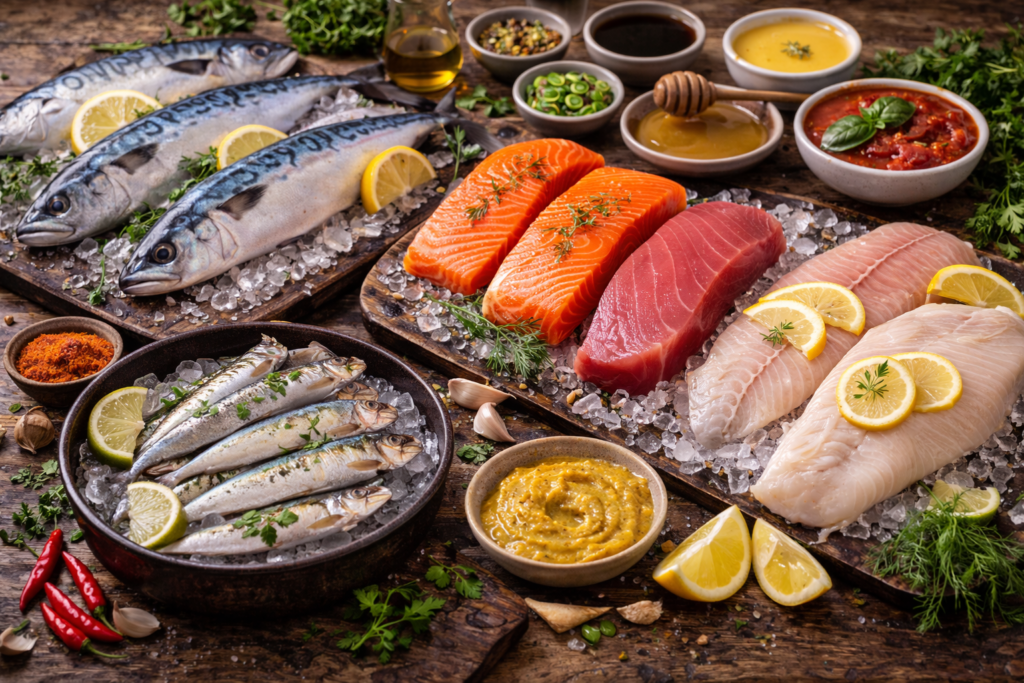
Fish whose flavours are more intense exist in the ocean. Mackerel, sardines and anchovies produce strong flavours which combine perfectly with sour and spicy foods. The mild taste of cod and tilapia fish makes them suitable for cooking with both lemon butter and tomato sauces
Salmon shows culinary flexibility because it can be combined with various herbs, mustard and honey, soy sauce and other ingredients. Before you choose your fish selection you must consider which seasonings you will use.
Sustainable Choices Matter
You should evaluate sustainability beyond the cooking method. You should select fish that comes from responsible sources and choose fish that is in season. Smaller fish reproduce faster than larger fish, which makes them better for sustainable fishing practices. Local fisheries provide environmental advantages because they help decrease negative effects on nature. Seafood selection should be done properly to guarantee its availability for future generations.
Final Thoughts
Choosing the right fish isn’t complicated once you understand texture, fat content, and cooking method.
If you’re grilling, choose firm fish
If you’re frying, choose structured white fish
If you’re baking, go for salmon or whole fish
If you’re steaming, select delicate varieties
If you’re making curry, pick sturdy cuts
The proper fish selection for cooking methods makes fish cooking simpler for you to handle. Our Fish recipe section, together with our individual fish recipes, shows you how different fish types perform best with specific cooking methods. You will find cooking fish to be an enjoyable experience because you can start testing different cooking methods.