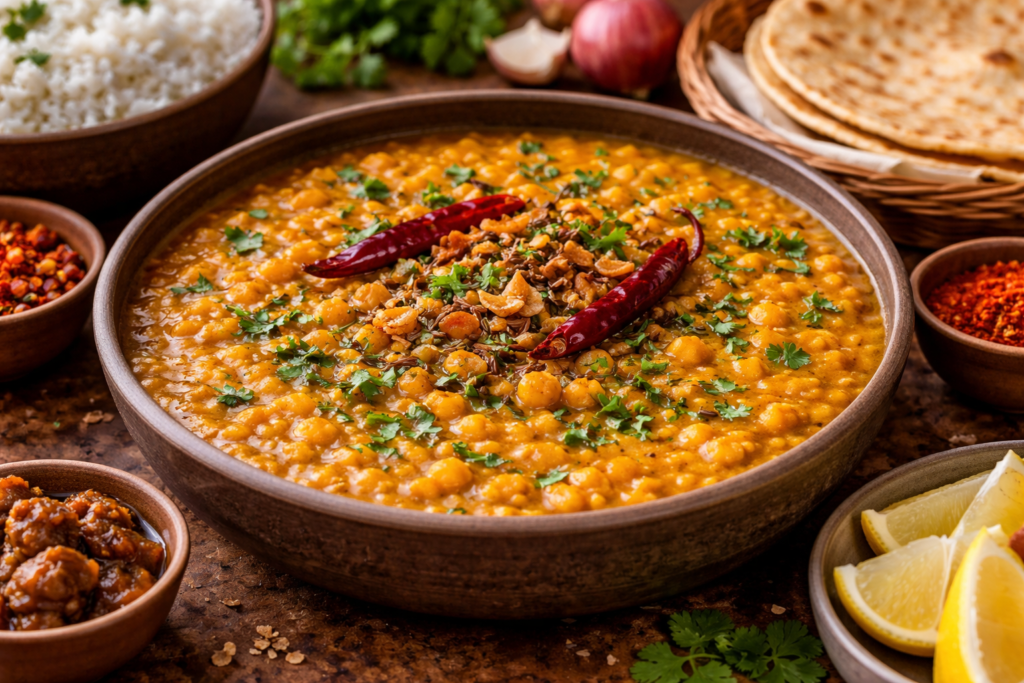
Chana dal provides a satisfying experience through its bowl presentation. The dal has a texture that falls between two extremes because it does not reach the softness of moong dal, while it also does not have the weightiness of rajma. People enjoy chana dal because it offers a filling, nutty flavour and hearty texture. The dish offers a complete experience through its texture, which maintains its form and delivers wholesome, substantial bites
Chana dal serves as a common dish people prepare during weekdays in Indian households. The dish creates perfect harmony with chapatis, steamed rice, and jeera rice. This dish provides a homey feeling which people can make when they want simple,e warm food
People need to prepare this dish according to traditional Indian kitchen methods
Ingredients
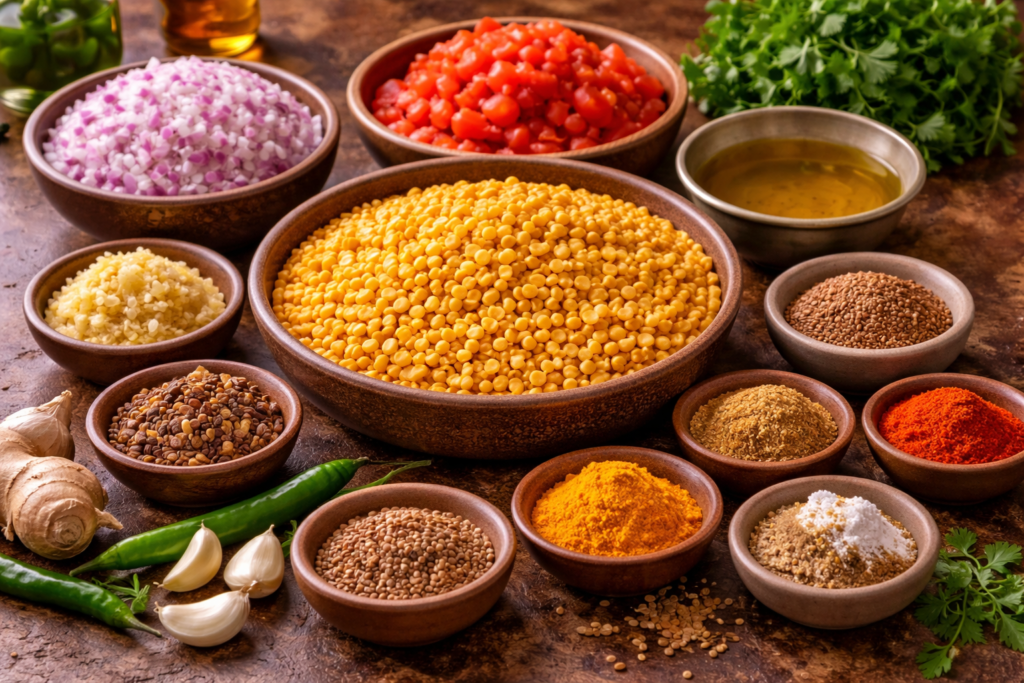
- 1 cup chana dal
- 3 cups water (for pressure cooking)
- 1 medium onion, finely chopped
- 1 medium tomato, finely chopped
- 1 teaspoon ginger, grated
- 3–4 garlic cloves, crushed
- 1 green chilli (optional), slit
- ½ teaspoon turmeric powder
- 1 teaspoon red chilli powder
- 1 teaspoon coriander powder
- ½ teaspoon garam masala
- 1 teaspoon mustard seeds
- 1 teaspoon cumin seeds
- A pinch of hing (asafoetida)
- 2 tablespoons oil or ghee
- Salt to taste
- Fresh coriander leaves for garnish
Methods to Prepare Dal
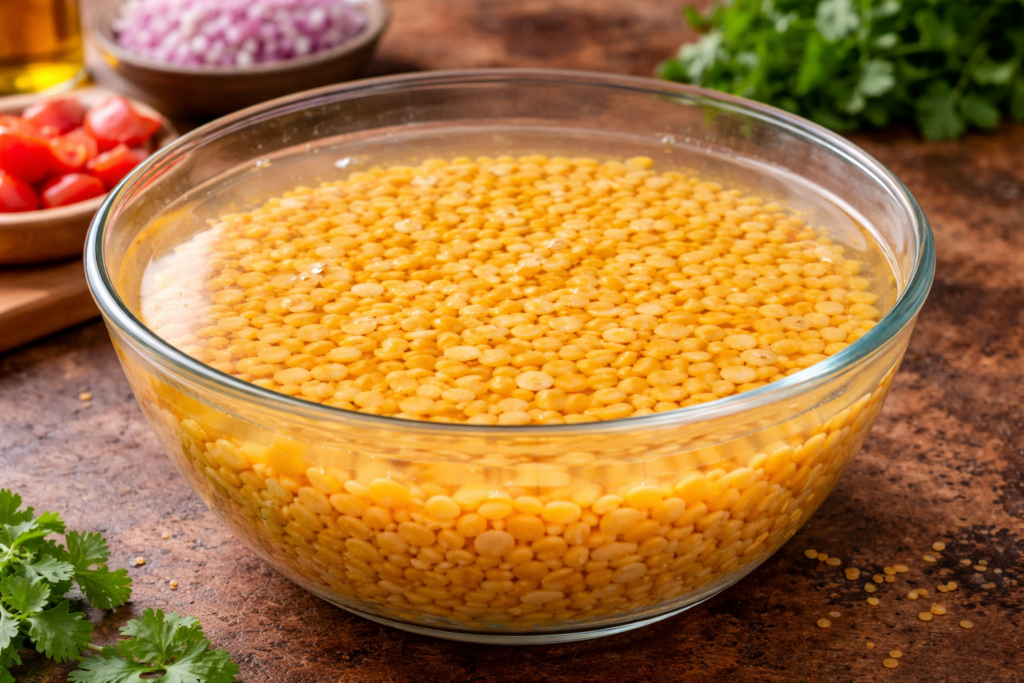
Step 1: Soaking the Dal
You must complete this step without exception. The chana dal needs to be rinsed until the water runs clear, then soaked in enough water for one hour. The two-hour soaking period provides better results whenever time allows
The dal needs to soak because it helps the lentils become softer,which results in better cooking results
The process decreases cooking duration while it enhances the body’s ability to digest food
The dal will expand slightly during the cooking process, which is the desired outcome. The cook needs to remove the soaking water before starting the cooking process
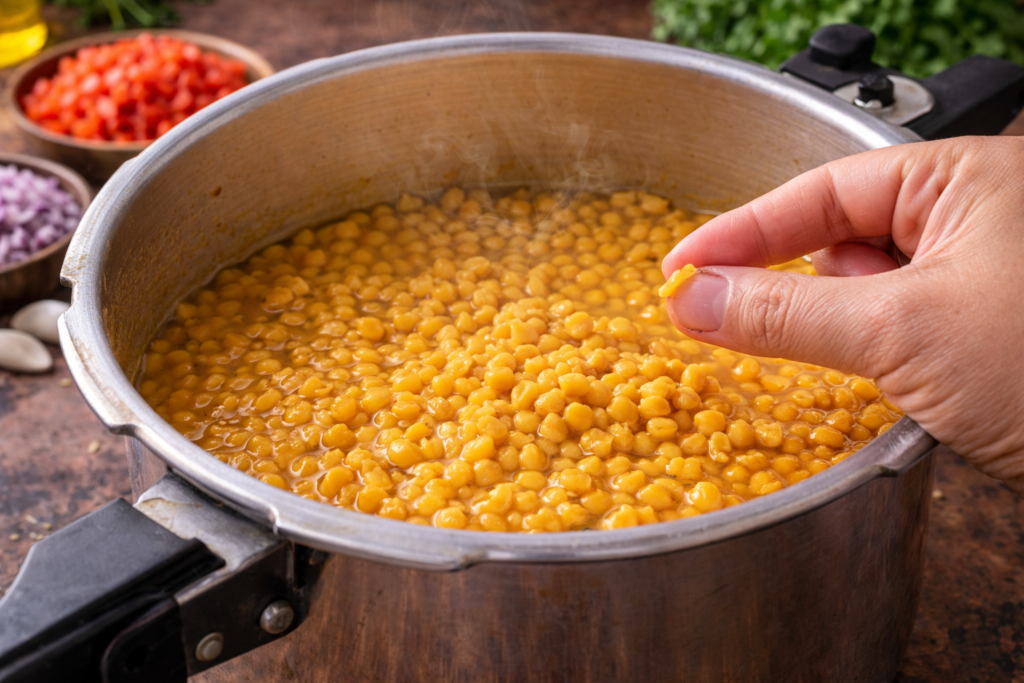
Step 2: Pressure Cooking the Dal
After cooking the dal properly, mix all of it once again. Next, pour in milk and gradually begin to add sugar. Stir well to incorporate all ingredients properly
Close the lid and cook on medium heat for:
- 1 whistle on high flame
- Then 2–3 whistles on low flame
The process needs to stop heating until all pressure has been released through natural methods. The dal should become soft after you open the cooker while maintaining its original shape
You should press a grain between your fingers, yet it should maintain its solid form. The dish needs more hot water to cook until the next whistle, when it shows undercooked results
The dish requires a thickness adjustment, which you can perform at any time
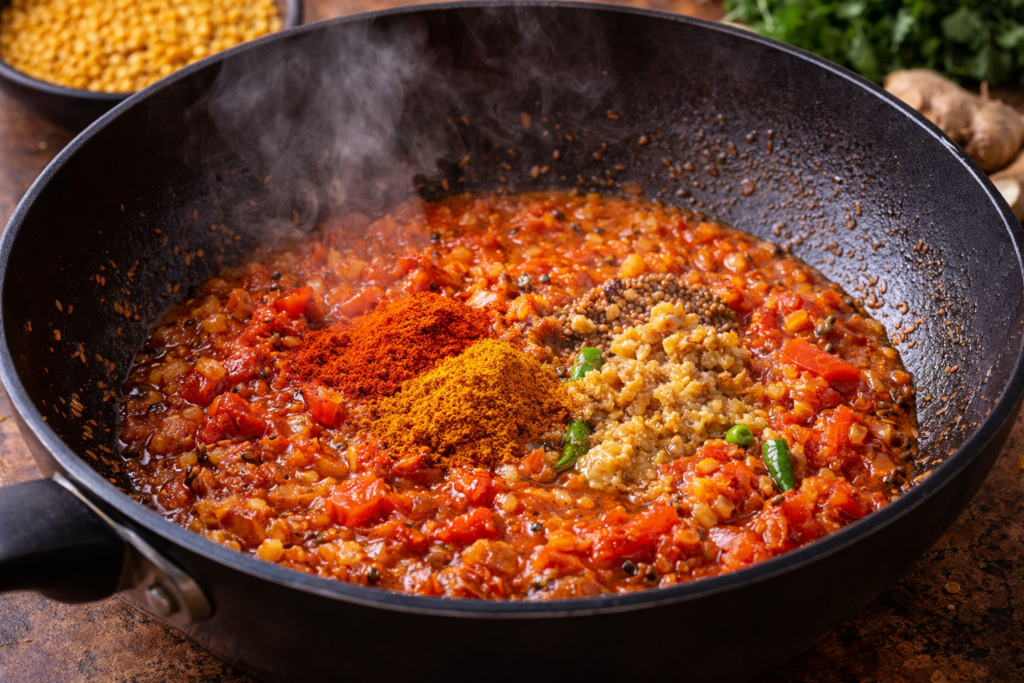
Step 3: Preparing the Tempering (Tadka)
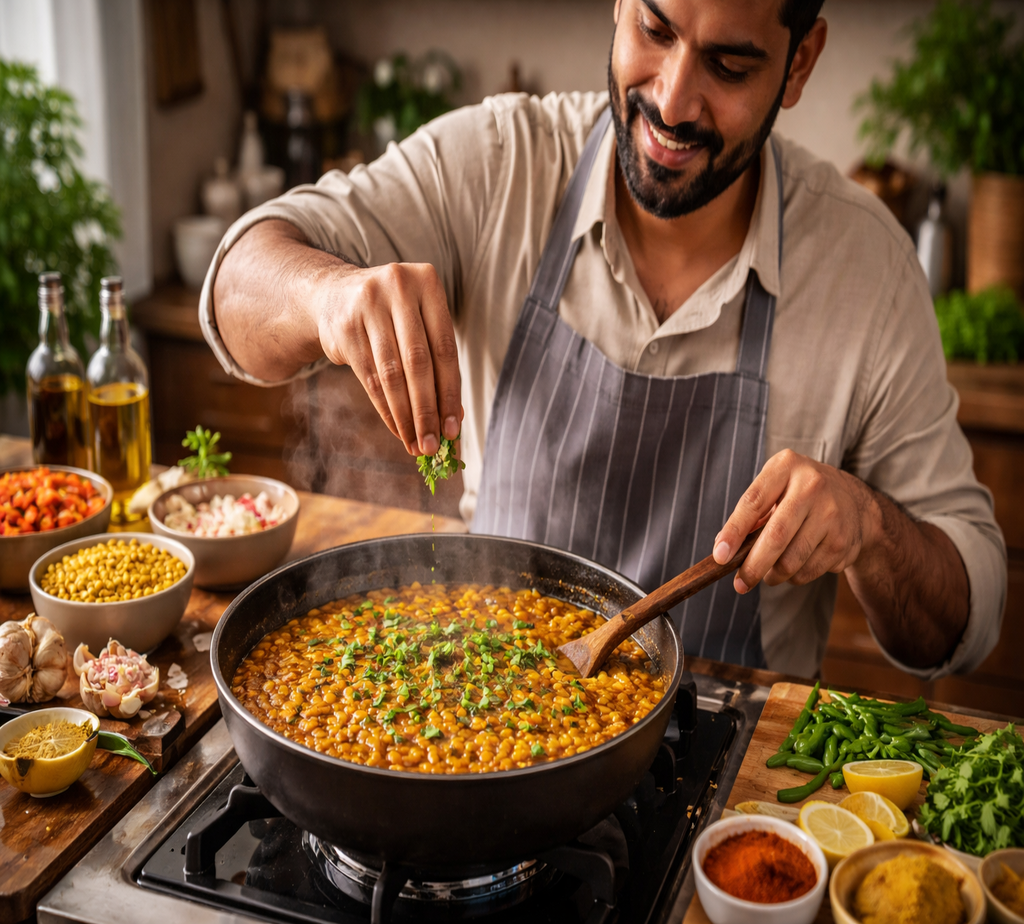
The authentic taste starts at this point. The deep pan requires hot oil or ghee for cooking. You should put mustard seeds into the pan when it reaches the right temperature. The seeds should make sounds when they are cooked. You should add cumin seeds together with hing powder after the process. The scent, which resembles earth,h begins to spread through the space
Next, put chopped onions into the cooking process. The chef needs to cook the onions until they turn golden brown. The process needs time because onions that have reached a light brown colour produce a better flavour
You need to add ginger, garlic, and green chilli to the cooking process. You need to cook the ingredients for one more minute until the raw smell leaves the dish.
The dish requires chopped tomatoes with red chilli powder and coriander powder. The cooking process requires you to wait until the tomatoes become completely soft and the oil starts to separate from the borders. This step builds the base flavour.
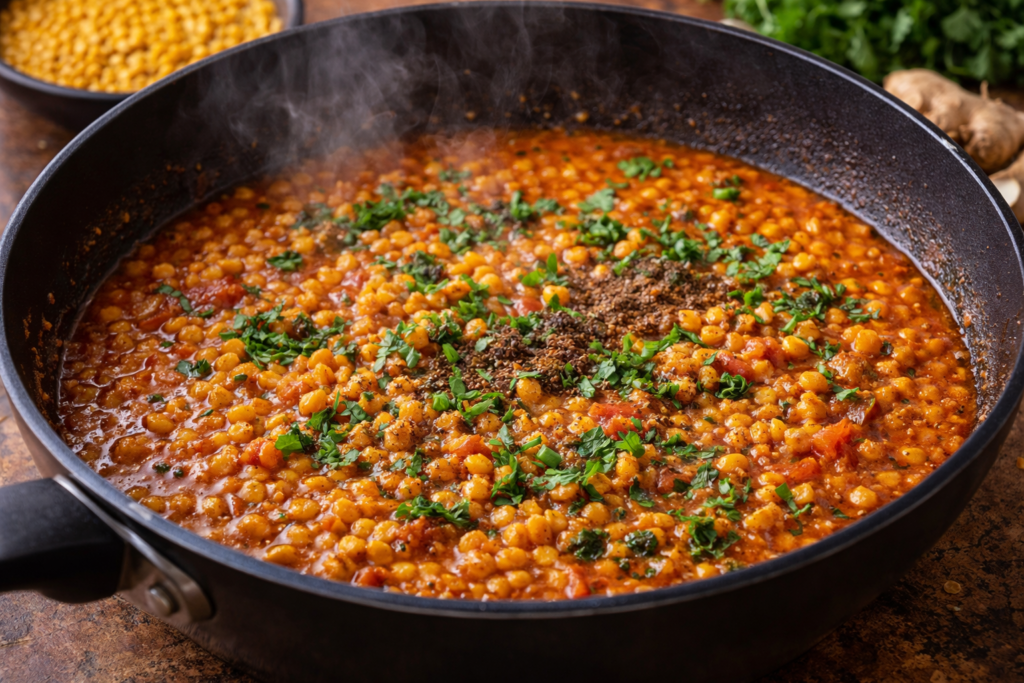
Step 4: Combining and Simmering
Now gently add the cooked chana dal into the masala. The two ingredients should be combined through thorough mixing. The consistency needs hot water for adjustment at this point. The chana dal should maintain a thick consistency, which should not become dry
The cooking process should continue for 8 to 10 minutes after reaching a gentle simmering point. The simmering time period enables the different flavours to merge together in perfect harmony
The dish requires two finishing touches,s which include garam masala and freshly chopped coriander leaves
The chef needs to taste the dish before proceeding to add more salt. The cooking process requires turning off the heat, while the food needs to rest for several minutes before it becomes ready for serving
Serving Suggestions
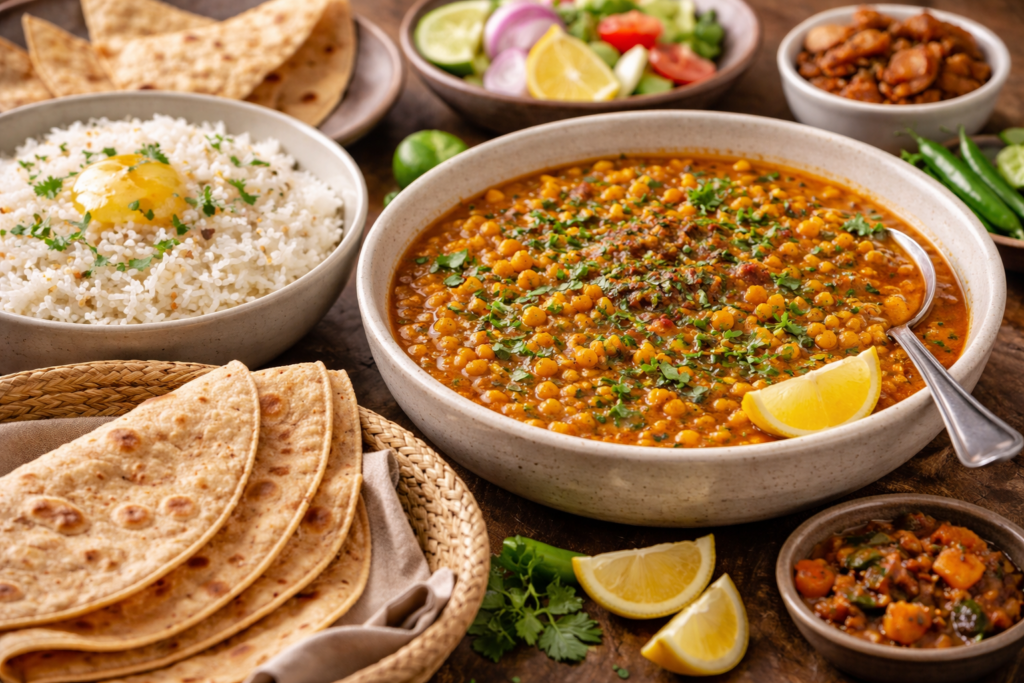
Chana dal is wonderfully versatile.
- Serve the food hot, together with chapati or phulka
- The dal can be stored in the refrigerator for a period of 2 to 3 days. The flavours of the dish reach their full potential after one day of waiting
- The dish should be served with steamed rice and a spoonful of ghee
- The dish requires a lemon squeeze to be added before it can be served
The meal should be consumed with pickle and papad that are served as side dishes
Tips for Perfect Chana Dal
- Always soak the dal for a better texture and digestion
- Don’t overcook — chana dal should hold its shape
- For richer taste, use ghee instead of oil
- Add spinach or lauki for variation
- If cooking without a pressure cooker, simmer covered for 35–45 minutes until soft
Common Mistakes to Avoid
- Skipping soaking time
- Adding too much water while pressure cooking
- Not cooking the onion-tomato masala properly
- Over-simmering until mushy
F& Q
Q. Am I able to cook dinner chana dal without soaking?
Yes, but it’s going to take longer to cook dinner and won’t soften lightly.
Q. How long ought I strain prepare dinner it?
Commonly, 3–4 whistles total are enough after soaking.
Q. Why is my dal nevertheless tough?
it may need extra cooking time, or it wasn’t soaked long enough.
Q. Can I make it without onion and garlic?
sincerely. bypass them and upload more hing for flavour.
Q. How long does chana dal last?
It keeps nicely in the fridge for up to three days.
Q. Is chana dal healthful?
Sure. It’s rich in protein and fibre and keeps you complete for longer.
A simple bowl of chana dal may not look fancy, but it contains warmth, consolation, and familiarity. It’s the kind of meal that experience

Anjali Raj Singh
I am a food writer and culinary content creator specializing in global cuisines, traditional recipes, food culture, and cooking techniques. Through extensive research and hands-on recipe analysis, I create accurate, informative, and engaging content that helps readers explore authentic dishes from around the world. My work covers recipe development, food history, ingredient guides, restaurant features, and culture-driven culinary stories.
At Foods Around the World, I focus on delivering well-researched, reader-friendly, and SEO-optimized content that reflects the traditions, flavors, and culinary heritage behind each dish. Every article is carefully reviewed for accuracy and relevance, ensuring readers can discover trusted recipes, cooking insights, and food experiences from diverse cultures worldwide.