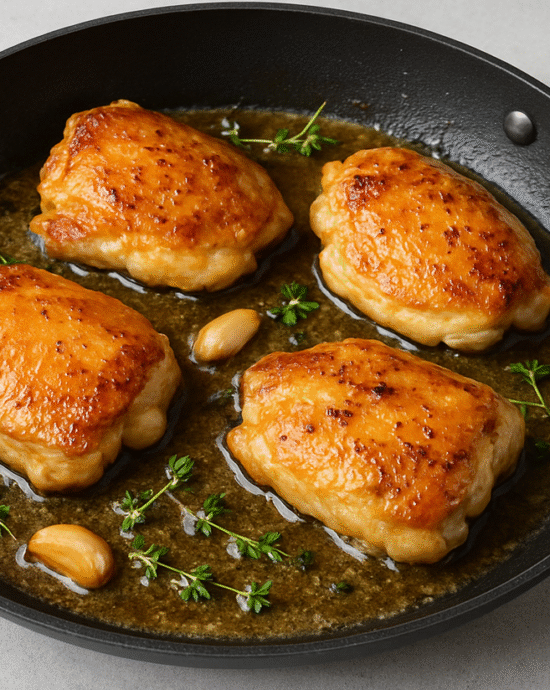

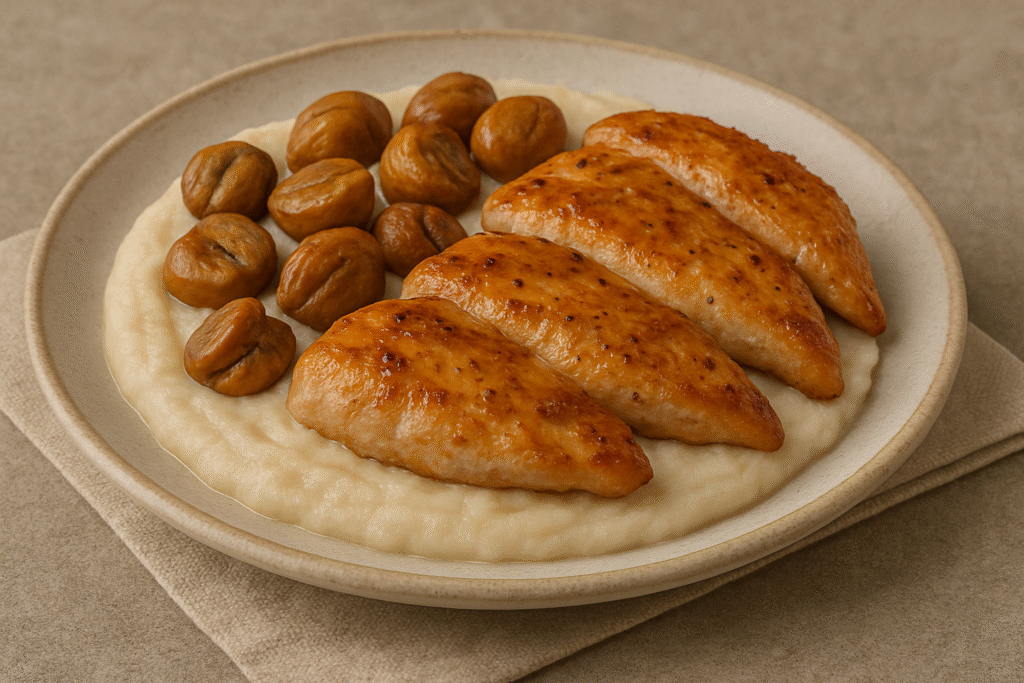
Some dishes don’t need grand introductions. A single bite is adequate, and it tells a story. That is the nature of the dish, a bit of reflective food. Chicken cooked in a hot frying pan and caramelised, on peaceful, buttery velvet pure of celery root, all surrounded by boiled chestnuts that resemble small golden morsels of ecstasy. That plate is a silent type of restaurant which you never forget for an hour or two after having the last bite
This is not a flashy and fussy recipe. It is about beautiful comfort. It can be used when preparing dinner to please your family or someone who needs a little bit of warm food, who has had a bad week or has a slight case of the blues
Background & Old-World Uniqueness and Modern Warmth
The origin of this dish is found in the traditional European kitchens where customers attended to their basic ingredients with love and respect. Celery root, or celeriac, is perhaps not a contestant in the glam-bam beauty contest at the fresh produce market, but whacked with boiling water (cooked) and given a whirl in the blender (pureed), it becomes a creamy, soft, and very comforting dish. Chestnuts are a winter staple, especially in France and Italian households. A common method of preparation is roasting, which is always followed by some sharing
And what about the chicken? There is a reliable star, well. Its golden, juicy colour comes out when it is sauteed with butter and herbs, absorbing a burst of flavour at each pop in the pan. Add all of that, and you have a meal that is comforting and also unique.
Ingredients
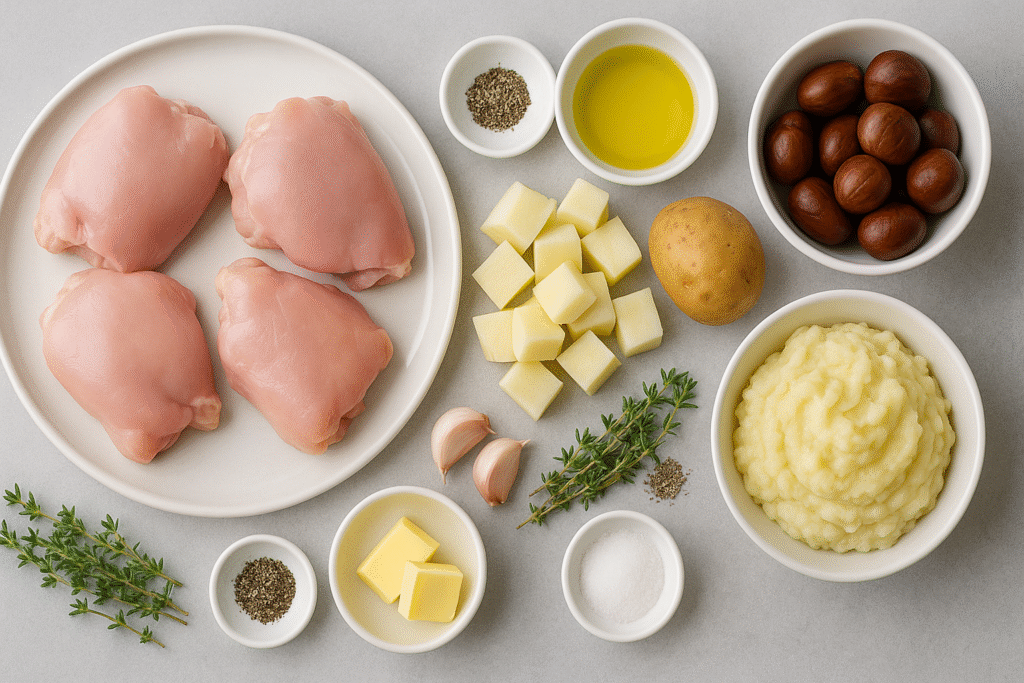
- 4 chicken thighs, boneless (breast, in case you like it better)
- 1 tablespoon olive oil
- 1 tablespoon butter
- Seasoning (Salt and pepper to taste )
- 2 cloves of Garlic ( lightly crushed)
- 2 or 3 fresh thyme sprigs (or a small pinch of dried thyme)
For the Celery Root Purée:
- 1 medium celery root (about 500g), peeled and cubed
- 1 small potato (for extra smoothness, optional)
- 2 tablespoons butter
- ½ cup whole milk or cream
- Salt and a little white pepper
For the Chestnuts:
- 1 cup pre-cooked chestnuts (you can find these vacuum-packed)
- To taste salt and pepper
- 2 cloves of garlic squashed slightly
Some sprigs of fresh thyme (a pinch of dried)
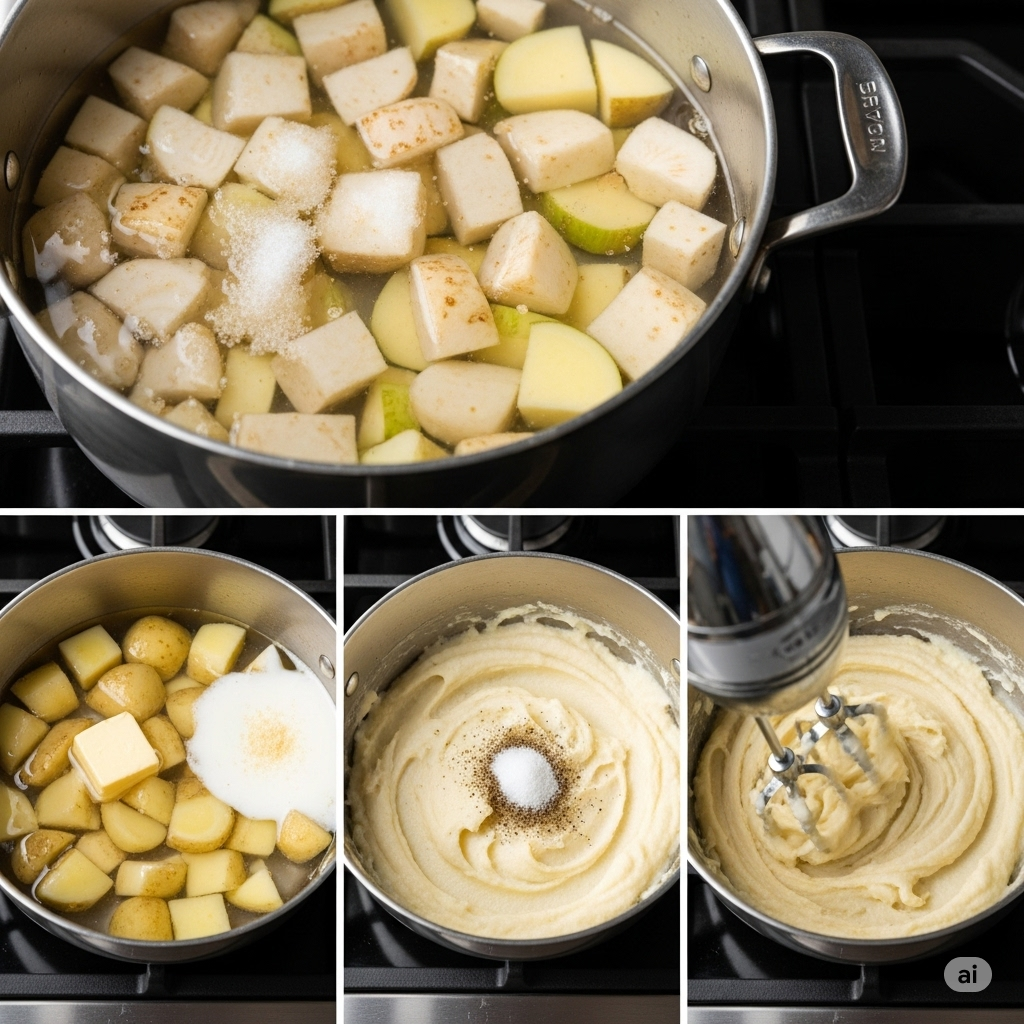
Step 1: Add chopped celery root (and potato, if using) to a pot of salted water. Simmer it up until it is all fork-tender, which takes approximately 15-20 minutes
Pour off and pour in the butter, warm milk, salt and white pepper. Mash it all, or beat it till soft and silky. Test and season
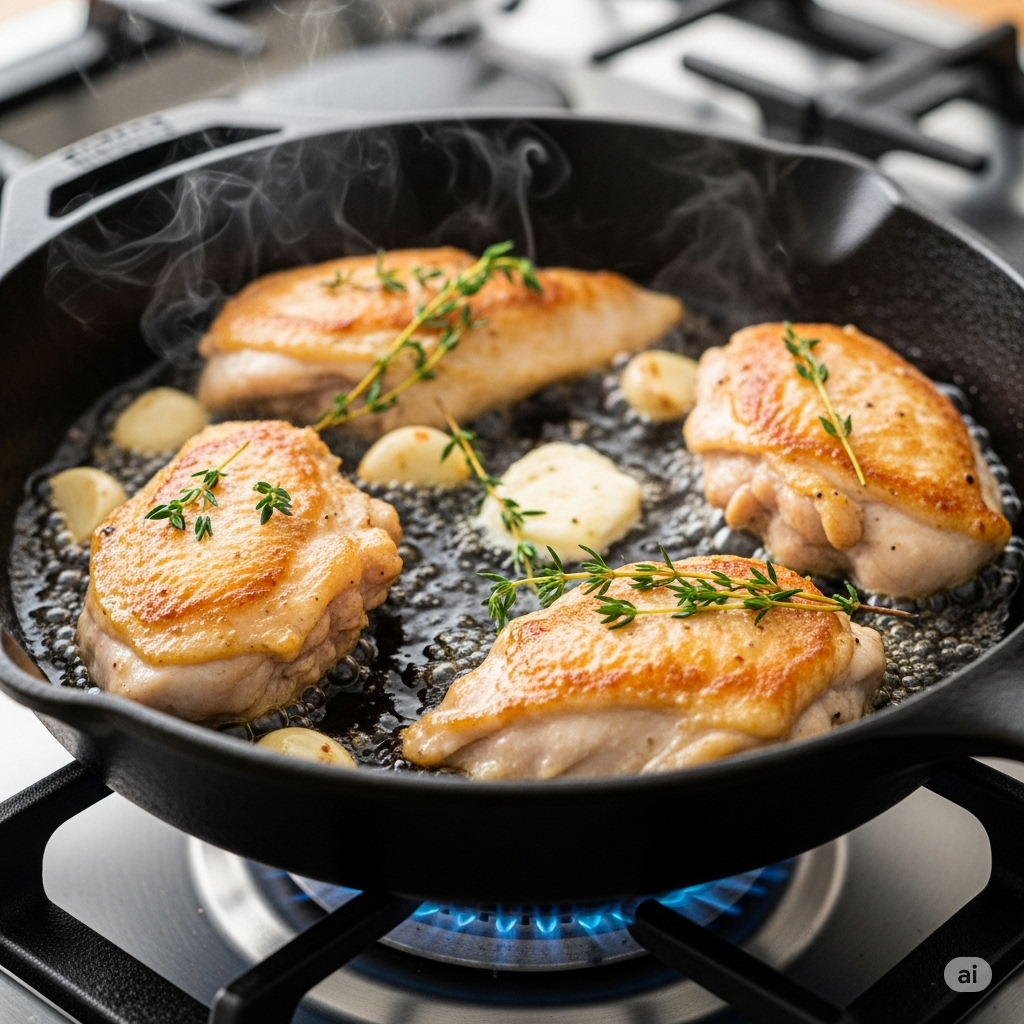
Step 2: Dry off the chicken with a paper towel and season it on both sides.Heat in a skillet the olive oil and butter.
Add the garlic and thyme, and let them gently sizzle — this flavours the pan. Place chicken pieces in, skin-side down if you’re using thighs. Cook until nicely golden, about 6 minutes per side.
Once cooked through, take it off the heat and let it rest a minute or two
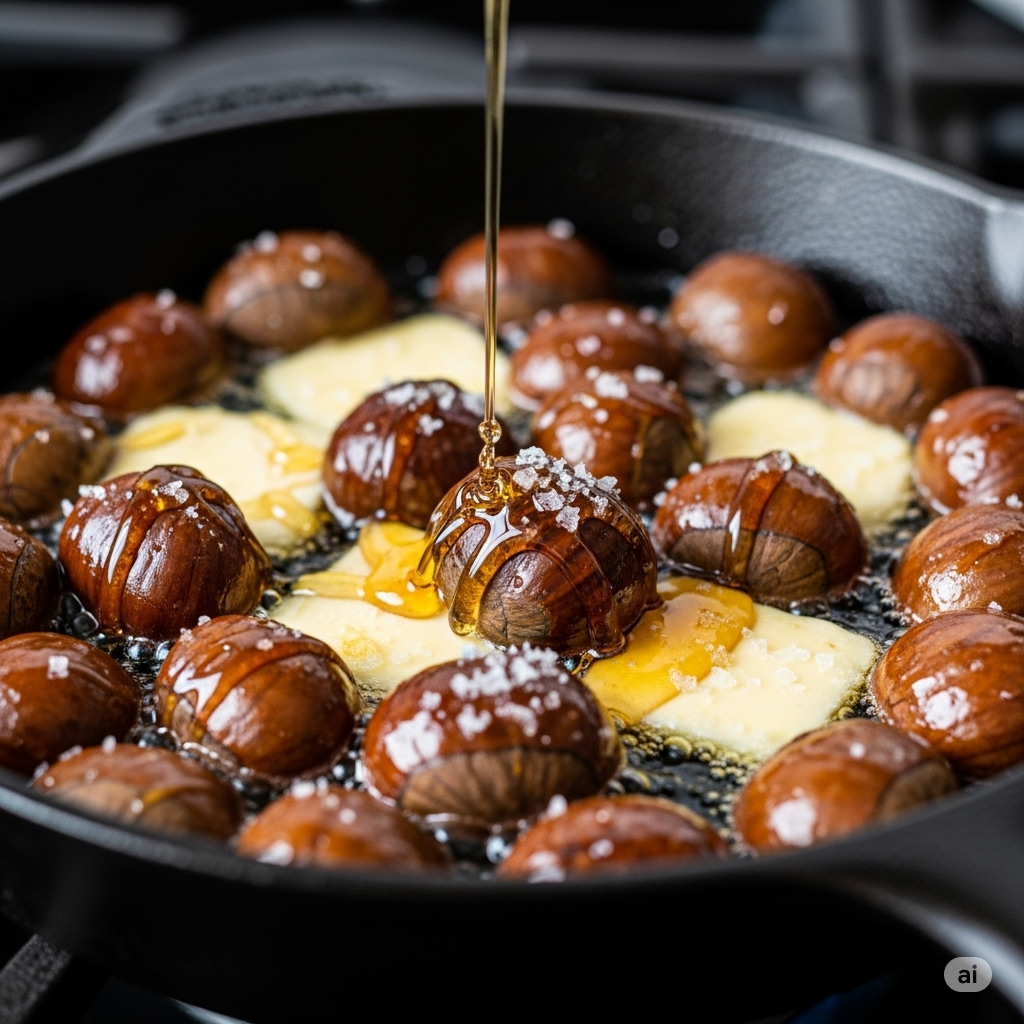
Step 3: In the same pan, add butter and chestnuts. Let them warm through and take on some colour, then drop in a little honey or syrup and a sprinkling of salt,–enough to render them soft and sweet.
Serving Tips
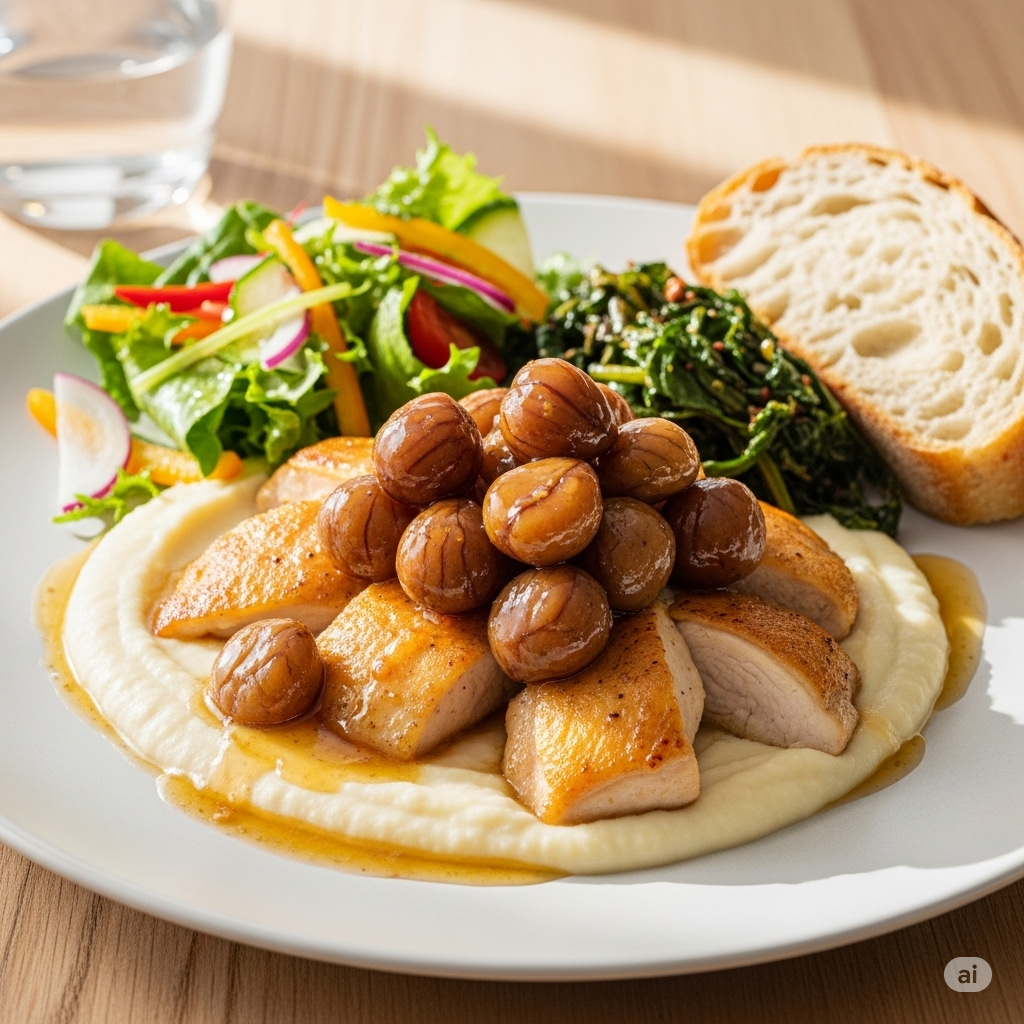
- Put the purée first upon each plate with a spoon. Put the chicken on top of this, and heap those golden chestnuts on. Put on a little drizzle of its buttery pan juice over it, in case you have saved any enriches. Serve with a light salad or roasted greens… or even fresh bread to mop up the last of the puree
- Life is peaceful even with a light glass of wine or even a cup of herbal tea on the side, and the sentiment of a well-balanced, healthy meal
Precautions
- Peel the celery root deeply — its outer layer is tough and bitter
- Taste the purée before serving — celery root has a gentle flavour that needs proper seasoning.
- Don’t overcook the chicken — just until juicy and done
- Let it rest before slicing — even a few minutes makes a difference
More About Sauteed Chicken
Hurry, seriously, even here. No compulsion to make it perfect. It is about going at a slower pace, allowing the ingredients to do the work and have something warm in your heart and stomach. It can be a dish that satisfies the customer as well as the cook; either way, it is that type of food which makes a kitchen smell like love, before it goes into the mouth and feels like home.