
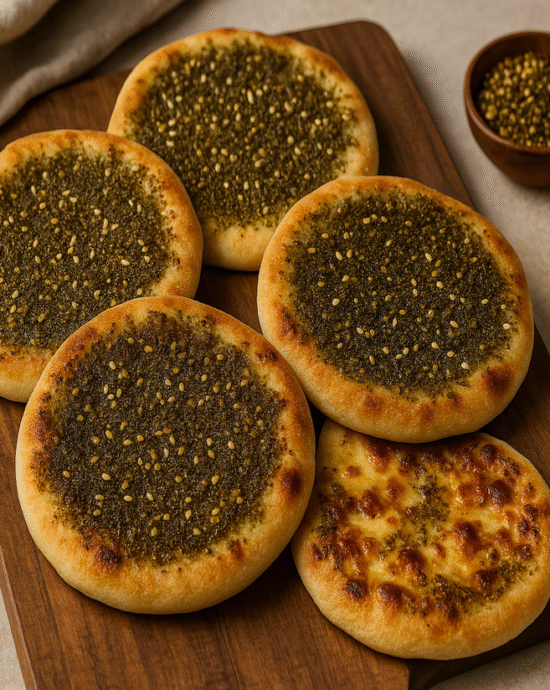


The best way to know this is to take part in a stroll through a Middle Eastern street in the morning, where you are likely to smell the refreshing aroma of fresh bread mixed with the warm, herby smell of Zaatar. That rings your name, manakish (makes us spell it sometimes, manakeesh), is a golden, slightly chewy flatbread that defies many nicknames but is commonly and lovingly referred to as the Arabic pizza. In contrast to the Italian variety, however, Manakish is simple but extremely delicious and traditionally topped with a blend of olive oil and zaatar, creamy cheese or ground meat
This is not bread, this is a cultural embrace. Manakish is a breakfast in Lebanon, Syria and Palestine, as well as the rest of the Gulf countries, but it is more than breakfast, it is a ritual. It circulates the family tables, is bought from local bakeries on the way to work, or is enjoyed with friends over and over again, in a limitless amount of mint tea. Every nibble narrates a ballad of simplicity executed quite exquisitely.
Some History on Manakish
Manakish has a very long history of being part of traditional Levantine cuisine, shaped centuries ago when parishioners baked bread together in common ovens (saj) in the mornings. At home, women would make dough, take it to the local bakery and put whatever they found available on bread with a splash of olive oil, some fresh herbs or soft cheese. Gradually, Zaatar emerged as the staple topping, not only with the taste, but also because this was nutritious and well preserved
Manakish has quite obviously been baked far away from where it started, and can now be found in bakeries across Abu Dhabi, to New York, but the essence, the soul, of it all, remains the same- a bread that satisfies the soul as much as the stomach.
Ingredients

(Makes about 4 medium flatbreads)
For the dough:
- 3 cups all-purpose flour (or substitute with half whole wheat for a heartier texture)
- 1 cup warm water (not too hot, to keep yeast happy)
- 2 tsp instant yeast (or 2.5 tsp active dry yeast, proofed in warm water)
- 1 tsp sugar
- 1 tsp salt
- 2 tbsp olive oil
For the topping:
- 4 tbsp za’atar mix (blend of thyme, sesame seeds, sumac — store-bought or homemade)
- 4 tbsp extra virgin olive oil (good quality for best flavour)
- Optional: shredded mozzarella or feta, or akkawi cheese (or even minced lamb used as a meaty version)
Substitutes
- Za’atar: In any event, in case you do not have pre-made za’atar, mix dried thyme, toasted sesame seeds, sumac and a pinch of salt
- Flour: Gluten-free all-purpose flour can be used, but the texture will be different
- Cheese: Traditional cheese Akkawi, may be substituted with cream cheese, halloumi or even cheddar
- Olive oil: In a pinch, you can substitute sunflower or avocado oil, but the flavour will lack some richness
Instructions

Step 1: Add warm water, sugar, and yeast to a small bowl. Cover and let stand for 5-7 minutes until it is foaming. Foam = your yeast’s alive and ready to rumble

Step 2: In a large mixing bowl, combine flour and salt. Add the yeast mixture and olive oil. Stir until a rough dough forms

Step 3: Turn onto a floured surface and knead for 8-10 minutes until it feels soft and springy. When a stand mixer is used, knead for 5-6 minutes at medium speed

Step 4: Put the dough in the greased bowl, sprinkle it with a clean kitchen towel, and leave it in a warm place to rise, 1- 1.5 hours (until it doubles its size)
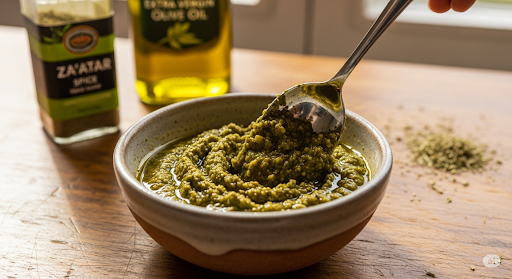
Step 5: Make a thick paste with zaatar and olive oil in a small bowl. If making cheese or meat versions, prepare those toppings too

Step 6: Knock back the dough with your fists, then split it into 4 even chunks. Roll each piece into a ¼-inch thick round—no need for perfection, just consistent thickness

Step 7: Place the mixture of za’atar on each circle and leave a certain border. In the case of cheese or meat, sprinkle and spread them
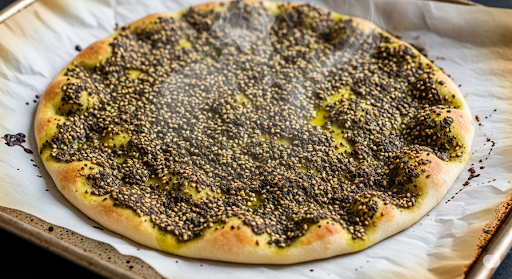
Step 8: Put your oven on a preheat to 220 degrees Celsius (425 degrees Fahrenheit). Rest the topped dough on an ungreased baking tray lined with parchment, and then bake 8 to 10 minutes, or until the edges are nicely browned and a bit crisp
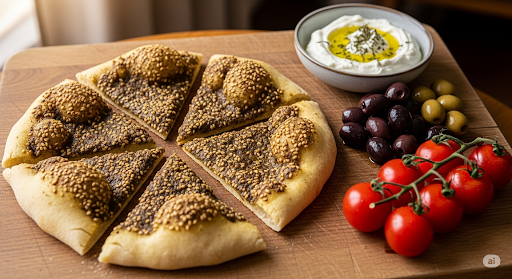
Step 9: Serve warm with fresh vegetables, olives, labneh or just alone
Serving Tips
- To make a traditional breakfast, use labneh (strained yoghurt) and fresh mint
- Serve with hummus and olives, and sliced cucumbers as a mezze spread
- To give it a modern touch, top off the dish with fresh arugula and cherry tomatoes once it is baked
Preacautions
- No overbaking.. Manakish must be soft with little crispy edges
- Good-quality olive oil is always used because it is one of the main flavours
- In case of meat toppings, these must be cooked first to prevent undercooking
- Zaatar burns easily, so watch the oven
This bread is not complex, but it has some magical quality to it, the balance; soft, crisp, herby, but also mellow, simple, but full of traditions. When you start making Manakish at home, it is impossible to use store-bought bread

Anjali Raj Singh
I am a food writer and culinary content creator specializing in global cuisines, traditional recipes, food culture, and cooking techniques. Through extensive research and hands-on recipe analysis, I create accurate, informative, and engaging content that helps readers explore authentic dishes from around the world. My work covers recipe development, food history, ingredient guides, restaurant features, and culture-driven culinary stories.
At Foods Around the World, I focus on delivering well-researched, reader-friendly, and SEO-optimized content that reflects the traditions, flavors, and culinary heritage behind each dish. Every article is carefully reviewed for accuracy and relevance, ensuring readers can discover trusted recipes, cooking insights, and food experiences from diverse cultures worldwide.