


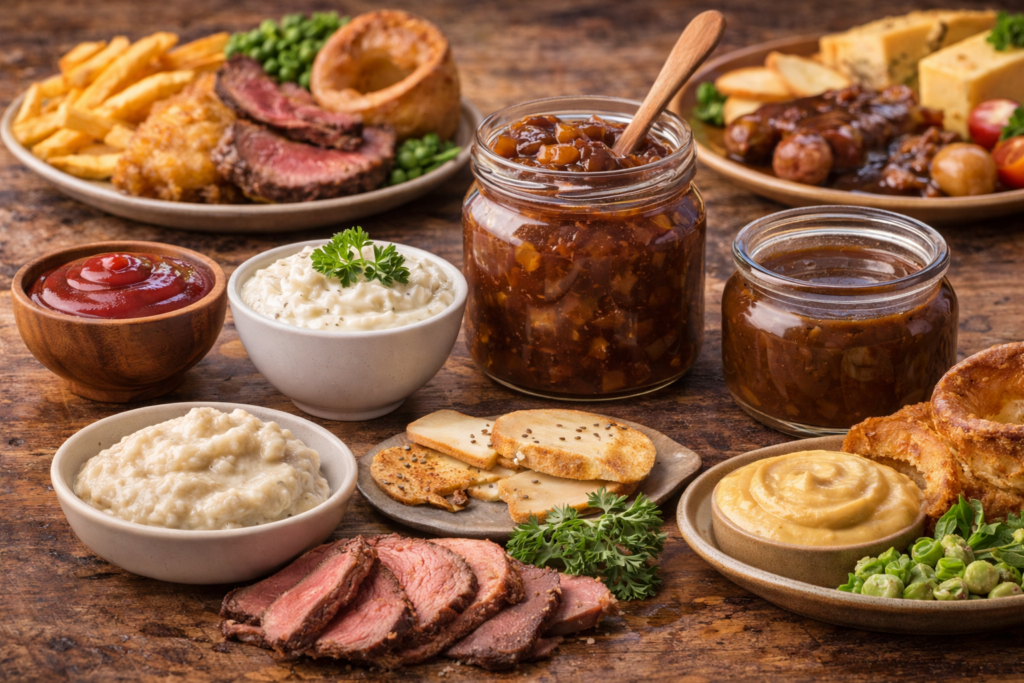
British cuisine showcases its authentic identity through the basic sauces and condiments which are served with its dishes rather than through its complex culinary creations. The designers of these additions created them to match the climate conditions and available ingredients and typical eating patterns because they wanted to improve dining experiences without making dishes taste too strong. A sauce in British cooking serves as a necessary component because it provides the table with its established traditional functions. The following section presents 5 traditional British sauces and condiments which have been reinterpreted to demonstrate their authentic purpose and matching food partners, and their continued importance in modern British kitchens
Brown Sauce (HP Sauce)
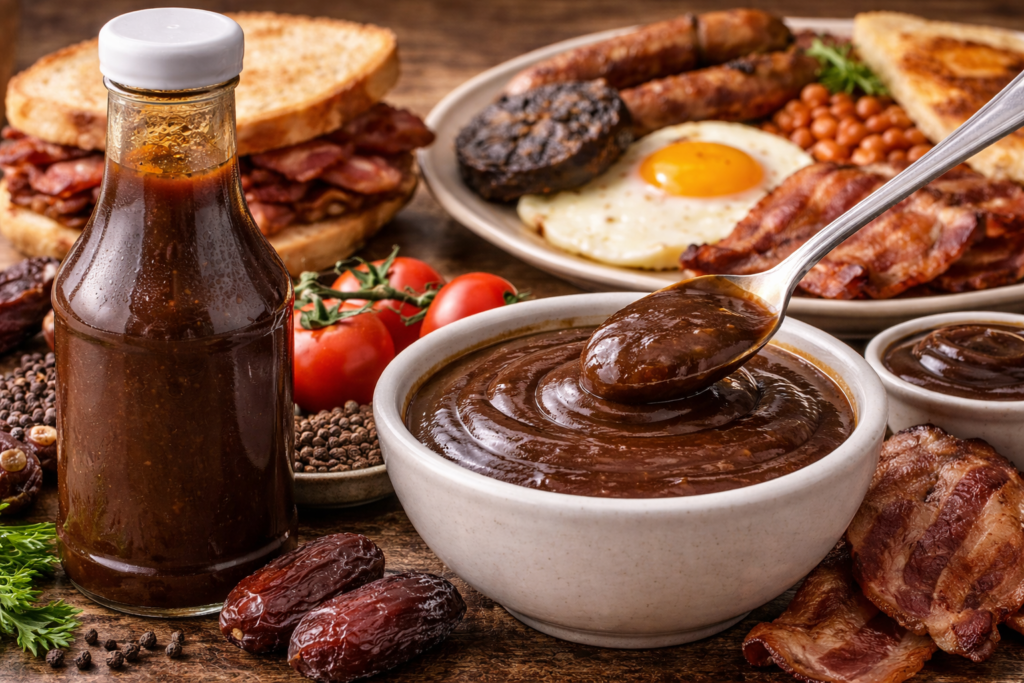
What is Brown Sauce
The recipe yields a dense, black-colored sauce which combines tomatoes with vinegar and molasses, dates and spices
Traditional usage of the Sauce
Brown sauce is directly connected with the full English breakfast. The dish is a combination of bacon and sausages, eggs, black pudding, and sausage or bacon sandwiches as its main components
The reasons behind the successful combination
The hard vinegar cuts through fatty meats, while the little sweetness balances salt and smoke. People commonly use brown sauce as a condiment, which they apply in small portions for immersing purposes because it helps them maintain balanced taste components.
English Mustard

What is English Mustard
A powerful mustard made from finely ground mustard seeds, mixed fresh to activate its heat
How it’s historically used
English mustard is a classic accompaniment to:
- Roast beef
- Ham
- Cold meats and pork pies
It is especially common at Sunday roasts and buffet-style meals.
Why the pairing matches
English mustard offers heat without sweetness because these qualities make it perfect for pairing with rich meat dishes. The sauce has such powerful intensity that users need to apply it in very small amounts because even a tiny amount gives sufficient results.
Mint Sauce
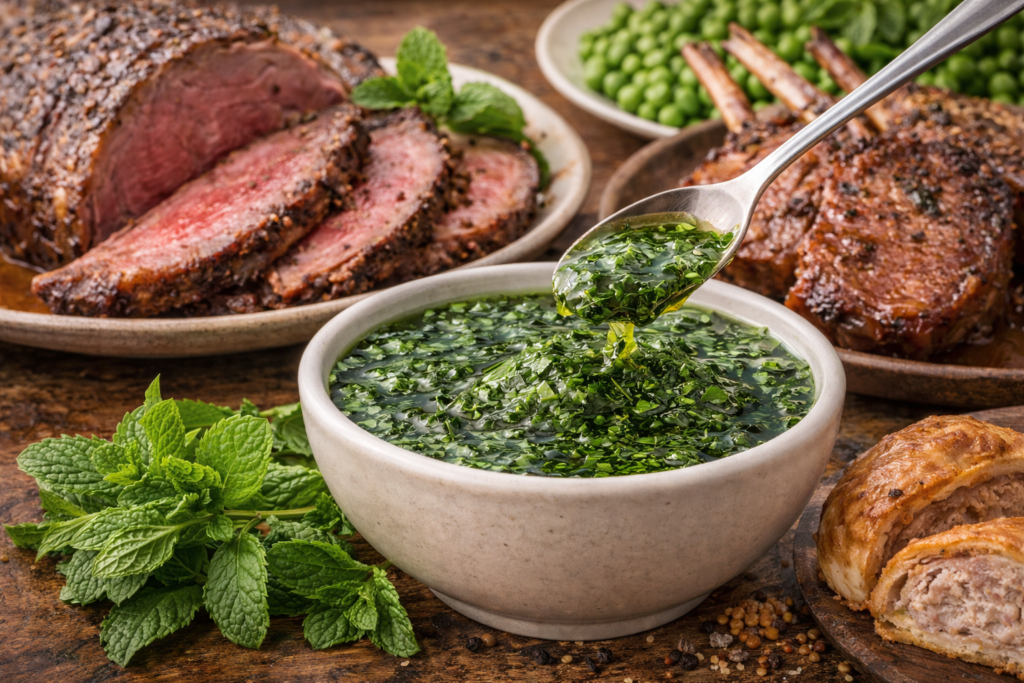
About Sauce
Chopped fresh mint is combined with vinegar and sugar
How it’s historically used
Mint sauce is almost entirely mixed with roast lamb and lamb chops. It is served to the people cold and placed on the side of the plate.
Why the pairing matches
Lamb is naturally rich and a little bit spoiled. Mint supplements freshness, vinegar improves the flavour, and sugar smoothens the acidity. This pairing dates back to seasonal spring cooking, when both lamb and fresh mint were plentiful.
Bread Sauce
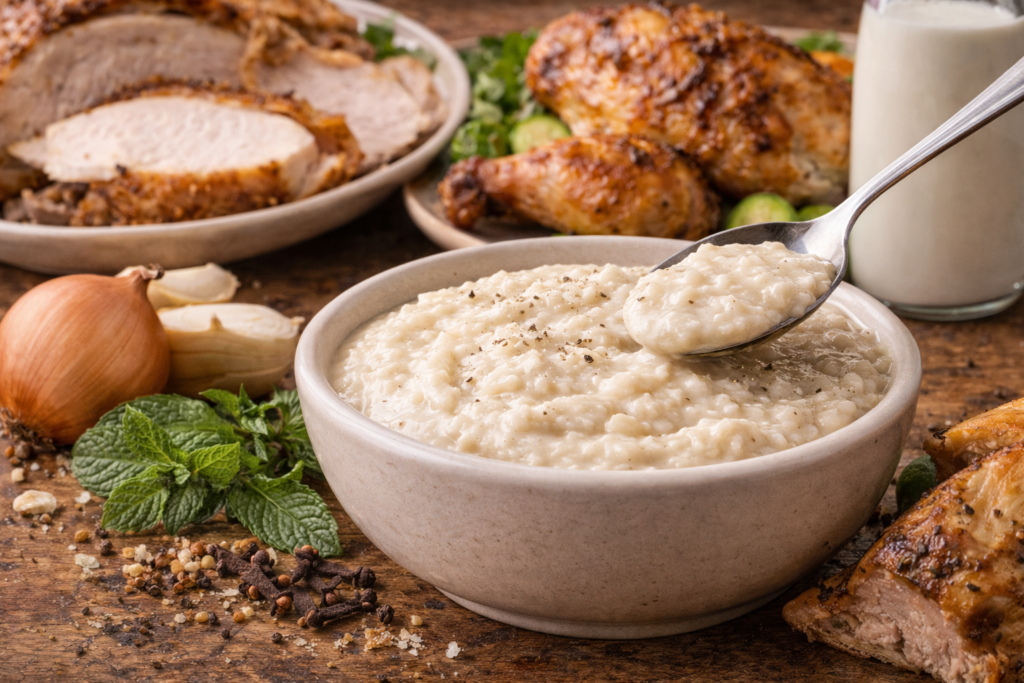
What is Bread Sauce
The warm, thick, creamy sauce is made from milk, breadcrumbs, onion, cloves, and nutmeg
How it’s traditionally served
Bread sauce is usually served to people with roast chicken or turkey, particularly at Christmas dinners and formal Sunday lunches.
Why the pairing matches
Unlike gravy, bread sauce is moderate and comforting. Its smooth texture and gentle spice complement poultry without camouflaging its taste. It’s spooned gently onto the plate rather than poured generously.
Worcestershire Sauce
What it is
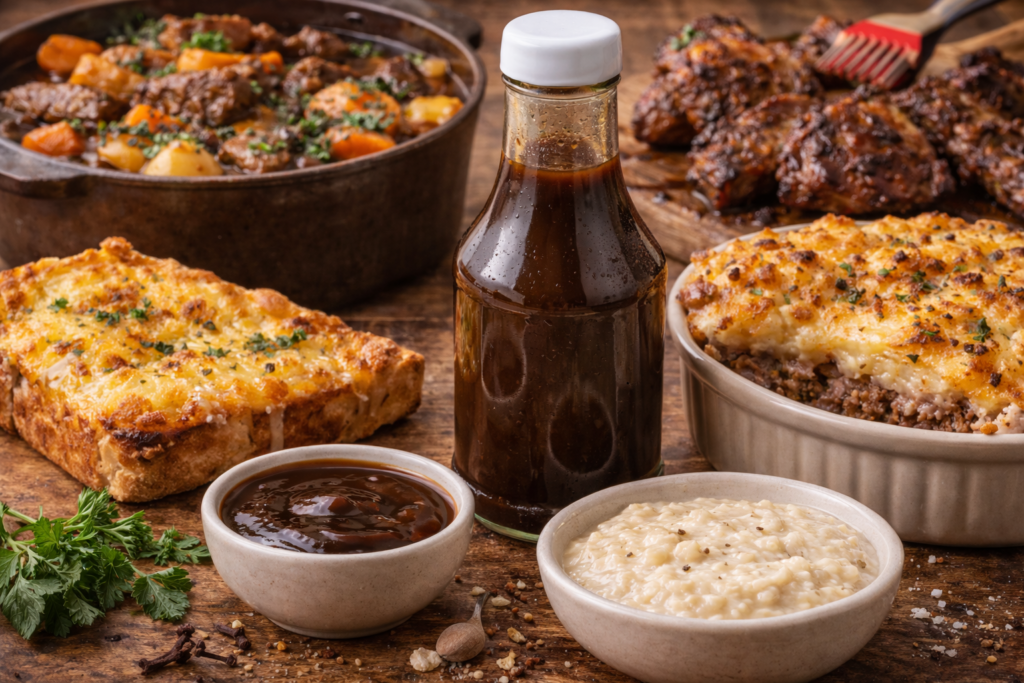
A fermented liquid seasoning is prepared from vinegar, anchovies, molasses, tamarind, and spices
How it’s traditionally prepared
Worcestershire sauce is not much used on its own. Instead, it intensifies its dishes, like:
- Cheese on toast
- Stews and casseroles
- Shepherd’s
- Marinades and savoury sauces
It’s also a vital ingredient in the Bloody Mary.
Why the pairing match
This sauce adds umami and acidity, elevating flavour without drawing attention to itself. Some drops are enough to change a dish
The British Approach to Sauces
British sauces are for regulation. Their objective is to:
- Balance richness
- Add contrast
- Respect the vital ingredient
They are not made to dominate the plate, but to quietly complete it.
Best Tip for Using British Condiments Correctly
- Offer Most sauces on the side
- Use small quantities
- Pair sauces with their traditional dishes
Acknowledging context is key—British sauces work best when used with appropriate intention.
Conclusion
British sauces and condiments show a foodways rooted in balance, tradition, and practicality. When used appropriately, they elevate simple meals and preserve centuries-old pairings
Trying the above sauces as they were meant to be used gives a deeper understanding of how British food has been prepared, delivered, and enjoyed by all generations.