
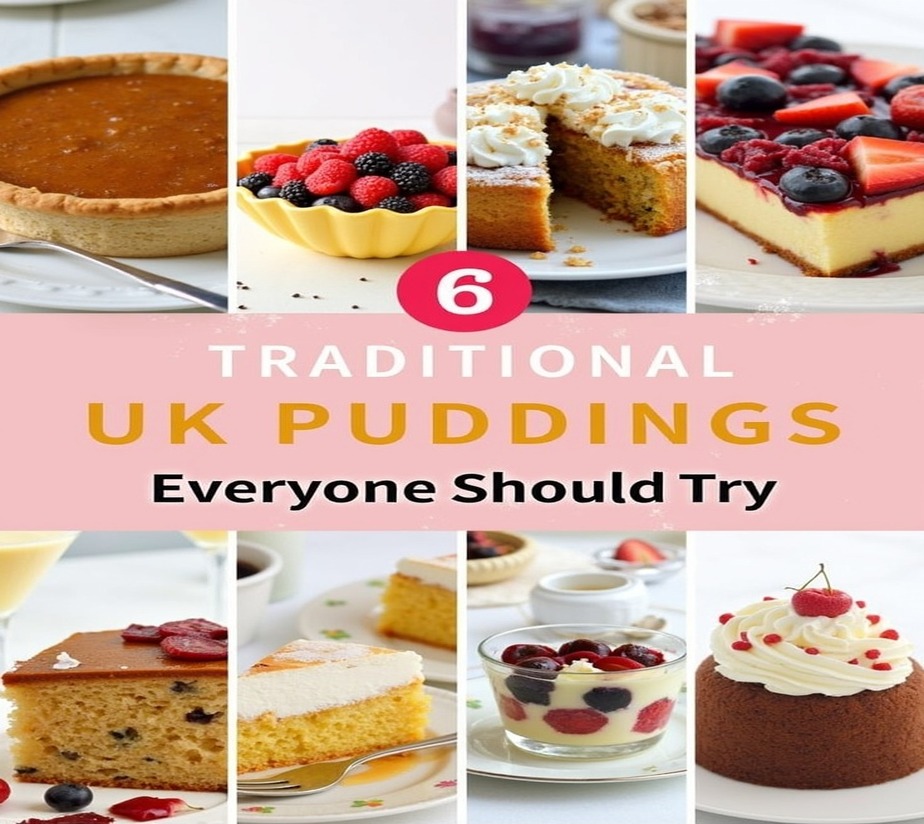

The British expression “What’s for pudding?” refers to “custard in a cup” which many people misunderstand. In the UK, the word “pudding” functions as a universal term for all sweet dishes that people eat after their main meal which includes both desserts and special steamed creations. UK Pudding recipes from the past allowed cooks to create dishes through baking, boiling, steaming, or setting methods. The dishes included both sweet and savory varieties while their design focused on creating filling and warming effects with affordable ingredients which suited Britain’s frigid climate and extended winter season. The British people still cherish their traditional puddings during the holiday season and throughout the winter months. The six classic UK puddings described here provide essential information about their historical significance and their flavor profile.
Sticky Toffee Pudding

The first dish we will present is the dessert which everyone enjoys. The dessert includes of sticky toffee pudding, have inside soft dark sponge cake made with dates and hot toffee sauce. The dish requires warming before serving with custard or vanilla ice cream. The pudding gained popularity during the 1950s but its warm and heavily sauced dessert style makes it taste like an earlier time period. The dish provides rich flavors through its simple elements that create a comforting dining experience. The dessert would bring a warm and generous personality to British puddings who possess their own distinct character traits.
Spotted Dick

The name always produces a response because this steamed pudding has historical significance as a traditional dessert. The term “spots” describes dried fruit while “dick” originates from an ancient word that means pudding. Spotted dick is a traditional dessert that uses suet and raisins to make a dense warming dish which people serve with hot custard. The dessert originated in the 19th century because people at that time believed desserts should provide full meals instead of only satisfying sweet cravings. The dish represents the essential nature of traditional British comfort food.
Bread and Butter Pudding

The creation of bread and butter pudding originated from the need to use leftover food. The dish combines stale bread with butter and dried fruit and eggs and milk and sugar, which chefs bake to achieve a golden custard finish. The pudding demonstrates British culture because it shows complete usage of all available resources. The dish remains popular in homes and pubs because its basic, versatile design creates excellent comfort during winter nights. The dessert comes warm, which gives it a homey taste that people associate with traditional family meals instead of professional cooking competitions.
Treacle Sponge

Treacle sponge is a steamed pudding with golden syrup sitting at the bottom of the basin, which becomes the topping when turned out. Steamed puddings like this were once the backbone of British desserts, especially before ovens became common. The food has a soft and moist texture which enables it to keep its heat for an extended period after cooking. The sweet taste of treacle sponge combines with custard to create a perfect dessert pairing which people consider the most important dessert companion in British cuisine.
Christmas Pudding

.Christmas pudding stands as the most ceremonial British dessert according to its ceremonial nature. The dessert requires extended time for construction because its components include dried fruits and spices and suet and alcohol which chefs prepare during a period before Christmas that lasts from weeks to months. The dish undergoes steaming instead of baking and restaurants commonly perform flambéing as a pre-serving practice for their customers. The pudding serves as a ceremonial food that links family members through their customary practices which establish ongoing family ties. People prefer to eat the dish because they want to experience its flavor.
Rice Pudding

The preparation process of this dish involves slowly mixing rice with milk and sugar to create a gentle and creamy dessert which offers quiet comfort. The pudding gained popularity because it served as an inexpensive and nutritious meal, which benefited both children and elderly people. Nutmeg is used as a baking item while the dish can also be eaten without any additional toppings. British people choose rice pudding because it offers a soothing dessert experience which differs from desserts that create strong excitement.
Why British Puddings Are Different
British puddings aren’t about presentation. They’re about:
- Warmth
- Comfort
- Tradition
- Shared meals
They’re made for cold weather, long evenings, and sitting at the table for more time.
Conclusion
British food culture requires people to learn about pudding as an essential concept rather than a specific dessert. The dessert functions as the meal’s final dish which serves both physical satisfaction and emotional comfort. People should taste these puddings because they offer more than just unique dining experiences. The items have remained in existence because their value has maintained throughout time.