A Roman blend of richness and creaminess of eggs, cheese, and pancetta

Carbonara is a classic Roman pasta, enjoyed worldwide for its creamy, rich taste without the use of cream. Deceptively straightforward, the taste is comforting, rich, and very gratifying. Carbonara’s history is controversially ambiguous. Some say it came from the ‘carbonari’ or the coal workers of the Apennine Mountain range, who relied on durable non-perishables like dried pasta and eggs with cured pork and cheese. Others argue it was modified after the Second World War, when the American army struck a deal to introduce local cooks to bacon, and it certainly included powdered eggs. Regardless of its exact inception, Carbonara is a testament to the Italian ability to convert basic goods into a stunner. If it’s well-made, it’s a creamy, peppery, savoury fortune that coats every single strand of pasta; every mouthful is a mouthful of rustic Roman tradition. It’s still a favourite at home and at trattorias across the land, guaranteeing both its taste and effectiveness.
Ingredients

- 400g bucatini or spaghetti – Classic Roman shape pastas
- 150g pancetta or guanciale, cut into small pieces – Guanciale is the preference for its robust flavor
- 3 large egg yolks + 1 whole egg – Yolks provide richness and body.
- 60g grated Pecorino Romano (or Parmigiano-Reggiano) – Grate using fresh cheese to get best effect
- 2 garlic cloves (optional, for oil infusing) – Drain off after frying to avoid overloading the dish
- Fresh black pepper, freshly cracked – Carbonara secret to kick
- Salt, to taste – Be careful; both cured meat and cheese are salty
Directions

Step 1: Take a pot and pour in water in it. Add in salt and a few drops of olive oil. Now, as soon as the water starts to boil, add in your spaghetti and let it cook
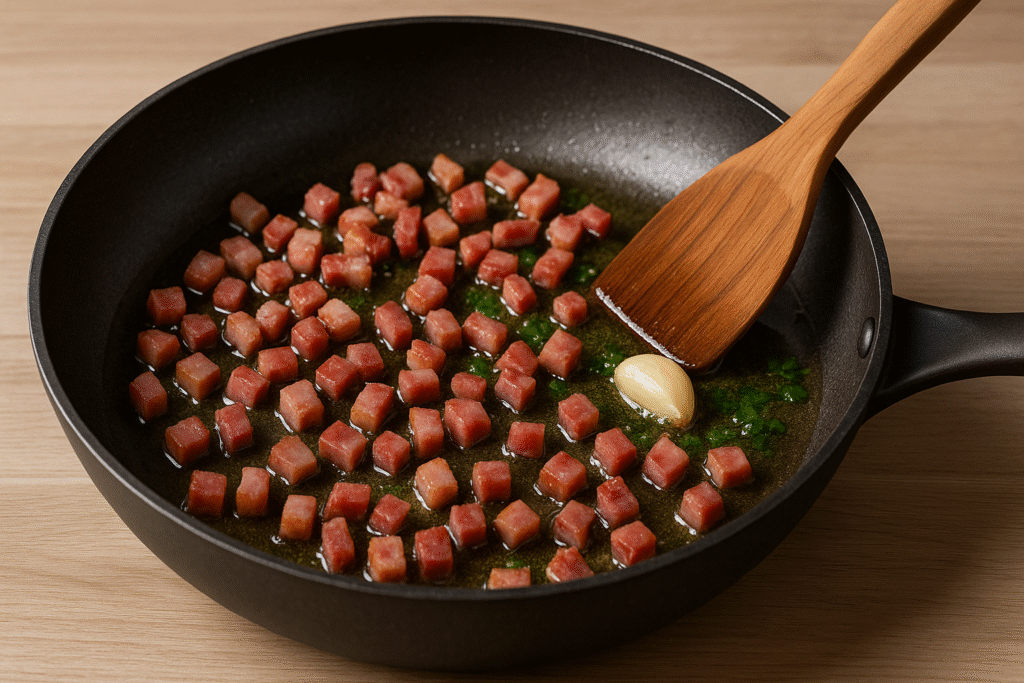
Step 2: While the pasta is cooking, set a big pan on the stovetop and heat it on a medium heat. Add olive oil and your guanciale or pancetta to the pan and cook until golden brown and crispy, letting it drain out its fat
When you are adding garlic as your aromatic base, add some crushed cloves with the cooking of the meat and strain them out before proceeding

Step 3: Let the spaghetti cook, but only 80% then turn off the flame and drain the remaining starch in a different bowl. (The starch is going to be needed further in the recipe, so do not throw it away)

Step 4: Beat the egg yolks, one egg, cheese, and lots of freshly cracked black pepper in a bowl. This is the foundation for your sauce. It is advisable to make it while your pasta is finishing up so the sauce is ready to be tossed by the time the ingredients are still warm
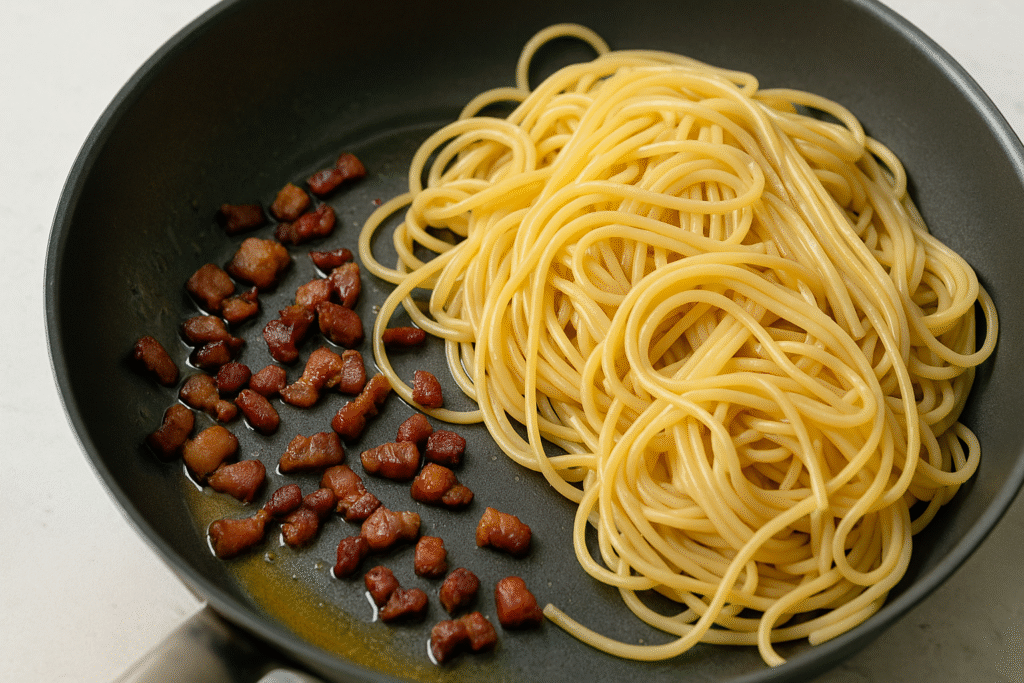
Step 5: After removing the skillet from heat (so eggs will not scramble), merely add cooked pasta into the pan with meat
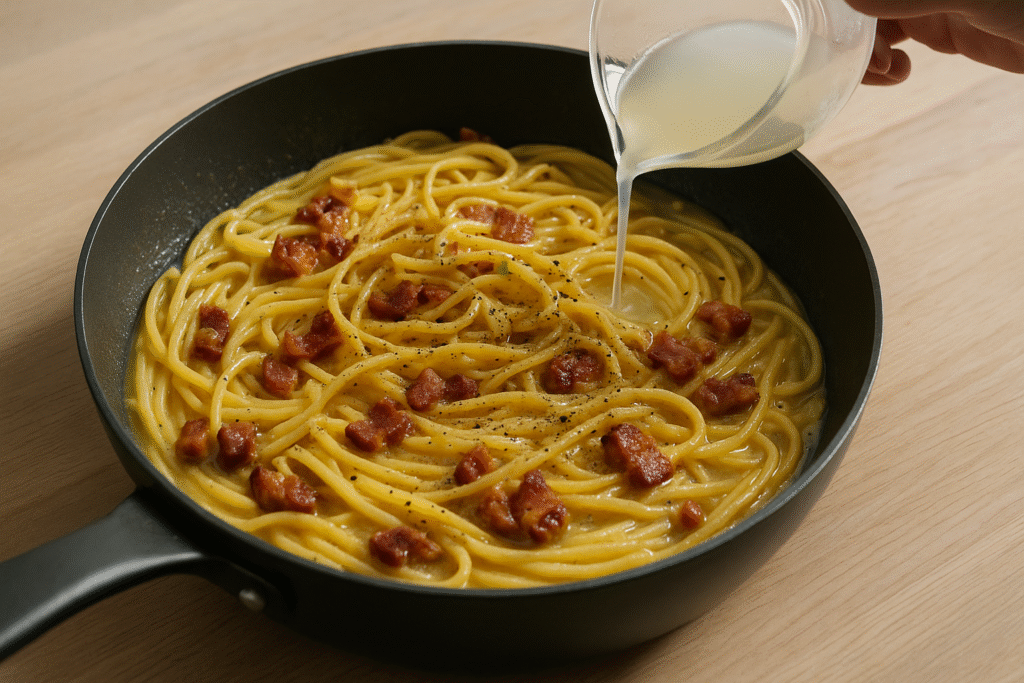
Step 6: Once everything is nicely tossed so that the pasta can soak up all that fabulous pork fat, and you have distributed the egg mixture into the pasta gently, tossing or stirring to make sure that each individual strand of pasta is coated evenly, start slowly adding the reserved pasta water a bit at a time until you have loosened the sauce and created a nice silky, glossy appearance
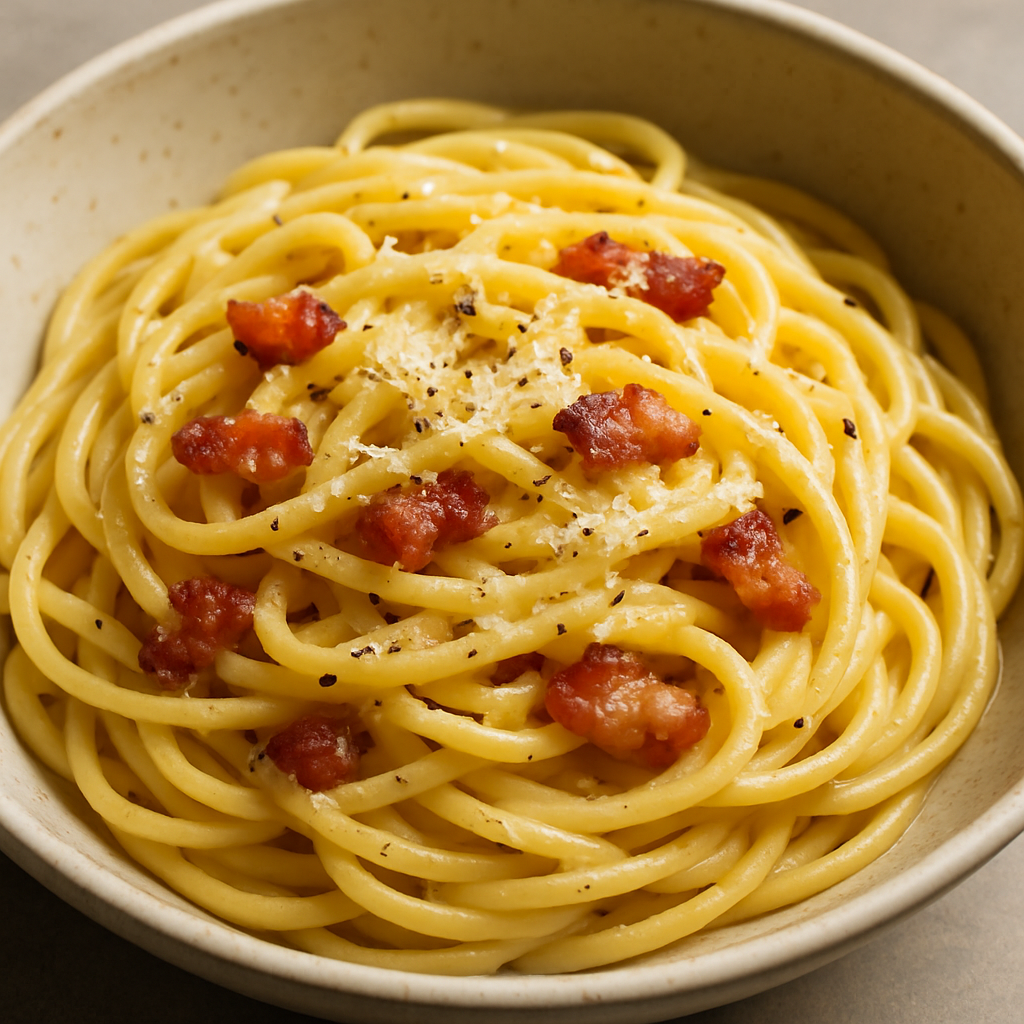
Step 5: Once it has been nicely mixed and creamy, serve hot in hot bowls. Top with some extra cheese and black pepper. The sauce should be smooth and stick to all strands of pasta without any egg curds being apparent
Tips

- Don’t use cream, it’s not authentic and disrupts the picky balance of the dish
- The heat of the pasta should warm the eggs slowly. Don’t have the pan too hot
- Guanciale is the first choice, but pancetta can be used as a substitute. Bacon as a final option can also do the job, albeit with smokiness being introduced.
- Make use of fresh, quality ingredients to maximize effect—Carbonara believes in simplicity and freshness of ingredients
- Serve hot—Carbonara doesn’t reheat due to interference with the sauce
- A dry glass of Frascati or Pinot Grigio can be served with richness of dish