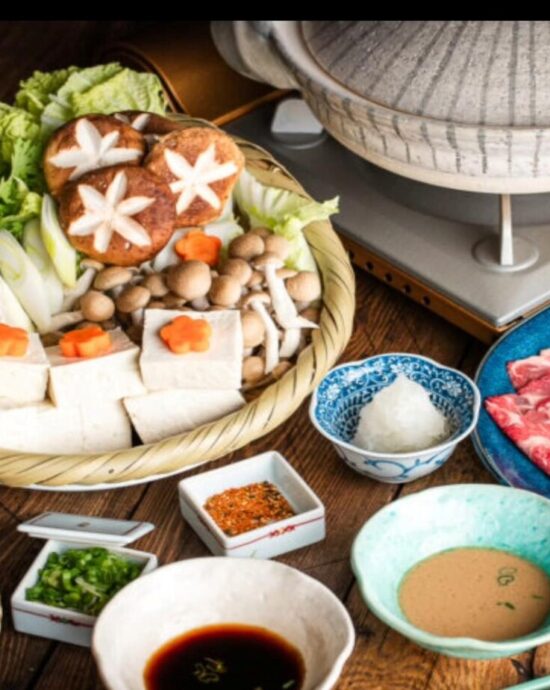

Today, let’s explore a new topic – a hot pot loved for promoting togetherness. I am talking about shabu-shabu. People enjoy making this dish because they get an opportunity to work in the same place. You need a lot of vegetables to cut for this savoury bowl. However, since people work collectively, making shabu-shabu becomes a relishing experience.

Making shabu-shabu in winter is common in Japan. It is so comforting and flavourful. Cooks enjoy preparing under the same roof. On the Internet, you’ll find several authentic Japanese hot pot recipes in different ways. However, I suggest trying my shabu-shabu recipe. Learn from me the secrets behind making this super-tasty, simple recipe and invite your close ones to make shabu-shabu.
Want to try more hot pot recipes? Try these homemade specialities next:
- Mille-Feuille Nabe
- Sukiyaki
- Yosenabe

What is Shabu-Shabu?
Have you observed the sound while making this hot pot? Next time, attentively listen to the sound – It’s similar to the swish-swish sound which you hear when cooking veggies and meat in the super-light dashi broth. As we know, cooking a few dishes in utensils, such as a clay pot, enhances the taste of food, and the same applies to shabu-shabu. Traditionally, people make shabu-shabu in a Japanese clay pot (donabe), which releases flavourful aroma and makes it appetising. Though hot pot originated in China and Inner Mongolia, shabu-shabu originated at Suehiro restaurant in Osaka in 1950. Before discussing its recipe, I would like you to know the reasons why shabu-shabu is my favourite.
- The simplicity of this Japanese hot pot is what makes it my go-to. Cut the veggies and add them to the broth, and it’s ready in a while.
- You can make this pot with zero oil. You add so many veggies to it.
- I am an office-goer and after returning home, I often make this hot pot and enjoy its flavour, since making this dish requires less time.
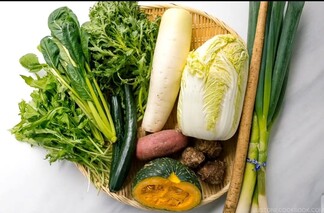
What Ingredients Do You Require for Making Shabu-Shabu?
- 1 lb beef (thinly sliced)
- 1 packet of tofu
- 1 packet of enoki mushrooms
- 1 packet shimeji mushrooms
- 4 shiitake mushrooms
- Udon noodles (1 serving)
- 1 piece of kombu
- 1 Tokyo negi (you need the white part)
- ½ bunch shungiku

- 8 napa cabbage leaves
- Carrot (2 inches)
- Water
Garnishing and sauce ingredients
- 2 inches of daikon radish
- 2 scallions or green onions
- Store-bought or homemade ponzu sauce
- Homemade or store-bought sesame dipping sauce
Optional ingredient
- Shichimi togarashi
Substitutes
- Tokyo Negi and Shungiku
At several points, home cooks fail to find core ingredients, such as Tokyo negi and shungiku. They wonder if they can use substitutes for it, or if they need to cancel making this super-tasty hot pot. No! You can still make shabu-shabu. Replace Tokyo negi and Shungiku in this Japanese treat with green leaves and veggies of your preference.
- Thinly sliced pork or beef
Japanese supermarkets and groceries sell shabu-shabu-grade pork and beef. If you do not get high-quality meat, slice rib-eye or chuck. New to slicing meat? No worries! Check my “How to slice meat” tutorial on the next blog.
- Kombu Dashi
Shabu-shabu gets its exceptional taste from kombu dashi. You only need water and kombu for this dashi. Add kombu to water and simmer for a while, or substitute it with another soup base.
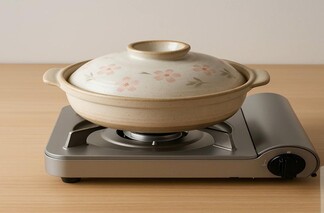
Equipment and tools I used in this recipe:
- Cooking chopsticks
- Donabe, electric hot pot or heavy-bottomed pot
- Gas canister and portable gas stove.
Method to Make Shabu-Shabu
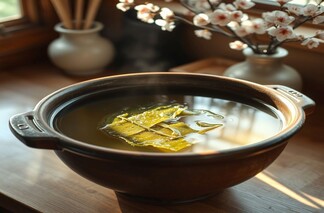
First, let’s make dashi.
- In a donabe, soak water and kombu for up to thirty minutes. You may reheat frozen udon noodles if you prefer to enjoy them with shabu-shabu. Discard the boiling liquid.
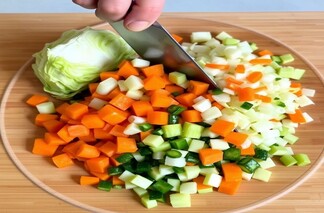
- Chop your favourite veggies, such as cabbage, carrots, shungiku, and Tokyo Negi, leafy greens into small chunks. Also, grate daikon radish.
Note: Do not mix chopped veggies with green onions and grated daikon radish at this point. Instead, keep them separately in small serving bowls.
- Discard the stems of the shiitake mushrooms and break the enoki and shimeji mushrooms into little chunks. Post this, cut the tofu.
Gathering veggies was the first step. Now, assemble them. Take two plates. Place chopped vegetables, mushrooms and tofu on one plate and beef on another plate. It completes your veggie preparation, and now, let’s cook them.
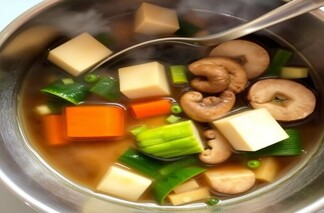
- Set a portable burner and donabe for cooking. Before adding veggies, remove the kombu from the dashi.
- Add veggies, tofu, and mushrooms to the simmering dashi and cook until they soften and release a flavourful aroma.
- Now, add meat to the dashi. I’ll share a simple formula to cook beef. Raw beef is pink in colour. Thus, you need not cook beef if you observe its colour change.
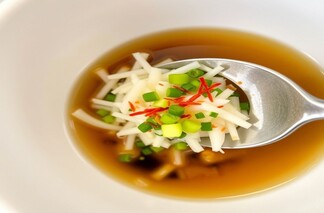
Till it’s cooking, prep the dip.
- In the ponzu dip, add grated daikon, green onions and shichimi togarashi. The only ingredient you require to add to the sesame dip is green onions.
- When perfectly cooked, you can enjoy this hot pot with those appetising dips.
- Remember to add leafy greens after removing veggies from the broth. You need to cook this only for a few minutes.
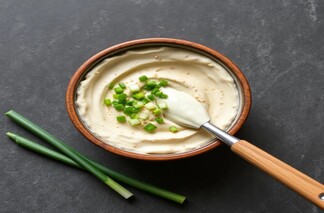
- Your shabu-shabu is almost ready. If you wish to serve it with udon, remove all the remains from the broth and add udon to it.
- Mix the dashi and ponzu dip in a small bowl and add the udon to it.
Pro Tips
- For its exceptional taste, people often cook shabu-shabu in a donabe. However, you may also cook it in an electric hot pot or a heavy-bottomed pot.
- You only need to cook the beef till it changes colour for a few seconds (say around 45 seconds). However, be careful that it doesn’t get overcooked.
- Use a fine-mesh skimmer to clean the broth in between.
- If you can’t cook everything at once, cook it in batches.
- You can also replace beef in this pot with pork or chicken to try a new variant.
- You can add more veggies to your hot pot, such as broccoli, sweet corn and zucchini.
- To make it a filling meal, you can replace udon with Japanese short-grain rice.
- You may skip meat to make it a vegan or vegetarian meal. Once I wasn’t in the mood to eat meat. Hence, I omitted meat, and even then, this hot pot tasted splendid.

Storage Tips
This hot pot stays fresh for a month in the freezer. You can also keep it in the fridge for up to five days. Don’t worry! It won’t get stale. Before enjoying this meal, only reheat it nicely.
However, I wonder why store it in the fridge or freezer? You don’t need much time to make this hot pot. So, why not make it fresh? Whenever I want to enjoy shabu-shabu, I make it fresh instead of reheating.