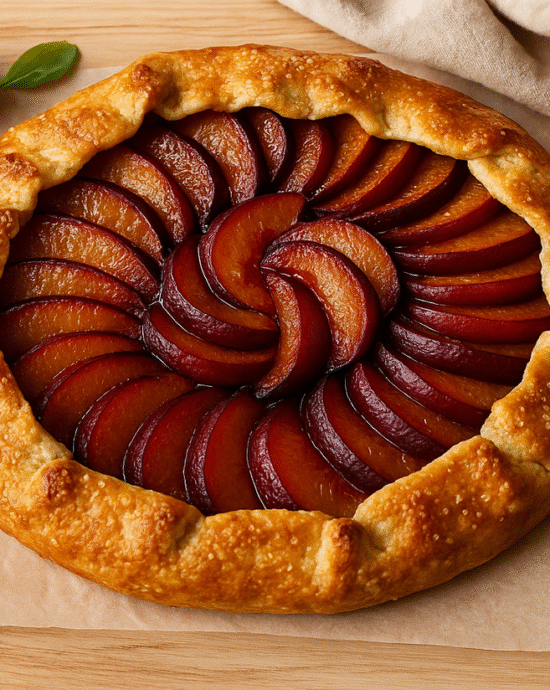

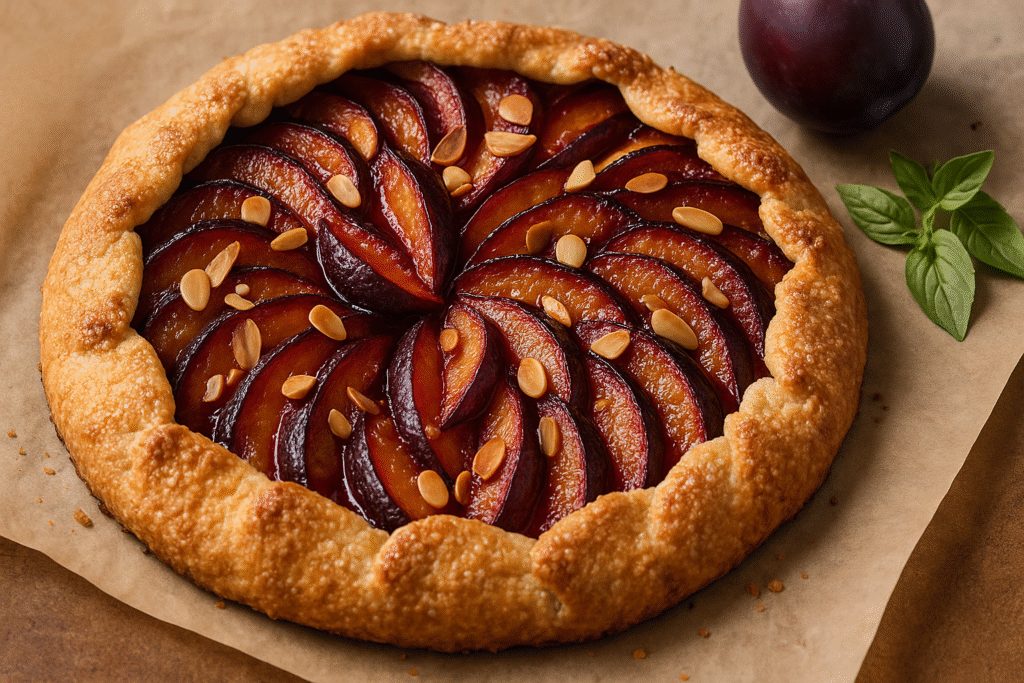
A Plum galette is a free-form French tart — rustic by nature and less complicated than a conventional pie. French home chefs have made fruit galettes for centuries to show off seasonal fruit without fussing over the best pies. It is mainly liked in summer for stone fruits like plums, peaches, or cherries. The word “galette” comes from the Old French word galet, meaning a flat cake or pebble — relating to the round, flat form. In France, “galette” is a huge period for rustic, loose-shape tarts made with pastry dough and any seasonal filling. There is no need for a pie tin — the dough is simply folded over the fruit. Historically, galettes were the pies of the geographical region: easy to make, using simple, nearby substances
Bakers did not want a fancy device, so galettes have become the normal dessert of French farm kitchens. In Brittany, “galette” can also seek advice from savoury buckwheat crepes; however, the fruit galette is more sizable outdoor the vicinity
Why Plums? Plums had been cultivated in Europe for thousands of years — a few types of trace returned to historic Roman orchards. In France, plums are plentiful in the late summer season. Popular varieties like Mirabelle, Reine Claude (also known as Greengage), and Prune d’Ente are prized for baking. The natural tartness of plums pairs perfectly with buttery pastry and just a hint of sugar,making them ideal for a galette.
Ingredients
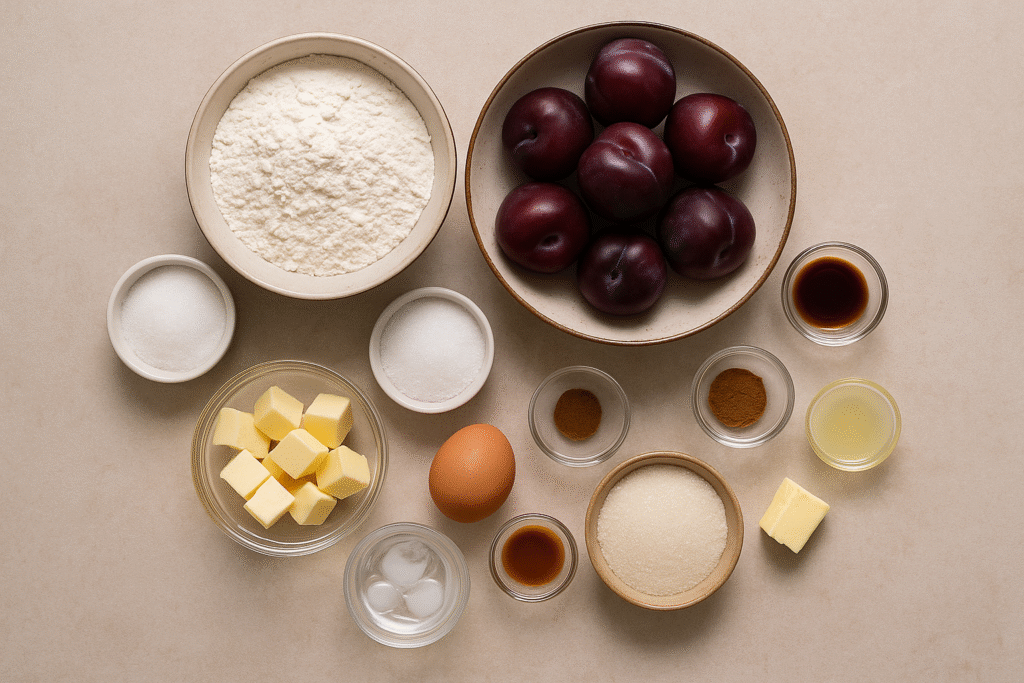
- 2 cups all-purpose flour
- 1 tbsp sugar
- ¼ tsp salt
- 8 tbsp (113g) unsalted butter, cold and cubed
- three–four tbsp ice water.
For the Filling:
- Four–five ripe plums, pitted and thinly sliced
- 3 tbsp finely granulated sugar (adjust to taste)
- 1 tbsp cornstarch (for thickening)
- ½ tsp cinnamon powder (non-compulsory)
- ½ tsp vanilla extract (optionally available)
- 1 tbsp lemon juice
- 1 tbsp butter, reduce into bits
- 1 egg, crushed (for egg wash)
- Finely granulated sugar, for sprinkling (optional)
Instructions
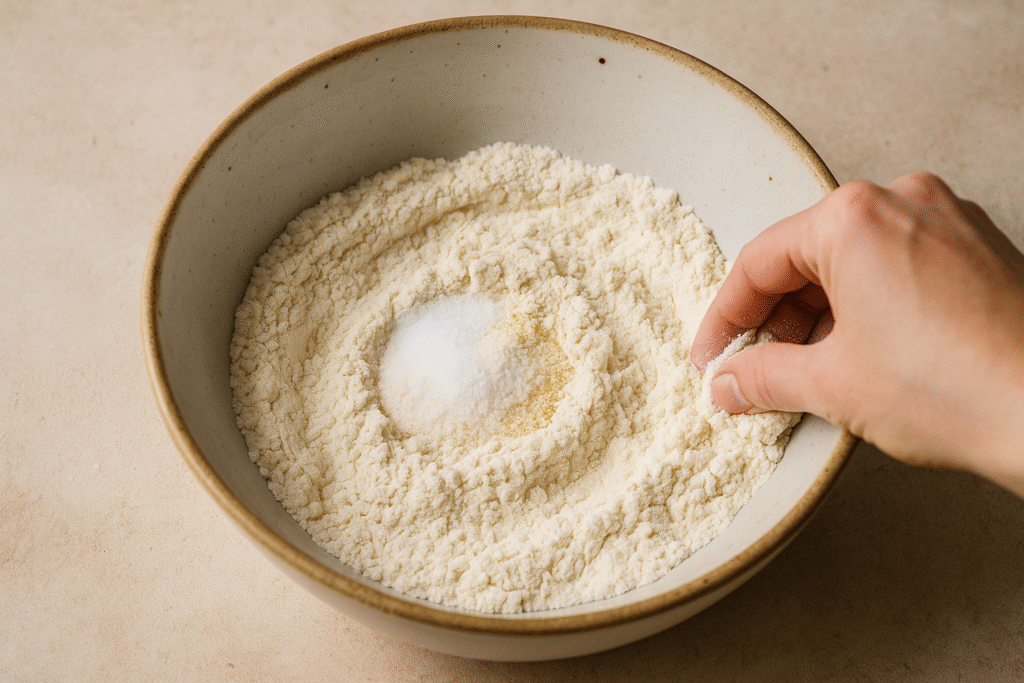
Step 1: Take a bowl and add in the dry ingredients (flour, sugar and a pinch of salt). Mix everything softly with your hands
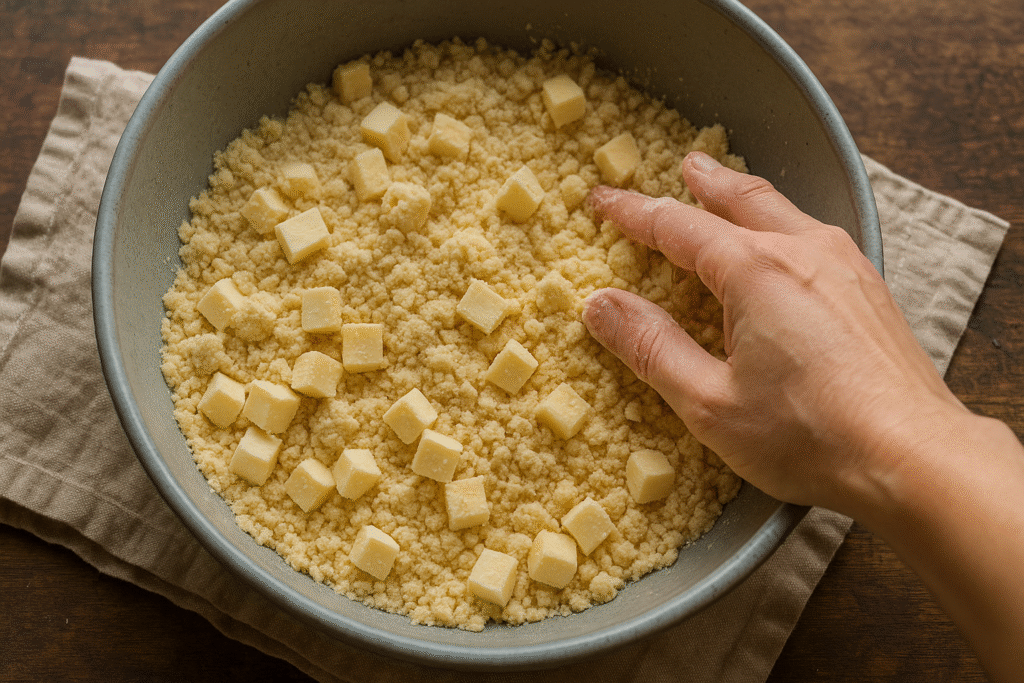
Step 2: Add the cold butter cubes to the dry mixture and use your hand or a blender to form a coarse dough for the base. The texture of the dough would be perfect when you try to make a ball with the dry dough, and the ball stays in its shape even if held lightly
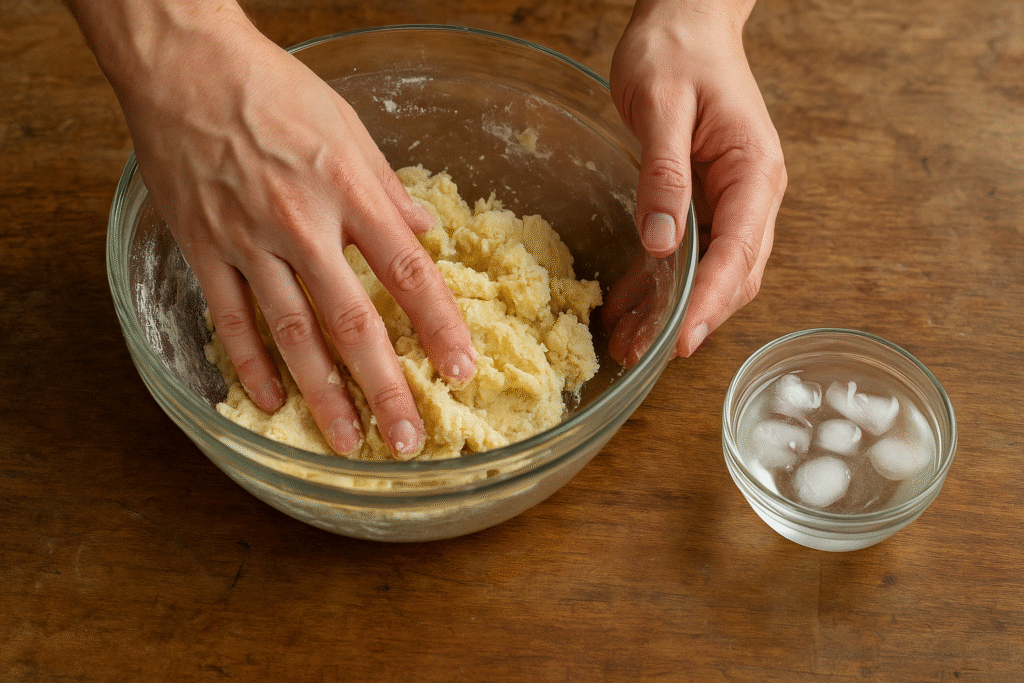
Step 3: Add ice water one by one with the use of a spoon and start forming a dough, mixing everything together
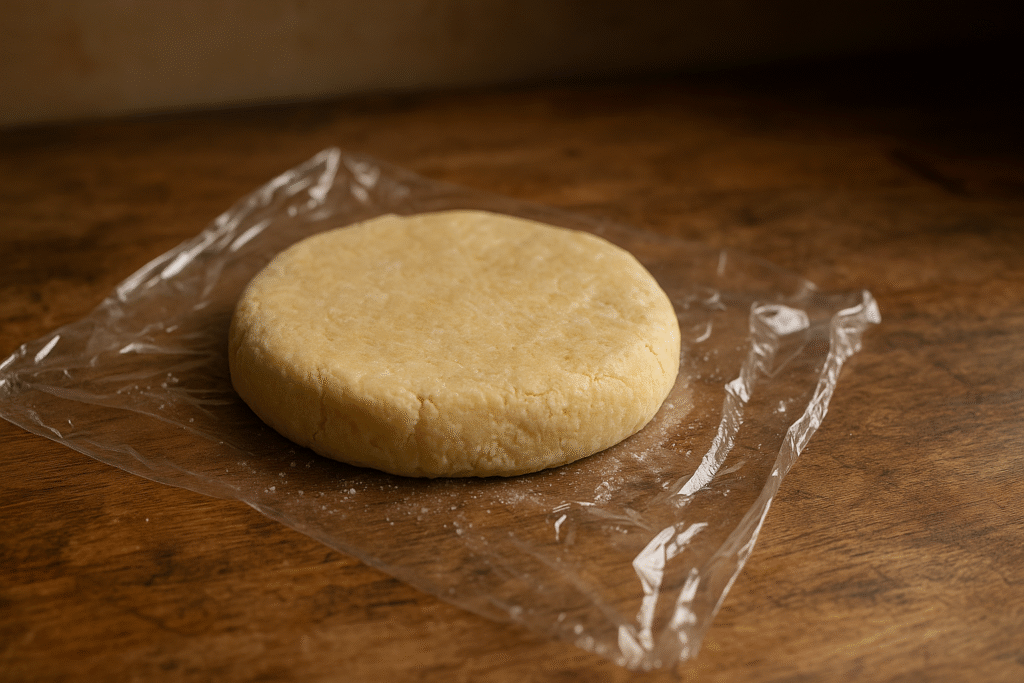
Step 4: Knead the dough in a round shape to roll it out for the base, later. Wrap it with a cling wrap and let it rest, set aside
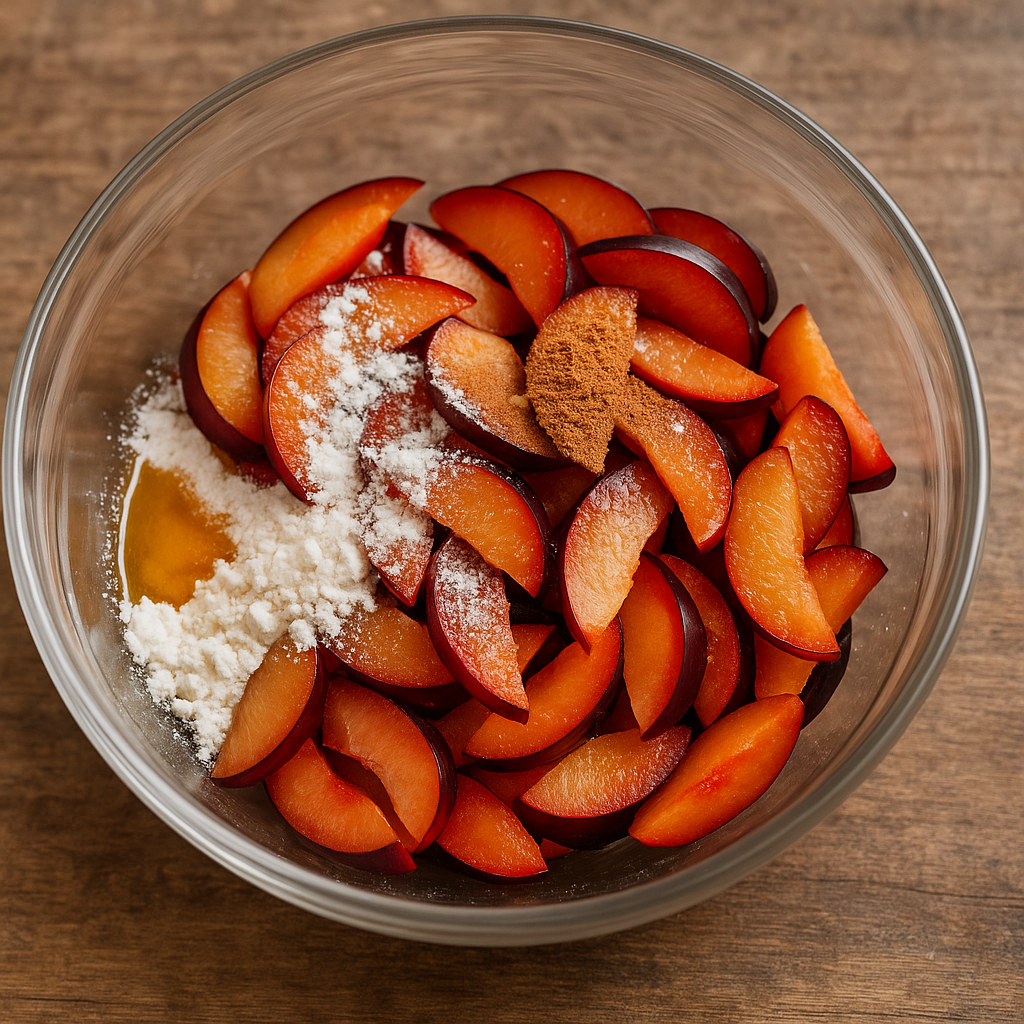
Step 5: Take another bowl and start making the plum mix by adding sliced plums, finely granulated sugar, cornstarch, cinnamon (if using), vanilla essence along with a punch of lemon juice. Mix everything and let it sit for 15 minutes for better absorption of flavours
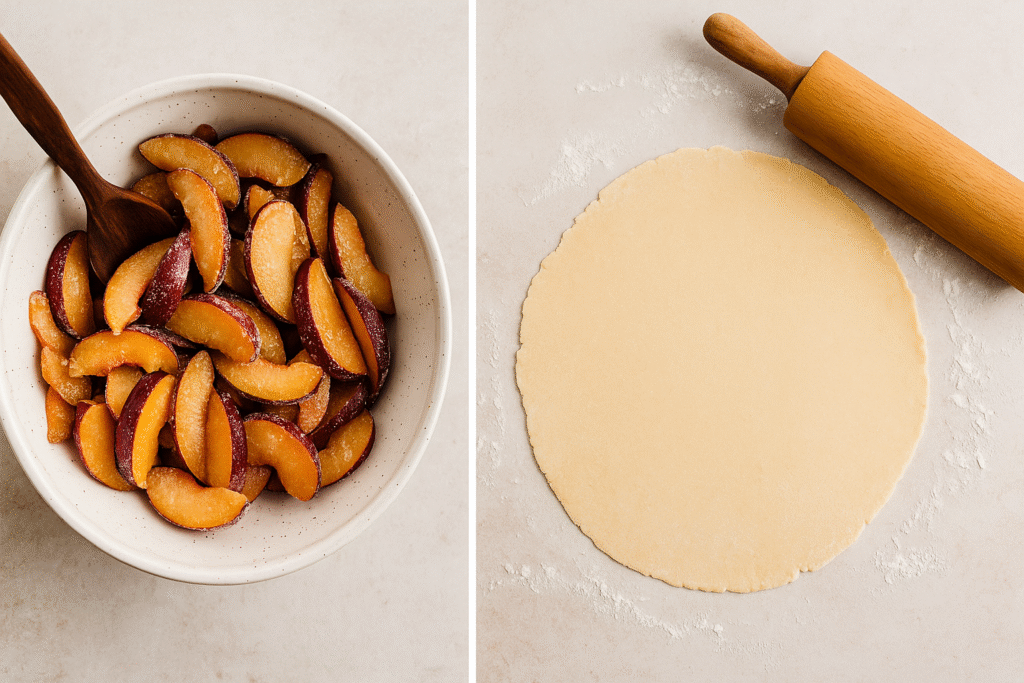
Step 6: Preheat oven to 400°F (200°C)
Step 7: On a floured floor, roll out the dough into a 12-inch circle
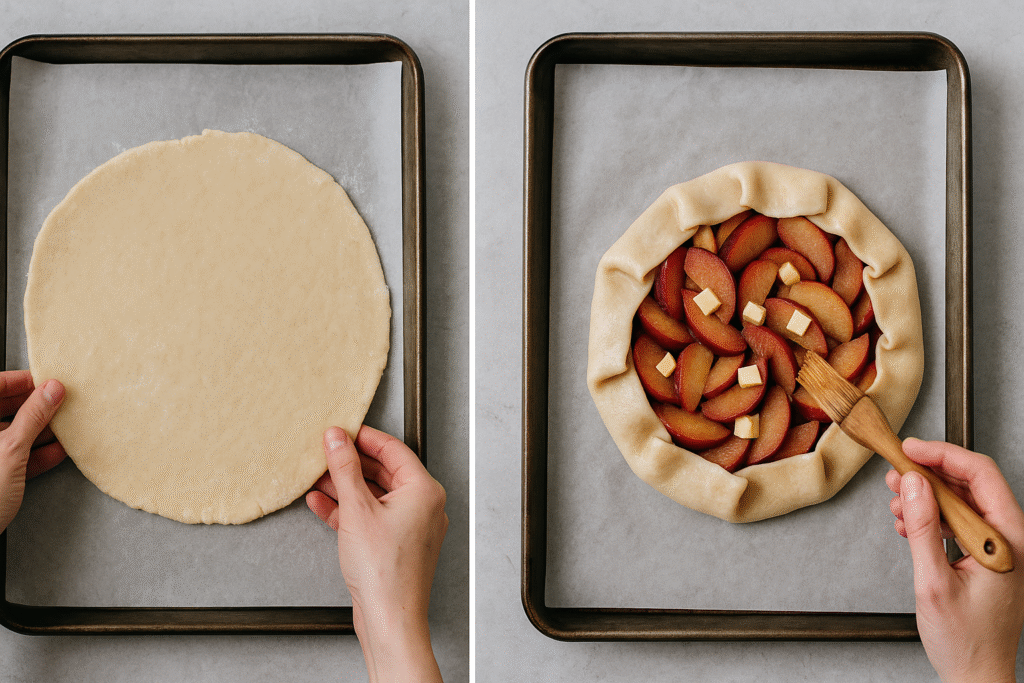
Step 8: Shift the rolled dough onto a baking tray with parchment sheet spread on it
Step 9: Arrange plum mix inside the centre(forming a circle), leaving a 2-inch border.
Step 10: Dot with bits of butter
Step 11: Fold in the sides of the leftover dough, covering the plums as per your preference
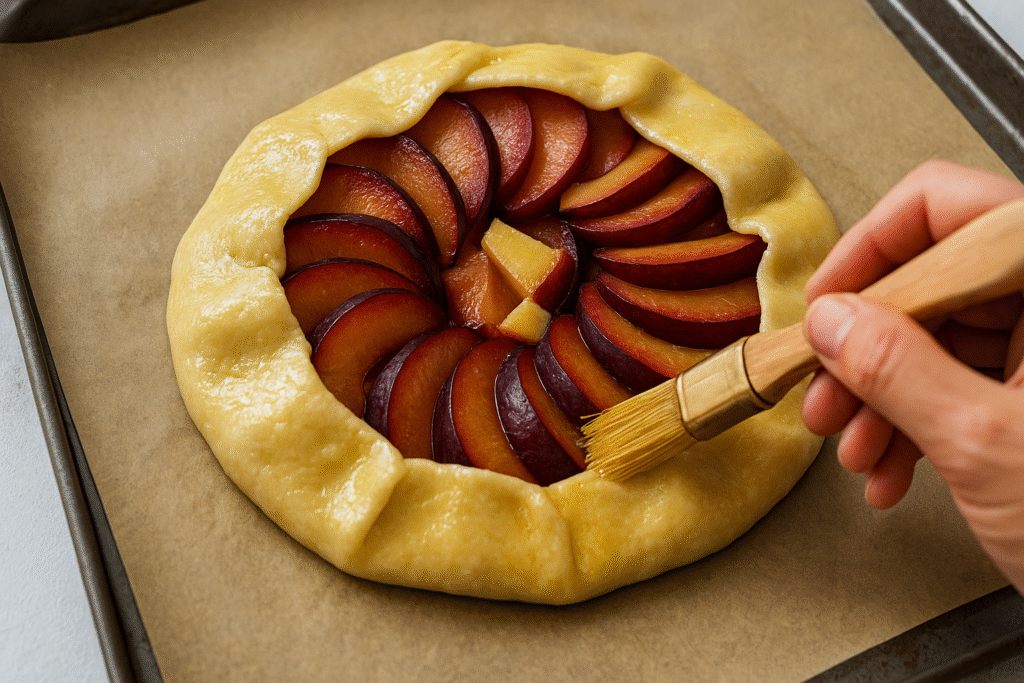
Step 12: Whisk an egg (mixing the yolk with the whites). Brush this onto the folds of your galette base
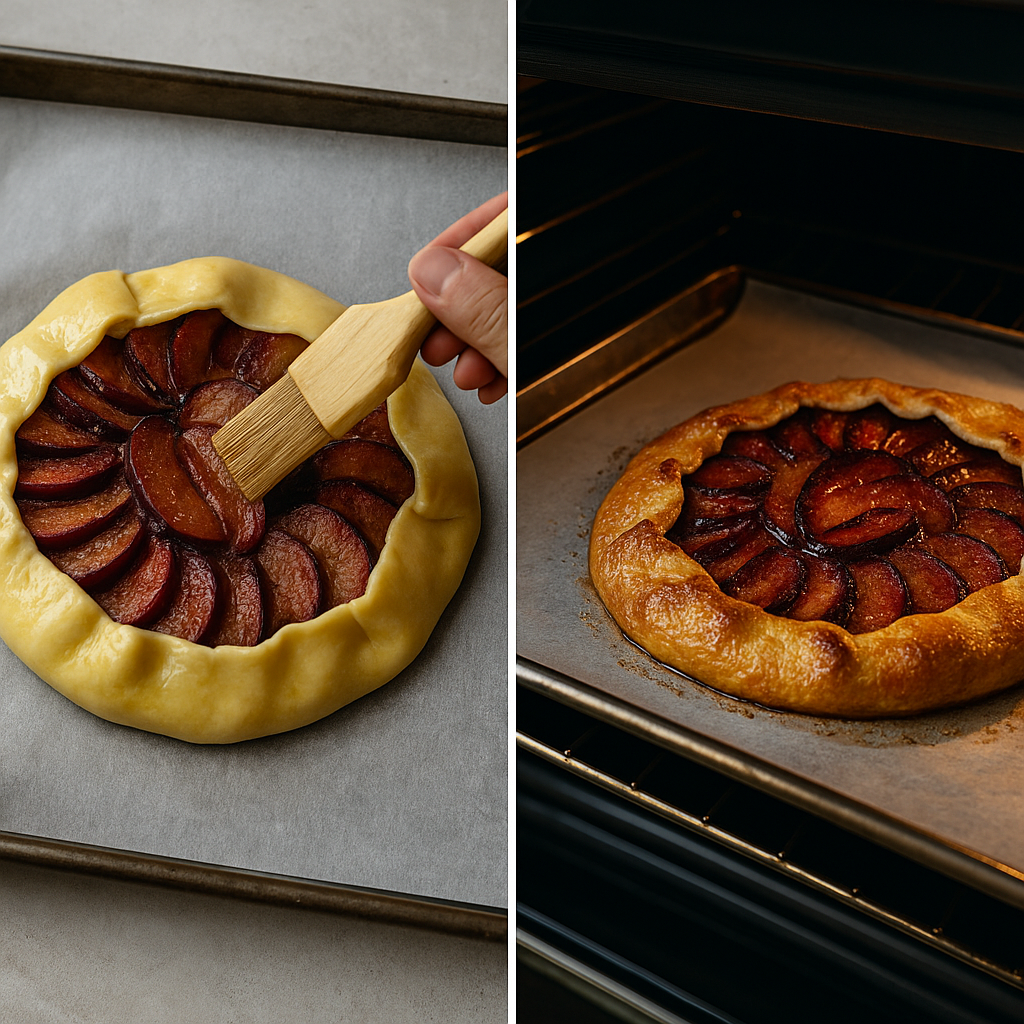
Step 13: Let the galette bake in the preheated oven until the crust turns golden brown and the plums turn bubbly and rich
Step 14: Cool slightly earlier than serving
Serve
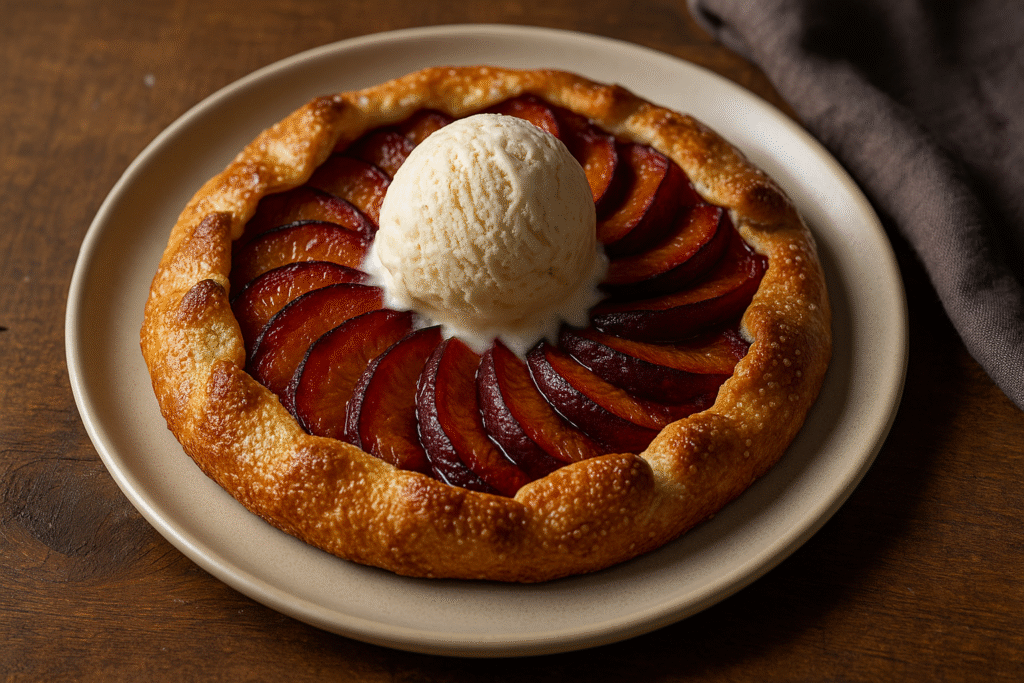
Tastes best with vanilla ice-cream or even whipped cream, so do not forget to add a scoop or two on top, while serving the crusty galette.