
There can be no dish more homey and versatile in innumerable different recipes than hummus. It may seem like a chicken salad made of chickpeas, tahini, lemon, and a bunch of garlic, but it is more than a meal; this is a cosy invitation to sit, converse, and indulge. Hummus can be served at a family lunch in a giant clay bowl, can be eaten as a quick snack with some warm pita bread and even used as the foundation in other culinary masterpieces. Regardless of how it finds its place at a meal, it simply makes itself right at home in every single spoonful
A Brief History: Who Created Hummus?
There has been a dispute over the origin of hummus, with Lebanon, Syria, Israel and Palestine all claiming ownership of the food. It has been around for many centuries, as dishes made of chickpeas can be found in old Arabic cookbooks. The fact remains that hummus today has become a standard all over the Middle East due to these qualities of the product’s simplicity, nutritional benefits, and taste. It has spread over the course of time much beyond its origin, acquired in plates in cafes, restaurants, and kitchens across the world.
Ingredients
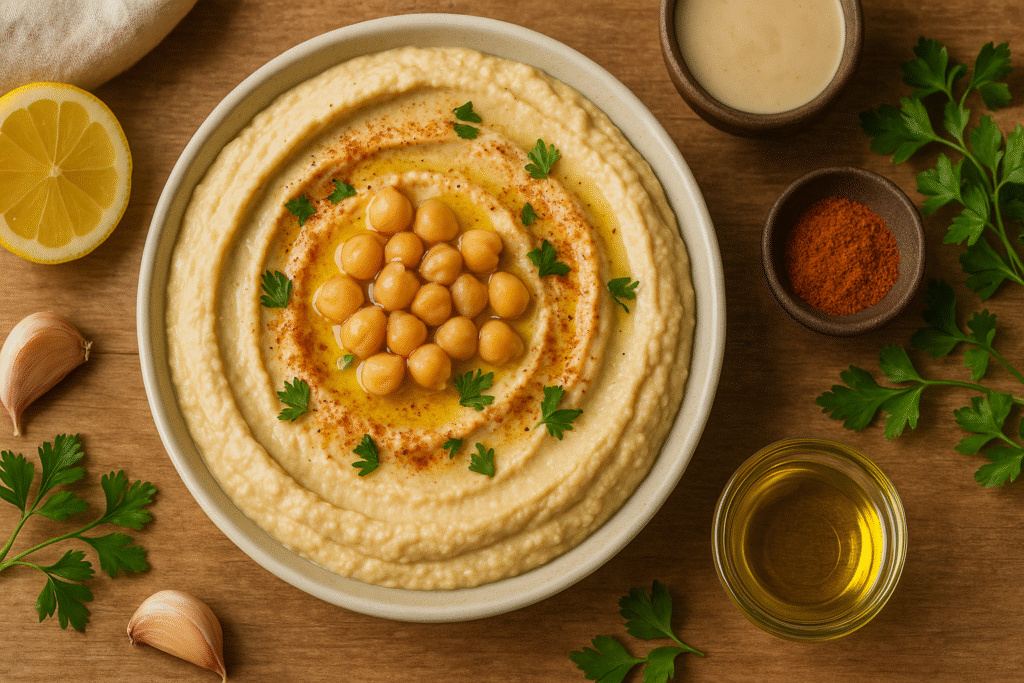
- Chickpeas, Garbanzo beans -1 1/ 2 cup cooked (or 1 can drained)
- Alternative: You can substitute white beans for a creamier, mellower.
- Tahini (sesame seed paste) 1/ 4 cup
- Substitutes: Smooth peanut butter or almond butter (another flavour can also be substituted with this, even though it is worth the pinch)
- Squeezed lemon juice -3tbsp
- You may also substitute Lime juice with a more biting flavour
- Garlic: -1/2 to 1-clove, chopped
- Roasted garlic is the easy fix: gentle sweetness, zero raw garlic punch
- Olive oil 2 – 3 tbsp
- Salt – to taste
- Cold water – 2–4 tbsp (adjust for texture)
- They can be garnished with optional paprika, cumin, parsley, or drizzled with some olive oil
At What Time to Enjoy Hummus
- As a fast food with warm pita bread, or crunchy veggies
- Served as part of a mezze platter with falafel, olives, and tabbouleh
- Mayonnaise may be replaced with an alternative healthy sandwich spread
- As a dip with grilled meat or fish
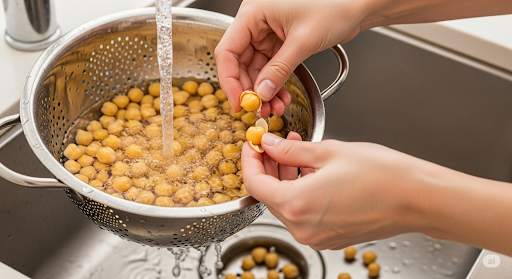
Step 1: Using canned chickpeas, rinse and drain them. To make it extra creamy, remove thin skins; yes, it demands some patience, but the essence promises to pay off
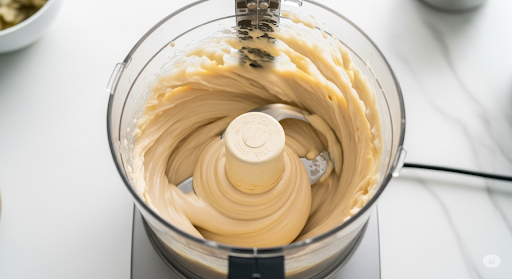
Step 2: In a food processor, combine tahini and lemon juice. Blend for 1 minute until it’s pale and creamy — this step makes your hummus extra smooth
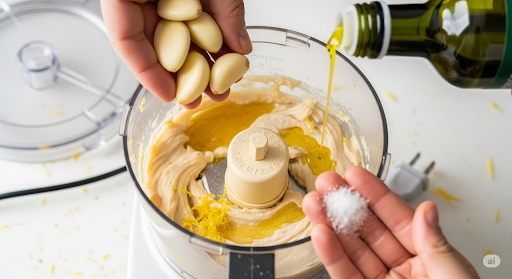
Step 3: Add garlic, olive oil & salt. Blend for another 30 seconds more
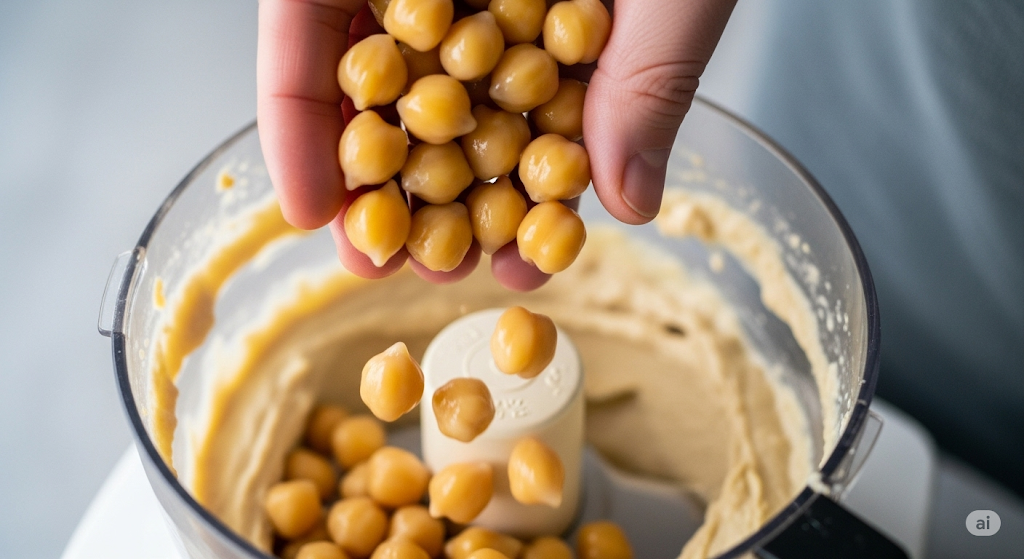
Step 4: Add half of the chickpeas and blend to a smooth texture. Add the remainder of the chick peas and keep processing, scraping the side edge as needed
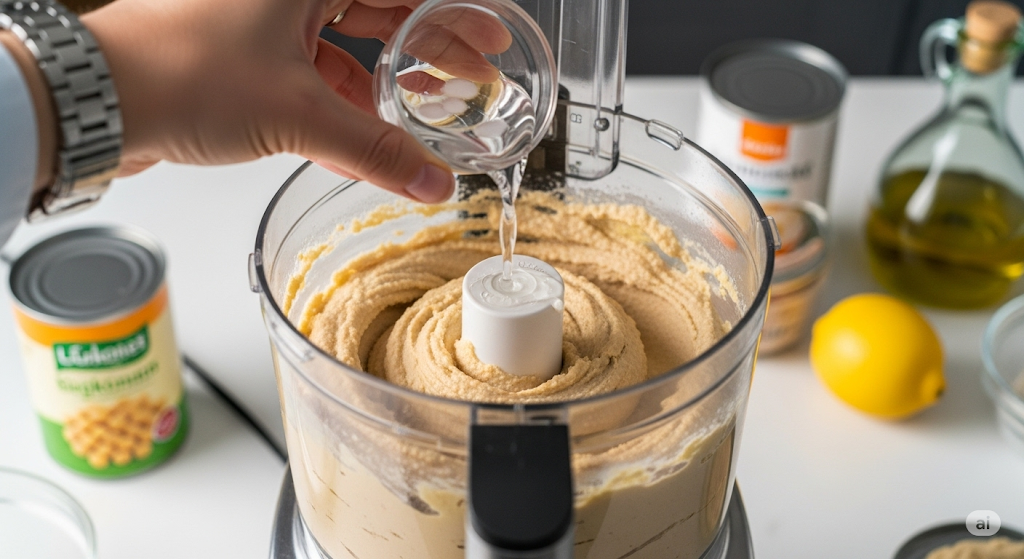
Step 5: With the processor going, slowly add cold water, 1 tablespoon at a time, to get the hummus to as smooth and thick a texture as desired
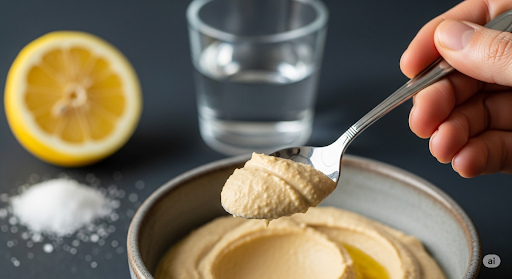
Step 6: Need more tang? Add lemon. Too thick? More water or olive oil. Not enough punch? Another pinch of salt or cumin
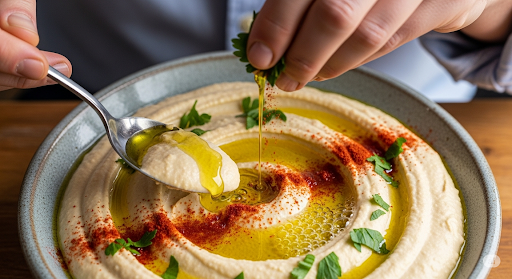
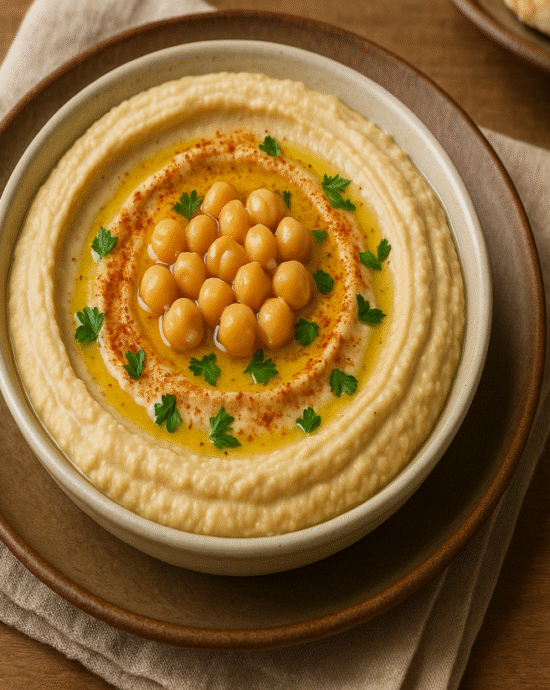
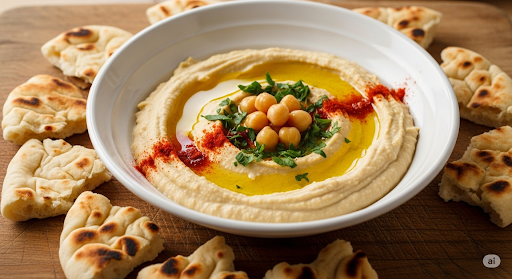
Step 7: Place into a shallow bowl, create a little swirl in the centre, and swirl olive oil over it. Sprinkle some paprika or parsley to add some vibrant colour and taste
Serving Tips
- Hummus should always be served at room temperature (18-22°C/64-72°F) to fully express its flavour profile. Chilling mutes the aromatic compounds in tahini and dulls citrus acidity, while excessive warmth causes oil separation. Almost any savoury food goes perfectly with fresh bread or crisp vegetables to dip in
- In case you make it in advance, keep it in an airtight container and pour a small veil of olive oil on the surface so it does not dry
Precautions
- Avoid bottles of lemon juice, because it will turn the flavour dull – try out fresh lemon juices instead
- Not too much garlic; raw garlic is harsh to the subtle tahini-chickpea act
- When stored, they are good to eat after 4 to 5 days to ensure the taste is not stale
The hummus is not merely a dip but a tale of history, kin and unity. The best part is fighting Willie. After you have learned the basics of recipe, it can be as much yours as possible and roast it in roasted red pepper, freshen it with herbs or even crown it with spiced minced lamb. It is the type of dish that transforms with each kitchen in which it is welcomed, but remains the same, keeping its soul alive.