A comforting journey through India’s most loved lentil dishes
Dal Fry – The Restaurant Favourite You Can Make at Home
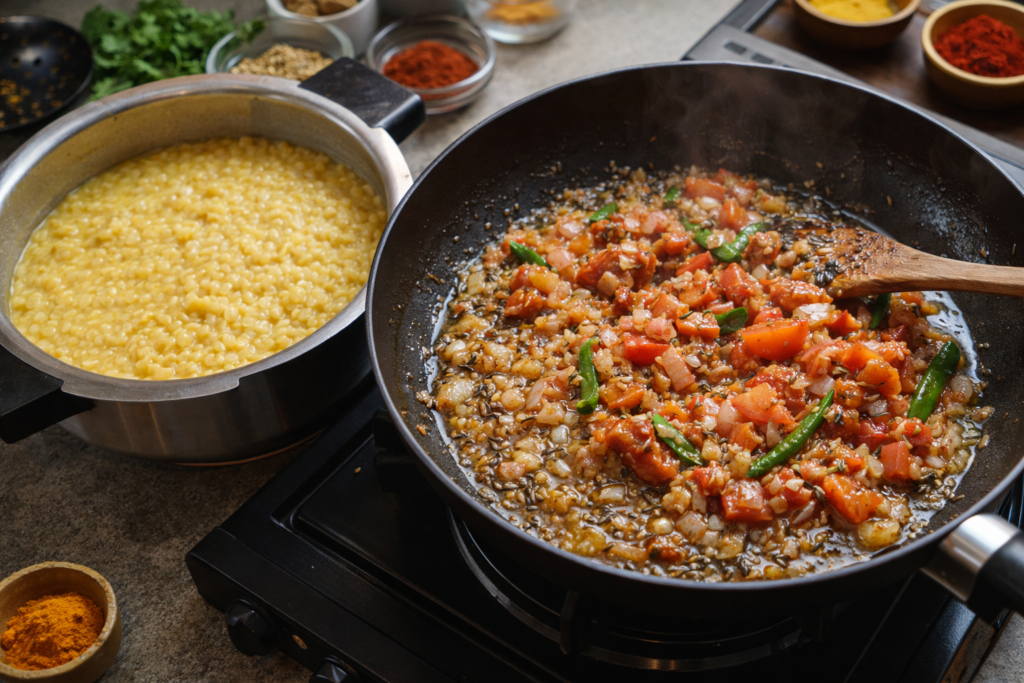
Dal Fry is one of the most ordered dals in restaurants, and for good reason. It’s rich, flavorful, and comforting without being heavy. The good news? You don’t need restaurant tools to make it taste amazing.
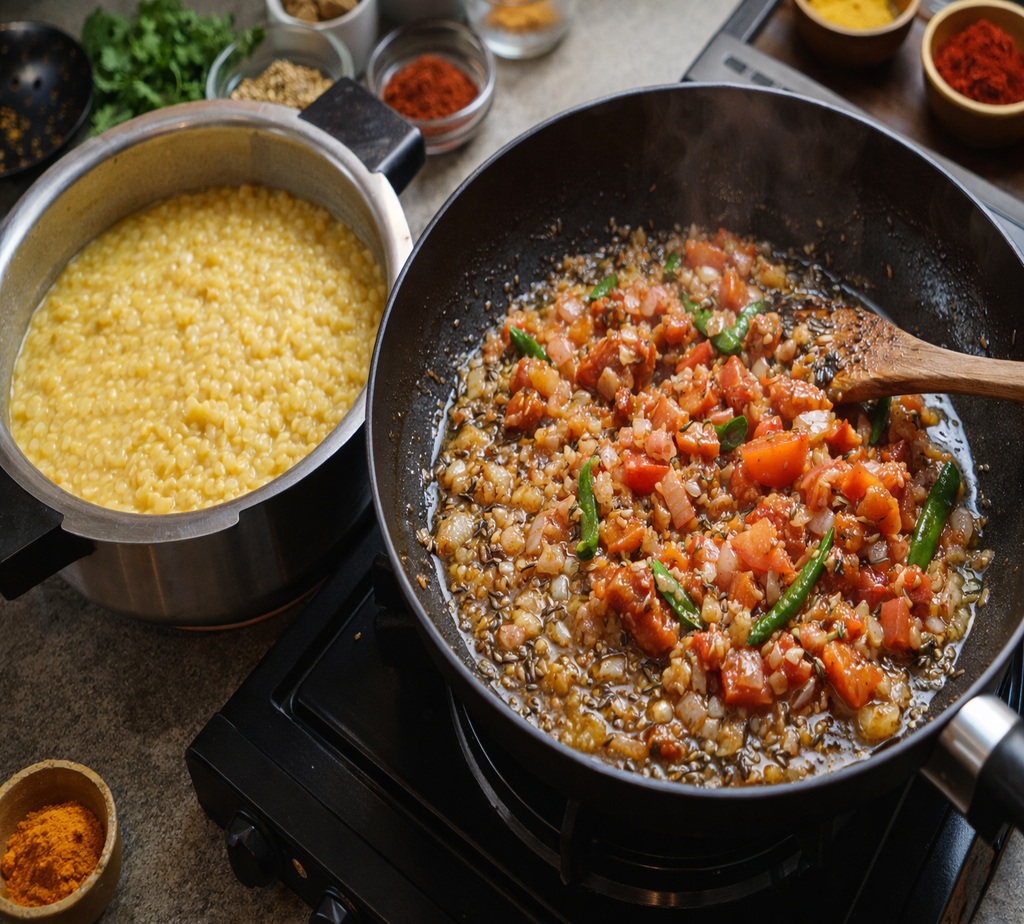
The preparation of Dal Fry starts with the use of toor dal, which cooks slowly to reach a soft and creamy texture. The dish gains its unique taste through the tempering process, which includes sauting onions and tomatoes together with garlic and spices and finishing with ghee. The dal needs to be washed first before you can start soaking it for 20 minutes
The two ingredients need to be pressure-cooked until they reach their softest state. The dal needs to be cooked while you start to make the tempering. You should heat ghee or oil in a pan and then add cumin seeds, followed by onions. You should cook them until they reach a golden colour. The sequence begins with you adding ginger, followed by garlic and green chilli, before introducing tomatoes. You should continue cooking until the oil starts to separate from the food
The next stage involves adding your spices, which include red chilli powder and garam masala. You should add the cooked dal to the pot and stir it properly before allowing it to cook at a low temperature. The kitchen begins to smell like a restaurant as the dal cooks and the flavours combine to create a thicker sauce. The dish should be served hot alongside rice or roti because you will not understand why you used to order it from restaurants.
Masoor Dal – The Everyday Hero
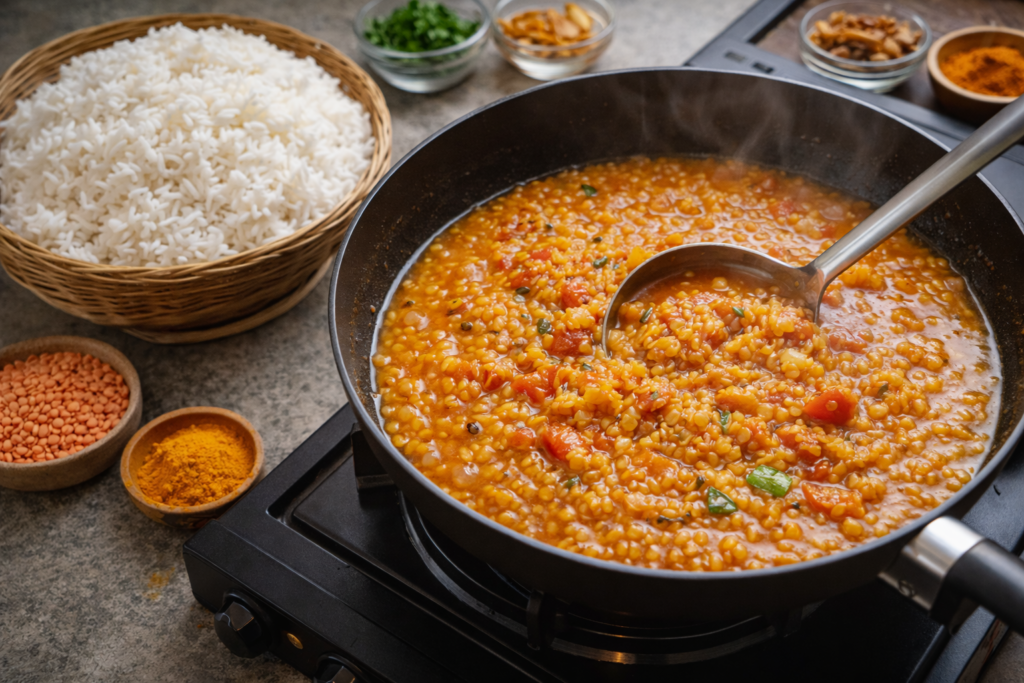
The optimal choice for hectic days is Masoor dal because it requires only a short cooking time and produces a light dish with minimal required components. Cooking beginners should start their learning process with this particular dal variety. The red lentils require thorough washing before boiling with turmeric and salt. The lentils become soft within a short period while transforming their colour into an attractive orange-yellow shade. For tempering purposes, the cook begins by heating oil before introducing cumin seeds, garlic and onions into the mixture. The cook should wait until the onions become tender before adding tomatoes, which need time to cook until they reach their complete softening point. The chef needs to add cooked dal into the pot and stir it before letting it cook on low heat for several minutes. The process requires no additional work because it does not involve any heavy spices. The best way to eat masoor dal is together with plain rice. The dish provides light digestion, which makes it suitable for daily consumption.
Chana Dal – Hearty, Nutty, and Satisfying
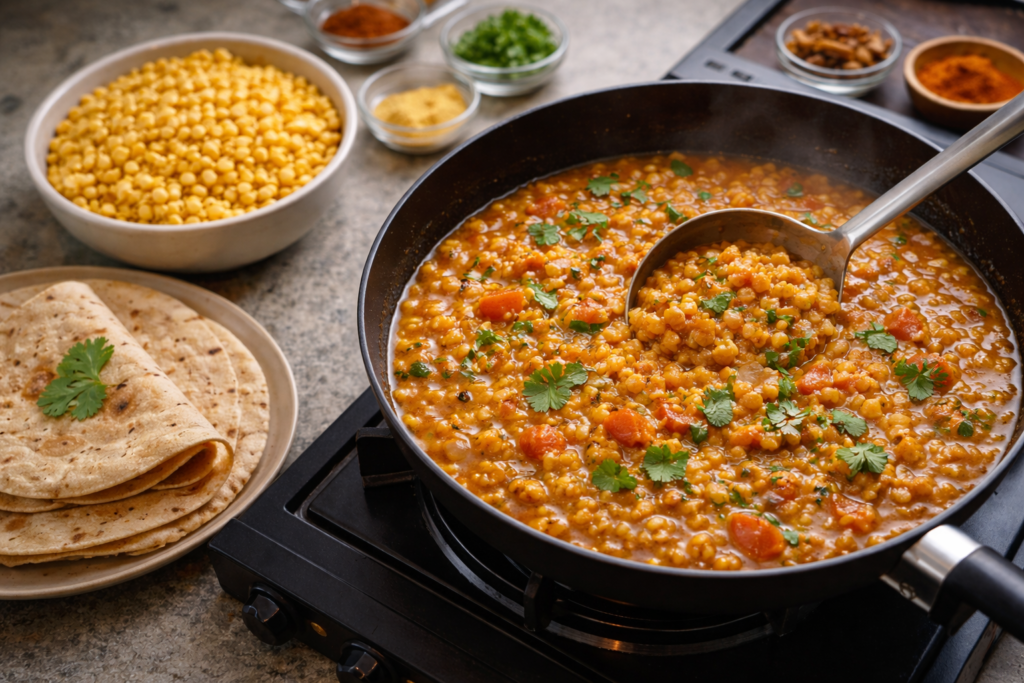
Chana dal has a slightly nutty taste and a firmer texture. The dish maintains its texture because of this feature, which makes eating it more enjoyable. You need to establish an exact timetable for the dal’s required soaking time. The dal requires at least one hour of soaking time before proceeding to pressure cook it until the beans reach their softest state while retaining their original shape. The tempering requires being combined with oil and mustard seeds, cumin seeds, onions, ginger and garlic. The cooked dal needs to be mixed with the tomatoes and spices after adding them to the dish. The dish needs to simmer so the various flavours can develop throughout the cooking process. The filling nature of chana dal creates a complete meal, which pairs perfectly with chapati and steamed rice. The dish works well when you need a warm meal that’s still heavy.
Green Moong Dal – Light, Healthy, and Nourishing
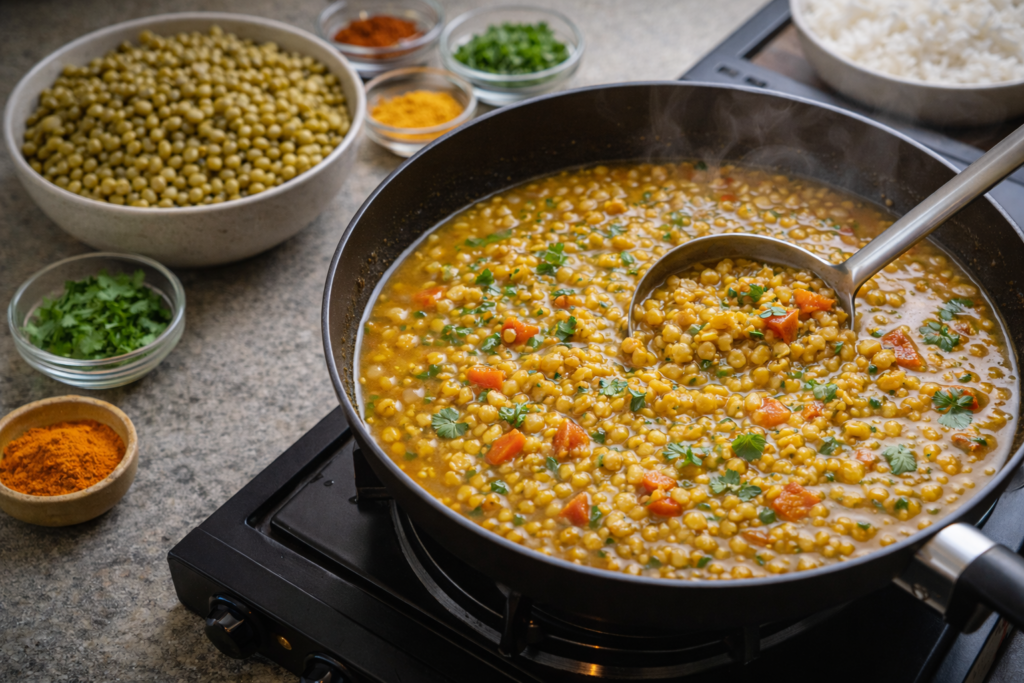
Green moong dal is a favourite among people who want to eat healthy food. The dish provides easy digestion together with high nutritional value and unexpected delicious taste.
The dal requires soaking for the entire night period. The dal needs pressure cooking with haldi and salt after completing the soaking process until it reaches full softness
The tempering process requires you to use basic elements. The cook should begin by heating oil, which he should follow by adding cumin seeds, together with ginger and onions. The dal should be added to the dish with pre-prepared dal, which should be adjusted to the required consistency for simmering
The dal creates a weightless flavour profile that delivers pleasant digestion after each mouthful. The dish works well for lunch and dinner because it provides nourishing food which does not create a heavy feeling.
Yellow Moong Dal – The Ultimate Comfort Food
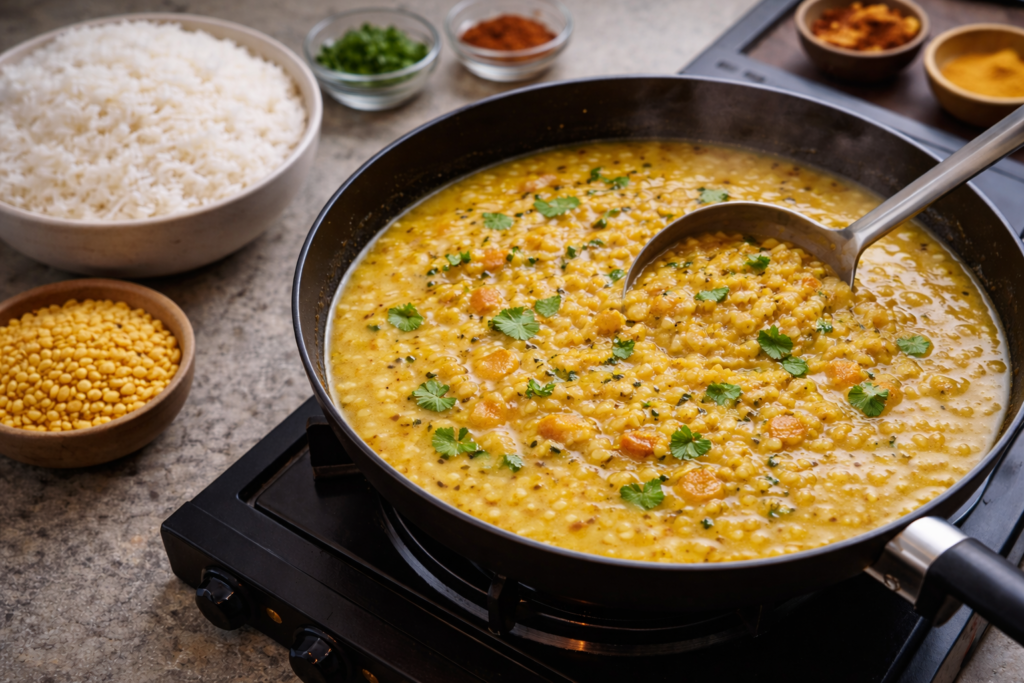
The majority of people from our generation began their meals with yellow moong dal. The food has a gentle taste and produces a feeling of warmth and comfort. This dal is often highly recommended as a food option for kids, older adults, and those who are experiencing health issues.
The dal needs washing before it enters the pressure cooker, which cooks it until all its parts become more tender. You should first heat ghee in a pan before you add cumin seeds and garlic to the heated ghee. The garlic should be cooked until its fragrance becomes apparent before you add the prepared dal to the pan
You should cook the mixture at a low temperature until you reach your desired salt level,l which indicates that your cooking process has reached its conclusion
The dal requires no intense flavouring because its essential characteristics bring out its most beautiful aspects. You have created a home-cooked meal by serving it with rice and adding ghee as a topping.
Sambar – A South Indian Classic
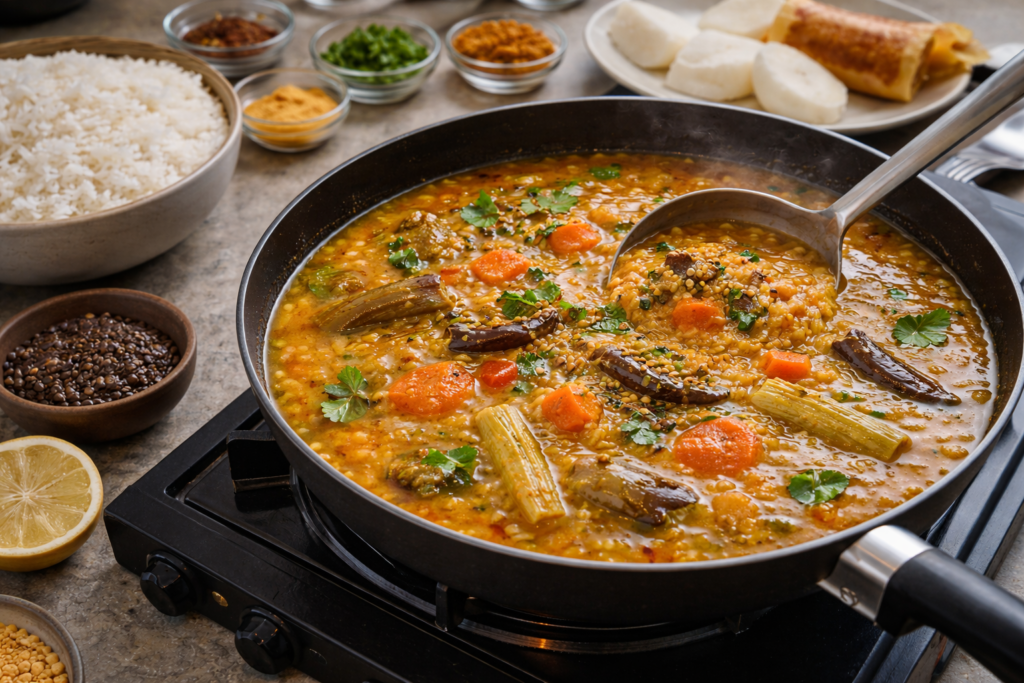
Sambar is not just a dal—it’s a complete meal in itself. Sambar consists of toor dal and vegetables with tamarind and spices, which create a dish that has bold, tangy flavours
Start by cooking toor dal until soft. The vegetables should be cooked in a separate pot with added salt. The vegetables should be combined with tamarind pulp and sambar powder before adding the dal
The dish needs mustard seeds and curry leaves to be cooked in oil as the final step of the cooking process. The sambar needs to simmer because it allows all the components to create a perfect blend
Sambar serves many purposes. You can eat it with rice, idlis, dosas, or even vadas. The different versions of the dish create its distinctiveness because each household prepares its own version.
Why Dal Will Always Matter
The affordable and nutritious dal ingredient provides chefs with an endless range of cooking possibilities. Once you understand how to prepare lentils and create flavorful dishes through tempering techniques, you will discover the entire realm of Indian culinary arts
The Ideal results do not serve as requirements for your work. The dal dish allows for error handling. The dish requires water when it becomes excessive. The dish requires an extended cooking time to correct its excessive liquid. The dish takes longer to cook because it’s too spicy. Your cooking experience introduces fresh learning opportunities through each pot you create
You should spend your time cooking. You should take your time to cook. You should frequently test the food. You should find happiness in every stage of the work
The bowl of dal contains more than food because it provides people with comfort and shows their cultural identity while demonstrating their dedication to others.
Happy Cooking!