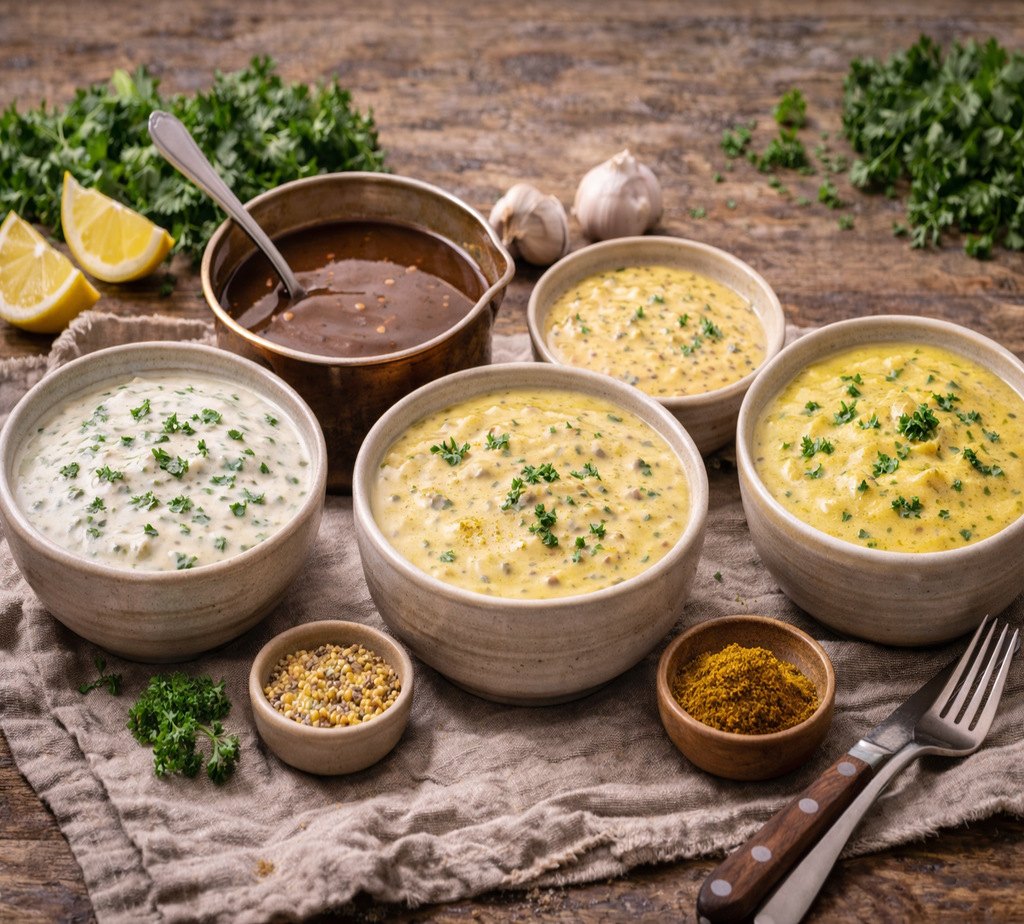
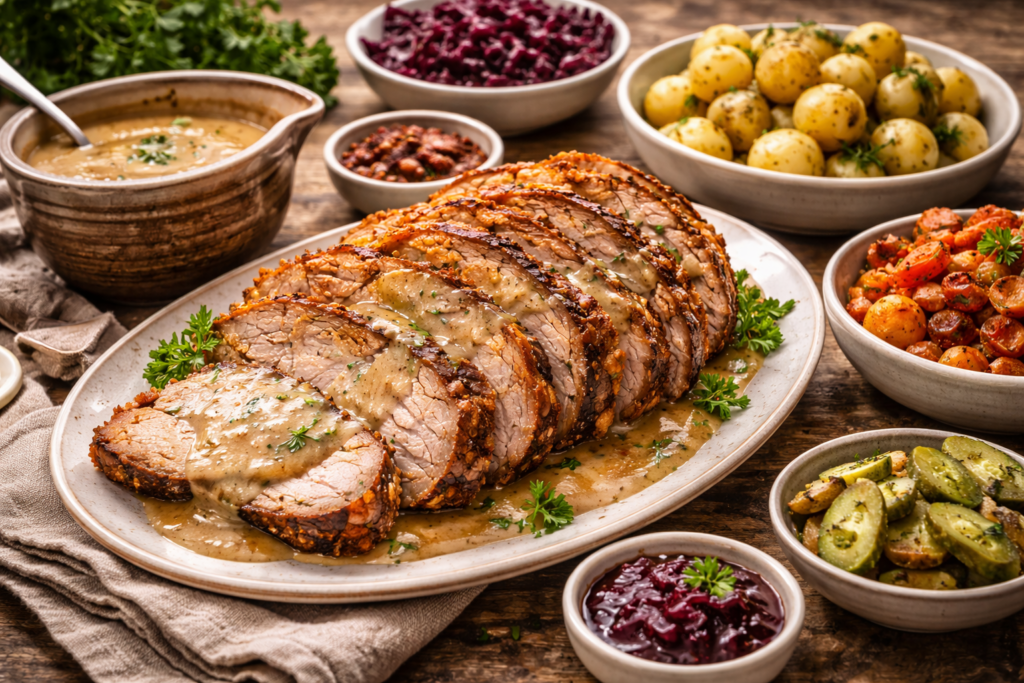
The Danes regard pork as more than just a protein source because it represents their national heritage. Pork dishes have always occupied a central position in Danish eating customs, from rustic farmhouse kitchens to festive Christmas tables. The essential element which defines Danish pork cooking resides in its sauce
Danish soups use simple cooking methods to create their recipes. The recipe uses actual pan drippings together with cream and herbs, root vegetables and seasonal ingredients. The purpose of these ingredients is to enhance the dish without making it taste stronger. Each sauce develops its unique flavour through the combination of farming methods, current food availability, and traditional home-cooking practices that have developed over the ages.
The classic dishes need our examination.
Persillesovs – Creamy Parsley Sauce
History
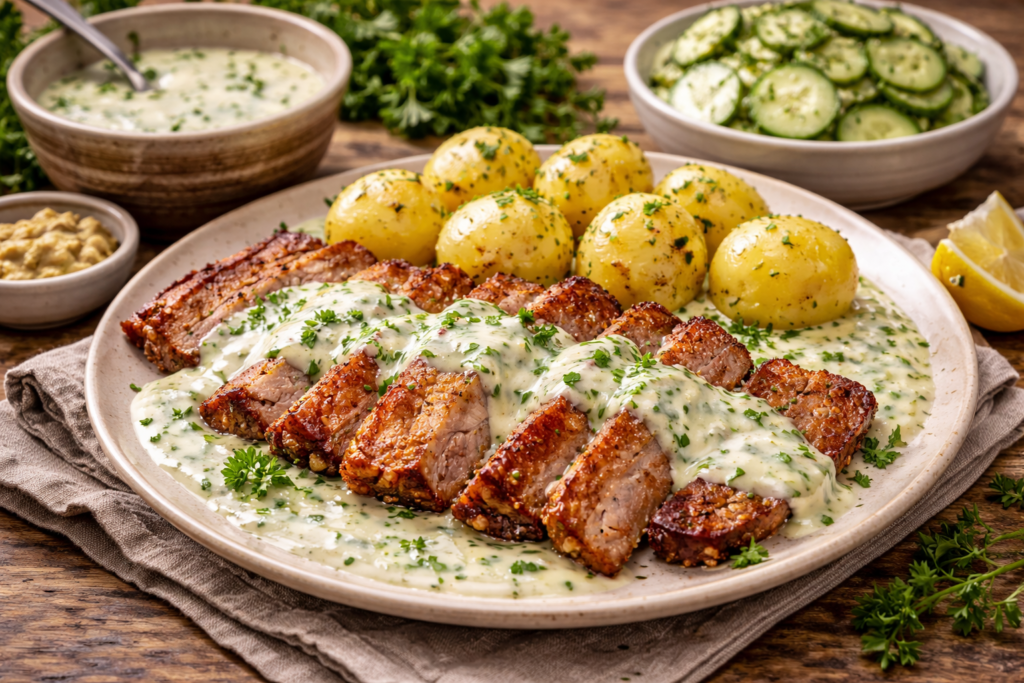
Danish home cooking has included Persillesovs since the 18th and 19th centuries. Farming families in the Nordic climate used parsley as their most accessible herb because they could grow it easily. After pork became the vital meat in Denmark, chefs began using fresh green herbs to create balance for their rich pork meals. The Danish national dish, Stegt Flæsk, became permanently linked to parsley sauce after its introduction. The dish still functions as traditional Danish comfort food.
Ingredients
- 2 tbsp butter
- 2 tbsp all-purpose flour
- 2 cups whole milk (warm)
- 1 large handful fresh parsley, finely chopped
- Salt to taste
- White pepper
- Optional: 2–3 tbsp pork cooking liquid
Methods to Prepare
- Melt butter gently in a saucepan over medium-low heat. Do not brown it
- Add flour and whisk continuously to form a smooth paste (roux). Cook for 1–2 minutes to remove the raw flour taste
- Slowly pour in warm milk while whisking constantly to prevent lumps
- Reduce the heat and simmer gently for 5–7 minutes until the sauce thickens and becomes smooth. Stir often
- Keep warm on very low heat until serving
- Add chopped parsley and stir well to distribute evenly
- Season with salt and white pepper
- For a deeper flavour, stir in a small spoonful of pork cooking liquid
Iconic Pairing: Stegt Flæsk med Persillesovs
Brun Sovs – Classic Brown Gravy
History
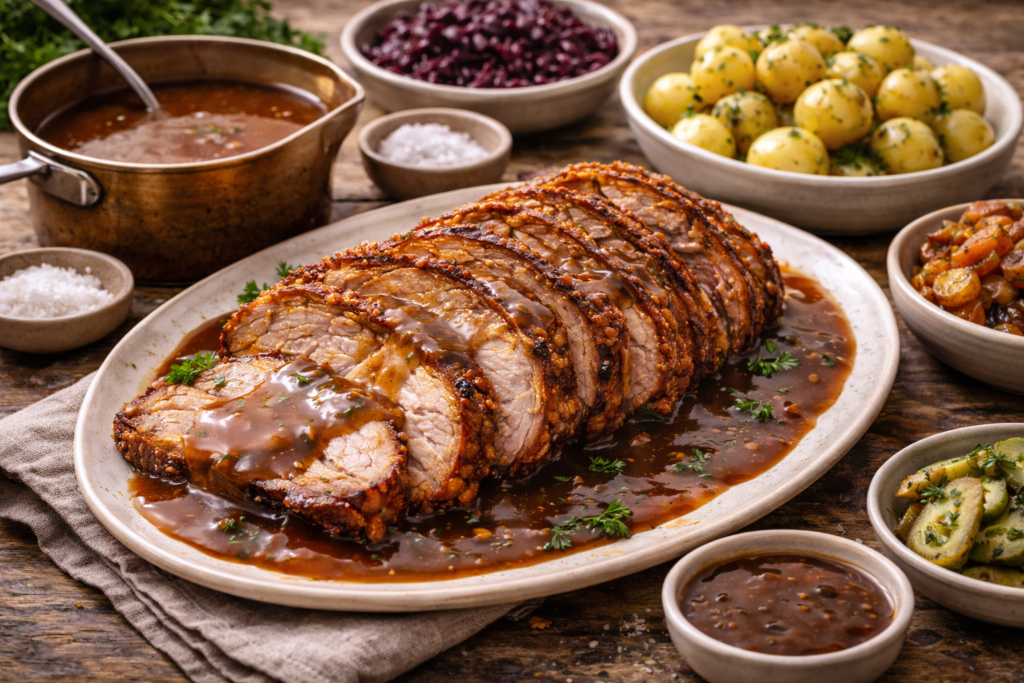
Danish farmhouse kitchens borught the practice of making brun sovs from whatever kitchen items were available. You can use the pan drippings, which remain after roasting pork and beef, to create a delicious gravy. The 1800s brought about the Sunday roast tradition,s which made brown gravy a vital component of family dining. The dish represents the Danish custom of Sunday dinners, which bring people together in a warm environment. The Danish holiday tradition of brun sovs continues to connect with celebrations, which include roast pork feasts.
Ingredients
- Roast pork drippings
- 1–2 tbsp butter
- 2 tbsp flour
- 2 cups pork or beef stock
- Salt and pepper
- Optional: caramel colouring for a deeper colour
Methods to Follow
- Keep the roasting pan over medium heat
- Add butter to the drippings if more fat is required
- Sprinkle flour into the fat and whisk thoroughly to form a roux
- Cook until it gets brown
- Gradually pour in warm stock while whisking continuously.
- Scrape up all browned bits from the pan — this adds flavour
- Simmer for 10 minutes until thick and glossy
- Strain if a smoother texture is desired
- Adjust seasoning and colour if needed
Iconic Pairing: Roast Pork with Brun Sovs
Flødesovs – Classic Cream Sauce
History
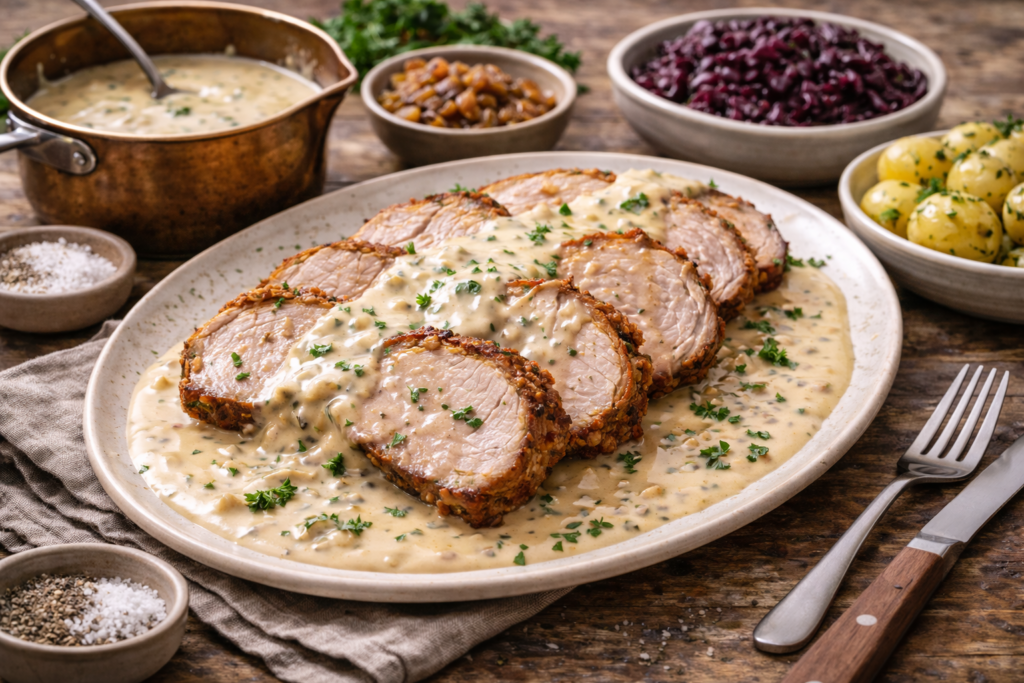
Flødesovs became famous in the early 20th century when cream production rosed in Denmark. The development of dairy farminggave permission families to access cream-based sauces, which were previously limited to special occasions. The sauce represents Danish culinary traditions, which added rich flavours with the country’s strong dairy farming heritage. Family dinners are incomplete without this dish, which pairs perfectly with pork tenderloin.
Ingredients
- 1 tbsp butter
- 1 small onion, finely chopped
- 1 cup pork stock
- 1 cup heavy cream
- Salt
- White pepper
Method for Cooking
- Melt butter in a saucepan over low heat
- Add chopped onion and cook slowly until soft and translucent
- Pour in pork stock and let simmer for 5 minutes to develop flavour
- Lower the heat and stir in cream slowly
- Let the sauce simmer gently for 8–10 minutes until it gets rich thick
- Stir often to avoid scorching
- Season carefully with salt and white pepper
- Taste and adjust richness by adding more cream if desired
Iconic Pairing: Mørbradbøffer i Flødesovs
Æblesovs – Apple Sauce
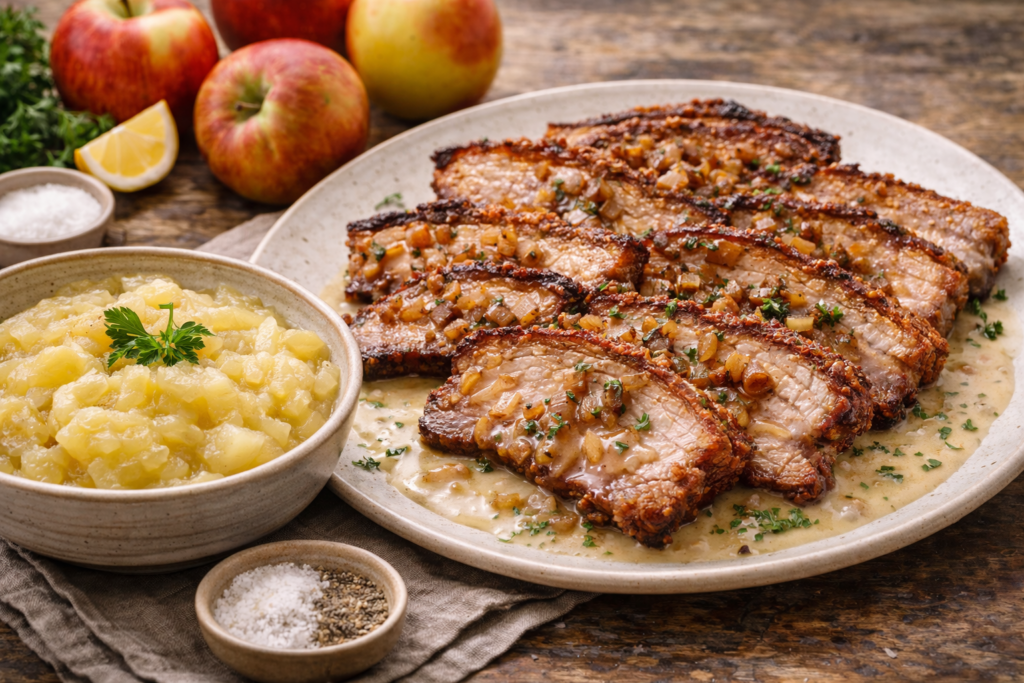
History
The Scandinavian tradition of pairing apples with pork has been present for many centuries. The seasonal availability of apples gave farmers a constant winter supply because they could harvest and store the fruit. Farmers found that sweet apples created a perfect flavour combination with fatty pork. In Denmark, apple sauce has grown into a common accompaniment for Æbleflæsk and other dishes. The dish showcases Denmark’s authentic cooking tradition,s which utilises local seasonal ingredients from farms.
Ingredients
- 4 apples (peeled and chopped)
- 2 tbsp sugar
- 2–3 tbsp water
- 1 tsp lemon juice
Stepwise Cooking Dish
- Keep the chopped apples in a saucepan withsome water
- Cook over medium heat until apples start to soften
- Reduce the heat and simmer for 10–15 minutes
- Keep stirring to avoid sticking
- Mash with a fork or blend smooth
- Add sugar and lemon juice
- Simmer 2 more minutes and cool before serving
Best Pairing: Æbleflæsk (fried pork + apples)
Svampesovs – Mushroom Cream Sauce
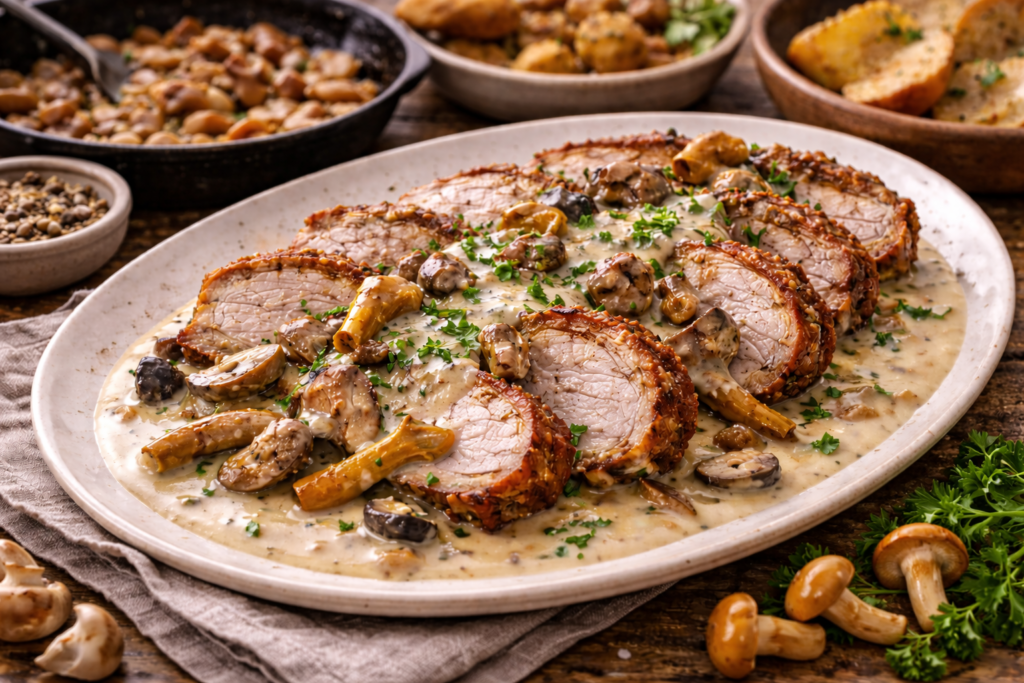
History
Denmark’s forests supplied wild mushrooms to people before supermarkets were introduced. Cream was used to make thick sauces, which were mixed with foraged mushrooms. The sauce gained popularity during autumn because of the mushroom harvest. The dish shows how Danes used forest ingredients, which they collected during specific seasons, to create their traditional comfort food.
Ingredients
- 250g mushrooms, sliced
- 1 tbsp butter
- 1 clove garlic
- 1 cup cream
- Salt and pepper
Stepwise Preparation
- Heat butter in a pan over medium heat
- Add mushrooms and cook until the moisture evaporates
- Stir occasionally and allow mushrooms to brown slightly
- Add garlic and cook for a period of 1 minte
- Pour in cream and lessen the heat
- Simmer for 8 minutes until slightly thick
- Season and serve warm
Great with pork chops or tenderloin.
Sennepssovs – Mustard Sauce
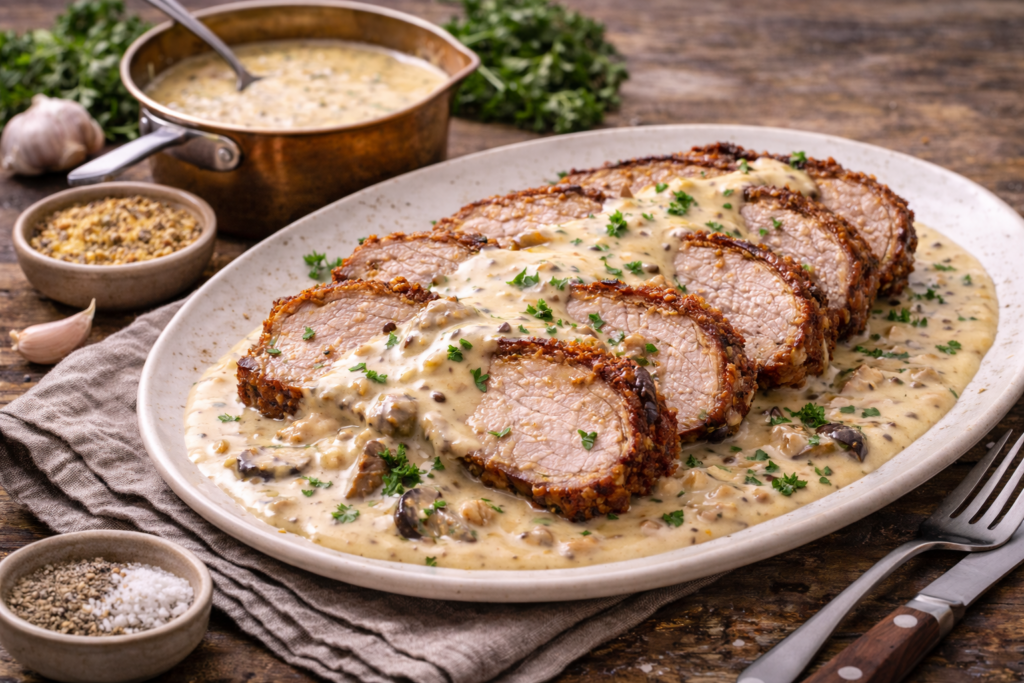
History
Danish culinary traditions introduced mustard in the 1700s. The sharp taste of mustard elevates the flavour of rich meat dishes. Danish cooks created a pork-friendly mustard sauce by making changes tto he authentic recipe into a creamy sauce with mild sweetness.
Ingredients
- 1 tbsp butter
- 1 tbsp flour
- 1 cup cream
- 2 tbsp Dijon mustard
- 1 tsp sugar
Stepwise Preparation
- Melt butter and stir in flour
- Prepare slowly for 2 minutes
- After that, add cream while whisking
- Simmer until smooth
- Stir in mustard and sugar
- Taste and adjust the balance between sweet and sharp
- Excellent with roast pork
Karrysovs – Mild Curry Sauce
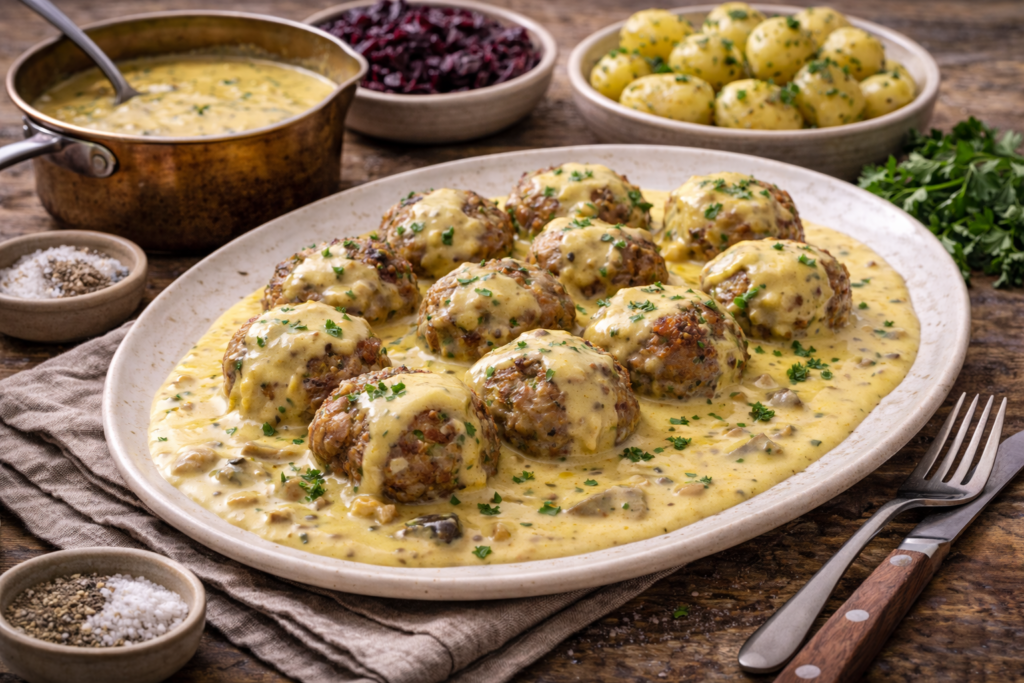
History
Curry powder came to Denmark through trade in the early 1900s. Danish cooks created a mild, creamy sauce from the items to match the flavour choices of their Nordic region. The dish continues to be a favourite for serving with pork meatballs and offering food for family get-togethers.
Ingredients
- Butter
- Onion
- Mild curry powder
- Cream
- Pork stock
Step-by-Step Preparation
- Melt butter and sauté the onion gently
- Add curry powder and toast lightly
- Pour in stock and simmer briefly
- Stir in cream slowly
- Cook until thick and smooth.
- Season lightly with salt
- Lovely with Frikadeller
If You’re Cooking at Home, Try These Iconic Pairings
- Stegt Flæsk med Persillesovs (crispy pork belly + parsley sauce)
- Mørbradbøffer i Flødesovs (pork tenderloin + cream sauce)
- Roast Pork with Brun Sovs (Sunday roast + brown gravy)
- Æbleflæsk with Æblesovs (pork + apple balance)
- Frikadeller with Karrysovs (meatballs + mild curry)
Danish pork sauces achieve harmony through their ability to balance three pairs of flavours, which include rich and fresh flavours and sweet and sour tastes, as well as basic and complex culinary elements. The complete understanding of these sauces enables you to prepare authentic Danish home cooking. Should I provide detailed information for all remaining sauces, which include Madeirasovs and Ølsovs, Julesovs and Baconsovs?