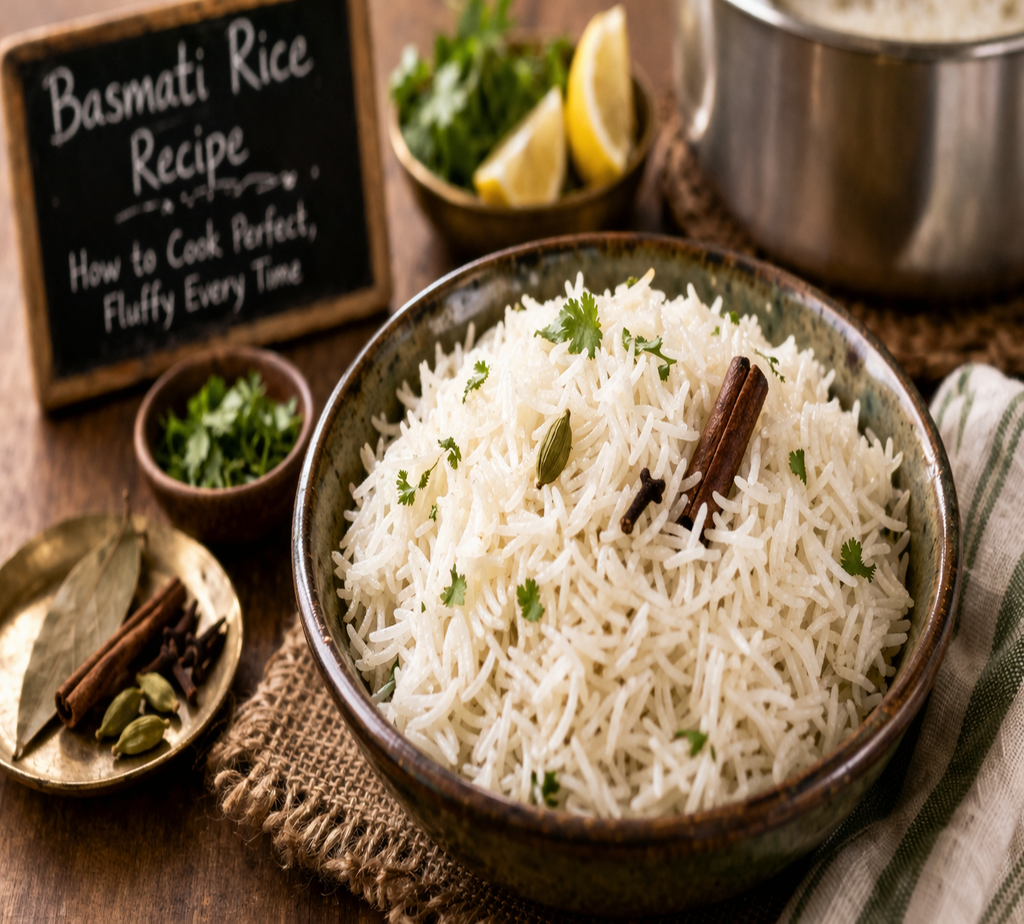
The process of cooking rice appears easy, but achieving fluffy and aromatic rice requires specific skills. The experience of making sticky or mushy rice happens to many people, so cooking rice problems affect most cooks. The good news is that with the right method, preparing a perfect Basmati Rice Recipe at home becomes incredibly easy
Basmati rice is known for its delicate fragrance, long grains, and soft texture. Every dish people eat with it brings special comfort and satisfaction through its presence, which exists from curries to stir-fried vegetables to grilled dishes
What Makes Basmati Rice Special?
Basmati rice is a long-grain rice variety which people have cultivated since ancient times in the Himalayan mountains of India and Pakistan. The rice has gained worldwide popularity because its special scent and soft texture create a unique dining experience. The cooking process makes basmati grains distinct from other rice types, making them perfect for preparing biryani, pulao, and plain steamed rice
Some reasons why people love basmati rice include:
- It has a natural fragrance and aroma
- Long, slender grains that stay separate
- It has a light and fluffy texture
- It complements well with a wide range of dishes
These qualities make basmati rice a staple in many households.
Method to Cook Basmati Rice
Follow these simple steps to prepare fluffy basmati rice.
Rinse the Rice
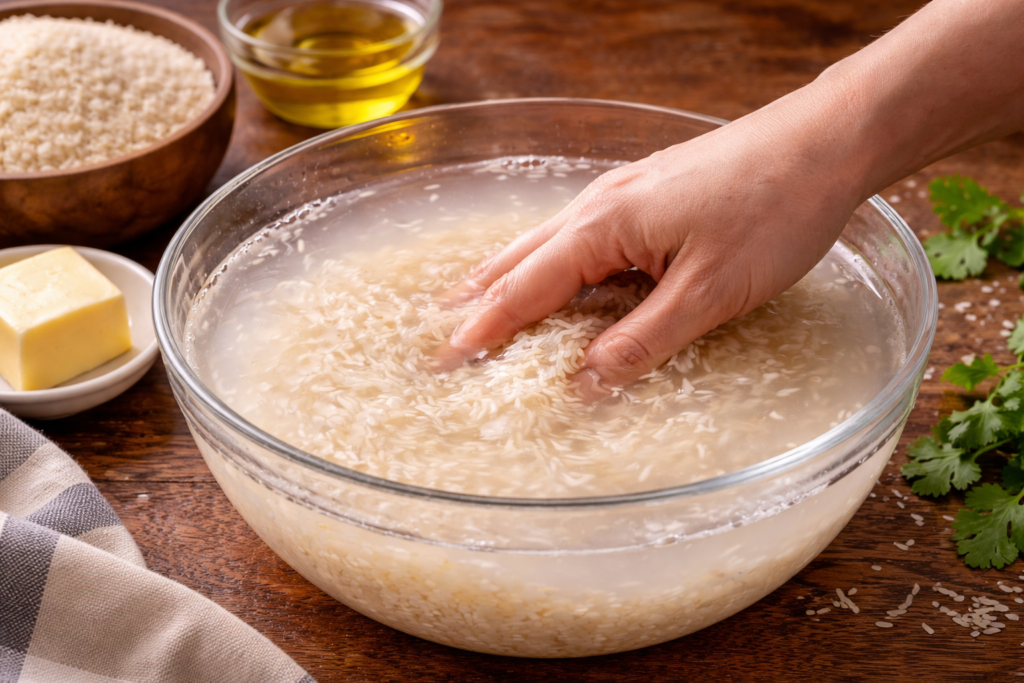
You should wash basmati rice in a bowl using cold water two to three times. The process removes extra starch, which prevents the rice from becoming sticky
Soak the Rice
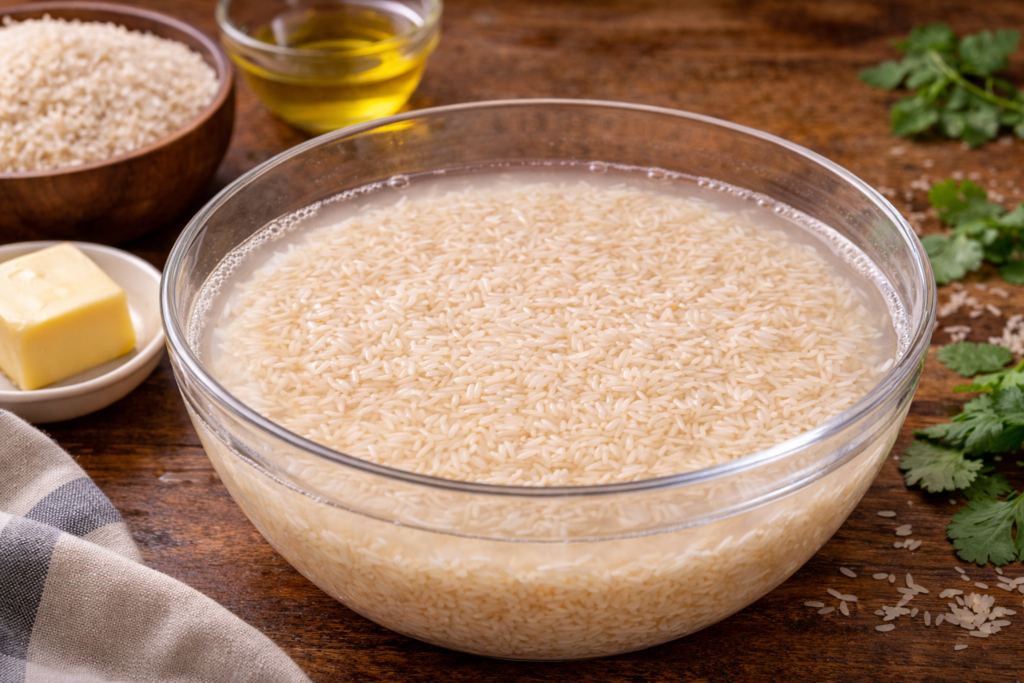
The rinsed rice should be soaked in water for a period of 20 to 30 minutes. The grains need this step to absorb moisture, which enables them to cook at an equal rate
Add the Rice
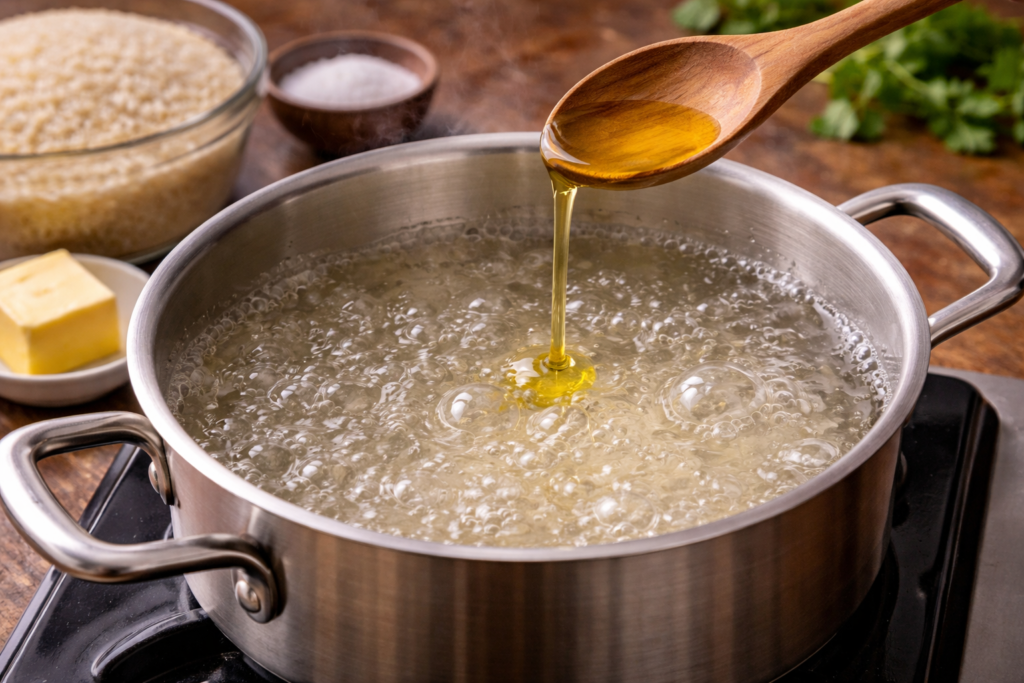
In a saucepan, bring the water to a gentle boil. Add salt or oil if you prefer
Cook on Low Heat
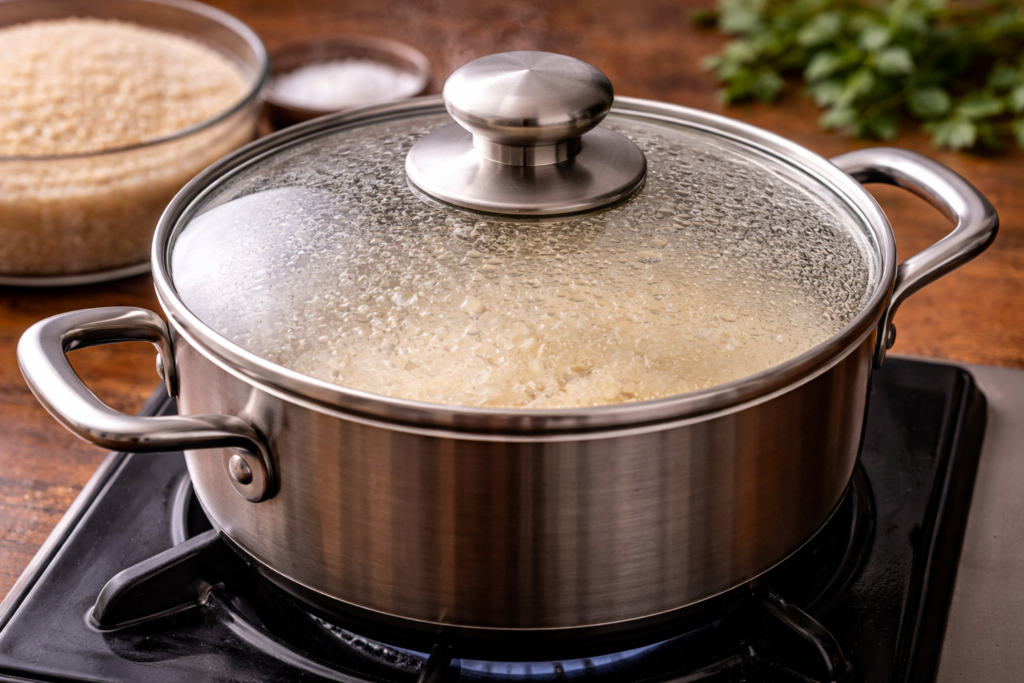
You should place the lid on the pot and then lower the cooking temperature to its minimum setting. The rice needs to be cooked for 10 to 12 minutes until all the water has been absorbed
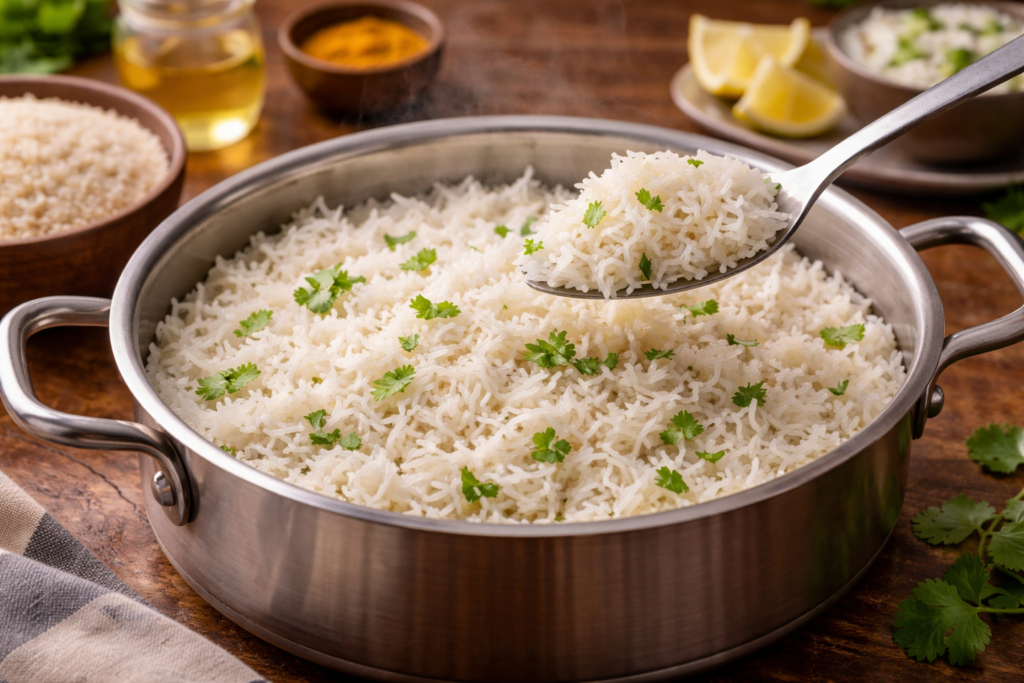
Put off the heat and cover the pot with a cloth for sitting for 5 minutes. Fluff gently with a fork. Your perfect basmati rice is ready to go
Tips for Perfect Fluffy Basmati Rice
Small details can make a big difference when cooking rice. Keep these tips in mind:
- The rice needs to be washed until all starch content is removed
- The rice needs to be soaked before cooking because it helps produce longer and fluffier grains
- The rice needs less stirring during the cooking process because excessive stirring will make the rice lose its proper texture
- The rice needs to rest for several minutes before it can be served
- The correct water-to-rice ratio needs to be used for cooking purposes
These simple steps help achieve the light, separate grains that basmati rice is famous for.
Common Mistakes to Avoid
Even experienced cooks sometimes run into problems when cooking rice. Here are a few things to watch out for:
- Skipping the soaking step: This can lead to uneven cooking
- Adding too much water: This causes mushy rice
- Cooking on high heat: Rice may cook unevenly or burn at the bottom
- Stirring too often: This can break the grains
Serving Suggestions
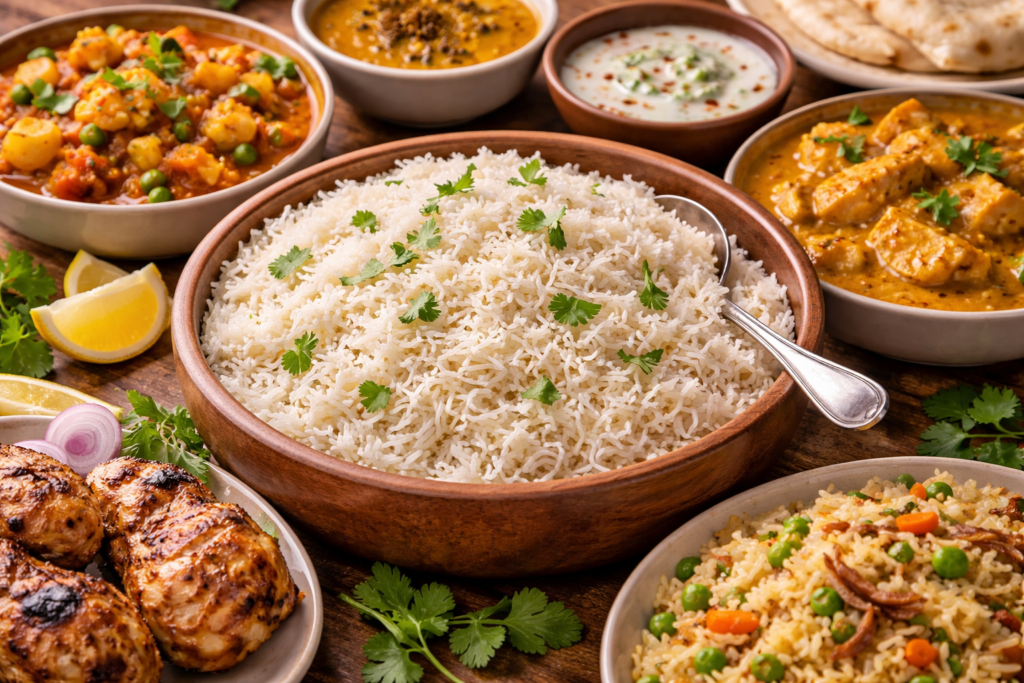
Basmati rice is incredibly versatile and pairs well with many dishes. You can serve it alongside:
- Vegetable or chicken curry
- Lentil dishes such as dal
- Stir-fried vegetables
- Grilled fish or chicken
- Indian biryani or pulao
Its light texture and aroma enhance both simple and rich meals.
Variations of Basmati Rice Recipes
Once you master basic basmati rice, you can easily experiment with different flavours.
Some popular variations include:
- Jeera rice: Cook basmati rice with cumin seeds and ghee
- Vegetable pulao: Add mixed vegetables and spices
- Lemon rice: Toss cooked rice with lemon juice and herbs
- Herb rice: Add fresh coriander or mint
Nutritional Benefits of Basmati Rice
These variations bring exciting flavours while keeping the fluffy texture of basmati rice.
Basmati rice is not only delicious but also offers several nutritional benefits.
Provides a good source of energy through carbohydrates
- Low in fat
- Naturally gluten-free
- Easy to digest compared to many other grains
Conclusion
The Basmati Rice Recipe achieves its goal by offering a straightforward method that produces delicious results. The recipe requires only basic steps to create rice that has a light and fluffy texture, which complements numerous types of dishes. The process of cooking basmati rice becomes automatic for you after you master this technique. The next time you cook curry or vegetables, please try basmati rice to experience its exceptional aroma and unique texture.
F&Q
Q.Why do we soak basmati rice before cooking?
It lets the long grains relax and take in a bit of water, so they turn light and fragrant instead of sticky. Soaking lets the grains drink up water so they cook evenly, turning out longer and fluffier, like rice just starting to steam.
Q.How much water do I need when cooking basmati rice?
About enough to cover the grains so they shimmer just beneath the surface. Usually, about one and a half to two cups of water for each cup of rice does the trick, though it depends on how you cook it—whether it’s simmering gently on the stove or steaming until the grains turn glossy.
Q.How do you make basmati rice stay light and fluffy?
Rinse the rice, let it soak before cooking, then give it a short rest afterwards—each step helps the grains stay loose and distinct, with steam curling up like a light mist.
Q. Can you cook basmati rice without soaking it first, or will those long grains still stay light and fluffy?
Yeah, but soaking makes the texture smoother and helps every grain cook evenly, like when rice turns soft and separate instead of clumping.