
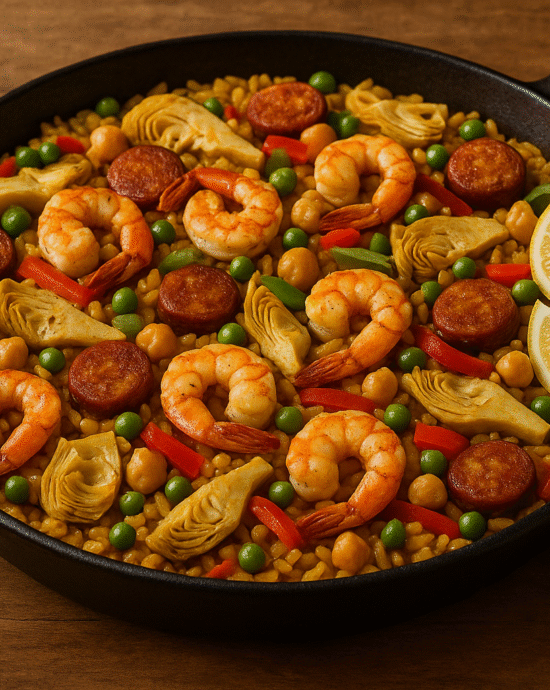

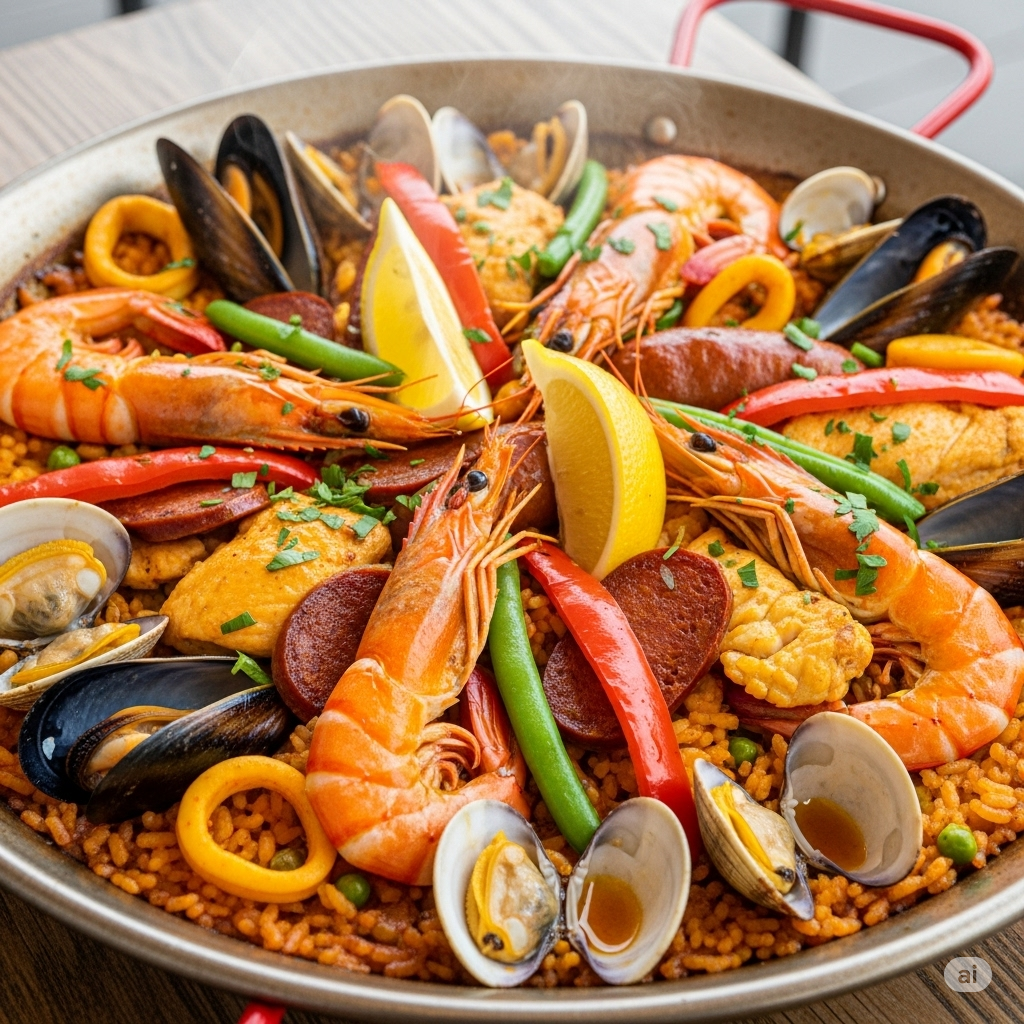
Do we find the heart of Spain in one single dish? It is that dish one and only Paella. It is a dish that people do not cook; they eat it together. Imagine me with a huge, shallow pan across the table, comrades discussing everywhere, wine running, and golden saffron rice sweet-smoked a bit beneath a dome of fresh, crunchy seafood or falling apart, plump chicken. Paella, that is, not just a plate of food, but an event.
The Story Behind the Pan
Paella was born in the sunbaked fields of Valencia, where rice was cooked over open flames with whatever the earth and sea could supply. In the 18th century, farmers and workers would cook rice in an open fire; they used the odd ingredients available, such as rabbit, snails, and vegetables. It was simple (one-pan) and filled the entire family as well as the neighbourhood
The dish has now changed over the years, depending on the region and season. Seafood did get involved in the matter thanks to coastal towns, and by the time the rest of the world heard of it, Paella had become an enshrined part of Spain. Even though today there are several variations, the spirit of the dish has not been lost: togetherness, comfort, and tradition
When to Make Paella
Paella will work on a weekend, a holiday, or any event where you want to slacken the pace and enjoy yourself. It is a crowd pleaser at dinner, or a perfect Sunday mass family lunch. Paella is not a type of meal that you wanna eat in a rush, but it’s kinda a party you want to enjoy
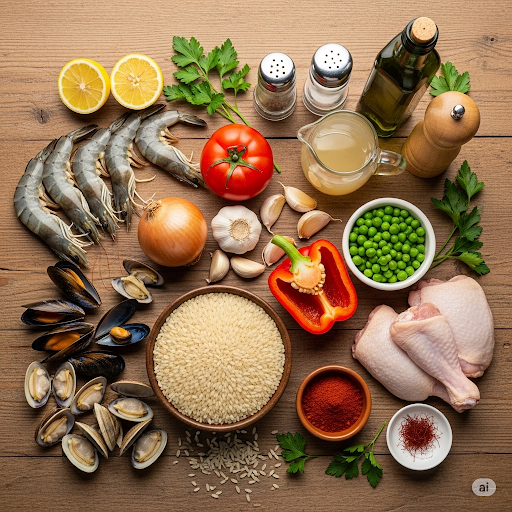
This is what you need to make a traditional Paella Mixta (the recipe is a mix of meat and seafood), and some clever alternatives in case you don’t have all the ingredients in the cupboard:
- 2 cups Bomba or Arborio rice (rice is made up of short-grain rice)
- 1 onion, finely chopped
- 3 cloves garlic, minced
- 1 large tomato, grated or crushed
- 1/2 red bell pepper, sliced
- 1/2 cup green peas
- 8–10 large shrimp (prawns), deveined
- 6–8 mussels or clams, scrubbed
- 2 chicken thighs, cut into chunks
- 1 tsp smoked paprika
- A few threads of saffron (soaked in warm water)
- 4 cups chicken or seafood broth (warm)
- Olive oil
- Add salt and pepper for taste
- Fresh parsley and lemon wedges, for garnish
Substitutes

- No saffron? Use a pinch of turmeric for colour (flavour won’t be the same, but it works)
- No seafood? Stick with chicken and chorizo
- Vegetarian version? Omit meat and seafood and include artichokes, chickpeas and further peppers
Instructions

Step 1: Heat olive oil over medium-high heat in a broad flat paella pan or a large skillet. Add cutlets of chicken and fry until golden brown. Discard and reserve
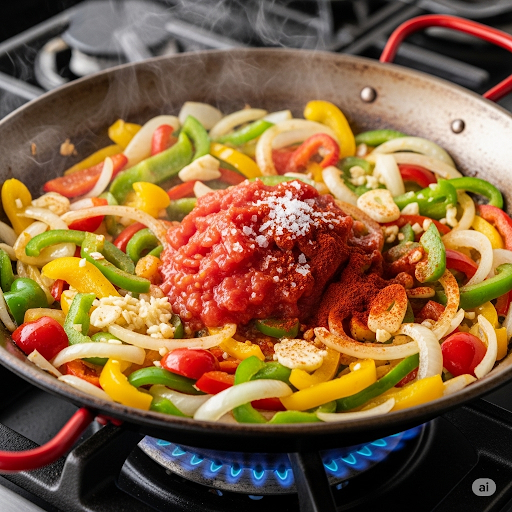
Step 2: Add onions, garlic and bell pepper in the same pan and allow the heat to go down and permit the softening of onions and garlic. Add grated tomato, paprika and a pinch of salt. Leave it to simmer into a perfumed base
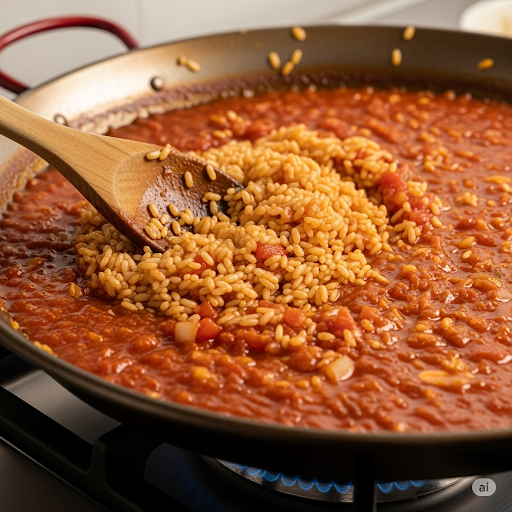
Step 3: Stir the rice into the sofrito until it is glistening with tomato-red oil–it is in this toasting together that the essence of this dish possesses it
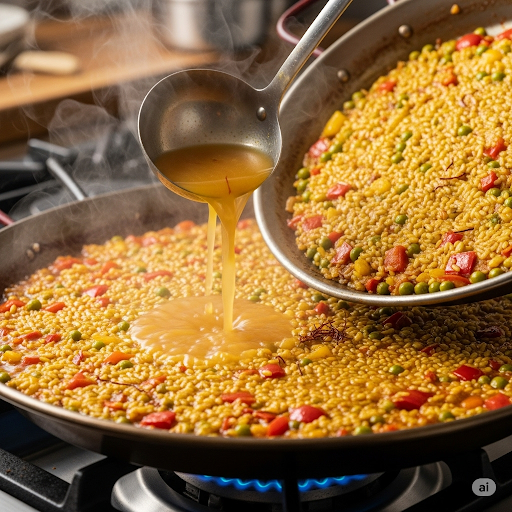
Step 4: Pour in the saffron broth, then tilt and shake the pan so the rice settles flat. Hereinafter, no stirring. Simmer like that, covered it for 10 min

Step 5: Put the chicken back in the pan. Add the shrimp, mussels and peas. Cook additional 10 to 15 minutes until the rice is tender and the liquid is absorbed.

Step 7: Heat up to high again during the last 2-3 minutes to allow the rice to get a nice crispy and golden crust on the bottom, where it will be the treasure socarrat. Pay attention to a muffled crackling

Step 8: Turn off the heat. With the help of a kitchen towel, cover the pan and leave it to rest for around 5 to 10 minutes. After that, garnish with chopped parsley and lemon wedges
Serving Tips
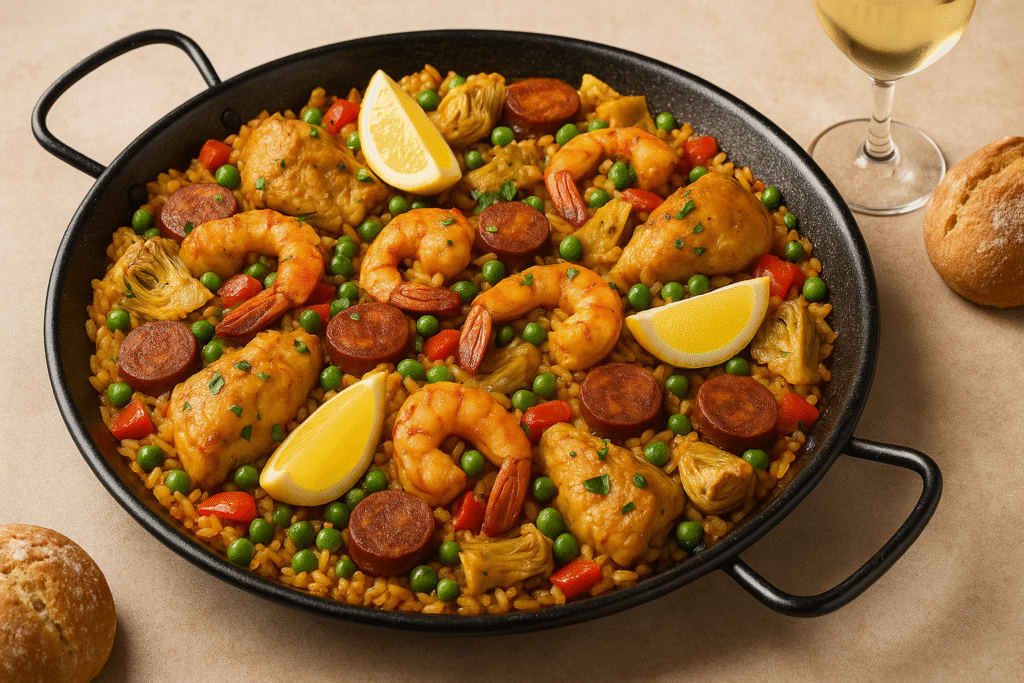
- Serve in the pan itself—paella is about shared eating. Let everyone dig in from their side
- Serve with a dry white wine or light Spanish rosé
- Serve with lemon wedges- the sharpness cuts through each bite.
- An oatmeal roll also goes well with it
Precautions
- Avoid over-stirring. Contrary to the risotto, the stage of introduction of the broth should be followed by letting the paella sit alone
- Don’t overcook the seafood. Putting shrimp and mussels late during the cooking process will ensure that they are juicy
- Never skip resting. Later in the cooking process, add shrimp and mussels to cook them juicy.
- Don’t skip resting time. It allows the flavours to settle and the texture to finish
- Use the right pan. Generally, using a shallow pan helps in cooking the rice evenly and creates that socarrat
Paella is not just a dish; it is a gradual waltz with tradition. Its creation creates a space of human interaction, whether you are grilling it on a fire in a backyard with friends or even on a stovetop where the family members are close by. Maybe that’s the real secret
Then by all means, pull your people together, fill a tumbler and have the yellow rice speak.

Anjali Raj Singh
I am a food writer and culinary content creator specializing in global cuisines, traditional recipes, food culture, and cooking techniques. Through extensive research and hands-on recipe analysis, I create accurate, informative, and engaging content that helps readers explore authentic dishes from around the world. My work covers recipe development, food history, ingredient guides, restaurant features, and culture-driven culinary stories.
At Foods Around the World, I focus on delivering well-researched, reader-friendly, and SEO-optimized content that reflects the traditions, flavors, and culinary heritage behind each dish. Every article is carefully reviewed for accuracy and relevance, ensuring readers can discover trusted recipes, cooking insights, and food experiences from diverse cultures worldwide.